Why Golden Green Uses the Stinger GT30 for Aeration and Overseeding
After years of wrestling with different aerators, here's why Golden Green chose the Stinger GT30 — and why the operator behind the machine matters even more than the machine itself.
This article is part of our Lawn Care Services in Lehigh Valley, PA series. For a complete overview of what your lawn needs, start with that guide.
If you've been around lawn care long enough, you develop opinions about equipment.
I certainly have.
Over the years, I've used different aerators and different approaches to aeration and overseeding. I've wrestled with heavy walk-behind machines. I've seen what happens when technicians become exhausted after aerating property after property. I've watched expensive grass seed end up on sidewalks, driveways and landscape beds instead of where we actually want it — in the lawn.
Those experiences influence how we're building Golden Green.
When it came time to decide what type of aerator I wanted our technicians using, I didn't start by asking:
“What's the cheapest machine we can buy?”
I asked:
“If Golden Green were aerating my own lawn, what machine would I want the technician using?”
For me, the answer is the Stinger GT30. And here's why.
I've Used the Old Walk-Behind Aerators
Anyone who has spent an entire day running a traditional walk-behind aerator understands what I'm talking about.
They're work.
You're not leisurely walking behind the machine while it does everything for you. Depending on the machine and property, you're maneuvering a heavy piece of equipment around landscaping, slopes, trees and corners.
Do that once and it's not a big deal.
Do it property after property, hour after hour, and you feel it.
I've experienced that fatigue myself.
Maneuvering heavy equipment around slopes, trees and corners
Hour after hour, property after property
Real, physical fatigue by the end of the day
And that's why technician fatigue isn't some theoretical management concept to me. I've actually operated this equipment.
When a technician is physically wrestling a machine all day, eventually he's going to get tired. And when someone gets tired, maintaining the same level of attention on lawn number 15 that he had on lawn number one becomes harder.
That's not a criticism of technicians. That's being human.
I would rather give our people equipment that allows them to spend more of their energy thinking about the lawn instead of fighting the machine.
Why I Chose the Stinger GT30
The Stinger GT30 is a stand-on core aerator designed for professional lawn care.
But I'm not impressed with a machine simply because the manufacturer's brochure has good specifications. I care about what happens on the lawn.
Can the technician control it well?
Can we produce consistent aeration?
Can we maneuver around a residential property?
Can the technician work efficiently without becoming unnecessarily exhausted?
Can we integrate overseeding into the process?
When the machine leaves, can I look at that lawn and feel good about the job we performed?
Those are the questions that matter to me.
The GT30 gives us the kind of professional platform I want Golden Green technicians working from.
What Core Aeration Is Actually Doing
There is real turfgrass science behind mechanical core aeration. Penn State describes core aeration as removing plugs of soil from the turf, creating larger pore spaces and helping alleviate soil compaction. Penn State also notes that adequate soil moisture is important for the tines to penetrate properly and remove plugs.
Relieves Compaction
Removing soil plugs opens pore spaces so roots can breathe and expand.
Improves Infiltration
Water, oxygen and nutrients finally reach the root zone instead of running off.
That's an important point. Owning a good aerator doesn't automatically create good aeration. Conditions matter. You can have an excellent machine, but if the soil conditions aren't right, you're not necessarily going to get the result you're looking for.
That's where experience enters the picture.
We're not trying to put random holes in someone's yard so we can check “aeration” off an invoice. We're trying to improve the lawn.
The Machine Doesn't Make the Lawn — The Operator Does
This is something I want homeowners to understand. You could buy the best aerator in the world and still perform a mediocre aeration job.
The equipment is a tool. The operator still has to pay attention.
What a good operator is looking at
I don't want a Golden Green technician simply riding around someone's property making holes. I want him looking at the lawn while he's working on it.
The Stinger gives us a very good tool. Our responsibility is to use it well.
There's Another Reason I Like the Stinger: Grass Seed
This may be the part homeowners don't think about. Good grass seed is expensive.
And after years in lawn care, one thing that bothers me is watching expensive seed go somewhere other than the lawn. You've probably seen it yourself. A property gets overseeded and afterward there is grass seed sitting on:
Wind can move broadcast seed. Slopes can affect distribution. And seed sitting above a dense turf canopy isn't necessarily getting the soil contact we're looking for.
I don't want to waste good seed.
Seed-to-Soil Contact Matters
This isn't merely my preference. Penn State specifically emphasizes the importance of seed contacting the soil when overseeding. Their guidance says overseeding can follow core aeration and that the seed needs soil contact and adequate space to germinate and develop.
Two Approaches, One Result
We're opening the soil while we're trying to establish new grass. That's very different from simply saying “throw some seed out there.” Having greater control over where our seed is being applied is something I've come to appreciate. Good seed is too valuable to waste.
There are situations where broadcast seeding still makes sense. Lawn care isn't one-size-fits-all, and I don't believe in pretending one piece of equipment solves every problem.
Why We're Particular About the Seed Too
The machine is only half of this conversation. What are we putting into the lawn? That's why we've put so much thought into Sunny Seed Mix, Golden Green's premium seed blend.
I've learned something important over the years: you can't fertilize your way out of poor grass genetics.
Fertilizer can help existing grass grow. Proper weed control can remove competition. Aeration can alleviate compaction. But if we're going through the expense and effort of overseeding a lawn, I want to introduce turf varieties that we actually want growing there.
How a Lawn Changes Over Several Seasons
Fall 2026
Introduce better grass with Sunny Seed Mix.
Fall 2027
Introduce more of the varieties we want.
Fall 2028
Continue improving the stand, season after season.
We're not expecting one overseeding to magically rebuild every lawn. We're gradually changing the population of grass plants growing on the property. That's a much more interesting way to think about overseeding.
Why Fall Is Such a Big Deal in Pennsylvania
For our Eastern Pennsylvania lawns, timing matters tremendously. Penn State says late summer into early fall is generally the best time to establish lawns from seed in Pennsylvania. Seedlings face less weed competition and get fall and spring growth before encountering their first summer heat stress. Penn State also identifies late summer to early fall as an appropriate period for core aeration of cool-season turf.
That's why I get excited about this time of year. A Pennsylvania lawn can take a beating during summer — heat, dry weather, traffic, disease, insects, weeds, compaction, thin areas. Then we start moving toward September. Days shorten. Temperatures begin moderating. Cool-season turf starts getting another opportunity to grow. Now we can work on rebuilding.
I Don't Want Our Aeration Program Built Around Speed
Obviously, Golden Green has to operate efficiently. We're a business. Our technicians have routes. Equipment costs money. Labor costs money. Fuel costs money.
But there's a difference between efficiency and rushing.
Rushing
- “How many lawns can we aerate in one day?”
- Volume over quality
- Check the box and move on
What Matters
- Did we cover the lawn properly?
- Did we pay attention to thin areas?
- Did we get quality cores?
- Did we place seed intelligently?
- Did the homeowner understand what to do afterward?
I don't want to brag that we can aerate an enormous number of lawns in one day. That's not the metric homeowners care about. They care about their lawn.
Why Technician Fatigue Matters to Me
This is where my years of experience have changed the way I think about equipment. I've operated those heavy walk-behind aerators. After aerating property after property, you're wrestling that machine around the lawn. I've experienced that fatigue myself.
So when I look at a stand-on machine like the Stinger, I'm not merely thinking:
Not this:
“Great, the technician has an easier job.”
This:
“Great, now the technician has more energy available to do a better job.”
There's an important difference. I want our technicians finishing the day with enough physical and mental energy to still care about the final property. Better equipment can help us do that.
More Expensive Equipment Doesn't Automatically Mean Better Lawn Care
There's another side to this. I'm not suggesting that because Golden Green owns a Stinger, Golden Green automatically performs better aeration. That would be silly.
A great chef can cook an excellent meal with basic equipment. A bad chef can ruin dinner in an expensive kitchen. Lawn care isn't much different.
Equipment amplifies the person operating it. That's why our equipment philosophy and technician philosophy have to work together. Give good people excellent equipment. Train them. Teach them what they're looking at. Give them enough time to perform the job correctly. Then hold them to a high standard.
What I Would Want Done at My Own House
This is probably the simplest way to explain Golden Green's equipment philosophy.
“If we were aerating my own lawn, this is the equipment I'd want our technician using.”
That's ultimately my test.
I'm not interested in buying a machine simply because it's inexpensive or because it's what everybody else uses. I've spent enough years in lawn care to become pretty particular about equipment.
I want equipment that helps our technicians produce the type of work I'd expect at my own home.
The Stinger alone doesn't make it successful
You still need all of these working together:
But when those pieces come together, I want our technicians operating equipment that gives them every reasonable advantage to perform excellent work. That's why you'll see Stinger aerators on Golden Green properties.
What Should You Expect After We Leave?
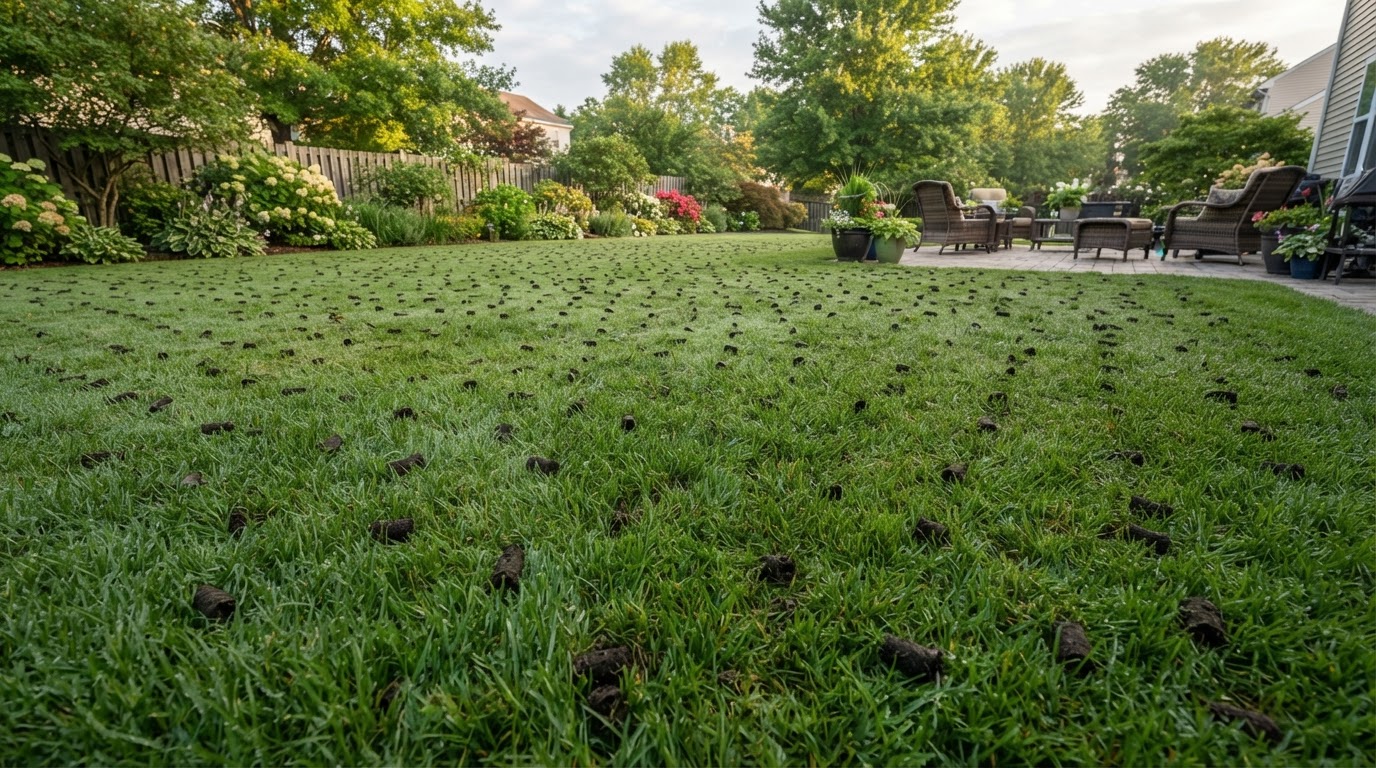
Don't expect the lawn to look like a putting green the next morning. You'll see plugs. You'll see seed. Depending on the condition of the lawn, you may see areas that received additional attention. That's okay.
Aeration and overseeding is about what we're trying to build over the coming weeks, months and even years.
And then comes the homeowner's part:
Watering.
We can use great equipment and excellent seed, but we can't make a seed germinate without adequate moisture. That's why we want homeowners to understand their aftercare responsibilities before we leave.
Aeration Isn't Automatically Necessary Every Year
This is another place where I don't want to oversell the service. Not every lawn has exactly the same needs.
Some lawns need real help
- Severely compacted
- Thin
- Heavy traffic
- Poor soil
- Significant renovation needed
Others are already healthy
Some lawns are already in excellent condition and may not need aggressive work every single year.
Penn State recommends looking at the underlying reasons for turf deterioration before beginning renovation work, including issues such as shade, weeds, disease and insects.
That's sensible advice.
Our goal shouldn't be “how do we sell this homeowner an aeration?” It should be “what does this lawn actually need?” That's the kind of company I want Golden Green to be.
The Golden Green Perspective
After years of working in lawn care and trying different equipment, I've learned that little details become big details when they're repeated across hundreds or thousands of lawns.
The machine matters
The operator matters
The seed matters
The timing matters
The soil matters
The watering matters
And yes, the technician's energy at the end of the day matters too.
That's why Golden Green chose the Stinger GT30.
Not because a machine can magically create a beautiful lawn. But because when we're asking good technicians to perform excellent work with premium seed, I want to put excellent equipment underneath them.
A premium lawn isn't simply fed.
It's built.
And building it correctly is what we're after.
Share this article
Think Your Lawn Needs Aeration and Overseeding?
Send Golden Green a few photos or request a lawn evaluation. We'll look at what you're dealing with and help determine whether aeration, overseeding, both — or something entirely different — makes sense for your lawn.
Because sometimes the best lawn-care recommendation is knowing what not to sell.
Golden Green — Your Lawn's Best Friend.
Related Articles

Lawn Care Services in Lehigh Valley, PA: Complete Homeowner's Guide
Looking for lawn care services in Lehigh Valley, PA? Learn about fertilization, weed control, aeration, overseeding, grub control, lime and seasonal lawn care.
Read Article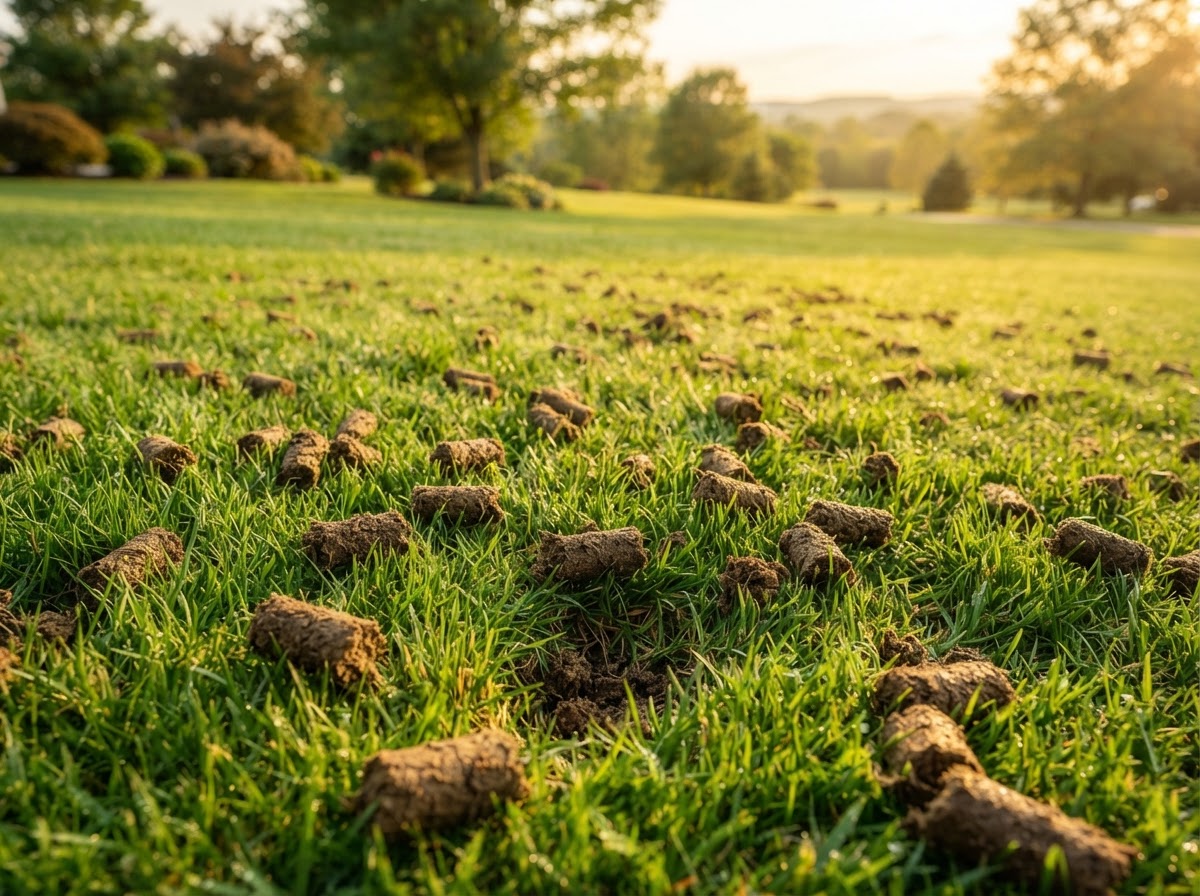
Lawn Aeration in Lehigh Valley: Why Your Lawn Needs It
How mechanical core aeration reduces compaction and why pairing it with overseeding produces the best results.
Read Article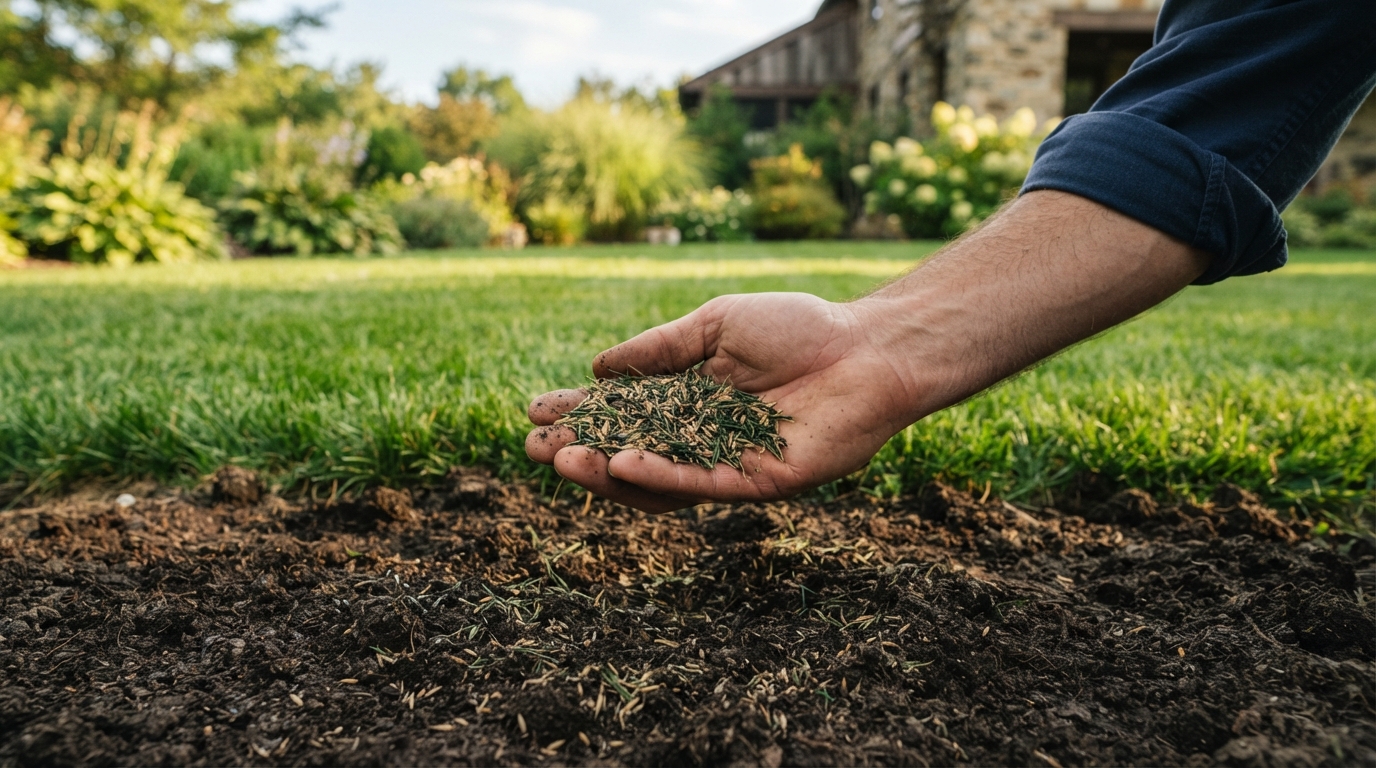
Best Grass Seed for Lehigh Valley PA Lawns: Complete Guide
Compare tall fescue vs Kentucky bluegrass and explore Sunny Seed Mix for your property.
Read ArticleGolden Green Lawn Care Services