Grub Control Services
For Eastern PA homeowners who want to stop grubs before brown patches appear — our preventative grub control protects your lawn's roots before damage starts, so your turf stays intact through summer and fall.
Timed to Pennsylvania's beetle life cycle. Applied by licensed local techs. Backed by the Golden Green Guarantee.
Stop Destructive Grubs Before They Destroy Your Lawn
White grubs are the highly destructive larvae of various beetles, including Japanese beetles and June bugs. These pests live just beneath the surface of your soil and feed aggressively on the root system of your grass. Because the damage happens underground, homeowners often don't realize there is a problem until it's too late.
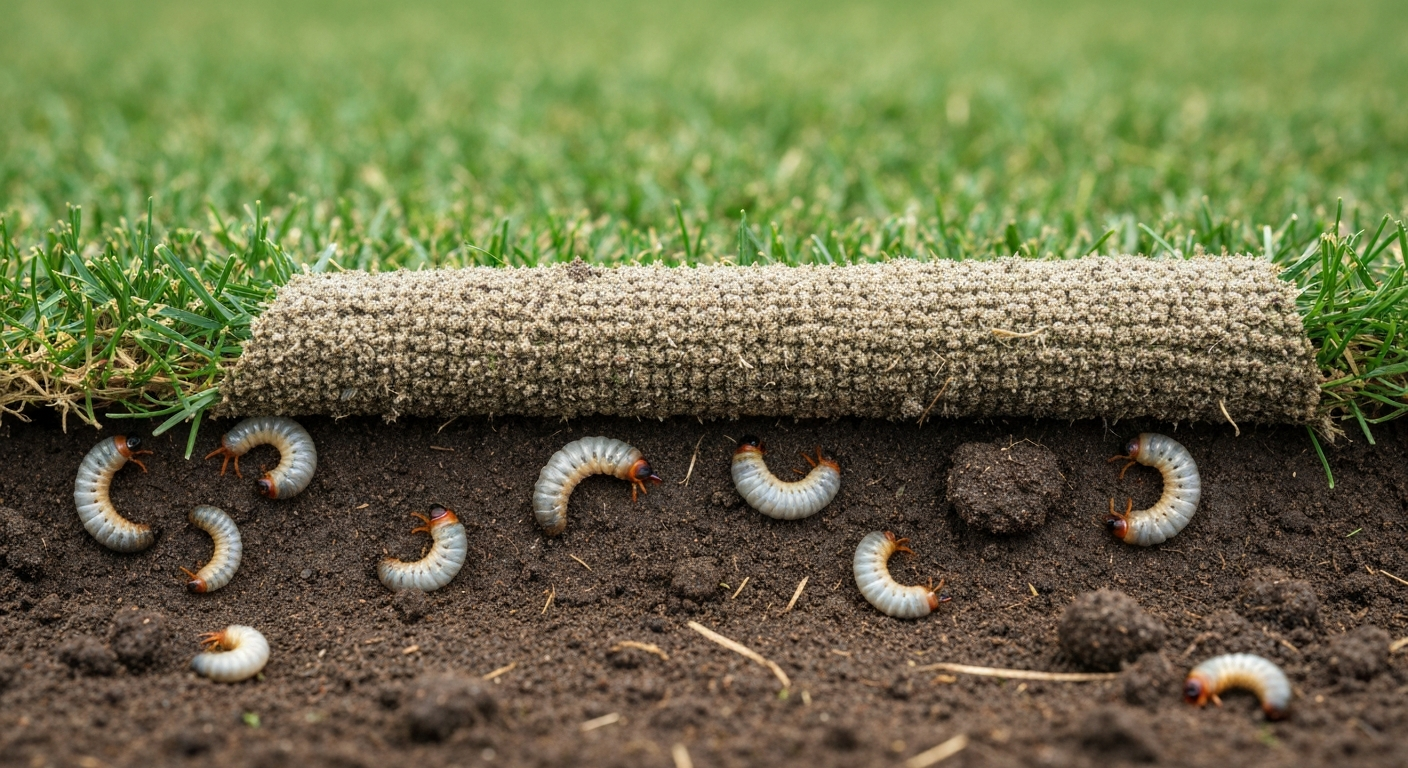
Furthermore, grubs attract secondary pests like moles, skunks, and raccoons, which will aggressively dig and tear up your yard in search of a grub meal, compounding the destruction. That is why Golden Green offers two distinct types of grub control.
Preventative vs. Post (Curative) Grub Control
Most homeowners don't realize there are two completely different grub treatments — and the difference in cost, timing, and results is significant. Here's a simple breakdown so you know exactly which one you need.
Think of it this way: Preventative grub control is like putting a roof on your house before it rains. Curative grub control is like replacing everything inside after the roof already leaked and ruined it. One costs a little. The other costs a lot.
Preventative Grub Control
The Smart Choice. Applied seamlessly at the same time as our Step 3 Summer Application, this treatment creates a protective barrier in the soil that stops grub eggs from hatching — before any damage can occur.
Much More Affordable
A fraction of the cost of curative treatment.
Stops Damage Before It Happens
Grubs never get a chance to feed on your roots.
No Lawn Repair Needed
Your turf stays intact — no dead patches, no reseeding.
No Extra Visit Required
Bundled with your existing Step 3 application.
Best For
Every homeowner who wants to never worry about grub damage. This is what we recommend to all our customers.
Post (Curative) Grub Control
The Emergency Fix. Used only when active, large grubs are already feeding on your lawn's root system. A completely different, fast-acting product is required to stop the destruction — but the damage already done cannot be reversed.
Significantly More Expensive
The curative product costs far more than preventative.
Damage Is Already Done
Roots have been severed — dead patches are already visible.
Costly Lawn Repair Required
Dead turf must be raked out, reseeded, and nurtured back to health.
Requires a Separate Visit
Not bundled — scheduled as its own emergency service call.
Best For
Only when grubs are actively destroying your lawn right now and you need to stop further damage immediately.
| Comparison | Preventative | Curative |
|---|---|---|
| When It's Applied | Before grubs hatch (with Step 3) | After grubs are already feeding |
| Relative Cost | $ — Affordable | $$$ — Expensive |
| Lawn Damage | None — prevented | Already done — irreversible |
| Seeding Required After? | No | Yes — often extensive |
| Who Should Use It | Every homeowner | Emergency situations only |
Get 2 FREE Flea & Tick Applications
Because white grub damage is so costly to repair, we want to incentivize you to protect your lawn. Sign up for our 6-Step Fertilization & Weed Control Program PLUS Preventative Grub Control, and we'll give you 2 Free Flea & Tick treatments!
Claim Your 2 Free ApplicationsWhat Is the Best Grub Control for Lawns?
Learn the critical difference between preventative and curative grub treatments, proper timing for Pennsylvania lawns, and why product selection matters more than simply spraying any insecticide.
Wondering about price? See what affects grub control cost in Pennsylvania — including a real 12,000 sq ft pricing example.
Read the Full GuideHow Our Grub Control Service Works
Whether you choose preventative or curative treatment, the process follows the same careful steps. Here is exactly what happens from the moment you request a quote through the follow-up after your application.
Property assessment
We walk your lawn, look for signs of grub activity — wilting patches, loose turf, or animal digging — and confirm whether grubs are present or you are protecting against a future hatch. This determines whether preventative or curative treatment is appropriate.
Product selection and application
For preventative control, we apply a long-lasting systemic insecticide with your Step 3 summer visit that stops grub eggs from developing. For curative situations, we use a fast-acting contact product that targets actively feeding grubs. Both are applied by licensed technicians at the labeled rate.
Watering-in instructions
Most grub products need to be watered in to move the active ingredient into the root zone where grubs feed. We leave clear instructions so you know exactly how much water to apply and when.
Follow-up and repair planning
After a curative treatment, we assess the surviving turf and plan any needed repair. Dead patches are raked out and reseeded — often with fall aeration and overseeding — so the lawn recovers before the next growing season.
When to Treat for Grubs in Pennsylvania
Grub timing is tied to the beetle life cycle, not the calendar. Here is how the season shapes up across the Lehigh Valley and Eastern Pennsylvania.
Late spring – early summer
Adult beetles emerge, feed, and lay eggs in the soil. Preventative treatment is scheduled now so the protective barrier is in place before eggs hatch.
Mid-summer (Step 3)
Eggs hatch into young grubs that begin feeding on roots. This is when preventative grub control is applied alongside your summer fertilization visit.
Late summer – fall
Grubs are large and actively feeding — damage becomes visible. Curative treatment is used here, followed by fall repair and overseeding.
Grub Control Questions We Hear
How do I know if I have grubs?+
Signs include irregular brown patches that feel spongy underfoot, turf that lifts up like loose carpet, and animals like skunks or raccoons digging in your lawn. The only way to confirm is to cut a small sample of turf and check the root zone for white, C-shaped larvae.
Is preventative grub control safe for pets and kids?+
Yes. We follow labeled rates and provide clear re-entry instructions. Once the product is watered in and the lawn is dry, normal activity can resume. We also offer pet-safe grub timing as part of our broader program.
Can I just wait and treat only if I see damage?+
You can, but curative treatment costs significantly more and cannot reverse damage that already occurred. Preventative control is a fraction of the price and prevents the root loss entirely, which is why we recommend it to every customer.
Will one treatment protect my lawn all year?+
Preventative grub control is applied once per season and provides season-long protection when watered in correctly. Curative treatment is a separate, targeted application used only when active feeding is confirmed.
Do you offer grub control in the Lehigh Valley and surrounding counties?+
Yes. We service lawns across Lehigh, Northampton, Berks, and Bucks counties. If you are in Allentown, Bethlehem, Easton, Reading, Quakertown, or the surrounding areas, request a quote and we will confirm coverage for your address.