The Schwenksville Lawn Field Guide

    Identify the Problem.
    Then Act.

    Schwenksville lawns roll — and so does the water, the shade, and the trouble. We read your lot like a field guide: identify what's actually wrong, then fix it with a plan, not a guess.

    Licensed & insured
    Soil-tested plans
    Perkiomen Valley local
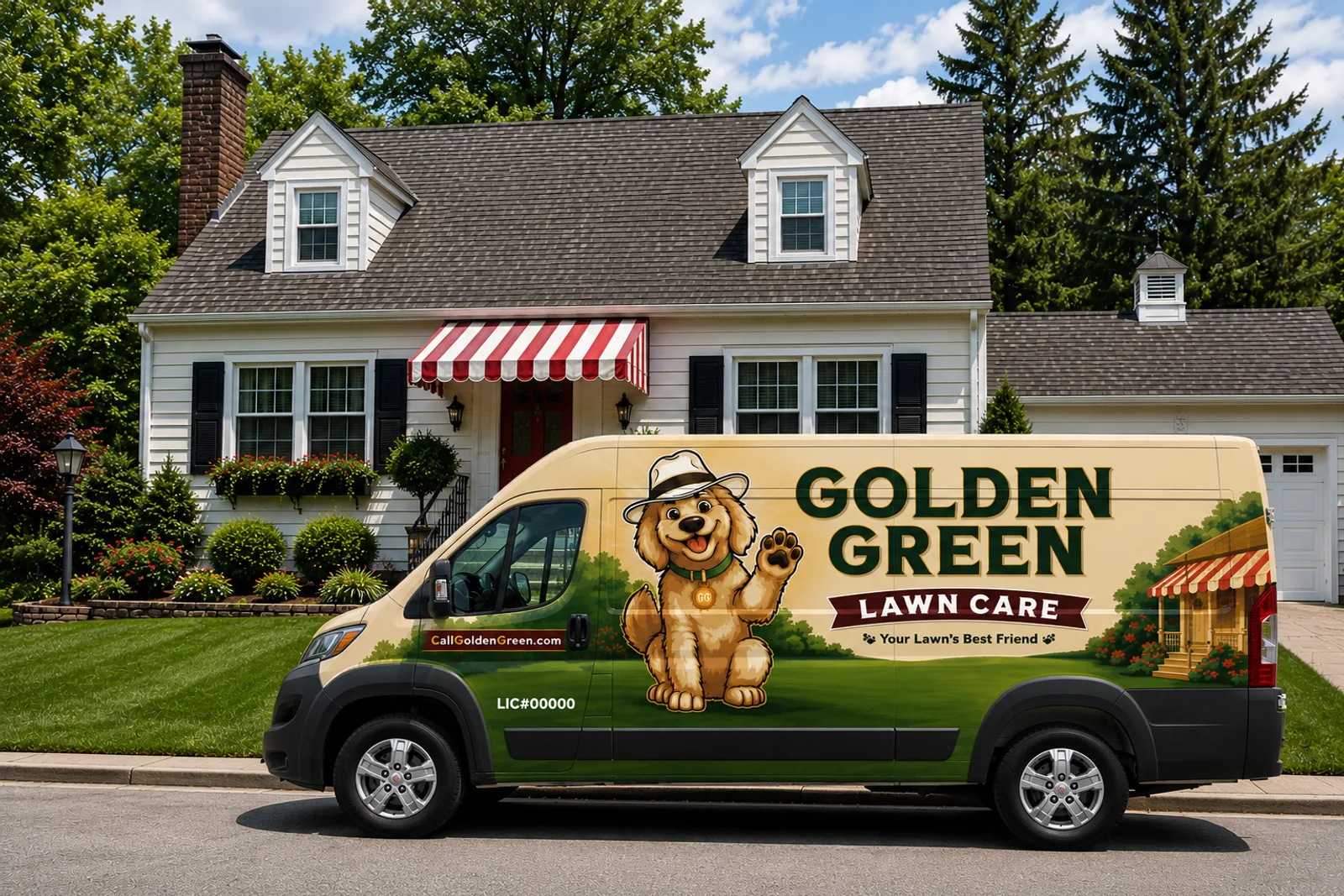
    Golden Green lawn care van serving Schwenksville, PA
    Field-Guide Diagnosis
    Golden Guarantee
    Soil-Tested Plans
    Perkiomen Valley Local
    How to Use This Guide

    A field guide doesn't guess. It identifies, then acts.

    Schwenksville is rolling country. A lawn on a south-facing ridge has almost nothing in common with one in a shaded hollow near the creek — yet most lawn companies treat them the same. That's why so many yards here look the same year after year: the treatment was never matched to the land.

    A field guide works differently. You observe what's in front of you, match it to an entry, and follow the fix. That's how we approach Schwenksville lawns: we read your actual lot — the slope, the shade, the drainage, the grass that's really growing — and we match a plan to it. No blanket programs. No guessing.

    Below are the six entries we see most often in Schwenksville. Find the one that looks like your lawn, and you'll know what's actually wrong and what to do about it.

    The Six Field Entries

    The lawn problems we identify most often on Schwenksville lots — each with its habitat, what it means, and the fix.

    01

    The Pale Ridge Lawn

    Habitat: South-facing slopes & drier upland lots

    Identification

    Grass is green-ish but never that deep, dark green the neighbor has. Color fades fast in July. Feels thin underfoot — you can see soil between the blades.

    What It Means

    Sun-baked slopes in Schwenksville shed water before it soaks in, so roots stay shallow. The grass survives spring on rain and collapses the first dry week. It's a root problem, not a fertilizer problem.

    The Fix

    Core aeration to open the compacted slope, then a measured fertility program that feeds roots — not the blanket nitrogen that makes weak turf look green for two weeks and burn out. Fall overseed with Sunny Seed Mix to build a deeper root zone.

    02

    The Shaded Hollow Lawn

    Habitat: North-facing lots & tree-lined hollows

    Identification

    Thin, patchy turf under mature oaks and maples. Bare dirt under the canopy. Moss creeping in where the grass gave up.

    What It Means

    Schwenksville's older, wooded lots lose the light war. Grass can't outcompete tree roots for water and sun, so it thins — and moss fills the gap. No amount of fertilizer fixes shade.

    The Fix

    We map the real shade and tell you honestly where turf will and won't grow. In the heavy shade we recommend shade-tolerant Sunny Seed Mix in a fall overseed; where shade wins permanently, we say so. Honesty beats a lawn that keeps failing.

    03

    The Wet-Spot Lawn

    Habitat: Low swales & lots near the creek corridor

    Identification

    A persistent soft, damp patch — sometimes with standing water after rain. Grass there is thin, yellowed, or replaced by nutsedge and moss.

    What It Means

    Water collects in the low spots of Schwenksville's rolling lots, and cool-season grass drowns in saturated soil. The roots can't breathe, so the turf thins and wet-loving weeds take over.

    The Fix

    We read the drainage first — no product fixes a grading problem. Where we can build turf, we aerate to get oxygen into the root zone, lime if the pH has dropped, and thicken with Sunny Seed Mix so the grass outcompetes the nutsedge. Where water will always sit, we tell you the truth.

    04

    The Compacted Builder Lawn

    Habitat: Newer developments with stripped subsoil

    Identification

    A lawn that's only a few years old and already thin, hard, and weedy. Soil feels like concrete underfoot. Water runs off instead of soaking in.

    What It Means

    New-construction lots in Schwenksville were compacted by heavy equipment and stripped of topsoil. The grass is trying to grow on subsoil. No spray fixes that — it's a soil problem hiding under a weed problem.

    The Fix

    This is a build-it-over-time lawn. We start with a soil test, correct the wrecked pH, then run repeated fall aeration and Sunny Seed Mix overseeding to actually grow a root zone into the compacted subsoil. Year one stabilizes, year two thickens, year three it looks like the lawn you thought you bought.

    05

    The Summer-Weed Invasion

    Habitat: Thin, stressed turf in the July heat

    Identification

    Crabgrass, spurge, and broadleaf weeds explode in mid-summer — especially in the thin spots. You spray, they come back in weeks.

    What It Means

    Weeds are a symptom of a thin lawn, not the cause. Summer heat exposes every weak patch, and weeds colonize the gaps. Spraying the weed leaves the same thin turf underneath, so the next weed fills in immediately.

    The Fix

    Pre-emergent in spring stops crabgrass seed. Post-emergent knocks back what's up. But the real fix is density — fall aeration and Sunny Seed Mix overseeding so the lawn outcompetes the weeds instead of needing constant spraying. A thick lawn is its own weed control.

    06

    The Grub-Damaged Lawn

    Habitat: Any Schwenksville lawn, especially thin ones

    Identification

    Brown patches in late summer that pull up like loose carpet. Skunks or crows digging in the lawn. Turf that won't green up no matter what you do.

    What It Means

    Japanese beetle grubs feed on grass roots underground, so by the time you see the brown, the roots are gone. A thin Schwenksville lawn is the most vulnerable — it has no root reserve to fall back on.

    The Fix

    Preventive grub control goes down in early summer, before the eggs hatch. After the fact is too late. We time the window for Eastern PA and protect the lawn before the damage starts — then build density so it can take a hit and recover.

    What Most Homeowners Miss

    You're reading the symptom. We read the lot.

    Most Schwenksville homeowners see a weed, a bare spot, or pale color and reach for a product. But the weed isn't the problem — the thin turf under it is. The bare spot isn't the problem — the compaction or shade under it is. The pale color isn't the problem — the acidic soil blocking your fertilizer is.

    A field guide exists because the thing in front of you is almost never the real issue. You have to identify the habitat — the slope, the shade, the drainage, the soil — to know what's actually wrong. That's the step most homeowners skip, and it's the step a rushed company skips too. We don't.

    How We Use the Guide

    Four Steps, Every Schwenksville Lawn

    A field guide only works if you follow it. Here's how we apply it to your lot — every time, no shortcuts.

    Identify the Entry

    We walk your Schwenksville lot and match what we see to a field entry — slope, shade, drainage, compaction, weed pressure. Diagnosis before treatment, always.

    Confirm with a Soil Test

    A field guide is only as good as its data. We test the soil before we feed it — Schwenksville's rolling lots run acidic, and guessing at lime is how lawns stay pale.

    Apply the Right Fix

    Each entry has a specific fix — not a blanket program. We match the plan to the lot you actually own, using Sunny Seed Mix, aeration, lime, and timed grub control.

    Track Across Seasons

    A field guide is a year-round tool. We revisit the lawn each season, update the entry, and adjust the plan — because a Schwenksville lawn in April isn't the same lawn in August.

    Why Timing Matters in Pennsylvania

    The right fix in the wrong month is still the wrong fix.

    Schwenksville runs on cool-season grass — tall fescue, Kentucky bluegrass, perennial ryegrass. That means spring and early summer are for weed prevention, late summer and fall are for aeration and overseeding, and summer is when weak turf gets exposed. Get the timing wrong and even the right product wastes your money.

    Spring seeding in Eastern PA fights heat and crabgrass before the new grass can root. Aeration in July stresses a lawn that's already heat-stressed. Grub control after the eggs hatch is too late. We time every step to the season your Schwenksville lawn is actually in — not a generic calendar.

    What to Expect Over Time

    A field guide is a multi-season tool.

    One treatment can knock back visible weeds — but that's not the same as fixing the lawn. Real improvement in Schwenksville takes time because it's built on root depth, soil health, and turf density, none of which happen in a single visit.

    This season: we stabilize — correct the pH, knock back the weeds, time the grub control, and start building density with a fall aeration and Sunny Seed Mix overseed.

    Next season: the lawn thickens. The Sunny Seed Mix roots established over winter start to crowd out the weeds that used to fill every gap. You spray less because the lawn defends itself.

    By the second or third season: a thicker, deeper-rooted lawn that handles Schwenksville's rolling terrain, summer heat, and shade the way it was supposed to. That's the difference between a spray and a plan — and it's why better grass genetics in Sunny Seed Mix matter long-term.

    Schwenksville Offers

    Three low-pressure ways to start — no contracts, no guessing.

    Picture Your Weed, We'll Spray It for Free

    Not sure which field entry your lawn matches? Snap a photo of the weed, send it over, and we'll identify it and spot-treat it for free. The easiest first step there is.

    SEND PHOTO

    Sunny's Seed Promise

    Sign up for our 6-step program plus aeration and seeding, and receive unlimited seeding if needed. Better grass genetics, backed for the long run.

    VIEW PROGRAM

    2 FREE Applications

    With a qualifying program, get 2 free flea & tick applications. Limited time only for Schwenksville homeowners.

    CLAIM NOW
    Golden Green Perspective

    We'd rather identify the lawn than sell it a program.

    Schwenksville is the kind of place where the land tells you what to do — if you're willing to read it. A slope, a hollow, a shaded lot, a compacted new build: each one needs a different plan, and a blanket program applied to all of them is why so many lawns here stall.

    We built our approach like a field guide because that's how we actually think. We walk your lot, we test the soil, we identify the turf, and we match a plan to what's really growing. Then we track it across seasons and adjust — because a lawn in April isn't the same lawn in August, and a good company knows the difference.

    We're not the cheapest, and we won't pretend to be. But we are the company that reads your lawn before we treat it — and stands behind it with the Golden Guarantee. That's the whole idea.

    Frequently Asked Questions

    Real questions from Schwenksville homeowners, answered straight.

    Let Us Read Your Schwenksville Lawn

    One lawn evaluation tells you more than a year of guessing. We'll walk your lot, test the soil, and match it to the right field entry — then tell you honestly what it needs. No pressure, no contracts.

    Serving Schwenksville and the surrounding Perkiomen Valley in Montgomery County. Licensed, insured, and backed by the Golden Guarantee.

    ZIP 19473

    Golden Green proudly serves homeowners in the 19473 area of Schwenksville, Pennsylvania. Local lawn care you can count on — fertilization, weed control, aeration, and overseeding tailored to your neighborhood.

    Explore Schwenksville

    Schwenksville is home to Schwenksville Community Park, a well-known community park in the area — one of the reasons we're proud to serve Schwenksville homeowners.

    CALL TEXT