At Golden Green, we treat the area around a pool as a place that requires a different level of planning—not simply another pass with the spreader.
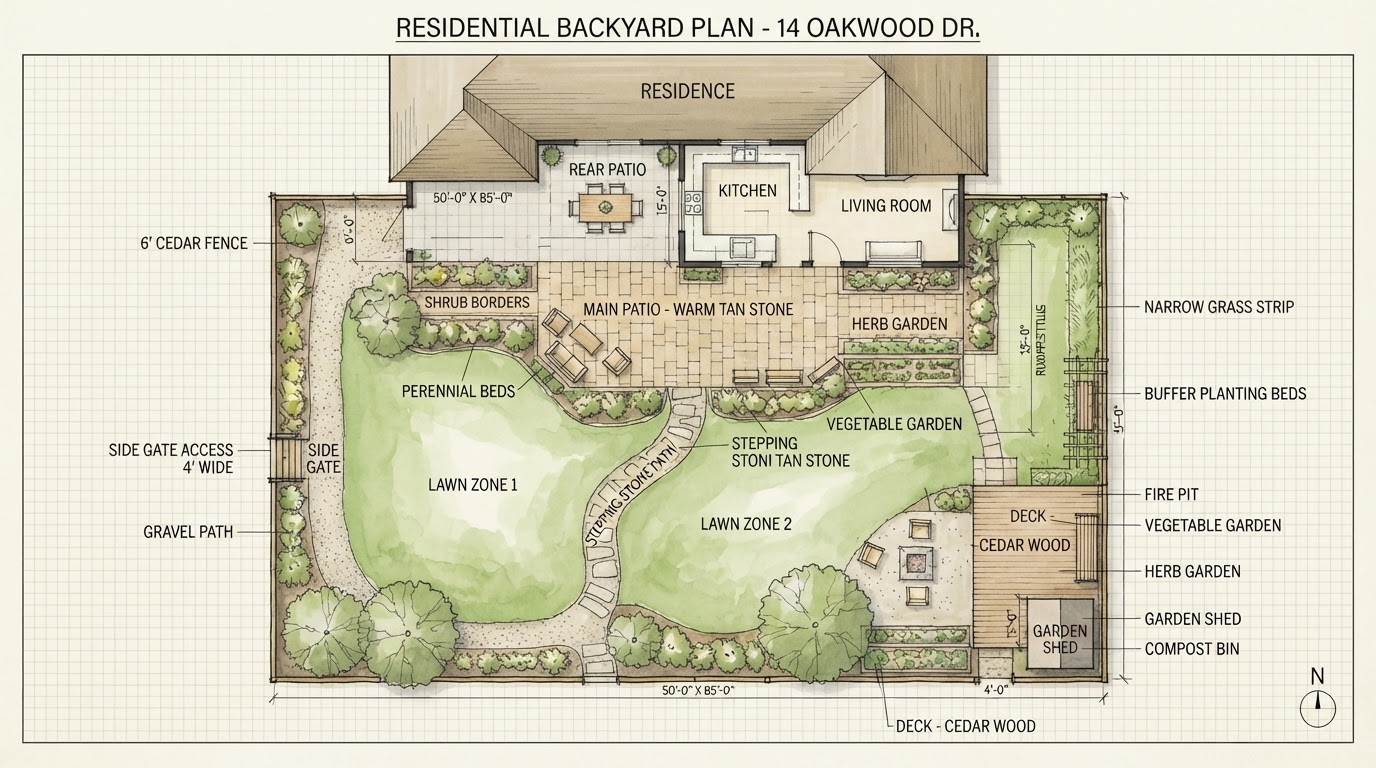
Picture a narrow strip of grass beside an in-ground pool.
The homeowner wants that grass looking healthy. It is beside the patio, close to where the family gathers, and visible every time someone walks outside.
But from the technician’s perspective, there is more to consider than the grass.
Where will the granules travel? Could they bounce off the concrete? Is the cover installed? Are there exposed springs or anchors? Can the equipment apply the product without sending it into the wrong place?
Those questions belong in the visit before the fertilizer leaves the spreader.
For me, premium lawn care is not only about what we apply. It is also about how carefully we treat the property around it.
Why Pool Areas Are Tricky for Lawn Applications
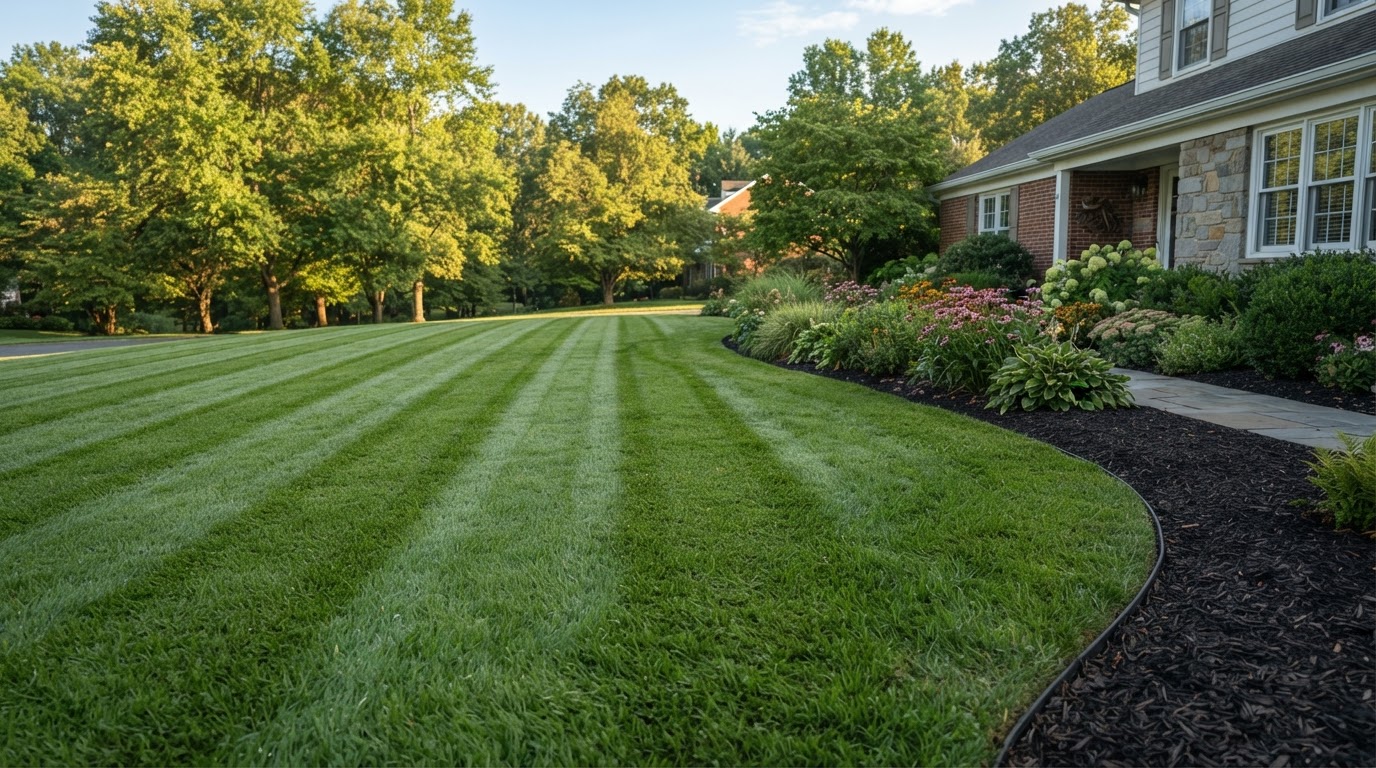
A large front lawn and a narrow poolside strip are different working environments.
Around a pool, the technician may be navigating concrete, fencing, planting beds, tight corners, and limited space to turn. The lawn still needs to be considered, but the application method must fit the setting.
Broadcast spreaders distribute granules outward. That includes many push spreaders and ride-on applicators. Drop spreaders work differently, releasing material beneath the equipment within a narrower path. University of New Hampshire Extension explains why that distinction matters near pavement and other areas where fertilizer is not wanted.
Equipment that works efficiently in the open may not be the appropriate choice beside a pool.
The question is not, “Can this machine fit?”
It is, “Can we use it appropriately here?”
The Problem: Granules Can Bounce and Roll
One detail I want technicians watching for is what happens after a granule leaves the spreader.
It may reach the intended grass. But around a tight edge, it can also hit concrete, bounce toward the cover, or settle somewhere that is easy to overlook.
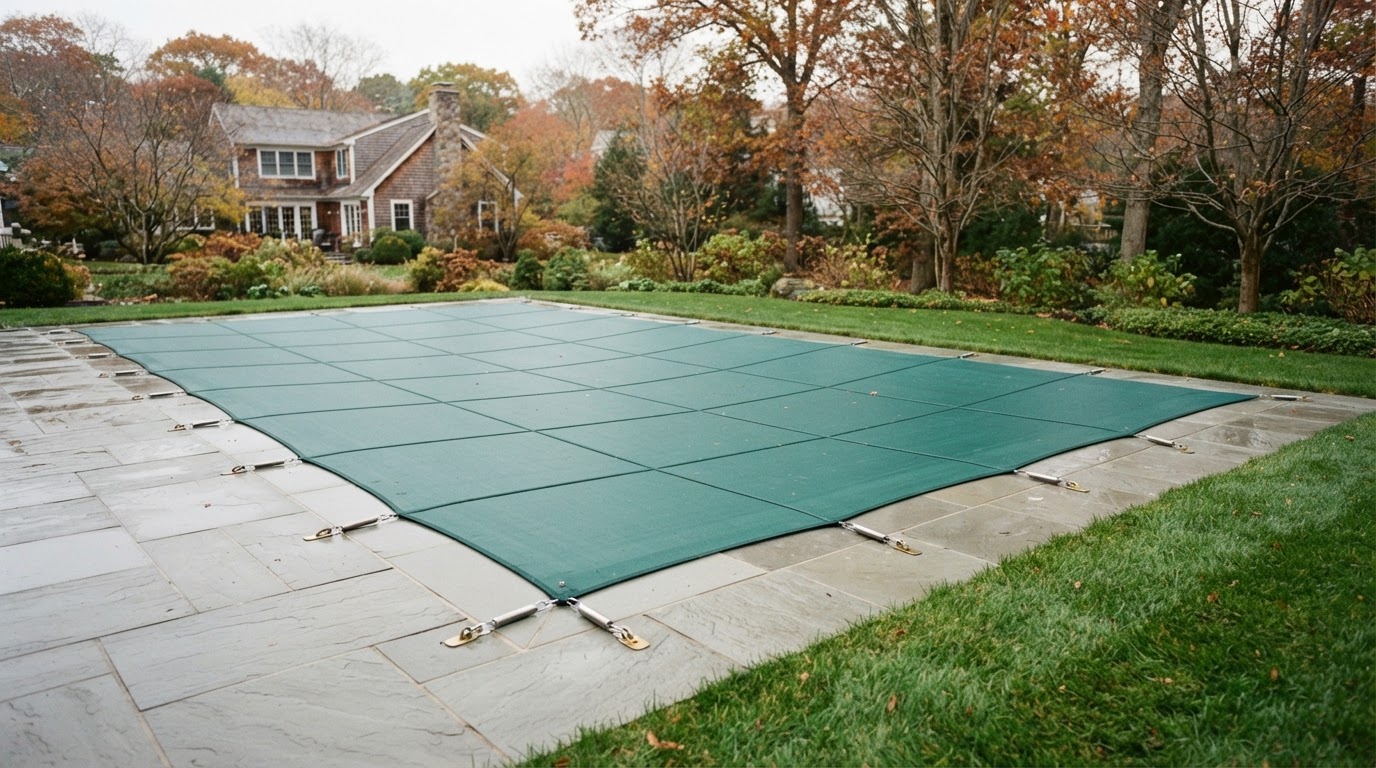
In the poolside situations described here, the places to check include the coping—the finished edge around the pool—along with cover corners, nearby hardware, and low spots where material may collect.
A quick glance from the lawn may not reveal everything.
That is why I do not want a technician thinking only about whether the grass received its application.
We also need to look at where the product may have gone beyond the grass.
What Most Homeowners Never See
Homeowners often see the finished lawn, the service notification, or the sign near the driveway.
They may not see the technician checking the poolside edge afterward.
That final inspection is part of the standard I want Golden Green to deliver.
It is the same principle behind our approach to fenced backyards and tight-access areas: use the appropriate equipment, notice the limitations, and communicate when something requires attention.
Our Service Standard describes documenting sensitive areas, reviewing property instructions, and checking the included service areas before completing the visit. A pool should be part of that property-specific conversation.
A homeowner should not have to discover an overlooked cleanup problem after the technician leaves.
Why Fertilizer on a Pool Cover Matters
The first concern is straightforward: the product is outside the intended application area.
The second is that fertilizers are not all formulated alike.
Some iron-containing products carry staining warnings for surfaces such as patios and walkways. For example, Southern-Gro’s iron sulfate instructions specifically warn about staining and direct users to sweep material off those surfaces. That does not mean every fertilizer will stain every material.
For a particular pool cover, the fertilizer formulation and cover material both matter. I would not promise that stray granules are harmless—or claim that a few granules automatically mean the cover is ruined.
The appropriate response is to identify the product and remove it carefully, not guess about the outcome.
A pool cover is not a chemical barrier
Do not assume the pool is protected simply because it is covered.
Some mesh covers are designed to let rainwater pass through. Some solid covers have drainage panels, while others use pumps. LOOP-LOC describes these differences in its cover guidance.
That is why I would not rely on a cover to keep dissolved lawn products out of the water.
Nor would I use “the rain will wash it away” as a cleanup plan.
The High-Visibility Problem Around Pools
The grass around a pool is often an important part of how the homeowner enjoys the property.
It is beside the chairs, the patio, and the places people gather.
The homeowner wants the lawn to look cared for. But that should not come at the expense of leaving fertilizer on the deck or cover.
Even when no lasting damage occurs, an overlooked mess can undermine confidence.
A customer may reasonably wonder:
“If this was missed, what else was missed?”
That is why cleanup matters to me as both a property-care detail and a customer-service detail.
The grass and the pool area should not be treated as competing priorities. The service plan needs to account for both.
What a Rushed Visit Can Miss
A visit can look complete from the driveway while still needing attention around the pool.
The application may be finished, but the technician has not checked the cover corners. The main walkway may be clear, but granules remain beside a spring. A narrow grass section may have been approached with equipment better suited to open turf.
These are examples of what rushing can overlook—not a claim that every other company works this way.
At Golden Green, I want the question to be:
“Have we finished caring for the service area—not just finished applying the product?”
That question encourages a more complete visit.
How Golden Green Approaches Lawn Treatments Around Pools
Start with the property, not the spreader
Before treating the poolside lawn, we want to understand the layout and any relevant instructions.
Is the pool covered or open? Is there a narrow turf strip? Are there visible cover concerns? Where are the gates, gardens, drainage points, and obstacles?
A pool note in the property profile is useful only when it leads to attention on the ground.
The pool’s presence should affect the plan before the equipment is operating beside it.
Use an application method that fits the space
Golden Green’s equipment approach includes smaller tools for areas where larger equipment is inappropriate.
A granular hand spreader may be useful for a tight section. But a handheld broadcast spreader still broadcasts product; its smaller size does not automatically prevent granules from reaching the deck.
A suitable drop spreader or another approved, controlled approach may sometimes be the better option.
The choice must preserve the correct application rate. Penn State emphasizes calibrating equipment for the product and operator rather than assuming a setting will deliver the intended amount.
The goal is controlled placement—not simply switching to a smaller tool and hoping for the best.
Take more time without randomly changing the application
When I say “slow down around pools,” I mean take time to inspect, plan, and work deliberately.
I do not mean change the operating speed of a calibrated spreader without considering the effect. LSU AgCenter explains that speed changes can affect the delivery rate and, for rotary spreaders, the distribution pattern.
Close the product gate before turns or crossing hard surfaces, follow the equipment instructions, and reassess the method if the space cannot be treated appropriately. Penn State includes closing the hopper before turning among its application recommendations.
Know which product is being applied
A granular lawn treatment might be fertilizer alone, or it might also contain a pesticide.
That distinction matters.
For products containing herbicides or insecticides, the pesticide label provides the applicable use directions, precautions, and restrictions. EPA explains that those directions govern how the product may be used.
This article does not establish one universal distance, spreader setting, or cleanup procedure for every product and every pool.
The product instructions and the actual property still come first.
Cleanup Means Removing the Problem—not Moving It Into the Pool
If product lands outside the lawn, the response should prevent further movement.
Pennsylvania’s Department of Agriculture directs applicators to keep fertilizer off impervious surfaces and promptly sweep stray material back onto turf. That guidance does not mean washing it into a drain or toward pool water.
On the pool deck and other hard surfaces
Accessible dry granules should be addressed promptly using an appropriate method.
That may involve careful sweeping or collection. The method needs to account for the product, the amount, the surface, and where the material will go next.
Do not simply hose fertilizer off the deck. The same sweep-don’t-wash principle applies: collect stray granules rather than washing them toward a drain, planting bed, or the pool.
A spill also should not be dumped into one small lawn patch to make it disappear. It needs to be handled according to the product’s instructions and the situation.
On the pool cover itself
A blower is not the automatic answer.
Meyco mentions leaf blowers and brooms among options for removing leaves and other debris from its covers. That is cover-maintenance guidance—not a universal instruction for removing fertilizer or pesticide granules.
A technician needs to consider whether a proposed method could move product into the water, into drainage, or into another sensitive area.
Where controlled removal cannot be completed safely from the surrounding surface, the next step is to involve the supervisor and, where appropriate, the pool-cover manufacturer or pool professional.
If the material has become wet, dissolved, or entered the water, the situation needs product-specific advice—not an improvised rinse or another pool chemical.
Making granules disappear from view is not the same as resolving the problem.
Why Pool Cover Cleanup Can Be Difficult
A granule near the edge may be accessible. Material near the center may not be.
Cover hardware can complicate movement around the deck, and the technician must avoid snagging, puncturing, or disturbing the cover.
Most importantly, the cover is not a working platform.
Meyco advises against walking on its covers except in an emergency. A lawn-cleanup task is not a reason to walk onto the cover, lean equipment against it, or treat its safety rating as permission to stand there.
Our standard is to work from a safe surrounding surface and obtain the appropriate help when access is unsuitable.
Nobody should need to unhook springs or alter the cover installation just to finish a lawn application.
This is why prevention matters so much.
Prevention Is Better Than Cleanup
The best approach is to reduce the chance of product reaching the pool area in the first place.
For Golden Green, that means identifying the sensitive area, selecting suitable equipment, understanding the spread pattern, and keeping the application within its intended boundaries.
Where equipment has an appropriate edge-control feature, use it according to the manufacturer’s instructions. Where the space remains unsuitable, change the plan rather than force the application.
If a strip cannot be treated appropriately under the conditions, explain the limitation.
A controlled pause is better than a preventable cleanup problem.
That is not neglecting the lawn. It is recognizing that the service includes responsibility for the surrounding property.
What Golden Green Checks Before Leaving
The visit should include a deliberate final look—not only a check that the hopper is empty.
| Area | What we want to confirm |
|---|
| Pool deck and coping | No overlooked stray granules on accessible hard surfaces. |
| Visible cover surface and corners | No apparent product that still needs attention. |
| Springs and anchor areas | No collected material overlooked beside the hardware; nothing has been disturbed. |
| Drainage points and sensitive borders | Product has not simply been moved toward another problem area. |
| Service record | Any concern, access limitation, or need for follow-up is documented. |
This is a visual property-care check—not a certification of the pool cover’s structural condition.
If something needs further attention, the homeowner should hear about it through the service process.
The standard is not to walk away and hope it goes unnoticed.
Why This Matters for Eastern Pennsylvania Homeowners
Whether your pool is in Emmaus, Macungie, Allentown, or another part of our service area, the important detail is the layout of your property.
You may have a narrow band of lawn beside concrete, a fenced pool enclosure, or grass separated into several small sections.
Tell us about those details when discussing your lawn fertilization program.
Also update us when the pool is opened or closed, a cover is replaced, or access arrangements change. What was appropriate on an earlier visit may need another look.
Our published Service Standard provides for customers to update property instructions and identify sensitive areas.
Good communication helps the plan stay connected to the actual property.
Golden Green’s Perspective
At Golden Green, I want our work to be judged by more than the color of the lawn.
I want the customer to see that the property was treated thoughtfully.
That includes choosing suitable equipment, paying attention to the poolside edge, checking where granules may have traveled, and communicating honestly if something needs follow-up.
These details are easy to leave out of a sales conversation. They should not be left out of the service.
A pool cover with stray fertilizer is not something I want a homeowner discovering and wondering about.
Fertilizer belongs on the intended turf. Care belongs throughout the visit.
That is part of being Your Lawn’s Best Friend.
Tell Us About Your Pool Before Your Lawn Treatment
Have an in-ground pool with grass close to the deck or cover?
Mention it when requesting your evaluation. Share any relevant cover instructions, access concerns, or areas you want reviewed.
We will discuss the lawn-service approach and document the property details. Lawn treatment and pool maintenance are different responsibilities; a concern involving the cover or pool water may also require your pool professional.
Golden Green — Your Lawn’s Best Friend.