How Often Should You Fertilize Your Lawn in Pennsylvania?
Why Golden Green uses a seasonal six-step approach — and why treating every application the same is the biggest mistake homeowners (and some lawn companies) make.
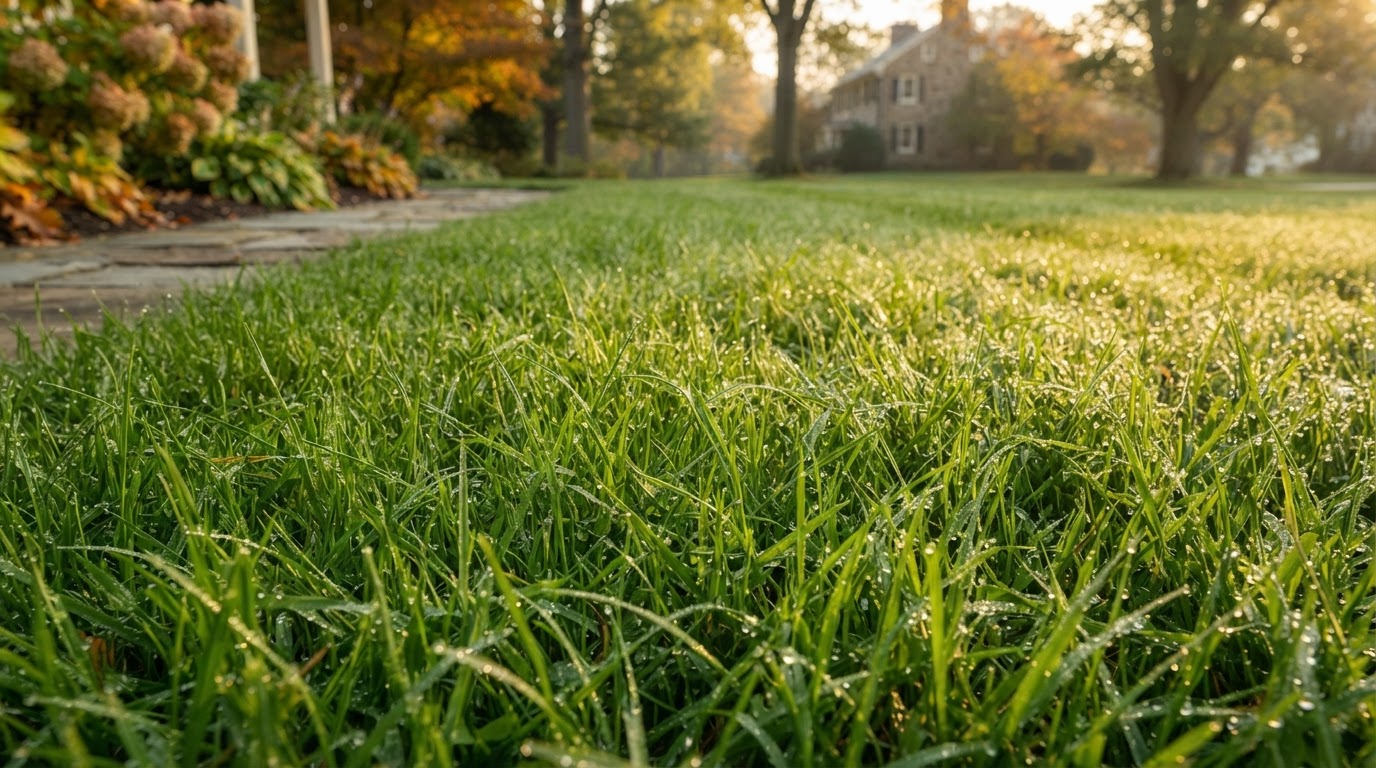
After years in lawn care, I have learned that one of the most common questions homeowners ask is: "How often should I fertilize my lawn?"
For most cool-season lawns in Eastern Pennsylvania, I like a seasonal lawn-care program with approximately six strategically timed visits during the growing season.
But there is something much more important than simply saying "six times."
Those six visits should not be six identical fertilizer applications.
That is where homeowners — and sometimes lawn companies — get into trouble. A lawn in March is not experiencing the same conditions as a lawn in July. A lawn in August does not need to be managed exactly like a lawn in October.
Pennsylvania has distinct seasons, and our cool-season grasses respond differently throughout those seasons.
"The real question isn't "How many times should I fertilize my lawn?" It is: "What does my lawn need during each part of the year?""
— Golden Green Lawn Care
That is how Golden Green approaches lawn fertilization.
Why Pennsylvania Lawns Need a Seasonal Fertilization Strategy
Most lawns throughout the Lehigh Valley and much of Eastern Pennsylvania contain cool-season grasses such as:
These grasses naturally perform best during cooler parts of the year. Spring can bring strong growth. Then summer arrives — heat increases, rainfall may become inconsistent, disease pressure can increase, and the lawn may slow down.
Then September arrives and the nights begin cooling. Suddenly the same lawn that looked exhausted in August starts responding again.
"I don't believe you should treat every fertilizer application the same. The lawn is changing all year. Your program should change with it."
Golden Green's Six-Step Program — A Seasonal Journey
Golden Green uses a six-step fertilization and weed-control program because it allows us to manage the lawn throughout the entire Pennsylvania growing season.
Step 1: Early Spring
March – AprilSpring wake-up + crabgrass prevention
The first application helps prepare the lawn for spring growth while beginning the crabgrass-prevention strategy. Winter is ending, soil conditions are changing, and the lawn is beginning to wake up. The objective isn't to force explosive top growth — we want controlled spring development while protecting the lawn from summer annual grassy weeds.
Step 2: Mid-to-Late Spring
May – JuneContinued pre-emergent + broadleaf weed attention
The second application continues the spring program. This is another important crabgrass-prevention period, which is why Golden Green prefers a split pre-emergent strategy rather than depending entirely on one application. Broadleaf weeds may need attention. The grass is growing strongly and rainfall is usually dependable. But more growth is not always better — the goal is balanced development.
Step 3: Summer
July – AugustConservative summer support
This is where lawn-care judgment becomes extremely important. Summer is not spring. When Pennsylvania enters the hotter part of the season, we do not aggressively push cool-season grass with heavy nitrogen simply because the calendar says another application is due. The lawn may already be dealing with heat, drought, disease, insects, and mowing stress. This is the time of year when the lawn may need support more than stimulation.
Step 4: Late Summer & Early Fall
SeptemberFall recovery + aeration/overseeding season
By late August and September, you often begin noticing cooler nights. Morning dew returns. The grass begins responding again. We may introduce somewhat more fertility than during the hottest summer period while still using a controlled, slow-release approach. This is also the beginning of aeration and overseeding season — so weed-control decisions need to be made carefully around newly seeded turf. September isn't simply another fertilizer round. It is the beginning of the rebuilding season.
Step 5: Fall
OctoberPeak cool-season growth + establishment support
Fall is when cool-season grass can do some of its best growing. This is a tremendous opportunity to build roots, recover density, support newly seeded areas, and prepare the lawn for winter. A lawn that struggled through July may look completely different several weeks into favorable fall weather. If the lawn has been aerated and overseeded, proper fertility, moisture, mowing and establishment care become especially important.
Step 6: Late Fall & Winter Prep
NovemberWinter hardening + cycle completion
The final application helps finish the growing season. By this point, our focus is no longer summer survival. We're preparing the turf for winter and supporting the plant going into the next growing season. This completes the yearly cycle — then spring begins the process again.
The goal is not to continually push the lawn. The goal is to manage the lawn according to the season it is in.
"Six steps does not mean six heavy fertilizer applications. Each step has a different purpose."
Why Six Applications Shouldn't Mean Six Bags of the Same Fertilizer
Imagine someone gave you the exact same meal six times — regardless of whether you were preparing for a marathon, recovering from sickness, sitting at a desk, or sleeping. That would make no sense. Your needs changed.
❌ Wrong Approach
"We fertilize the lawn hard six times."
✅ Right Approach
"We get six opportunities to evaluate and appropriately manage the lawn throughout the Pennsylvania growing season."
The appropriate fertility rate, nitrogen source, product combination and treatment strategy can change based on weather, soil moisture, time of year, grass condition, temperature, weed pressure, insect activity, and what is happening next in the program.
Why Golden Green Uses an Organic-Based Fertility Approach
There is another part of our fertilization philosophy that matters. Golden Green believes in an organic-based fertility approach.
That does not mean every product is 100% organic. And it does not mean traditional fertilizer nutrients are bad. It means I don't want our entire lawn-care philosophy to depend on making grass turn green quickly while ignoring everything happening underneath it.
"I don't simply want to make your lawn green. I want to help build a lawn that has a better reason to stay green."
A Lawn Is a System
Fertilizer is important — but it is one part of that system.
Synthetic Fertilizer Isn't the Enemy
Lawn care sometimes gets divided into two extreme positions: "Synthetic is bad" or "Organic doesn't work." I don't think either is particularly useful for most homeowners. The balanced approach makes more sense.
Traditional / Synthetic
+Effective turf nutrition
+Predictable response
+Cost-efficient
—Can be overused
—Doesn't build soil life alone
100% Organic
+Builds soil biology
+Environmentally gentle
—Slower acting
—Higher cost
—More homeowner involvement
That is why Golden Green combines fertility with aeration, overseeding, soil testing, lime where appropriate, proper mowing, smart irrigation, weed management, and quality grass seed.
The Energy Drink Problem
Here is one way I think about quick fertilizer response. A lawn gets fertilized. Several days later it turns dark green. The homeowner thinks: "Wow. That fertilizer is amazing."
Energy Drink Fertilizer
- Fast green-up — exciting!
- Quick boost, then fades
- Doesn't fix compacted soil
- Doesn't fix shallow roots
- Doesn't fix bad grass varieties
- Doesn't fix disease or watering issues
Real Nutrition Fertilizer
- Steady, slow-release feeding
- Supports long-term health
- Combined with aeration
- Combined with better seed
- Combined with soil management
- Builds a lawn that lasts
"A premium lawn isn't simply pushed. It is built."
Sometimes Your Lawn Doesn't Need More Fertilizer
This may sound strange coming from a lawn-fertilization company. But sometimes the answer is not more fertilizer.
Suppose I walk onto a lawn with a large bare area. We can fertilize that area all year. But if no desirable grass plant is growing there, fertilizer isn't going to create one.
🧪Fertilizer
Feeds the grass plants that are already there. Improves their color, growth, and density — but cannot put a new grass plant into an empty spot.
🌱Overseeding
Introduces new, desirable turfgrass plants into the lawn. Gives you an opportunity to change what grass is actually growing there over time.
"Fertilizer feeds the grass you already have. Overseeding gives you an opportunity to change the grass you have."
That is why our Sunny Seed Mix, mechanical core aeration, and fall overseeding program fit so naturally with fertilization. We are not only feeding the lawn. We are improving what we are feeding.
What Soil Has to Do With Fertilization
Homeowners naturally look at the surface — color, weeds, thin areas, brown spots, crabgrass. But many lawn problems begin below the surface.
If we ignore that and simply keep adding fertilizer, we can spend a lot of money without fixing the actual issue. That is why soil testing can be so valuable — it gives us information. And lawn care gets better when decisions are based on information instead of guessing.
Water and Fertilizer Need Each Other
Fertilizer doesn't exist independently of moisture. Many lawn-care products need appropriate moisture to move into the soil or become useful to the turf. But more water isn't always the answer either.
I have seen homeowners repeatedly irrigate lawns because the grass wasn't looking good — twenty minutes today, twenty minutes tomorrow, twenty minutes the next day. But if the lawn is thin, compacted, poorly rooted, or made up of turf that struggles badly in summer, continuously running sprinklers may not solve the problem.
For a deeper look at how watering and lawn health connect, read our guide to watering Pennsylvania lawns. And if rain is in the forecast around a scheduled treatment, our guide to fertilizing before or after rain in Pennsylvania explains why fertilizer-only and weed-control visits can call for different watering decisions.
"The goal is to build a lawn that uses water effectively — healthy roots, good turf density, appropriate grass varieties, proper mowing, and improved soil conditions."
Can a Better Lawn Eventually Need Less Corrective Work?
That is one of my long-term objectives. A great lawn will always need care — it is alive. But compare two lawns.
The Thin Lawn
- • Bare soil is exposed
- • Weeds continually appear
- • Crabgrass moves into open areas
- • Homeowner waters constantly
- • Every season feels like a repair project
The Dense Lawn
- • Dense population of desirable cool-season turf
- • Not invincible — but much more competitive
- • Fewer openings for weeds
- • Better root system
- • More resilient through summer
"Golden Green's goal isn't "How many products can we put on your lawn?" The better question is: "How good can we make this lawn over the next several years?""
How Often Should You Fertilize Your Lawn in Pennsylvania?
For many professionally maintained cool-season lawns in Eastern Pennsylvania, a six-step seasonal lawn-care program is a practical approach. But the number itself isn't the magic — the strategy is. I would rather have six intelligent lawn-management visits than six identical fertilizer applications.
What Does Your Lawn Need Right Now?
And sometimes it doesn't need more fertilizer at all — it needs better grass growing there.
"We're not trying to create the fastest green lawn for the next two weeks. We're trying to build a better lawn for the next several years."
— Golden Green — Your Lawn's Best Friend
Build My Lawn Care Plan
Not sure whether your lawn needs fertilizer, seed, aeration, soil testing, or something else? Let Golden Green take a look before you spend money guessing.
Request a Lawn EvaluationFrequently Asked Questions
About fertilizing Pennsylvania lawns
Many professionally maintained cool-season lawns can benefit from several strategically timed applications throughout the growing season. Golden Green uses a six-step program, but the products and fertility strategy vary by season.
Not necessarily, because six lawn-care visits should not mean six aggressive nitrogen applications. Different visits can have different goals, including fertility, weed management, crabgrass prevention, insect protection and fall recovery.
The fertilization season generally follows the active cool-season growing period from spring through late fall, with rates and products adjusted according to weather and turf conditions.
Summer fertility should generally be handled more conservatively for cool-season turf because heat and drought can create additional stress.
Yes. Fall is an important growing period for cool-season lawns, making properly timed fall fertility valuable for recovery and preparation for winter.
Not by itself. Fertilizer helps existing grass plants grow, but bare or severely thin areas may require overseeding and other corrective work.
That depends on the product and application. Always follow the specific directions provided for the treatment.
Golden Green uses an organic-based approach that combines effective turf nutrition with soil-focused and cultural lawn-care practices.
Newly seeded turf has different fertility needs from an established lawn, so seeding and fertilization should be coordinated rather than treated independently.
No. Lawn condition, goals and circumstances differ. Golden Green's six-step program is our general seasonal management framework, not a claim that every lawn everywhere has identical needs.
Share this article
Related Articles
Organic-Based Lawn Fertilizer in Pennsylvania: Is It Better for Your Lawn?
Learn how organic-based lawn fertilizer can support Pennsylvania turf and why Golden Green combines fertility, soil health, aeration and overseeding.
Read Article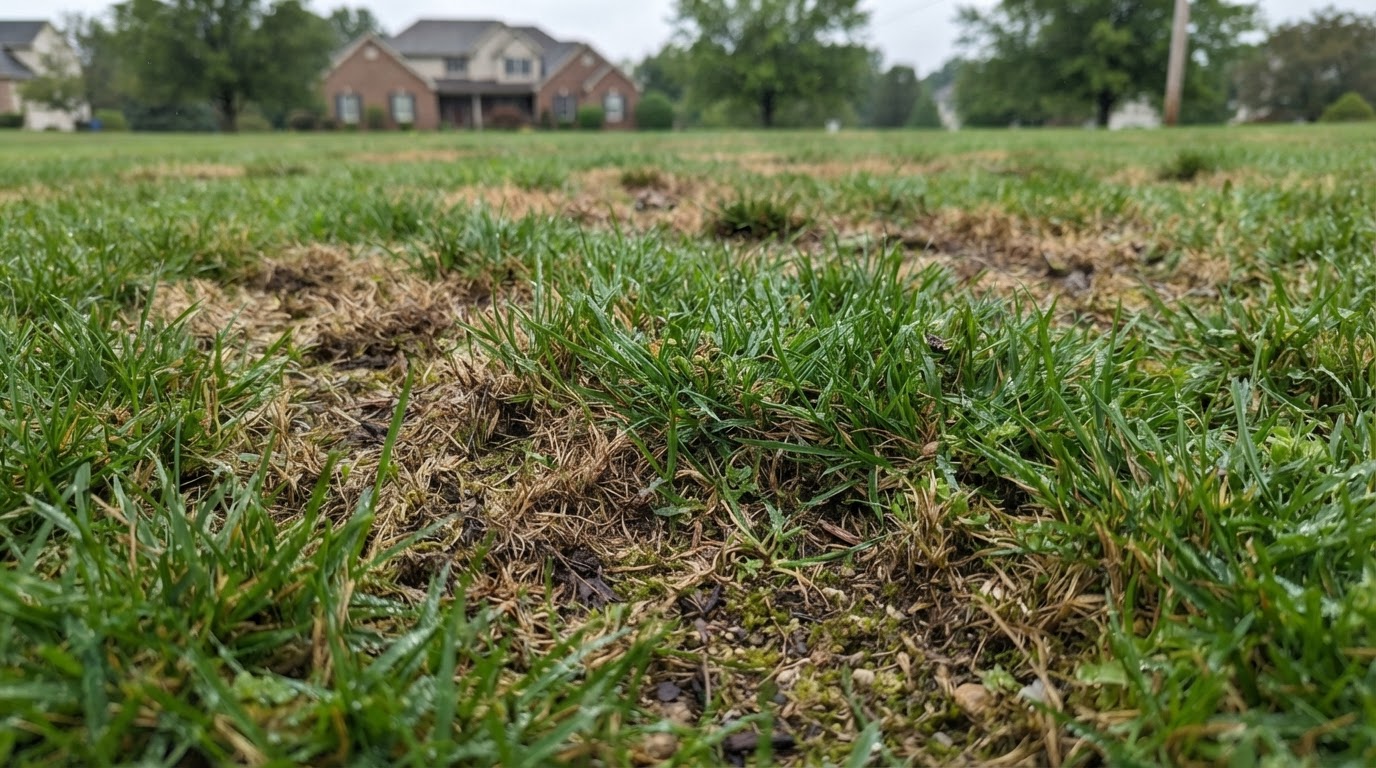
Fertilizer Burn or Lawn Disease? What Damaged Your PA Lawn?
Brown patches after lawn treatment? Learn what may suggest fertilizer injury or disease, what records matter, and how to investigate before treating again.
Read Article
Is Professional Lawn Care Worth the Cost in Pennsylvania?
Is professional lawn care worth the cost in Pennsylvania? Compare DIY expenses, treatment pricing, service expectations, and what your quote should include.
Read ArticleGolden Green Lawn Care Services