Grub Control in Lehigh Valley: Protect Your Lawn From Grubs
White grubs are one of the most destructive lawn pests in the Lehigh Valley. They feed on grass roots beneath the soil, and by the time you see the damage, the lawn may already be severely weakened. Here's what every Lehigh Valley homeowner should know.
This article is part of our Lawn Care Services in Lehigh Valley, PA series. For the full picture of what your lawn needs, start with that guide.
What Are White Grubs?
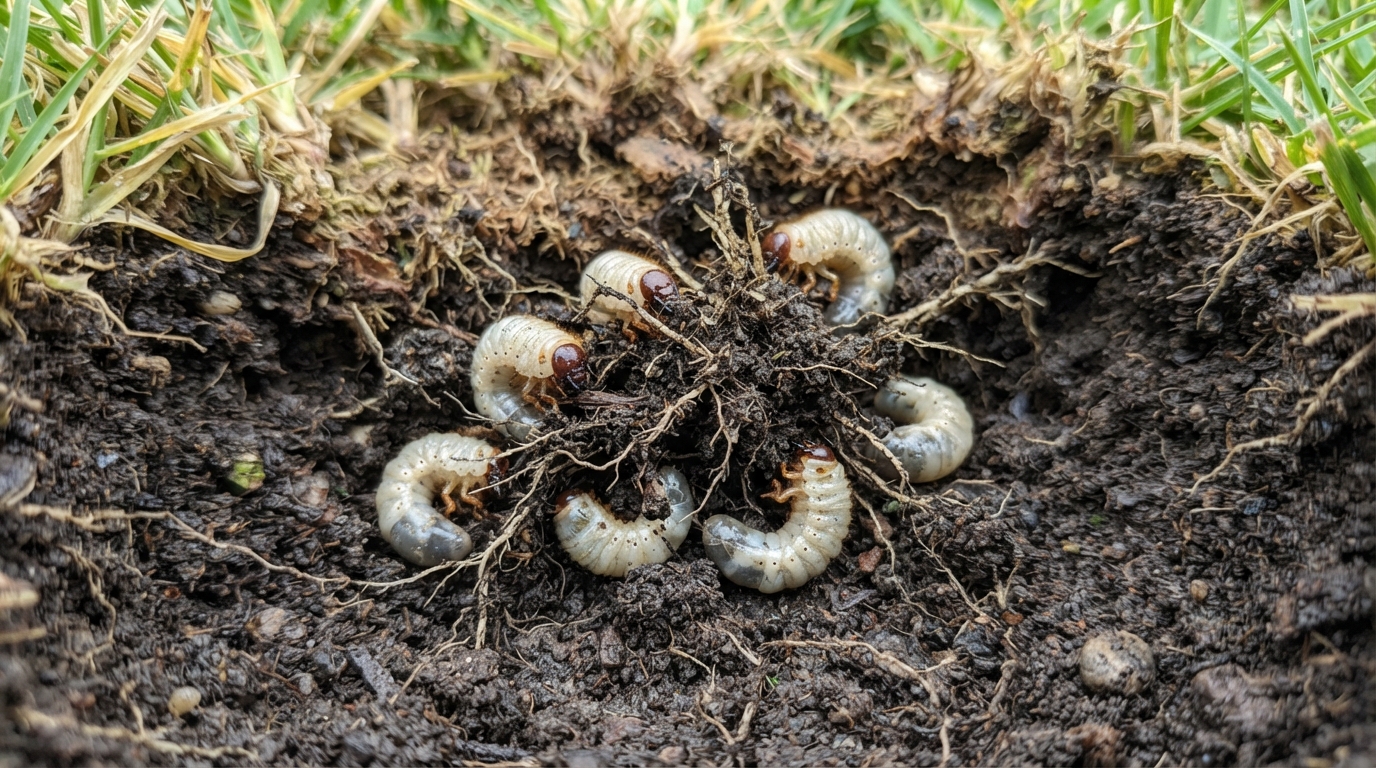
White grubs are the larval stage of scarab beetles, including Japanese beetles and northern masked chafers — two of the most common damaging species in Pennsylvania. Adult beetles lay eggs in the soil during summer. Those eggs hatch into grubs that feed on turfgrass roots.
For a complete guide on choosing the right grub control approach, see our Best Grub Control for Lawns guide.
Signs of Grub Damage in Lehigh Valley Lawns
Visible Signs
- Irregular brown or dying patches
- Turf that feels loose or spongy
- Grass pulls up easily like carpet
- C-shaped white grubs visible in soil
Animal Activity
- Skunks digging in the lawn
- Raccoons tearing up turf
- Birds feeding extensively on the lawn
- Moles tunneling through the yard
However, brown grass doesn't automatically mean grubs. Heat stress, drought, disease, and other insects can cause similar symptoms. Correct diagnosis should come before treatment.
Preventative vs. Curative Grub Control
There are two fundamentally different approaches to grub control:
Preventative
Applied before grub damage occurs. Controls young grubs early in their development. Much cheaper and more effective.
Timing: Late spring to early summer
Curative
Used when grubs are already actively feeding and damaging the lawn. More expensive, shorter treatment window.
Timing: Late summer to early fall
The Grub Life Cycle in Pennsylvania
Understanding the grub life cycle helps explain why timing matters:
- Summer: Adult beetles emerge, mate, and lay eggs in the soil
- Late Summer: Eggs hatch into small grubs that begin feeding on roots
- Fall: Grubs grow larger and continue feeding near the surface
- Winter: Grubs move deeper into the soil to survive freezing
- Spring: Grubs return to the surface and feed briefly before pupating
Preventative treatments target the young, susceptible grubs before they cause damage. Curative treatments are needed when that window is missed.
What to Do If Your Lawn Has Grub Damage
If grubs have already damaged your Lehigh Valley lawn:
- Apply curative grub control to stop further feeding
- Rake away dead grass from damaged areas
- Aerate the soil to reduce compaction
- Overseed damaged areas with Sunny's Seed Mix
- Apply preventative grub control the following season
Prevention Is Always Cheaper Than Repair
Preventative grub control is significantly less expensive than curative treatment plus lawn repair. A single preventative application can protect your lawn for the entire grub season, while repairing grub-damaged turf requires curative treatment, reseeding, watering, and time.
That's why Golden Green includes preventative grub control as part of our grub control service — and why we strongly recommend it for every Lehigh Valley lawn.
Protect Your Lawn From Grubs
Don't wait for grub damage to appear. Golden Green offers both preventative and curative grub control for Lehigh Valley homeowners, with treatment programs designed for Pennsylvania conditions.
Golden Green — Your Lawn's Best Friend.
Related Articles

Lawn Care Services in Lehigh Valley, PA: Complete Homeowner's Guide
Looking for lawn care services in Lehigh Valley, PA? Learn about fertilization, weed control, aeration, overseeding, grub control, lime and seasonal lawn care.
Read Article
What Is the Best Grub Control for Lawns? Pennsylvania Grub Control Guide
Best grub control for lawns. Learn preventative vs curative treatments, timing, and what works for Pennsylvania lawns.
Read Article
Lawn Aeration in Lehigh Valley: Why Your Lawn Needs It
Learn about lawn aeration in the Lehigh Valley, how mechanical core aeration reduces compaction, and why pairing it with overseeding produces the best results.
Read ArticleGolden Green Lawn Care Services