Best Grub Control for Lawns: Pennsylvania Treatment Guide
If you're wondering what the best grub control for lawns is, the answer depends on one important question: Are you trying to prevent white grubs before they damage your lawn, or are grubs already actively feeding on your grass roots?
Those are two completely different situations. Preventative grub control and curative grub control use different active ingredients, are applied at different stages of the grub life cycle, and have different treatment windows. For Pennsylvania homeowners, understanding that difference can mean preventing lawn damage instead of trying to repair it afterward.
What Are White Grubs?
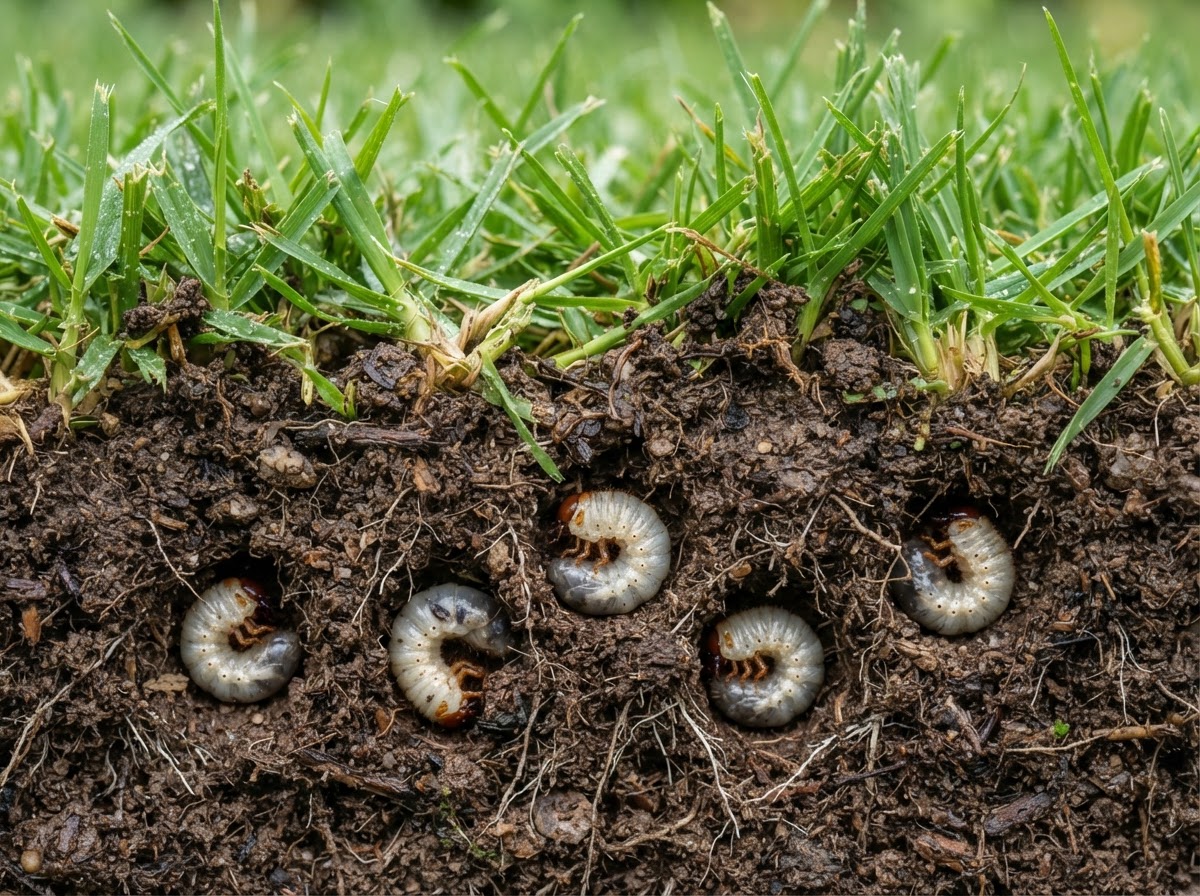
White grubs are the larval stage of several scarab beetles. Penn State Extension identifies Japanese beetles and northern masked chafers among the predominant damaging white grub species found in Pennsylvania home lawns. Other species can also occur.
The adult beetles lay eggs in the soil. Those eggs eventually hatch into small grubs that begin feeding on turfgrass roots. As the grubs feed, they can damage or destroy the lawn's root system.
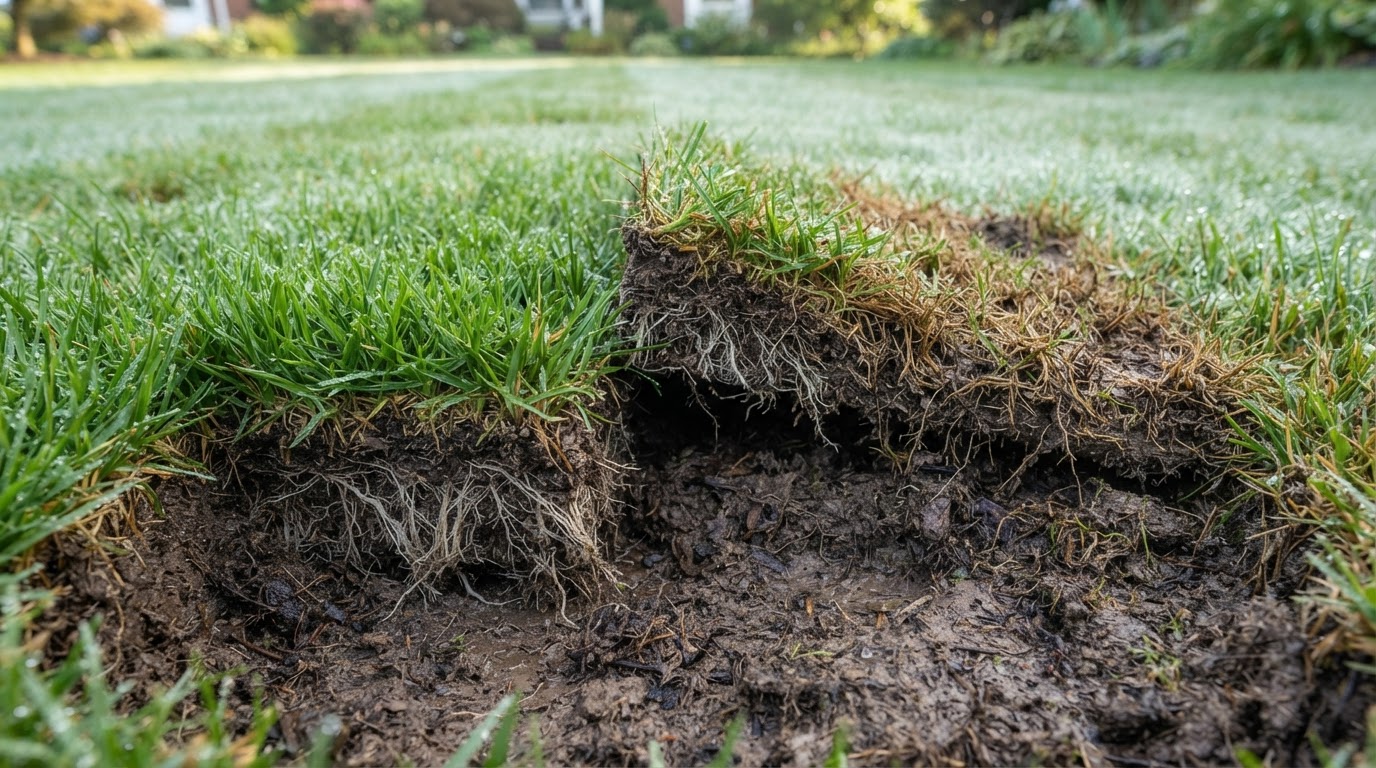
One classic sign of severe grub damage is turf that can be pulled or rolled back almost like carpet because the roots underneath have been destroyed. Animals such as skunks, raccoons and moles may also tear into affected lawns while searching for grubs.
That's why timing matters as much as the product itself.
So, What Is the Best Grub Control for Lawns?
For most lawns where prevention is the goal, preventative grub control applied at the correct time is generally the better strategy.
Penn State Extension identifies chlorantraniliprole and imidacloprid as preventative active ingredients for white grub management. However, they don't have identical application timing. Penn State notes chlorantraniliprole as a May–June preventative option, while imidacloprid is applied later in the season.
The important takeaway is: there isn't one "best grub killer" for every month and every situation. The best treatment depends upon:
- The grub species and life stage
- Whether you're preventing or correcting an infestation
- The active ingredient
- Application timing
- Product label requirements
- Irrigation after treatment
- Local environmental and weather conditions
Preventative Grub Control: Stop the Problem Early
Preventative grub control is designed to control susceptible grubs early in their development before extensive root damage occurs. This is usually the approach we recommend when homeowners want to protect a healthy lawn rather than wait for visible grub damage.
Timing varies according to the active ingredient. Penn State Extension states that chlorantraniliprole is a preventative treatment that should generally be applied in May or June. Imidacloprid is another preventative option, with a later treatment window.
Penn State also emphasizes that timing can vary with location, grub species, weather conditions and soil temperatures. This is one reason professional grub management should be based on the grub life cycle, rather than simply applying an insecticide whenever damage appears.
Curative Grub Control: When Grubs Are Already Feeding
What happens when you missed the preventative treatment and grubs are already damaging the lawn? That's when curative grub control may be necessary.
Curative treatments are designed for actively feeding grubs and generally have a much shorter treatment window. Penn State identifies trichlorfon as a curative active ingredient and notes that it is most effective when grubs are smaller, typically in late summer or early fall.
Penn State's current home-lawn guidance explains that curative treatment may be needed during the summer when young grubs are actively feeding near the surface, with exact timing varying across Pennsylvania according to grub development, species, weather and soil temperatures.
This distinction is critical. Preventative treatment protects the lawn before serious feeding damage. Curative treatment attempts to stop an infestation that is already underway. And killing the grubs doesn't magically repair roots that have already been destroyed.
Preventative vs. Curative Grub Control
| Preventative | Curative | |
|---|---|---|
| Purpose | Prevent damaging infestation | Control active infestation |
| When | Before significant grub feeding | After grubs are actively feeding |
| Grub stage | Young/developing population | Existing feeding grubs |
| Example active ingredients | Chlorantraniliprole, imidacloprid | Trichlorfon |
| Timing | Depends on active ingredient | Typically late summer/early fall |
| Lawn damage | Goal is preventing damage | Damage may already exist |
| Repair may be needed | Usually not from grubs if prevention succeeds | Possibly |
Always follow the pesticide label because the label determines legal application rates, sites, timing, watering requirements and other restrictions.
Why Can't You Just Apply Grub Killer Anytime?
Because white grubs change throughout the year. Adult beetles lay eggs. Eggs hatch. Young grubs begin feeding. Those grubs grow larger, move through the soil profile and eventually overwinter before completing their life cycle.
Different active ingredients work best during different portions of that cycle. Penn State specifically cautions that spring applications aimed at existing large grubs can be less effective because those grubs are larger and harder to control.
This is why grabbing any bag labeled "insect control" from a store isn't necessarily effective grub management. Penn State also warns that some insecticides that work against surface-feeding insects do not provide effective control of grubs living below ground.
Does Grub Control Need to Be Watered In?
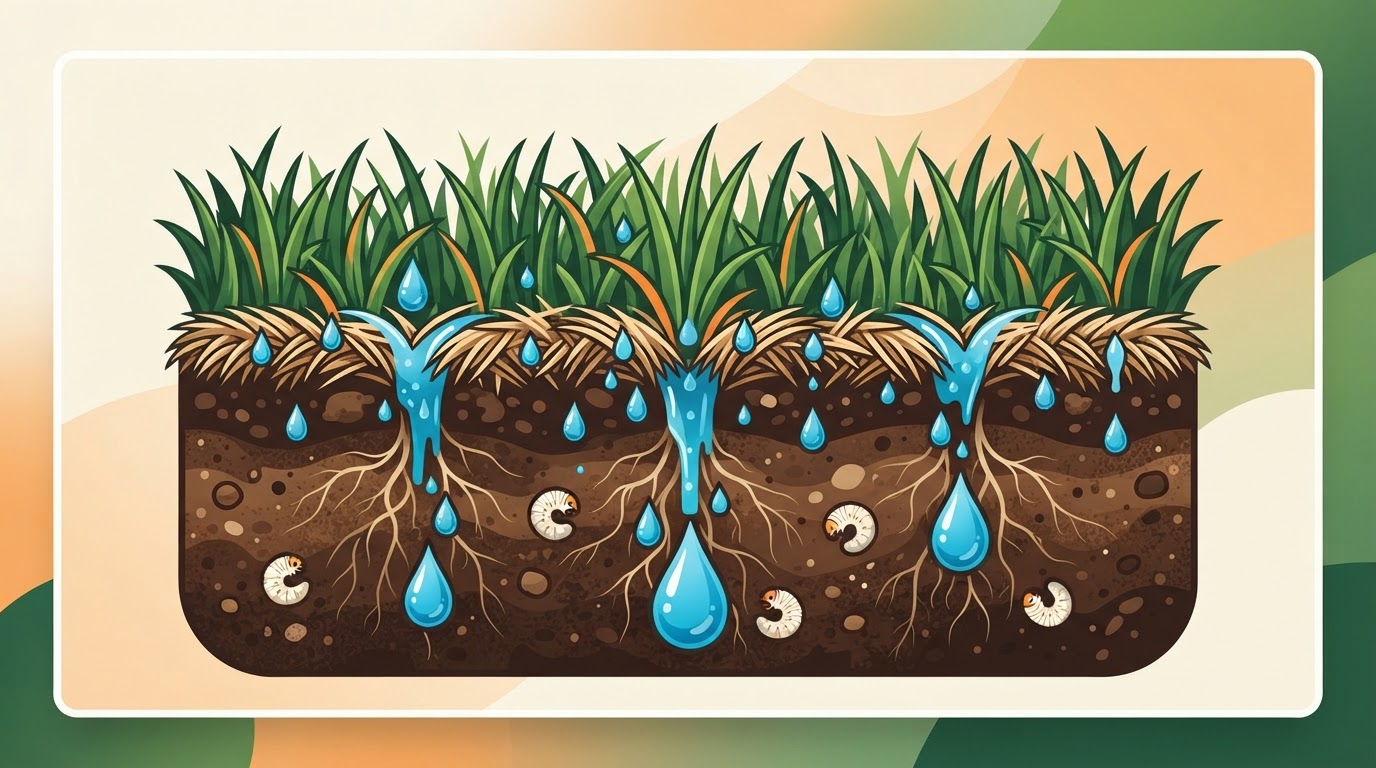
Generally, grub-control products must reach the soil/root zone where grubs live. Penn State recommends that appropriate grub-control treatments be irrigated into the soil according to the specific product label.
Simply applying a product to dry grass and leaving it sitting on the leaf blades may not accomplish the intended treatment. Always follow the individual product label regarding watering and application instructions.
How Do I Know If My Lawn Has Grubs?
Watch for:
- Irregular brown or dying areas
- Turf that feels unusually loose
- Grass that pulls away easily from the soil
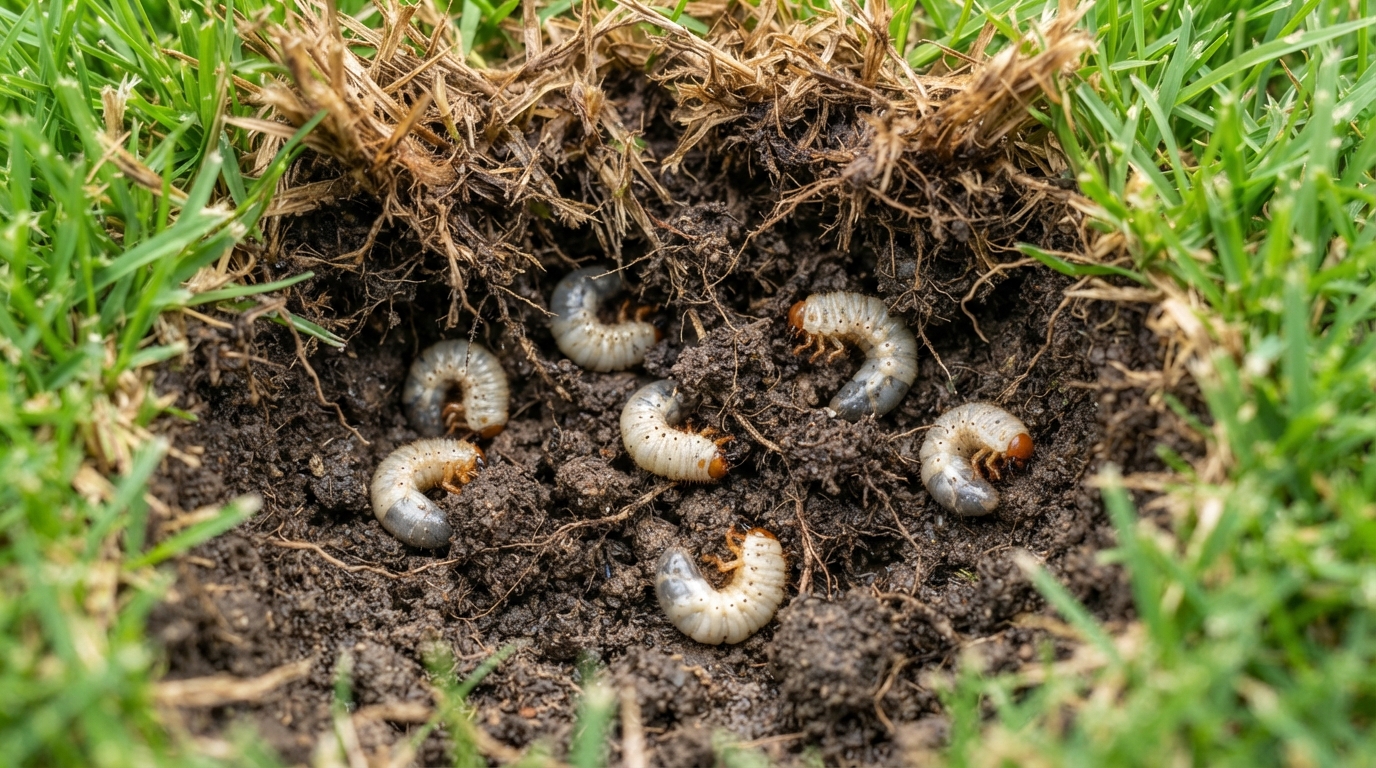
- Visible C-shaped white grubs beneath the turf
- Skunks, raccoons or birds digging in the lawn
- Unexplained turf decline despite adequate watering
However, brown grass does not automatically mean grubs. Heat stress, drought, disease and other insects can create similar symptoms. Correct diagnosis should come before curative treatment.
What Is the Best Grub Prevention Strategy for Pennsylvania Lawns?
For most homeowners, the goal should be simple: don't wait for the lawn to be destroyed before thinking about grubs. A properly timed preventative program gives you the opportunity to control susceptible young grubs before extensive root feeding occurs.
At Golden Green, we offer both preventative and curative grub control for Eastern Pennsylvania lawns because they solve two very different problems. Our preventative treatment is designed to protect lawns during the appropriate grub-control window. If an active infestation is already damaging the turf, we can evaluate whether curative treatment is appropriate.
Authoritative Reference
For more detailed, Pennsylvania-specific information on white grub identification and management, we recommend reading the Penn State Extension article:
White Grubs in Home Lawns — Penn State Extension (Updated May 2026)Keep Reading About Grub Control
This article is the broad guide to preventative vs. curative grub control. If you're specifically concerned about pet safety and Pennsylvania timing, see:
Pet-Safe Grub Treatment for Lawns: Why Golden Green Applies Preventative Grub Control Before DamageFrequently Asked Questions About Lawn Grub Control
What is the best grub control for lawns?
The best grub control depends on whether you are preventing an infestation or treating actively feeding grubs. Preventative active ingredients include chlorantraniliprole and imidacloprid, while trichlorfon is one curative option identified by Penn State Extension. Timing and label directions are critical.
When should I apply grub control in Pennsylvania?
It depends on the active ingredient and whether the application is preventative or curative. Penn State identifies earlier preventative timing for chlorantraniliprole, later preventative timing for imidacloprid, and late-summer/early-fall use of trichlorfon against smaller actively feeding grubs.
Can you treat grubs after lawn damage appears?
Potentially, yes. Curative products can control susceptible actively feeding grubs, but they cannot reverse root damage that has already occurred.
Should every lawn receive preventative grub control?
The decision should consider the property's grub history, local pest pressure and treatment objectives. Penn State notes that preventive treatment decisions can be informed by historical monitoring and previous experience at the site.
Does grub control kill Japanese beetles?
Grub treatments target susceptible larval stages in the soil. They should not be confused with treatments directed at adult Japanese beetles feeding on ornamental plants.
Helpful lawn care advice for Pennsylvania homeowners
If this guide helped you, add Golden Green as a Preferred Source on Google to see more of our lawn care guides in Google Search and AI experiences.
Protect Your Lawn From Grubs
Don't wait for grubs to destroy your lawn. Golden Green offers both preventative and curative grub control for Eastern Pennsylvania homeowners.
Golden Green — Your Lawn's Best Friend.