How Many Years of Aeration and Overseeding Does It Take to Transform a Lawn?
How often should you aerate and overseed a Pennsylvania lawn? Golden Green shares a practical, firsthand look at why lawn transformation can take several fall seasons — and why one service rarely rebuilds an established lawn.
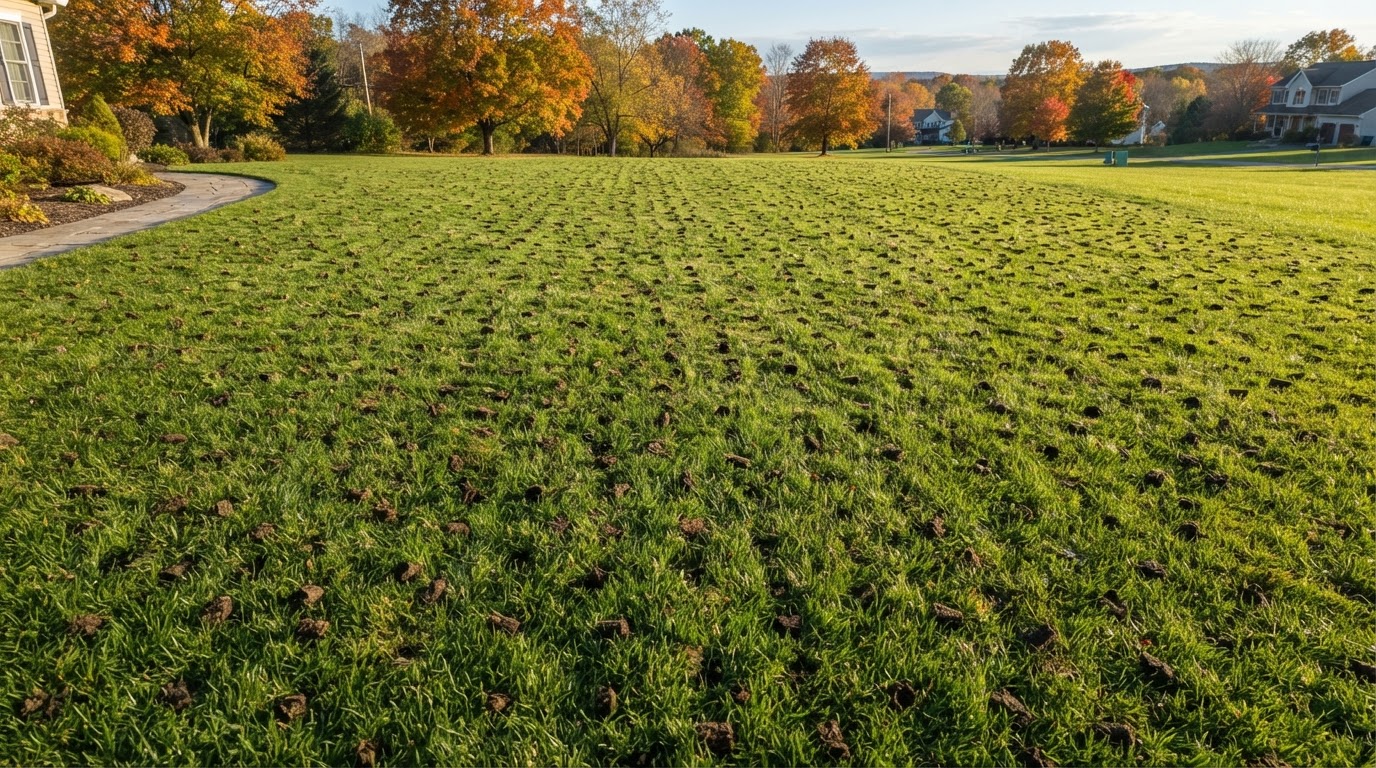
If you aerated and overseeded your lawn last fall and expected it to look completely different by spring, I understand the frustration. But I also think homeowners deserve an honest explanation of what aeration and overseeding can — and cannot — do in one season.
After years of working with lawns and watching them change over time, I've come to look at aeration and overseeding very differently than I did when I first entered the lawn-care business.
One aeration and overseeding can improve a lawn. But if I inherit an established lawn in the Lehigh Valley that has thin turf, older or undesirable grass varieties, compaction, weeds, or poor original seed, I don't expect one fall service to magically replace everything that's already growing there.
For a lawn I truly want to transform, I like thinking in terms of multiple fall seasons.
In my experience, four to five consecutive years of properly timed aeration and overseeding can make tremendous progress in the right lawn. That's not a guarantee that every lawn needs five years. It's what I've learned from actually trying to improve established lawns.
The Short Answer: How Often Should I Aerate?
A relatively healthy lawn
It may not need overseeding every year.
A thin or compacted lawn
Annual fall aeration and overseeding may make sense while we're rebuilding it.
An older lawn with undesirable grass varieties
Think in seasons, not one application.
A lawn needing major transformation
In my experience, four to five consecutive fall seasons can produce a dramatic change when weed control, fertility, watering, mowing and site conditions are also handled correctly.
A severely deteriorated lawn
Repeated overseeding may not be the best answer at all. Full or partial renovation may make more sense.
Why Doesn't One Aeration Fix Everything?
Here's how I explain this to homeowners. Imagine a 10-foot-by-10-foot section of your lawn. Now run a core aerator across it. The machine may create a tremendous number of holes, but it obviously doesn't remove every square inch of soil. There is space between the tines and space between the individual cores.
That's not a flaw in the machine. That's how core aeration works.
Penn State explains that core aerators commonly use hollow tines and that the percentage of soil surface affected by one pass can actually be relatively small. In one example, an aerator using ¾-inch tines with 4-by-8-inch spacing affects only about 1.38% of the surface in a single pass.
That's why multiple passes can matter during serious aeration or renovation work. Penn State's lawn-management guidance discusses six to eight passes when aeration is being used to prepare thin turf for overseeding, while its more intensive lawn-renovation guidance discusses eight to ten passes.
Think About Your Lawn This Way
This is a concept, not a literal map of where future aeration holes will land.
You're Also Competing With the Grass That's Already There
This is the part I think homeowners often miss. When I overseed an existing lawn, I'm not planting into an empty field. I'm introducing new grass into an existing ecosystem. There might already be:
The new seed has to establish among all of that. That's very different from preparing bare soil and establishing an entirely new lawn.
From My Experience: The New-Construction Lawn Problem
I've seen this situation many times. A homeowner buys a beautiful new house. The landscaping looks nice. But the lawn wasn't necessarily established with the same long-term expectations the homeowner now has. Maybe the soil was heavily disturbed during construction. Maybe there's compaction. Maybe the topsoil isn't great. Maybe the original turfgrass isn't what I would choose for a premium lawn.
Then we're hired to improve it. We aerate. We overseed with better seed. And the homeowner naturally looks outside afterward expecting the lawn to be transformed. But I'm still working with their existing lawn. I didn't install the original turf. I didn't choose the original grass. I didn't create the soil conditions. I'm introducing better grass into what is already there.
Give us time to build the lawn.
Seed Doesn't Equal Grass
Another misconception is that if we spread 100 seeds, we're eventually getting 100 mature grass plants. It doesn't work that way. There are too many variables:
Penn State specifically emphasizes that seed needs soil contact and room to germinate and develop, and its establishment guidance stresses the importance of irrigation and choosing turfgrasses suited to site conditions. That's why no responsible lawn care service in Allentown, PA should promise that throwing seed over an existing lawn once will completely rebuild it.
Sometimes I Don't Want to Seed the Lawn Yet
This may surprise homeowners. There are lawns where I would rather fix some problems first. Suppose I walk onto a property and it's loaded with broadleaf weeds and crabgrass. I don't necessarily want my first move to be throwing premium seed into that mess. I may want to get the weed situation under control, improve the overall lawn-care program, understand what's happening with the soil, and then establish new turf under better conditions.
Important: The exact interval between a weed-control application and overseeding depends on the product. Always follow the pesticide label.
Why I Like a Four-to-Five-Year Plan
This isn't something I learned from a marketing book. It's something I've come to appreciate from watching lawns change. If I can aerate and overseed a lawn this September, then improve it again next September, and again the following September, and continue that process for four or five years, I'm giving quality turfgrass repeated opportunities to establish itself throughout that lawn.
Meanwhile, we're also working on everything around it:
After several years, we're no longer talking about one bag of seed we spread years ago. We're talking about years of intentional turf improvement. That's when I've seen lawns really change.
Lawn Transformation Timeline
Start
Core aeration + quality seed + proper watering
What I'm looking for: Successful establishment and improvement in thin areas.
Build
More aeration + more quality seed
What I'm looking for: Greater density and another generation of desirable turf.
Momentum
Continue improving the stand
What I'm looking for: The lawn begins feeling more uniform and established.
Transformation
Years of good decisions begin accumulating
What I'm looking for: A substantially improved turf stand compared with where we started.
Maturity
Continue only where the lawn and conditions justify it
What I'm looking for: A lawn increasingly composed of the type of turf we're trying to build.
This timeline reflects my field experience, not a promise that every lawn requires or responds identically to five annual overseedings.
Why Seed Matters as Much as Fertilizer
I've built my career around lawn treatments, so I certainly believe fertilizer matters. Nitrogen matters. Potassium matters. Soil pH matters. Weed control matters. But here's something I think gets overlooked:
Fertilizer can improve a grass plant. It cannot change what grass plant you have.
If I fertilize an undesirable grass plant, I've still got that plant. If I want to change the genetic makeup of the lawn over time, I have to introduce better turfgrass. Penn State notes that no single grass is ideal for every situation and recommends selecting species and cultivars appropriate for the property's shade, drainage, traffic and maintenance conditions. That's one reason I'm so particular about seed.
Why We Use Sunny Seed Mix
At Golden Green, our premium seed program is called Sunny Seed Mix. Our philosophy behind it is simple:
A premium lawn isn't just fed. It's built.
When we're overseeding, I don't want to think only about how much grass germinates next week. I'm thinking about what that lawn could look like several years from now. That means choosing turfgrass appropriate for Eastern Pennsylvania and matching the seed to the conditions where it has to survive. Because the objective isn't simply "grow grass." The objective is "build a better lawn."
Why Fall Is So Important in Allentown and the Lehigh Valley
For the cool-season grasses we grow around Allentown and the Lehigh Valley, late summer into early fall is an important establishment window. Penn State identifies late summer as the optimum seeding period for most Pennsylvania locations because soils remain warm while air temperatures become more favorable, weed competition generally decreases, and seedlings get fall and spring growth before facing their first summer.
That's why September means so much to me. Spring is exciting because lawns wake up. But fall is when we can rebuild them. If you're looking for lawn aeration in Allentown or anywhere in the Lehigh Valley, I would much rather talk with you about what we're trying to accomplish over the next several seasons than simply sell you holes in the ground.
Golden Green Field Note: What I Want Homeowners to Remember
If your lawn doesn't look dramatically different after one overseeding, that doesn't automatically mean the service failed. Ask better questions:
Judge the process — not simply one photograph after one application.
Does Every Lawn Need Aeration and Overseeding Every Year?
No. And I think that's important to say. If you've already developed a thick, healthy lawn with desirable turf and there isn't significant compaction, continuing to overseed indefinitely just because it's September may not make sense. We're trying to solve problems. We're not trying to sell unnecessary work. Penn State also treats aeration as a management practice tied to conditions such as compaction rather than something every lawn universally requires on an identical schedule.
My four-to-five-year approach is something I like when we're actively transforming an established lawn. Once we've built the lawn we want, we reassess.
When Overseeding Isn't Enough
There's another side to this. Sometimes I look at a lawn and think: we shouldn't spend five years trying to gradually fix this. If the existing stand contains serious undesirable perennial grasses, the lawn is severely deteriorated, drainage or soil problems haven't been corrected, or most of the existing turf isn't worth preserving, a more substantial renovation may be appropriate.
That's why an honest lawn evaluation matters. The answer isn't automatically "aerate and overseed." The answer is: what does this particular lawn need?
My Answer After Years of Doing This
So, how many times should you aerate and overseed your lawn? If you ask me about an established Lehigh Valley lawn that we're genuinely trying to transform, my answer is:
Don't think one year. Think several.
In my experience, four to five consecutive fall seasons can give us an incredible opportunity to improve an older, thinner or lower-quality turf stand. We're creating more opportunities for seed-to-soil contact. We're introducing better turfgrass repeatedly. We're addressing weeds. We're improving fertility. We're correcting other problems. And we're allowing time to do something no fertilizer application can accomplish overnight: change the lawn itself.
That's why I believe aeration and overseeding can be one of the most important things we do for a lawn. Not because one September service creates a miracle. Because good lawn care compounds. Year after year. Seed after seed. Season after season. And eventually you can look across the property and realize: this isn't the lawn we started with.
Helpful lawn care advice for Pennsylvania homeowners
If this guide helped you, add Golden Green as a Preferred Source on Google to see more of our lawn care guides in Google Search and AI experiences.
Frequently Asked Questions
Share this article
Looking for Lawn Care in Allentown, PA?
If you're comparing lawn care services in Allentown, PA, looking for lawn aeration in Allentown, or need a lawn fertilizer service in the Lehigh Valley, think beyond what can be done in one visit. Golden Green's goal is to understand what you have now, what is holding the lawn back, and what it will realistically take to improve it.
Golden Green — Your Lawn's Best Friend.
Related Articles
Lawn Care Services in Lehigh Valley, PA: Complete Homeowner's Guide
Looking for lawn care services in Lehigh Valley, PA? Learn about fertilization, weed control, aeration, overseeding, grub control, lime and seasonal lawn care.
Read Article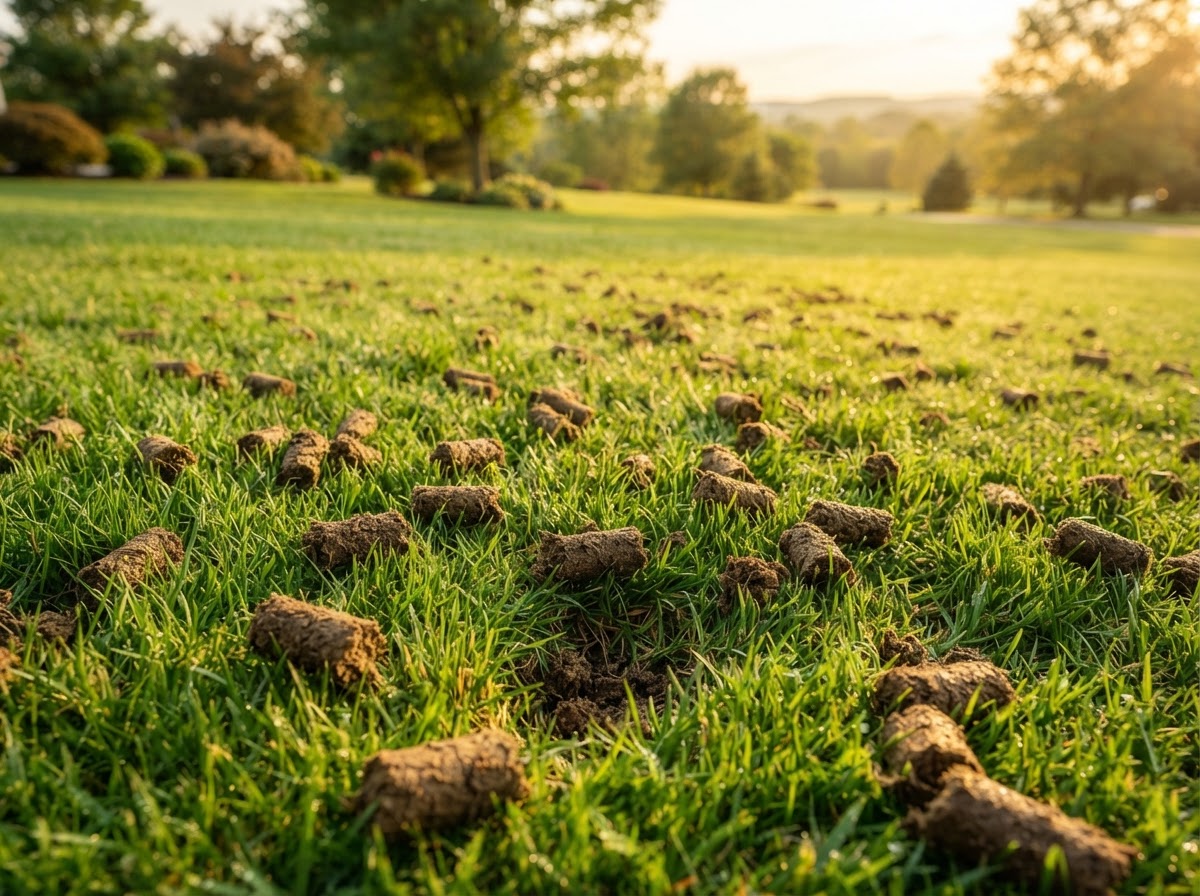
Lawn Aeration in Lehigh Valley: Why Your Lawn Needs It
How mechanical core aeration reduces compaction and why pairing it with overseeding produces the best results.
Read Article
Why Golden Green Uses the Stinger GT30 for Aeration and Overseeding
After years of using different aerators, here's why Golden Green chose the Stinger GT30 — and why the operator matters even more than the machine.
Read ArticleGolden Green Lawn Care Services