Back to Knowledge Center

    The Owner’s Professional Insight

    “You were just here to treat my lawn. Now there are red patches. What happened?”

    Why Does My Lawn Have Pink or Red Patches? Red Thread Disease in Pennsylvania Lawns

    The Owner’s Professional InsightOctober 5, 20269 min read

    That is a spring conversation I know well. A homeowner signs up for lawn care, gets the first application, and feels good about getting the season started. Then we get a stretch of damp weather. A few weeks later, pinkish patches or little red threads appear in the grass.

    Understandably, the homeowner wants an answer—and a fix. My first response is to identify what is happening. If it is red thread, my next response usually surprises people:

    We may not need a fungicide.

    The spring phone call I’ve heard many times

    Here is how this often unfolds on the Eastern Pennsylvania lawns I visit.

    1. 1

      March into early April

      “We’re getting started.”

      The homeowner begins our six-step fertilization and weed control program. The first application includes crabgrass pre-emergent as part of the spring plan. Exact timing depends on the season.

    2. 2

      Later in spring

      The weather gets a vote.

      Rain, lingering moisture, and mild conditions change what is happening in the lawn. Somewhere around May, sometimes before the second application, the homeowner notices red or pink patches.

    3. 3

      Then comes the call

      “Does my lawn have a disease?”

      It might. Red thread is one possibility we investigate. The timing can make someone assume the first application caused the problem or that the program failed. Timing alone does not establish either.

    Crabgrass prevention and lawn disease management address different problems.

    I see this pattern around the Lehigh Valley and surrounding Eastern Pennsylvania communities, including Macungie, Emmaus, Allentown, Bethlehem, and Quakertown.

    What red thread actually looks like

    Red thread can give grass a pink or reddish cast, followed by faded, straw-colored patches. Look closely and you may see reddish threadlike growth on affected blades.

    It commonly appears during wet late-spring and early-summer conditions. It mainly damages foliage; most affected lawns recover, although severe cases can kill plants.

    Pink coloring alone is not a diagnosis.

    For more detail, see Penn State Extension’s guides to red thread and pink patch.

    My honest take on fungicides

    Over the years, I have been on lawns tens of thousands of times. In my own lawn-care experience in Eastern Pennsylvania, I have used a fungicide on just one yard.

    That is my experience and my approach. Other professionals may recommend different programs, and there are situations where fungicide treatment makes sense.

    But for a typical homeowner dealing with confirmed red thread, I usually want to address the growing conditions before recommending another paid application.

    “
    If this were my lawn, I would want to know whether that extra treatment was necessary—and what my lawn-care dollars could accomplish over the whole season.

    Fungicides can suppress disease, but they do not instantly turn damaged blades green again. The lawn still needs time to recover.

    Nor does treating red thread mean the lawn is protected from every other disease that might appear later. A different season can bring a different set of conditions and problems.

    That is why I look beyond the color of the patch.

    Why I don’t manage a backyard like a golf course

    A golf course superintendent may monitor turf daily, tracking weather, moisture, mowing practices, fertility, and disease pressure. The expectations for those playing surfaces can justify intensive management.

    A residential lawn has a different purpose and budget.

    Most homeowners want attractive, usable grass. They are not asking someone to inspect their turf every morning and manage it to golf-course standards.

    Often, our conversation begins after symptoms appear: someone notices a patch, calls, and asks us to take a look.

    My job is to recommend a sensible response for that lawn—not automatically recommend every treatment available.

    “Let it grow out” does not mean “ignore it”

    When I recommend helping the lawn grow through red thread, I mean giving it appropriate care and watching its progress.

    I sometimes describe a mild case as the lawn’s version of a common cold: noticeable, inconvenient, and not automatically a reason for the most intensive response.

    That is only an analogy. It is not a promise of recovery in two or three days.

    In our program, the second application includes slow-release fertilizer to support continued growth. Where nutrition is part of the problem, appropriate feeding can help the lawn replace damaged foliage.

    But we still need to consider what the lawn has already received. Please do not add extra fertilizer on top of a scheduled application without discussing it with us.

    Low nitrogen can contribute to red thread, but its presence does not prove the lawn was neglected. Susceptible grass and favorable weather matter too. Excess nitrogen can encourage other diseases, so more is not automatically better.

    The questions I ask before recommending more treatment

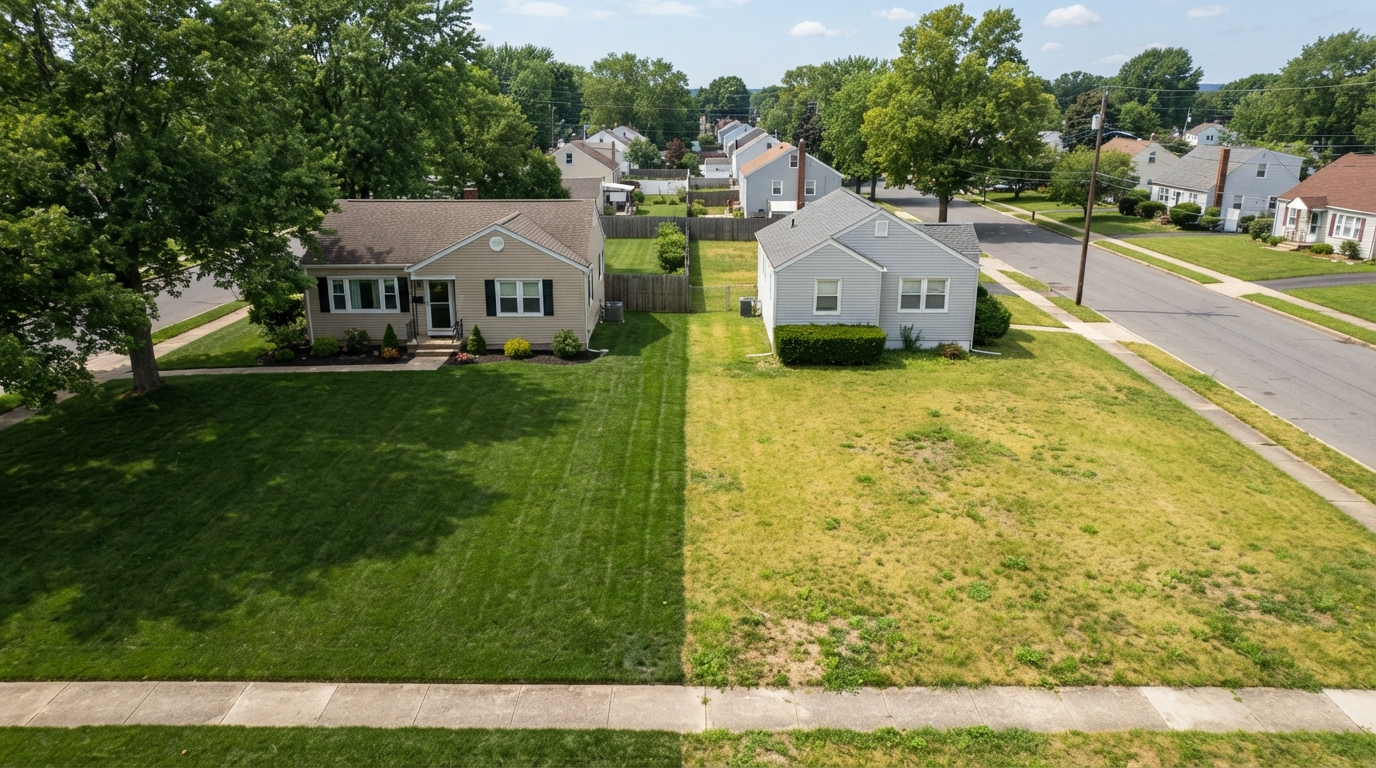
    A lawn is a living system. Two properties on the same street can respond differently.

    When I look at a problem area, I want to understand:

    • What grass varieties are growing there?
    • Does the area stay damp longer than the rest of the lawn?
    • What fertilizer has already been applied?
    • How is the homeowner watering and mowing?
    • Is this a new issue or something that returns repeatedly?
    • Is the grass recovering, or is the damage getting worse?

    The age of a lawn can offer clues about its history, but age alone does not tell us how disease-resistant its grass is.

    A lawn established years ago may contain a mixture of varieties introduced at different times. Knowing what is actually growing there is more useful than assuming newer always means better.
    What I would do this week—and this season

    This week: Support recovery

    1. 1.Confirm the diagnosis. Do not assume every pink, brown, or straw-colored patch is red thread.
    2. 2.Coordinate the feeding plan. Let us review the application history before adding anything.
    3. 3.Mow thoughtfully. Keep blades sharp, avoid scalping, and wait until the turf is dry enough to mow without adding stress.
    4. 4.Water according to need. After rainy weather, the lawn may not need irrigation. Early morning is preferable to extending wet conditions into the night.
    5. 5.Watch the direction of change. Take a photo so you can compare the same area over time.

    This season: Consider the lawn you want next year

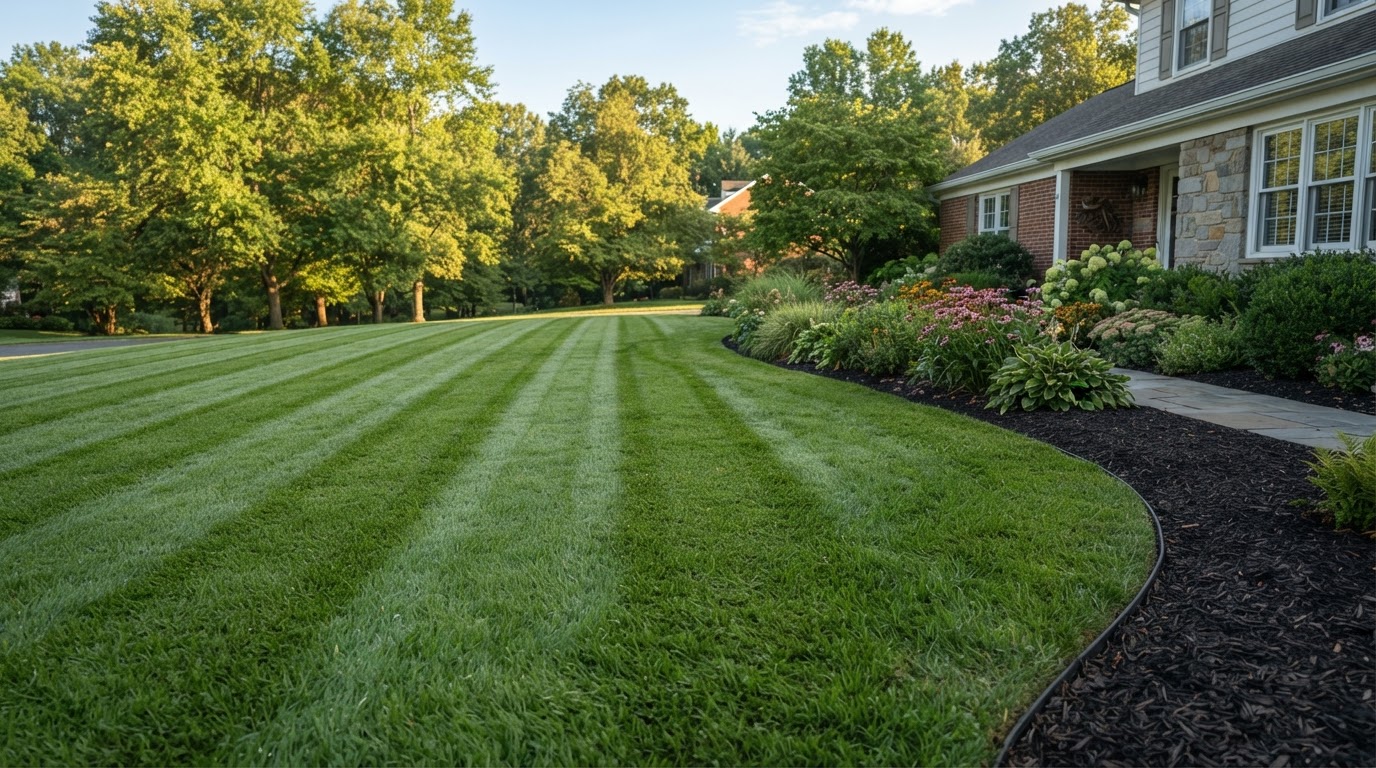
    If the lawn is thin or repeatedly struggles, I would rather discuss a longer-term improvement plan than keep reacting to every temporary discoloration.

    That might include:

    • mechanical core aeration where compaction is a concern and overseeding to introduce suitable grass varieties and improve thin areas.
    • Those services are not an immediate cure for red thread. They serve a different purpose: improving the lawn over time.
    • For a lawn that would benefit from them, that is often where I would prefer to put the budget.

    Where Sunny’s Seed Mix fits into my approach

    Grass selection is part of lawn care, not an afterthought.

    We use Sunny’s Seed Mix in our overseeding work. My aim is to establish grass suited to our area and improve the lawn’s ability to handle stress.

    Disease susceptibility varies among grass varieties. Selecting appropriate varieties can help, but I will never promise that a seed mix makes a lawn disease-proof.

    Sunny’s Seed Mix is not a fungicide. It cannot control the weather or make an unsuitable growing environment disappear.

    It belongs in a broader plan that considers the site, the grass, and the care it receives.

    When I want you to call us again

    Please do not interpret “give it time” as “stop paying attention.”

    If patches expand quickly, the lawn becomes substantially thinner, or you are uncertain about the diagnosis, contact us again.

    Most red-thread-affected lawns improve within a few weeks under favorable conditions and appropriate care. If yours is not improving, we should reassess it rather than keep assuming everything is fine.

    There are cases where further diagnosis or fungicide treatment is appropriate. My preference for a measured approach does not rule those out.

    A few questions homeowners ask me

    Did my spring crabgrass treatment cause red thread?

    Seeing symptoms after an application does not establish that the application caused them. We need to look at the symptoms, weather, and lawn history.

    Does red thread mean I need to reseed everything?

    No. First determine whether the existing grass is recovering. Overseeding is a separate decision based on lasting thin areas and the lawn’s overall condition.

    Should I buy fungicide as soon as I see red patches?

    I would start with identification. Penn State notes that most red thread situations do not warrant fungicide treatment. Severe cases deserve individual evaluation.

    Will my second fertilizer application make it disappear immediately?

    No. Feeding supports growth; it does not erase symptoms overnight. We evaluate progress over time.

    Can I still get red thread on a professionally maintained lawn?

    Yes. A lawn-care program supports the grass, but weather and susceptible varieties can still create disease pressure.

    Let’s give your lawn a sensible plan

    If pink or red patches have you worried, I understand. You are paying attention to your lawn and want to take care of it.

    My goal is to help you understand what you are seeing, what needs attention, and where your money will make a useful difference.

    Sometimes that means treatment. Sometimes it means adjusting the care. And sometimes it means giving recovering grass a little time.

    If you are looking for a lawn-care plan in Eastern Pennsylvania, tell us what is happening when you request your quote.

    Get My Lawn Quote

    Tell Golden Green about your lawn, the patches that concern you, and what you would like to improve. Start with your property and your questions.

    Get My Lawn Quote

    Golden Green Lawn Care — Your Lawn’s Best Friend.

    CALL TEXT