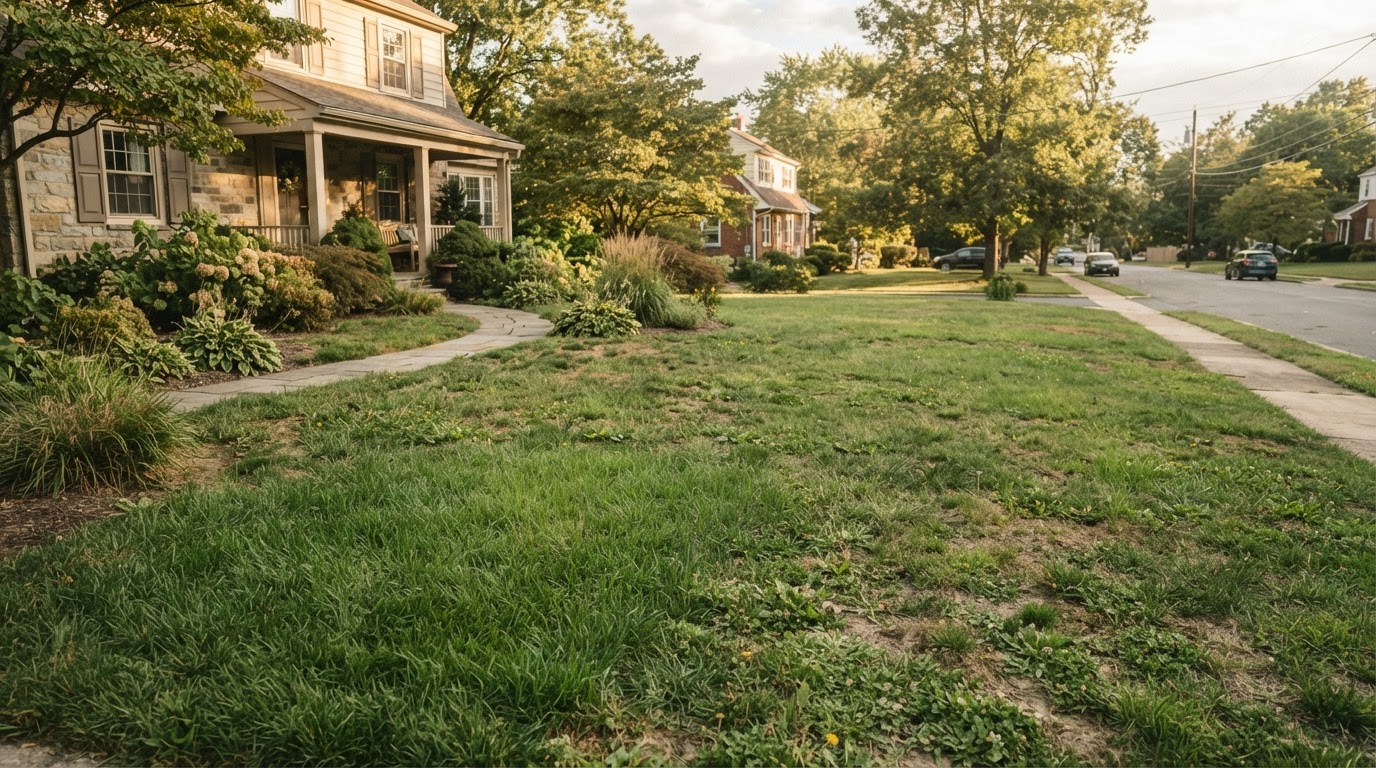
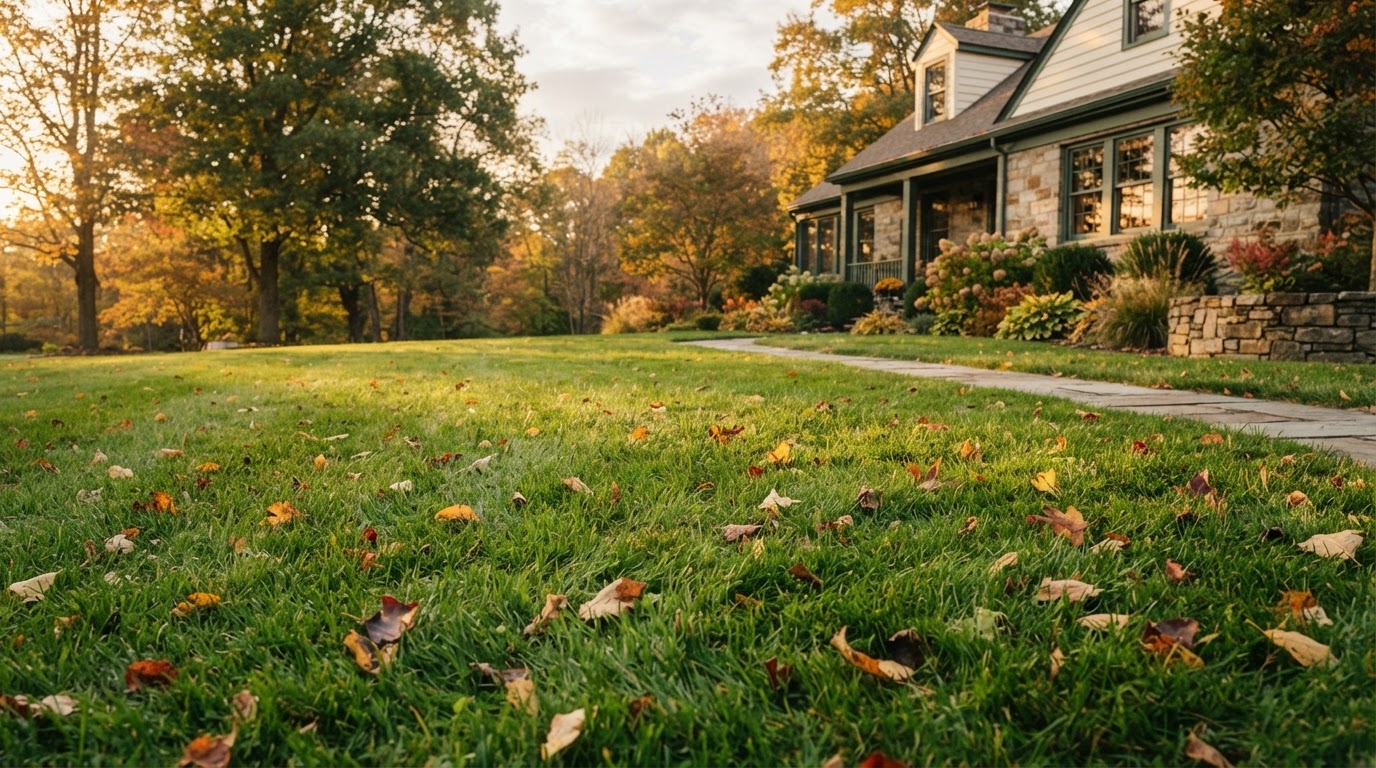
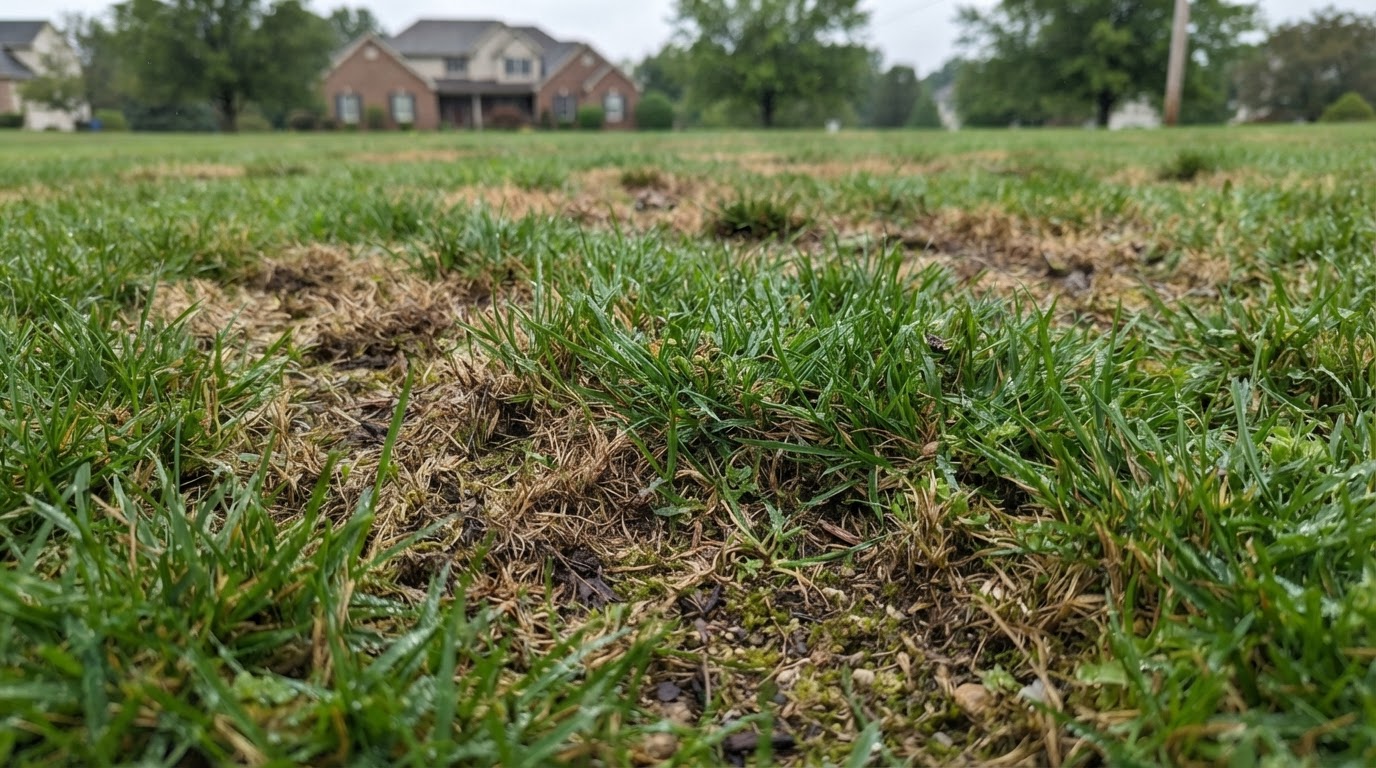
You hired a lawn care company, paid for service, and expected your lawn to look better.
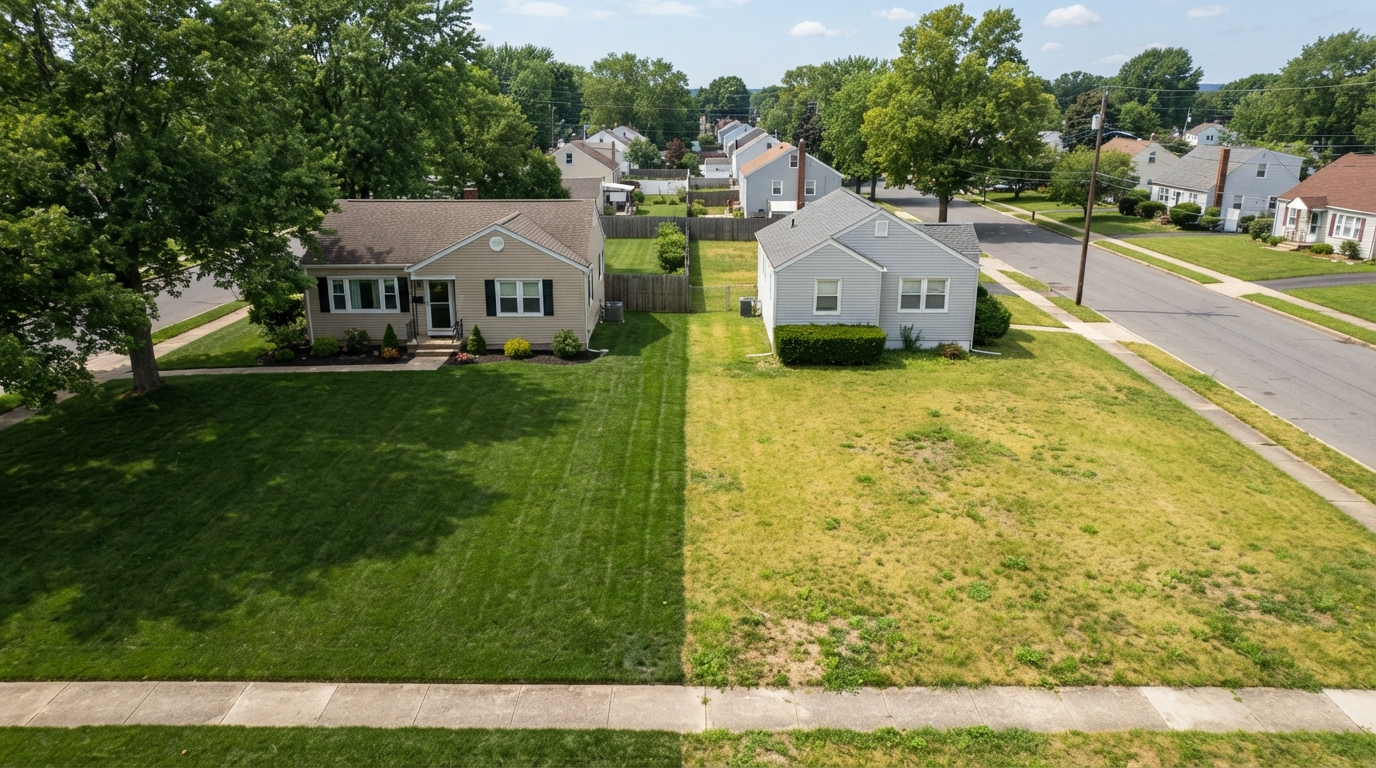
Then you looked across the property line.
Your neighbor's grass looks darker, greener, or thicker. Yours still looks pale or uneven—even though you have been trying to do everything right.
It is reasonable to ask why.
But two lawns next to each other can have surprisingly different grass, soil, sunlight, watering, and maintenance histories. The difference in color does not always mean one homeowner bought a better treatment.
It means there is something worth understanding.
The Quick Answer
Your neighbor's lawn may be greener because of different grass varieties, available nutrients, soil conditions, watering, mowing, or seasonal stress. Weed control alone does not necessarily make desirable grass darker green.
Before adding more fertilizer, check what your lawn care program includes and whether the lawn has a problem that fertilizer cannot solve.
The goal is healthy, dense turf with good color for its grass type—not a temporary color response that leaves the underlying problem unchanged.
Weed Control and Lawn Greening Are Different Jobs
Weed control targets unwanted plants. Fertilization supplies nutrients.
Those services can work together, but they are not interchangeable.
A weed-control application may successfully reduce dandelions or other targeted weeds without noticeably darkening the surrounding grass. If the lawn also needs nutrients, better soil conditions, or new grass plants, weed control will not provide those things.
In fact, removing weeds from a thin lawn can reveal how little desirable grass was growing between them. The weeds may have been contributing to the green appearance from a distance.
Golden Green's weed control service addresses targeted weeds. Our six-step fertilization and weed control program combines seasonal feeding with weed management.
Before judging a program by color alone, ask:
- Does my service include fertilizer as well as weed control?
- What was applied, and when?
- Which weeds are being targeted?
- Are soil testing, aeration, and seeding separate services?
- What watering and mowing care does the lawn need from me?
Knowing what the program covers makes it easier to judge whether the results match the service.
1. Your Neighbor May Have Different Grass
Grass is not one uniform plant.
Eastern Pennsylvania lawns can contain tall fescue, Kentucky bluegrass, perennial ryegrass, fine fescues, and a mixture of other grasses. Even varieties within the same species can differ in color, texture, and growth habits.
One lawn may naturally have a deeper green color. Another may contain lighter grasses or patches of coarse growth that stand out after mowing.
Penn State explains that turfgrass species differ in their adaptation to moisture, temperature, fertility, mowing, and other conditions. Those differences help explain why adjacent lawns do not always respond alike. Penn State Extension: Turfgrass Species for Pennsylvania
Fertilizer can support the grass you have. It cannot turn one grass variety into another.
When grass selection is part of the problem, professional overseeding may help introduce more suitable turf over time. It does not instantly replace every existing plant.
For appropriate sunny lawns, Golden Green offers Sunny's Seed Mix as part of that improvement plan. Choosing seed for the actual site matters more than choosing a bag based only on a promise of dark color.
2. The Soil Beneath the Lawns May Be Different
A property line does not mark the boundary between identical growing conditions.
One yard may have deeper topsoil. The next may have compacted fill left from construction. A shaded side yard may stay wet while the lawn across the driveway dries quickly.
Differences in soil pH and nutrient availability can also affect how grass responds to feeding.
That is why applying more fertilizer is not always the right first step.
A professional lawn soil test can help identify pH and measured nutrient conditions. Compaction, drainage, and soil depth also require an assessment of the site; a standard fertility test cannot diagnose every physical problem.
If testing shows that the soil is too acidic and recommends correction, lime treatment may be appropriate. Lime should not be applied simply because grass looks pale.
The useful question is: what does this soil need to support better turf?
3. Fertilizer Timing and Nutrition Can Affect Color
Your neighbor may have received a recent fertilizer application. Your lawn may be at a different point in its feeding schedule.
Where nutrients are limiting growth, an appropriate application can improve color and density. But adding more nitrogen to chase the lawn next door can create excessive growth without fixing problems such as compaction, shade, or poor irrigation coverage.
At Golden Green, seasonal feeding is part of a longer-term plan for cool-season turf. The right application considers the lawn's condition, the time of year, and previous treatments.
If your lawn has already been fertilized and remains pale, report that concern before adding another product yourself.
A useful follow-up asks why the lawn did not respond as expected.
4. Mowing Can Make Healthy Grass Look Pale
Look closely at the grass after mowing.
Are the tips cleanly cut, or do they look shredded and tan? Does the lawn look greener before mowing and browner afterward?
Dull blades can tear leaves. Cutting too low can expose pale lower portions of the plant and scalp uneven areas.
For many established tall fescue and Kentucky bluegrass lawns, a height around 3 to 3½ inches is a useful starting range, adjusted for grass type and conditions. There is no single mower setting that suits every property.
Good habits include:
- Keep mower blades sharp.
- Avoid removing more than about one-third of the leaf at once.
- Mow according to growth rather than a rigid calendar.
- Avoid scalping high spots.
- Avoid mowing severely wilted turf.
Penn State recommends sharp blades and limiting how much leaf is removed during a mowing. Penn State Extension: Growing a Better Lawn
If the lawn's appearance changes immediately after cutting, read our guide to why dull mower blades can make grass look brown.
5. Similar Watering Schedules Can Deliver Different Results
Two sprinklers running for 20 minutes may deliver very different amounts of water.
Coverage, pressure, nozzle type, slope, and soil infiltration all affect how much moisture reaches the roots. Trees and buildings can create additional differences within the same yard.
For established grass, frequent shallow watering may leave deeper soil dry. Excessive watering can also weaken the growing environment.
Check the actual soil moisture and coverage rather than copying your neighbor's timer settings.
Newly seeded areas are an exception: they need a watering routine suited to germination and early establishment before gradually transitioning to deeper, less frequent watering.
Your lawn's moisture needs should be matched to rainfall, soil, grass type, and current conditions.
6. Compaction and Thin Turf Can Limit the Result
A lawn can look lighter because there is less grass covering the soil.
Thin turf exposes soil, old leaves, and other material between plants. Even reasonably green individual blades may not create the same full appearance as a dense stand of grass.
Compacted soil can limit rooting and make establishment more difficult. Where compaction is contributing to the problem, mechanical core aeration removes soil plugs to help relieve it.
Aeration and overseeding address different needs:
- Aeration helps improve the root-zone environment where compaction is present.
- Overseeding introduces additional grass plants.
- Appropriate feeding and watering support their growth.
Severely bare spots may need extra preparation so seed reaches the soil. Simply scattering seed over a mat of dead grass is unlikely to produce a uniform lawn.
Timing matters, too. Late summer into early fall is generally the preferred seeding period in Pennsylvania. Later projects need an assessment of the remaining growing conditions rather than an automatic promise of establishment before winter.
7. Seasonal Stress, Insects, or Disease May Be Involved
Summer can expose differences that were less obvious during spring.
Heat, dry soil, tree-root competition, and heavy use may affect one lawn more than another. A brown summer lawn may be dormant, damaged, or a mixture of both.
As cooler conditions and adequate moisture return, watch how the grass responds. Persistent patches deserve inspection, especially if they spread or the turf loses its roots.
Do not diagnose insects from color alone. Disease, watering problems, and other stresses can create similar symptoms.
If an inspection confirms damaging grub activity, grub control may be part of the solution. Insect treatment should follow the diagnosis, rather than being the default response to every brown patch.
Penn State identifies shade, drainage, compaction, fertility, insects, disease, and poorly adapted grasses among the possible causes of lawn deterioration. Penn State Extension: Renovation of Lawns
What the Difference May Be Telling You
These observations are starting points for an inspection, not diagnoses.
| What you notice | What to check first |
|---|---|
| The whole lawn is uniformly lighter | Grass varieties, feeding history, and growing conditions |
| Grass looks tan immediately after mowing | Blade sharpness, cutting height, and scalping |
| Certain areas wilt sooner | Irrigation coverage, soil depth, roots, and exposure |
| The lawn is green but looks sparse | Turf density, compaction, shade, and seeding needs |
| Fertilizer produces little improvement | Soil conditions, moisture, grass type, and other stress |
| Brown patches remain while nearby grass recovers | Roots, moisture, disease symptoms, and insect activity |
The whole lawn is uniformly lighter
Check first: Grass varieties, feeding history, and growing conditions
Grass looks tan immediately after mowing
Check first: Blade sharpness, cutting height, and scalping
Certain areas wilt sooner
Check first: Irrigation coverage, soil depth, roots, and exposure
The lawn is green but looks sparse
Check first: Turf density, compaction, shade, and seeding needs
Fertilizer produces little improvement
Check first: Soil conditions, moisture, grass type, and other stress
Brown patches remain while nearby grass recovers
Check first: Roots, moisture, disease symptoms, and insect activity
A greener lawn starts with identifying what is limiting your lawn.
What Golden Green Wants to Understand About Your Lawn
If you contact Golden Green because your neighbors' lawns look better, useful information includes:
- When you first noticed the difference.
- Whether it affects the entire lawn or specific areas.
- Recent fertilizer and weed-control applications.
- Your mowing height and whether the tips look torn.
- Watering frequency and any dry or persistently wet spots.
- Recent seeding, construction, pet damage, or heavy traffic.
Photos of the overall lawn and close-ups of the affected grass can help start the conversation. Some concerns require an on-site assessment or soil testing before a useful recommendation can be made.
Depending on what is found, the next step might be a mowing adjustment, a change in watering, a suitable feeding plan, soil testing, aeration, or overseeding.
You do not automatically need every service. You need an explanation that connects the recommended work to the condition of your property.
Our Golden Guarantee explains the commitment behind Golden Green's service. It does not change the fact that lawns have different starting conditions and need realistic expectations.
Darker Green Is Only Part of a Better Lawn
A naturally darker grass variety is not automatically healthier than a lighter one.
Color can also change after feeding, rainfall, mowing, or a period of stress. Comparing two lawns on a single afternoon can miss the bigger picture.
Look for progress in several areas:
- More consistent turf density.
- Fewer targeted weeds.
- Better coverage of previously bare areas.
- Improved recovery from ordinary wear.
- Healthy growth appropriate to the season.
- Fewer recurring problem spots.
A lawn that is gradually becoming thicker and more consistent may be improving even if it does not match the neighbor's exact shade.
Frequently Asked Questions
Get a Plan for Your Side of the Property Line
You deserve more than “give it time” when you ask why your lawn is struggling.
You also deserve a recommendation based on what your lawn needs, rather than another application chosen only to chase a darker color.
Golden Green helps homeowners across the Lehigh Valley and surrounding Eastern Pennsylvania communities connect lawn care services with the conditions on their property.
Whether the next step is a coordinated feeding program, soil testing, or improving thin turf with aeration and seeding, start with a conversation about what you are seeing.
Golden Green Lawn Care — Your Lawn's Best Friend.