After Treatment & What Comes Next
Why Are Weeds Still Spreading After Lawn Treatment?
“You’ve had your lawn treated, but you’re still noticing weeds. Does that mean the treatment didn’t work?”
Weeds growing after lawn treatment can have several explanations: the original plants may still be responding, new weeds may be emerging, or the treatment may not have targeted the plants you’re seeing. Persistent weeds deserve identification and a clear follow-up plan.
For homeowners in Eastern Pennsylvania and the Lehigh Valley, the most useful starting point is understanding what is growing—and whether it is the same growth you saw before treatment.
First, distinguish slow response from new growth
A lawn does not necessarily look weed-free immediately after an application. The expected response depends on the weed, product, growth stage, and conditions.
Before deciding that weed control is not working, consider three possibilities:
Still responding
The same plants remain visible after treatment.
They may still be responding to the application, or the control may have been inadequate. Ask what changes you should see and when to reassess.
New seedlings
Small plants appear in previously clear areas.
New weeds may be emerging. Ask whether the treatment was intended to prevent new weeds or control existing ones.
Regrowth
Growth returns in the same patch.
A perennial weed may be regrowing from surviving underground structures. It may need a different approach or planned follow-up.
| What you notice | What it could mean | What to ask |
|---|---|---|
| The same plants remain visible | They may still be responding, or control may have been inadequate. | “What changes should I see, and when should we reassess?” |
| Small plants appear in previously clear areas | New seedlings may be emerging. | “Was this treatment intended to prevent new weeds or control existing ones?” |
| Growth returns in the same patch | A perennial weed may be regrowing from surviving structures. | “Does this weed need a different approach or planned follow-up?” |
Photographs taken from the same spot can help you compare changes. Record the treatment date and when you first noticed the problem.
Different weeds need different approaches
“Weed control” describes a goal. It does not mean every application controls every unwanted plant.
Broadleaf weeds, grassy weeds, and sedges can require different management strategies. Product selection also depends on the desirable grass, the weed’s growth stage, and whether the lawn was recently seeded.
| Weed | Useful identification clues | Why it may persist |
|---|---|---|
| Yellow woodsorrel (oxalis) | Three heart-shaped leaflets; small yellow flowers when blooming | New seedlings or surviving growth may require different management. |
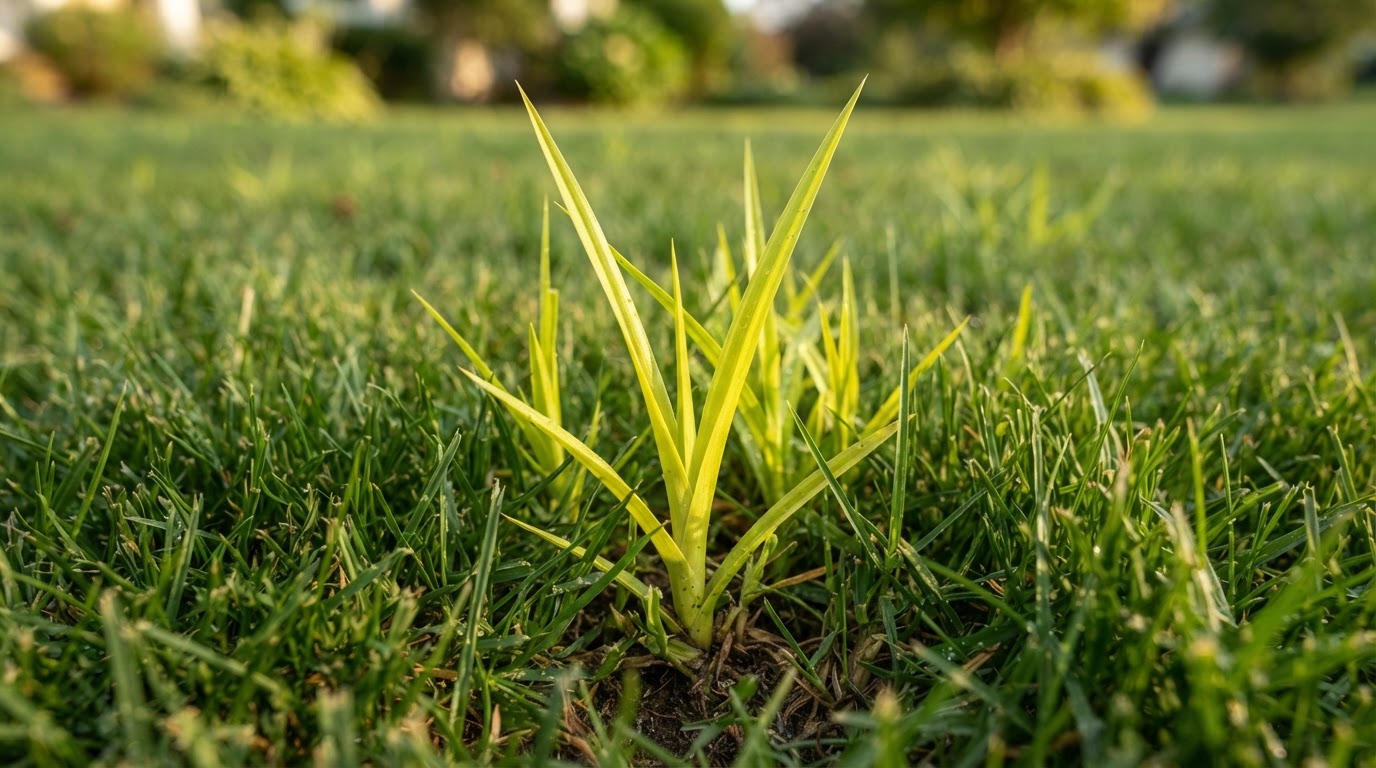
| Yellow nutsedge | Upright, yellow-green foliage that can rise above surrounding turf | Underground tubers can support additional growth. |
| Crabgrass | Spreading, grassy growth, often conspicuous in open areas | New emergence can occur where prevention was insufficient or protection has ended. |
These clues help narrow the possibilities. They are not a substitute for examining the plant.
Why oxalis may keep appearing
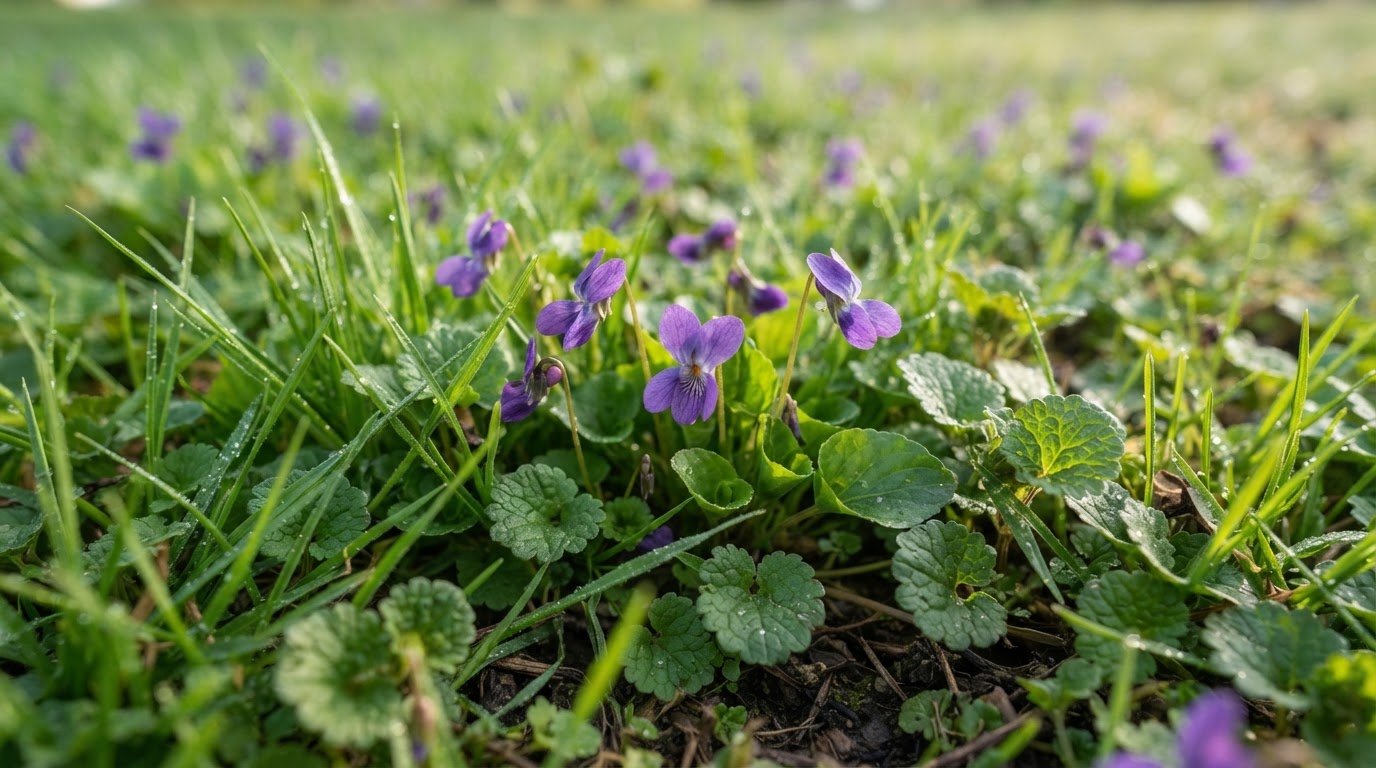
Yellow woodsorrel can resemble clover at a glance. Its heart-shaped leaflets are a useful distinction.
Identification matters because preventing new seedlings is different from controlling established plants. Penn State notes that some preemergence herbicides control yellow woodsorrel emerging from seed but do not control plants emerging from rhizomes, which are underground stems. Penn State Extension: Yellow Woodsorrel
If oxalis keeps appearing, ask whether the plants are new seedlings or established growth, whether the treatment targeted that weed, and whether thin grass is leaving room for it. The next step should follow that assessment rather than automatically repeating the previous application.
Why yellow nutsedge needs special attention
Yellow nutsedge is a sedge, even though people often call it “nutgrass.” Its upright growth and lighter color can make it noticeable soon after mowing.
Underground tubers help explain its persistence. Removing a visible shoot does not necessarily remove the structures capable of producing another one. However, hand removal of a small, young infestation can be useful when timed appropriately; it is not automatically ineffective. Penn State Extension: Yellow Nutsedge
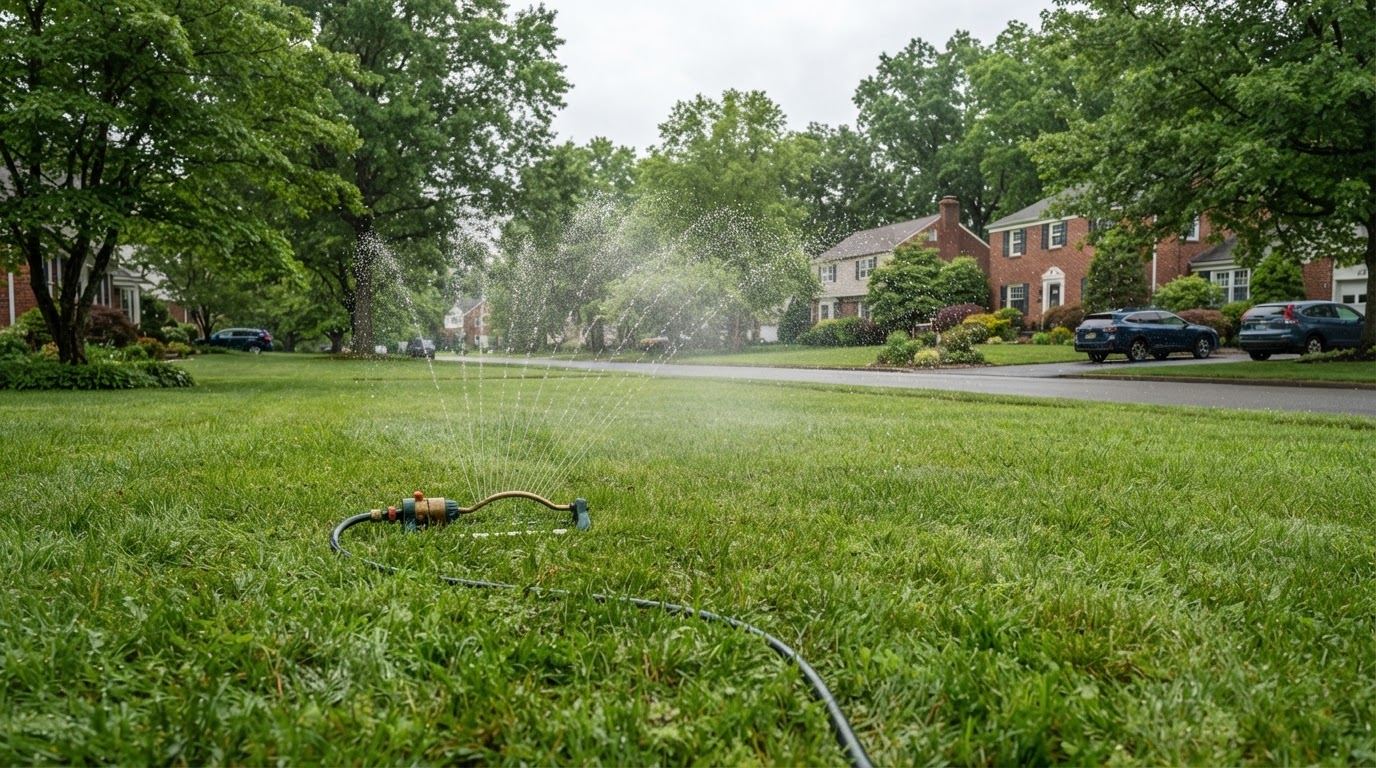
Nutsedge often favors moist conditions, so irrigation, low spots, and downspout discharge may deserve attention. Its presence alone does not prove that the lawn has a drainage problem. Evaluate the actual conditions before recommending a correction. University of California IPM: Nutsedge
Why crabgrass can appear after prevention
Crabgrass is a summer annual that grows from seed. Prevention and control of established crabgrass are different tasks, and treatment timing matters. Healthy, dense turf also helps reduce infestations. Penn State Extension: Smooth and Large Crabgrass
When crabgrass appears after a preventive application, useful questions include:
- ●Was the application made at the appropriate time?
- ●Did the product receive the moisture required by its label?
- ●Was coverage consistent?
- ●Was the soil disturbed afterward?
- ●Was the product still providing protection when those plants emerged?
A few breakthrough plants do not automatically mean an entire program failed. Widespread growth still warrants a closer review of the treatment and lawn conditions.
An unfamiliar weed needs an identification—not a guess
A description such as “fern-like” could fit more than one plant.
Before choosing a treatment, take a photograph of the whole plant, a close-up of its leaves and stem, and a wider view of the affected lawn. Include flowers or seed heads if present.
An unidentified plant should remain unidentified until there is enough evidence to name it. That is a useful step toward choosing an appropriate treatment.
What should happen before another application?
A follow-up visit is most helpful when it answers why the weeds remain. Ask your provider:
- 1.Which weeds are these?
- 2.Did the previous treatment target them?
- 3.Has enough time passed to evaluate the response?
- 4.Are we seeing new seedlings or surviving plants?
- 5.What is the next step, and is it included in my service?
Watering and mowing instructions should match the application. Avoid adding your own weed-control product while a response is being evaluated; overlapping treatments can complicate the plan.
For Golden Green’s published satisfaction promise, visit the Golden Green Guarantee.
Thicker grass helps reduce future opportunities for weeds
Treating weeds addresses part of the problem. Improving the grass around them can help reduce the open space available for future infestations.
That may involve adjusting mowing, watering appropriately, correcting a specific site problem, or repairing thin areas. Where suitable, overseeding can help rebuild desirable turf.
Seeding and weed treatments need to be coordinated. Some herbicides restrict when grass can be seeded or when seedlings can be treated. Follow the requirements for the actual product used.
Still seeing weeds? Start with the right questions
You should not have to guess whether persistent weeds are expected, overlooked, or outside the scope of your treatment.
When contacting Golden Green, share what you are seeing, where it is growing, when the lawn was treated, and whether the affected area is expanding. Ask what response to expect and when the next evaluation makes sense.
Learn more about Golden Green’s weed-control services, or request a quote for your Eastern Pennsylvania lawn.
Common questions about weeds after treatment
Does seeing weeds after treatment mean it didn't work?
Not necessarily. Some weeds respond slowly, new seedlings can emerge after a preventive application, and perennial weeds can regrow from underground structures. Identifying what is growing helps determine whether the treatment is working or needs a different approach.
How long should I wait to see results from a weed treatment?
Response time depends on the weed, the product, the growth stage, and the conditions. Ask your provider what response to expect for the specific treatment and when a follow-up evaluation makes sense.
Can I apply my own weed killer if I still see weeds?
Avoid adding your own product while a professional treatment is being evaluated. Overlapping treatments can complicate the plan and the assessment. Contact your provider first.
Does nutsedge mean my lawn has a drainage problem?
Nutsedge often favors moist conditions, but its presence alone does not prove a drainage problem. Evaluate the actual conditions — irrigation, low spots, downspout discharge — before recommending a correction.
Should I pull the weeds I see after treatment?
Hand removal of a small, young infestation can be useful when timed appropriately, but pulling a perennial weed does not always remove the underground structures capable of producing new growth. Ask whether the weed is better treated or managed another way.
Identify the plant. Evaluate the response. Plan the next step.
The goal is a clear explanation and an appropriate plan: identify the plant, evaluate the treatment response, and help the lawn become better able to compete.
Tell us what is growing, where it is, and when the lawn was treated. We can help you understand what comes next.
Request a Lawn-Care QuoteGolden Green — Your Lawn’s Best Friend.