When Is the Best Time to Spray Weeds in Pennsylvania? Why Timing Matters More Than Homeowners Think
Just because you see a weed doesn’t mean today is the best day to spray it.
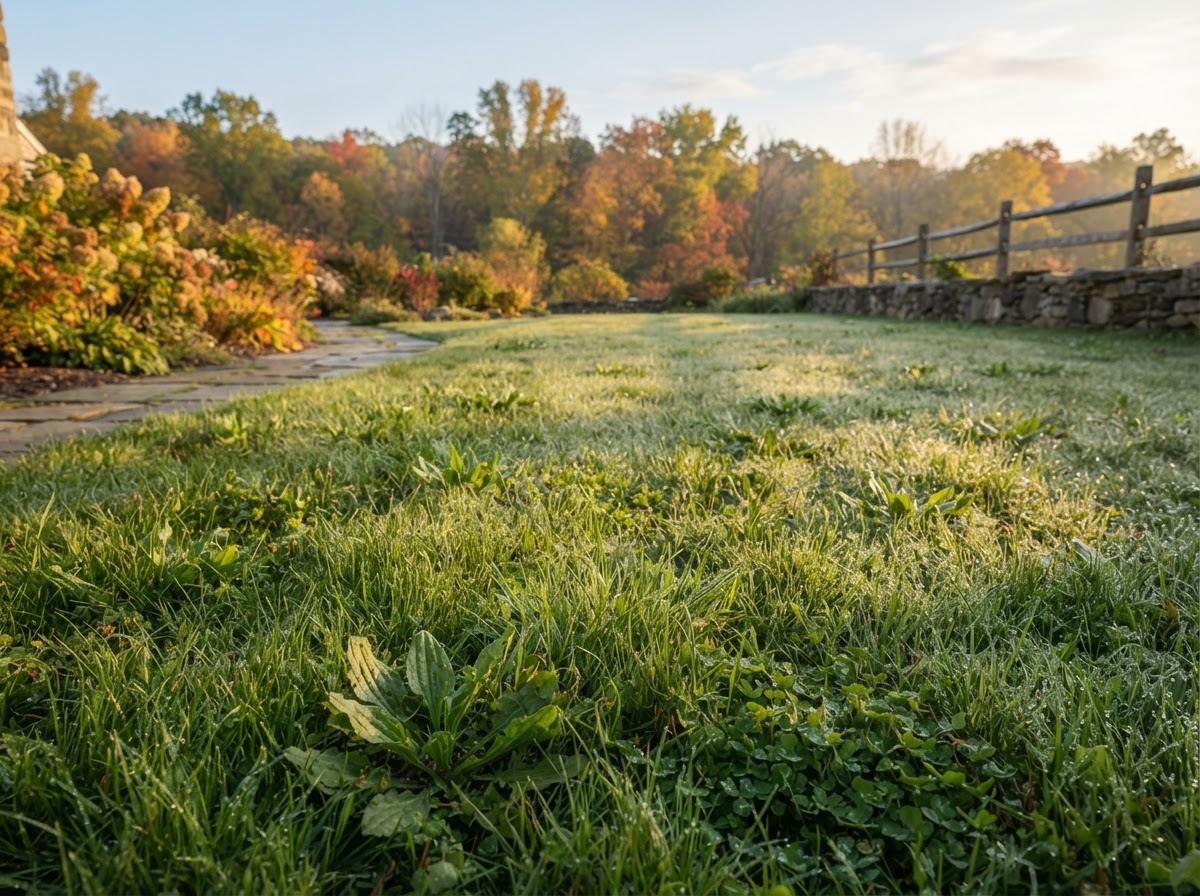
It is September 17 here in Pennsylvania as I’m writing this. Fall is coming. The nights are getting cooler. The lawns are beginning to recover from summer. And we’re probably about a month away from the period when many areas of Eastern Pennsylvania begin experiencing genuinely cold nights and the possibility of their first frost.
For someone in professional lawn care, this is an exciting time of year. But maybe not for the reason you think. Right now, you might walk across your lawn and see wild violet, creeping Charlie, clover or another weed and think:
Why isn’t somebody spraying this? That’s a fair question. But after years of working in lawn care, I’ve learned something that homeowners don’t always hear:
Just because we can spray a weed today doesn’t mean today is the best time to spray it.
Sometimes the best weed-control decision we can make is to wait. That’s especially important with some of the most stubborn perennial broadleaf weeds we encounter in Pennsylvania lawns.
The Quick Answer
Timing can accomplish what repeated spraying doesn't — sometimes waiting is part of the treatment plan.
For many stubborn perennial broadleaf weeds in Pennsylvania, fall presents an important control opportunity. But the weed, weather, turfgrass, recent seeding and the actual product label still determine what should happen — not a date on the calendar.
Weed Control Is About Identification AND Timing
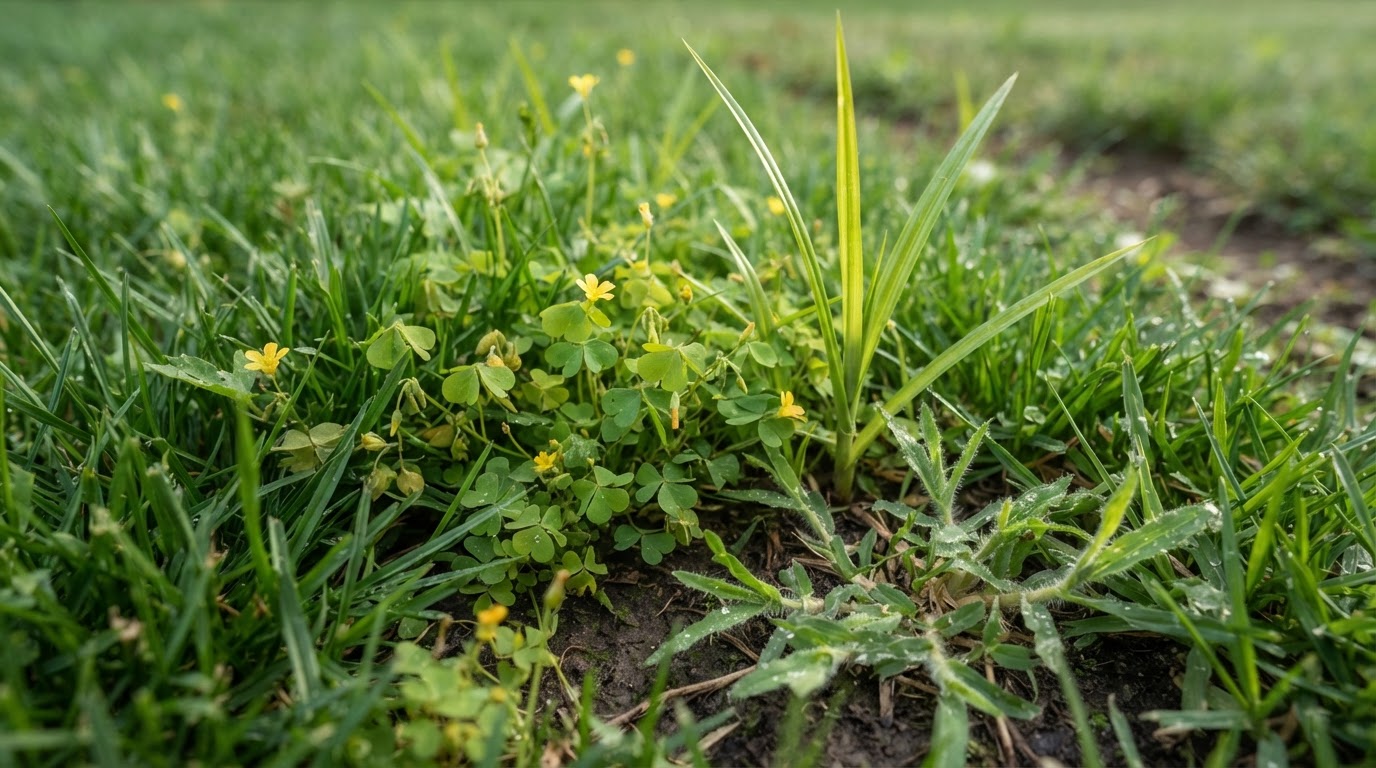
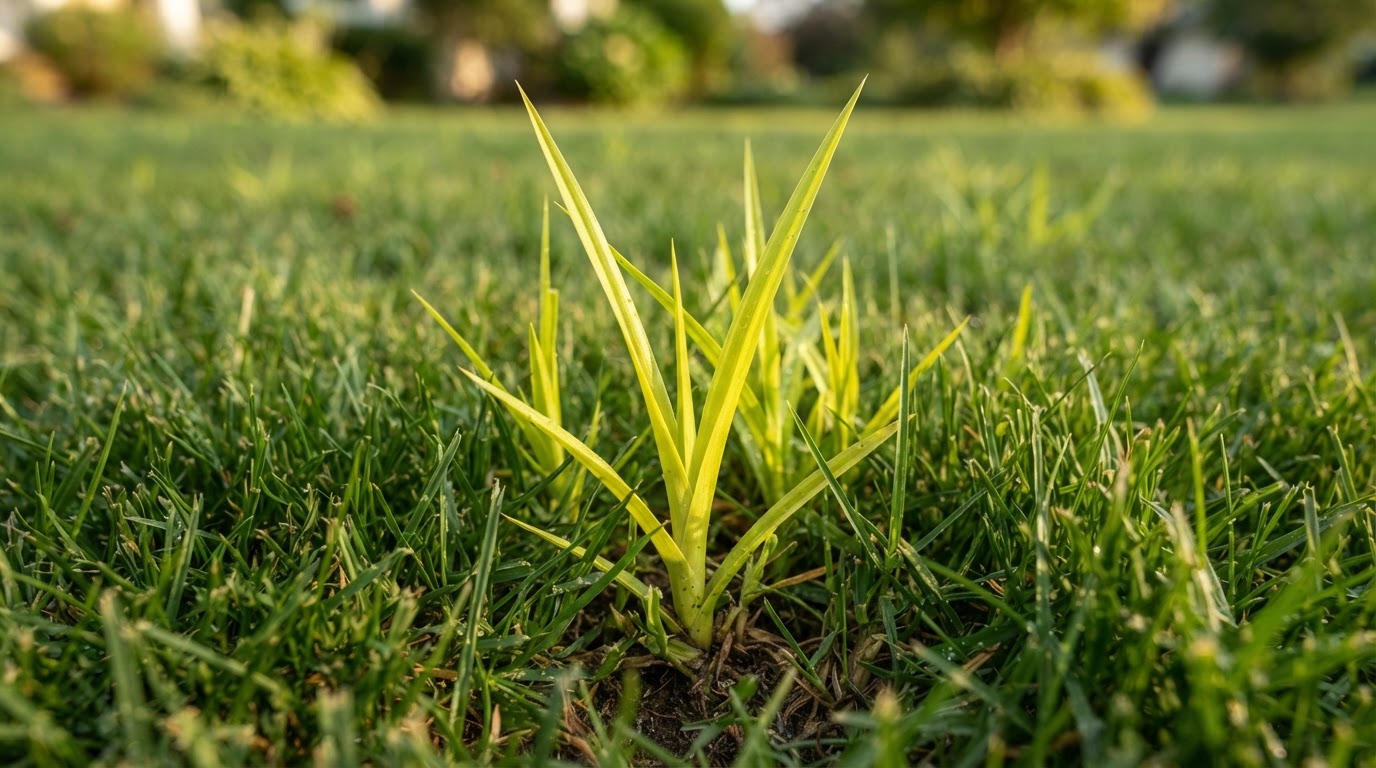
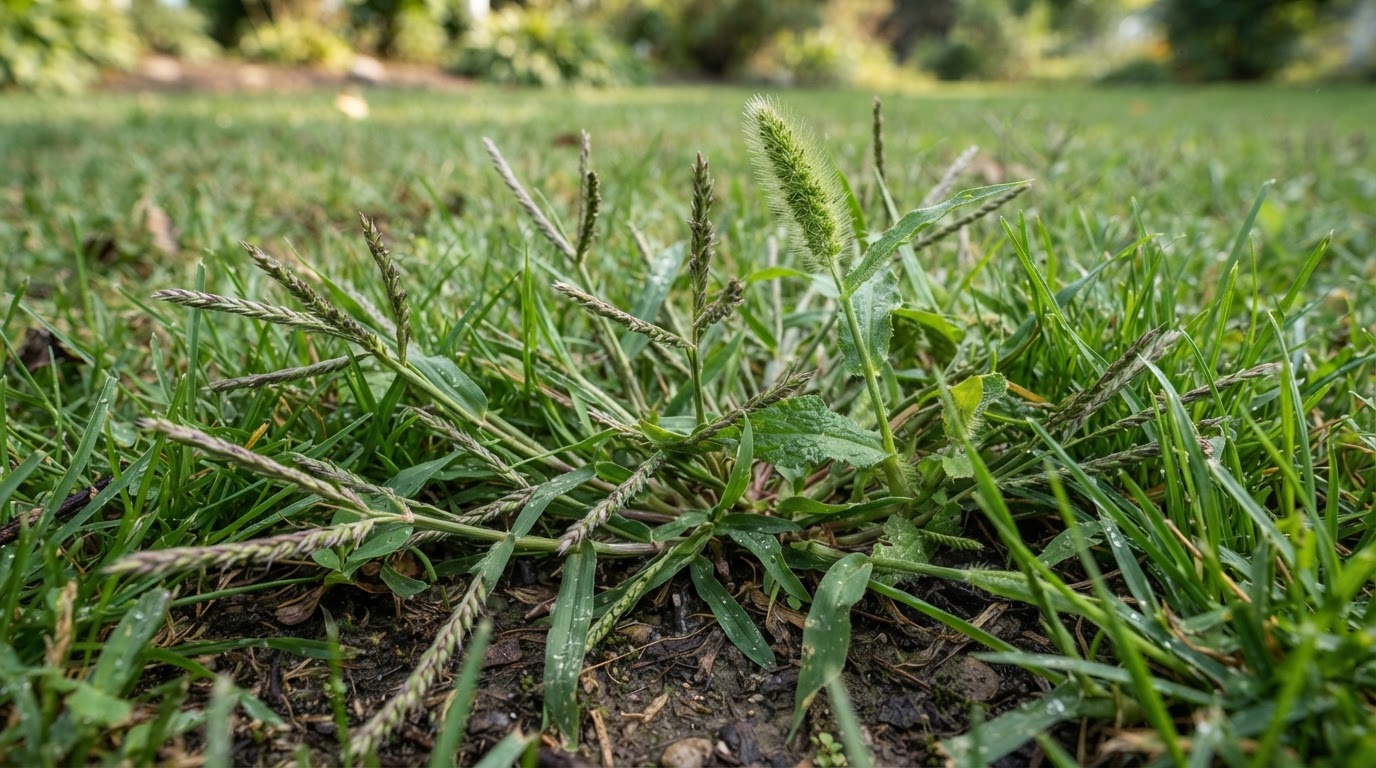
When I look at a weed in a lawn, I don’t want to begin with the sprayer. I want to begin with the weed. What is it? Is it crabgrass? Clover? Yellow nutsedge? Wild violet? Ground ivy — also commonly called creeping Charlie? Is it a broadleaf weed, grassy weed or sedge?
How is it growing? What do the leaves look like? Does it have seedheads? Is it spreading above the ground or below it? And perhaps most importantly: what time of year is it? Those questions matter because weeds aren’t all the same. Crabgrass isn’t yellow nutsedge. Yellow nutsedge isn’t wild violet. Wild violet isn’t clover.
Good weed control shouldn’t simply mean spraying more. It should mean identifying correctly and treating at the appropriate time with a product labeled for the weed and turfgrass involved.
Not All Weeds Are the Same
Identification drives strategy. The correct approach to one weed may be a poor approach to another.
| Weed | Type | Difficulty | General Timing |
|---|---|---|---|
Ground ivy / creeping Charlie Spreads by stolons. Penn State reports fall applications following the first frost can improve movement into crown tissues vs. spring. | Perennial broadleaf | Difficult | Fall — esp. after first frost |
Wild violet Thick waxy cuticle interferes with uptake; underground rhizomes aid recovery. Repeat applications may be needed. | Perennial broadleaf | Very difficult | Fall + repeat apps |
Dandelion Broadly recognized as a good fall broadleaf-control target in cool-season lawns. | Perennial broadleaf | Moderate | Fall preferred |
Clover Common in thin or low-nitrogen turf. Address the underlying stand, not just the weed. | Perennial broadleaf | Moderate | In-season / fall |
Crabgrass Different strategy entirely — pre-emergent interferes with germination. Post-emergent targets plants already growing. | Annual grassy | Seasonal | Pre-emergent spring |
Yellow nutsedge Not a grass or broadleaf — requires a different product class. Misidentification wastes time and product. | Sedge | Persistent | Mid-season |
General guidance for Eastern PA cool-season lawns. Always follow the actual product label for the weed and turfgrass involved.
Why I Get Excited About the First Frost
Here’s where September gets interesting. If you have stubborn ground ivy or creeping Charlie in your lawn, fall can present an important control opportunity. Penn State Extension describes ground ivy as a particularly difficult lawn weed and reports that herbicide applications in the fall following the first frost allow better movement of certain active ingredients into the plant’s crown tissues compared with spring applications.
Think about what’s happening to a perennial plant as winter approaches. The plant isn’t simply concerned with what you see above ground. It is preparing itself to survive winter. That biological process can work in our favor when an appropriately labeled systemic herbicide is applied at the proper time.
Timing can sometimes accomplish what repeated summer spraying doesn’t.
And it’s why, on September 17, my answer to a homeowner with a lawn full of creeping Charlie might actually be: wait. We’re getting closer — but we’re not necessarily at the window I want yet.
Why Fall Gets Interesting for Broadleaf Weeds
Heat-stressed turf. Spraying difficult perennials now often means repeat work.
Nights cool, turf recovers. Getting closer to the window — but not necessarily there yet.
Daytime 60s–low 70s. Perennials move energy to crowns/rhizomes — favorable for systemic uptake.
Penn State: applications following the first frost can improve translocation for ground ivy vs. spring.
Turf heading dormant. Window narrows. Plan ahead rather than chase the calendar.
Illustrative seasonal pattern. Actual conditions vary by year, location and weather.
Why the first frost matters
Penn State Extension reports that for ground ivy, herbicide applications in the fall following the first frost can allow better movement of certain active ingredients into the plant's crown tissues compared with spring applications. The plant is preparing for winter — and that biology can work in our favor.
Wild Violet Can Be Incredibly Frustrating
Wild violet is another one. If you’ve fought violet in your lawn, you probably know exactly what I’m talking about. You spray it. It begins to curl. Maybe it looks like you’ve finally won. And then it comes back.
One reason is the plant itself. Penn State describes wild violet as having a thick, waxy cuticle that interferes with herbicide uptake, along with underground rhizomes that give it strong recovery potential. Penn State notes that repeat applications may be needed for effective control. That’s a very different problem from simply seeing a dandelion and spraying it.
And this is where homeowners can get themselves into trouble. They think: it didn’t die, I need to spray it again. Then again. And again. More isn’t automatically better. Repeated or improperly timed herbicide applications can injure desirable turf, and every application still has to follow the product label.
Sometimes you don’t need more weed control. You need better weed control.
This Is Where Professional Experience Matters
I’ve seen this many times during my years in professional lawn care. A homeowner has a weed they’ve fought and fought. They’ve sprayed it. Another company sprayed it. They bought something from the store and sprayed it. Nothing seems to work. Then we identify the weed, choose an appropriate treatment, hit the correct seasonal window, and the homeowner can’t believe the difference.
Of course I like to think we’re good at what we do. But there’s something else going on: timing. That’s one of the less glamorous secrets of professional lawn care. Sometimes the difference isn’t that the professional has some magical sprayer. The difference is knowing what you’re looking at, what should control it, and when you should do it.
Good Weed Control Begins With the Weed, Not the Sprayer
Fall Can Be an Excellent Time for Broadleaf Weed Control
This isn’t merely a Golden Green opinion. Fall is broadly recognized as an important period for controlling perennial broadleaf weeds in cool-season lawns. Purdue Extension, for example, identifies fall as the best time to control dandelions and other broadleaf weeds and specifically notes that difficult weeds such as creeping Charlie and wild violet may benefit from herbicides containing active ingredients such as triclopyr or fluroxypyr, subject to the product label. For ground ivy specifically, Rutgers also identifies autumn as the most effective treatment period, particularly as daytime temperatures fall into the 60s and low 70s.
So when October arrives in Eastern Pennsylvania, weed control can become very interesting. But I don’t want homeowners reading this article and thinking: October 15 = spray everything. That’s not how this works. The weed, weather, turfgrass, recent seeding, herbicide formulation and actual product label still determine what should happen.
Sometimes I Tell a Customer, “We Need to Wait.”
This is one of the most important parts of providing professional lawn care. Suppose someone signs up with Golden Green in late summer. They have creeping Charlie throughout part of the lawn. They hired us for weed control. Naturally, they expect us to control the weeds. But if I’m looking at a weed that I believe will respond substantially better during a later treatment window, I’m not helping that customer by pretending otherwise.
I would rather tell them: we see it. We’ve identified it. It’s documented on your property. We’re waiting for the appropriate treatment window. That’s not avoiding the problem. That’s managing it. At Golden Green, that’s the kind of information we want documented on the customer’s property profile so the issue isn’t forgotten when the appropriate treatment period arrives. And communication is a huge part of this.
Sell the Service. Then Service the Sale.
I think lawn-care companies sometimes forget this. We’re businesses. We advertise. We market. We tell homeowners we provide weed control. We’re selling a service. There’s nothing wrong with that. But once we’ve sold that service, we have to service the sale. If I tell you Golden Green provides professional weed control and then I discover a difficult perennial weed in your lawn, I owe you more than driving past it with a sprayer.
I need to identify it. I need to determine an appropriate treatment strategy. And if now isn’t the appropriate time, I need to tell you that. Otherwise, from the homeowner’s perspective, it can sound like excuses: why is that weed still there? Why didn’t you spray it? I thought I was paying for weed control. Those are reasonable questions. The solution is communication.
Sell the service
MarketingWe advertise, market and tell homeowners we provide weed control. There's nothing wrong with that — we're a business.
Service the sale
Follow-throughOnce sold, we identify the weed, determine an appropriate strategy, and if now isn't the right time, we tell the customer — rather than driving past it with a sprayer.
Sell the service. Then service the sale.
September Creates Another Complication: Grass Seed
There’s another major reason we don’t simply spray everything we see in September: overseeding. September is one of the most valuable periods of the year for establishing cool-season turf in Eastern Pennsylvania. So Golden Green may be mechanically aerating and overseeding a lawn at exactly the same time the homeowner is staring at weeds. That creates a decision. Do we prioritize spraying the weed? Or establishing new grass? The answer depends on the weed, herbicide and circumstances.
Many herbicide labels contain specific restrictions concerning seeding or newly germinated turf. Those restrictions vary by product. That’s why I don’t like blanket statements such as “you can spray two weeks after seeding.” Which product? Which grass? Which weed? Which application rate? Read the label. Sometimes the best decision is to establish the grass first and address a perennial broadleaf weed during an appropriate later window. We cover this coordination in more detail in our aeration and overseeding timing guide.
Killing weeds doesn’t create grass.
Don’t Just Kill Weeds. Replace Their Opportunity With Better Grass.
Herbicides are tools. They can be very useful tools. But weed control doesn’t end with a sprayer. Penn State points out that developing a dense, properly managed turf is the first step in weed management. Why? Because weeds frequently exploit weaknesses. Thin turf. Bare soil. Compaction. Poor grass varieties. Shade. Moist areas. Summer damage. Insect damage.
That’s why Golden Green’s approach connects weed control with fertilization, aeration and overseeding. We don’t simply ask: how do we kill this weed? We also ask: why did this weed have room to become established here? Those are two different questions. And sometimes answering the second one is more important to the long-term lawn than answering the first.
Why did this weed have room to establish?
Weeds exploit weaknesses. Sometimes answering that question matters more than asking how to kill the weed.
Weed Control Across Eastern Pennsylvania
Whether we’re dealing with weed control in Sellersville or Telford, lawns around Skippack and Sanatoga, or properties farther west around Bally, the principle is essentially the same. We want to know: what weed is it? What stage is it in? What season are we in? What’s happening with the turf? Has the lawn recently been seeded? And what are we trying to accomplish next?
The town name doesn’t change the biology of the plant. But local experience with cool-season lawns in Eastern Pennsylvania helps us build the treatment calendar around the conditions our lawns actually experience.
Weed Control Across Eastern Pennsylvania
The town name doesn't change the biology of the plant. But local experience with cool-season lawns helps us build the calendar around the conditions our lawns actually experience.
What Should You Do If You Have a Weed You Can’t Kill?
If you enjoy taking care of your own lawn, that’s great. But if you’ve sprayed something repeatedly and it keeps returning, stop treating the problem like a guessing game. Take a good picture. Look closely at the leaves. Look at the stems. Look at how the plant spreads. Look for flowers or seedheads. Determine whether you’re dealing with a broadleaf weed, grassy weed or sedge. Then identify the plant before deciding what to apply. If you’re still unsure, seek professional advice.
If You Have a Weed You Can't Kill
- Take a good, close-up picture of the weed
- Look closely at the leaves and stems
- Look at how the plant spreads — above or below ground
- Look for flowers or seedheads
- Determine: broadleaf, grassy, or sedge
- Identify the plant before deciding what to apply
- If unsure, seek professional advice
You may discover that the problem isn’t that you haven’t sprayed enough. You may simply have been spraying at the wrong time — or using the wrong tool for that particular weed.
The Golden Green Approach to Weed Control
For me, professional weed control comes down to three things: identify it, time it, communicate it. Identify the weed correctly. Choose an appropriate treatment and timing based on the weed, turf, weather, seeding plans and product label. Then communicate the plan to the homeowner. That’s the difference between simply spraying lawns and actually managing them.
The Golden Green Approach to Weed Control
Identify it
Correct identification comes first. Crabgrass isn't nutsedge. Wild violet isn't clover. The right approach to one weed may be a poor approach to another.
Time it
Choose an appropriate treatment and timing based on the weed, turf, weather, seeding plans and product label. Sometimes the best move is to wait.
Communicate it
Document the weed on the property profile. Tell the homeowner what we found, why we're waiting, and approximately when we'll address it.
And on September 17, if you’re looking out the window at a patch of stubborn creeping Charlie or wild violet and wondering why someone hasn’t soaked it with weed killer yet, remember: sometimes waiting is part of the treatment plan. The cooler weather is coming. The fall treatment window is approaching. And when you’re dealing with difficult perennial weeds, timing may be far more valuable than simply spraying more.
Sometimes waiting is part of the treatment plan.
Golden Green — Your Lawn’s Best Friend.
Stop Guessing. Start Identifying & Timing.
Sometimes waiting is part of the treatment plan. Let Golden Green identify your weeds, document them, and treat them at the right window — not just the next visit.
Keep Reading About Weed Control & Lawn Management
These related guides go deeper on the services and timing behind professional weed control:
Golden Green Weed Control
Professional weed identification, timing and treatment for cool-season Eastern Pennsylvania lawns.
Six-Step Fertilization Program
A dense, well-fed stand is the first step in weed management. Feeding the grass you have.
When to Aerate & Overseed in Pennsylvania
Why September seeding and weed control must be coordinated — killing weeds doesn't create grass.
Crabgrass Prevention Guide
Why spring pre-emergent and fall overseeding belong to one annual plan, not separate decisions.
Helpful lawn care advice for Pennsylvania homeowners
If this guide helped you, add Golden Green as a Preferred Source on Google to see more of our lawn care guides in Google Search and AI experiences.
Frequently Asked Questions About Spraying Weeds in Pennsylvania
When is the best time to spray lawn weeds in Pennsylvania?+
It depends on the weed. Many perennial broadleaf weeds are effectively targeted in fall, while other weeds require entirely different seasonal strategies. Ground ivy, for example, can respond particularly well to properly selected fall treatments, with Penn State noting benefits to applications following the first frost.
Are creeping Charlie and ground ivy the same weed?+
Yes. Ground ivy (Glechoma hederacea) is commonly called creeping Charlie. It spreads through above-ground stems called stolons and can be difficult to control once established.
Why is wild violet so difficult to kill?+
Wild violet has a thick waxy leaf cuticle that can interfere with herbicide uptake, and its underground rhizomes give it substantial recovery ability. Multiple treatments may be necessary.
Should I keep spraying if the weed doesn't die?+
Not automatically. First confirm the weed, product, timing, turfgrass tolerance and label directions. Repeated spraying isn't a substitute for correct identification and treatment timing.
Can I spray weeds after overseeding my lawn?+
That depends on the specific herbicide, turfgrass species and stage of establishment. Herbicide labels contain seeding and new-turf restrictions, so the actual product label controls.
Does eliminating weeds fix a thin lawn?+
No. Removing weeds can create an opportunity for desirable turf, but it doesn't put new grass plants into bare areas. Thin lawns may also need improvements such as proper fertilization, aeration, overseeding or correction of underlying site problems.