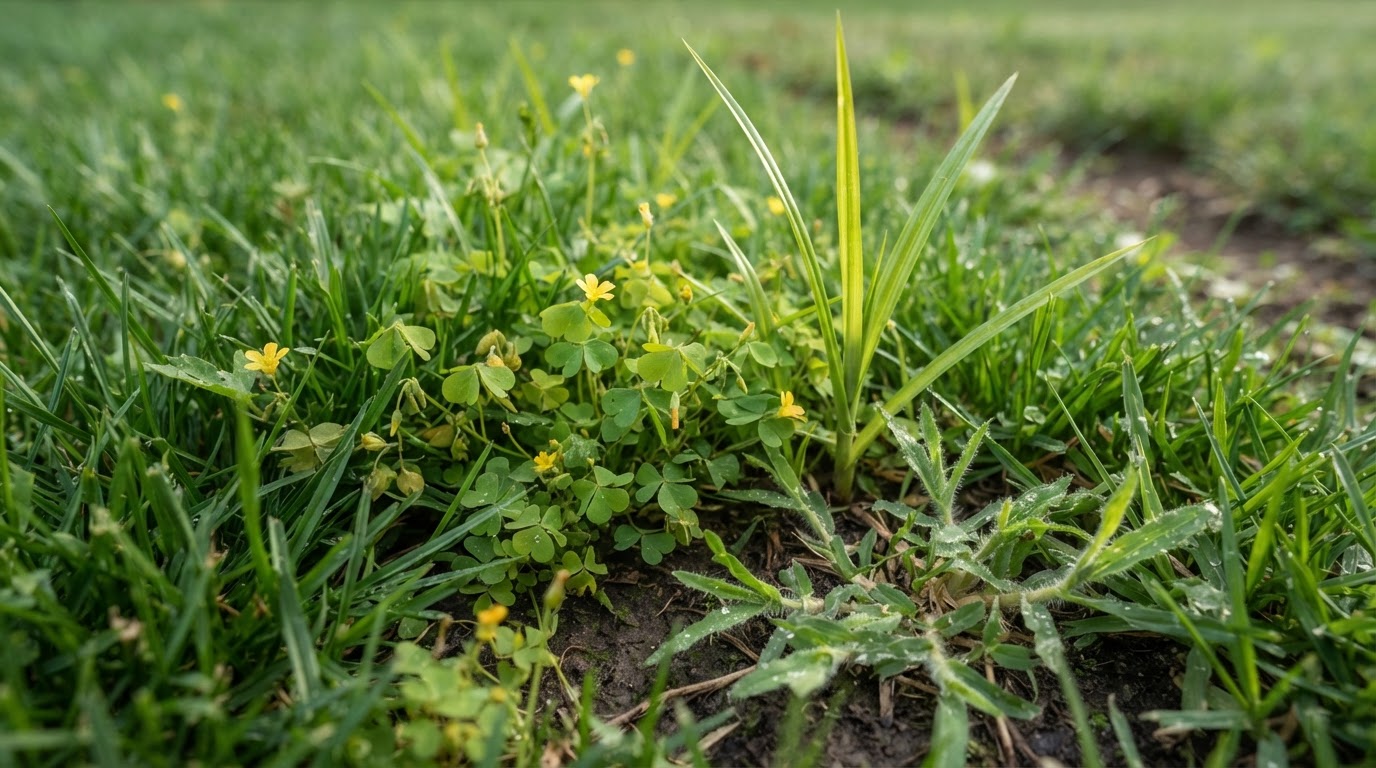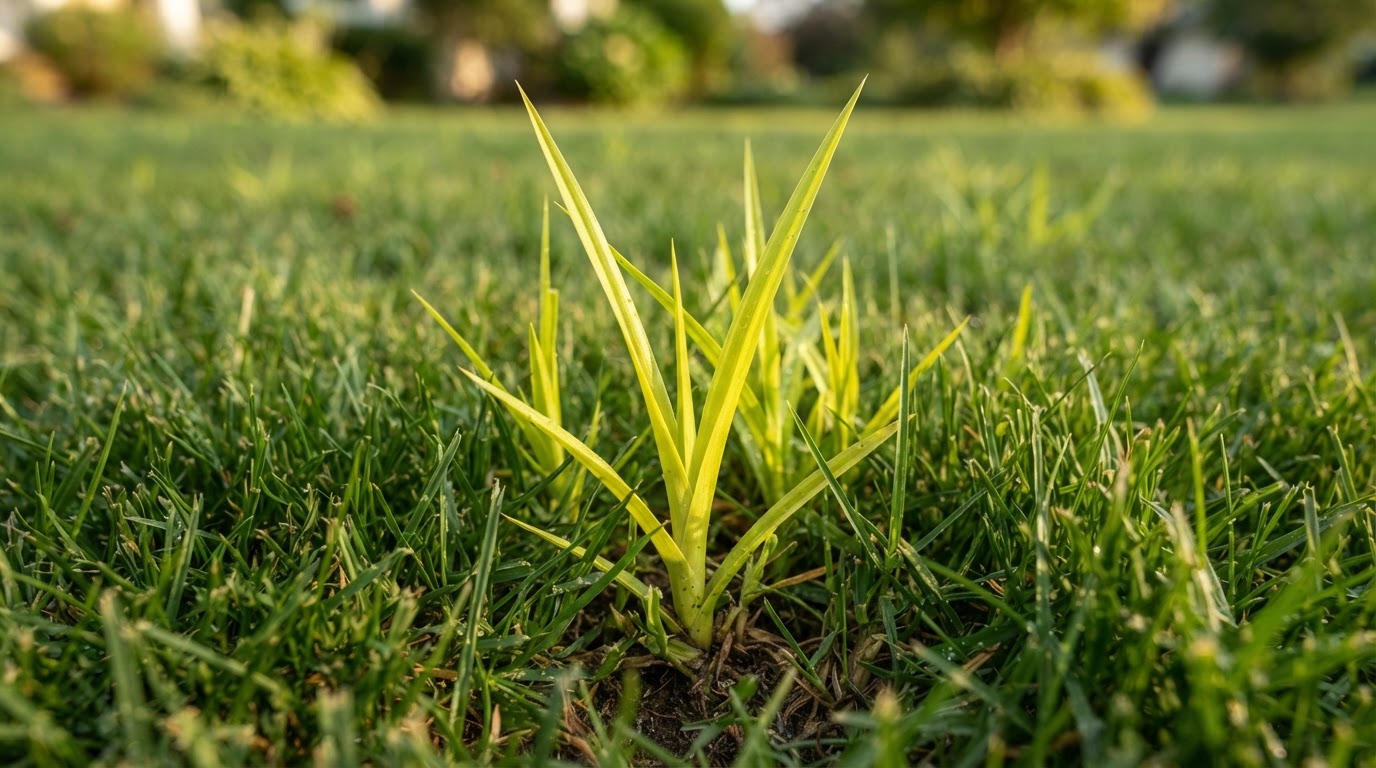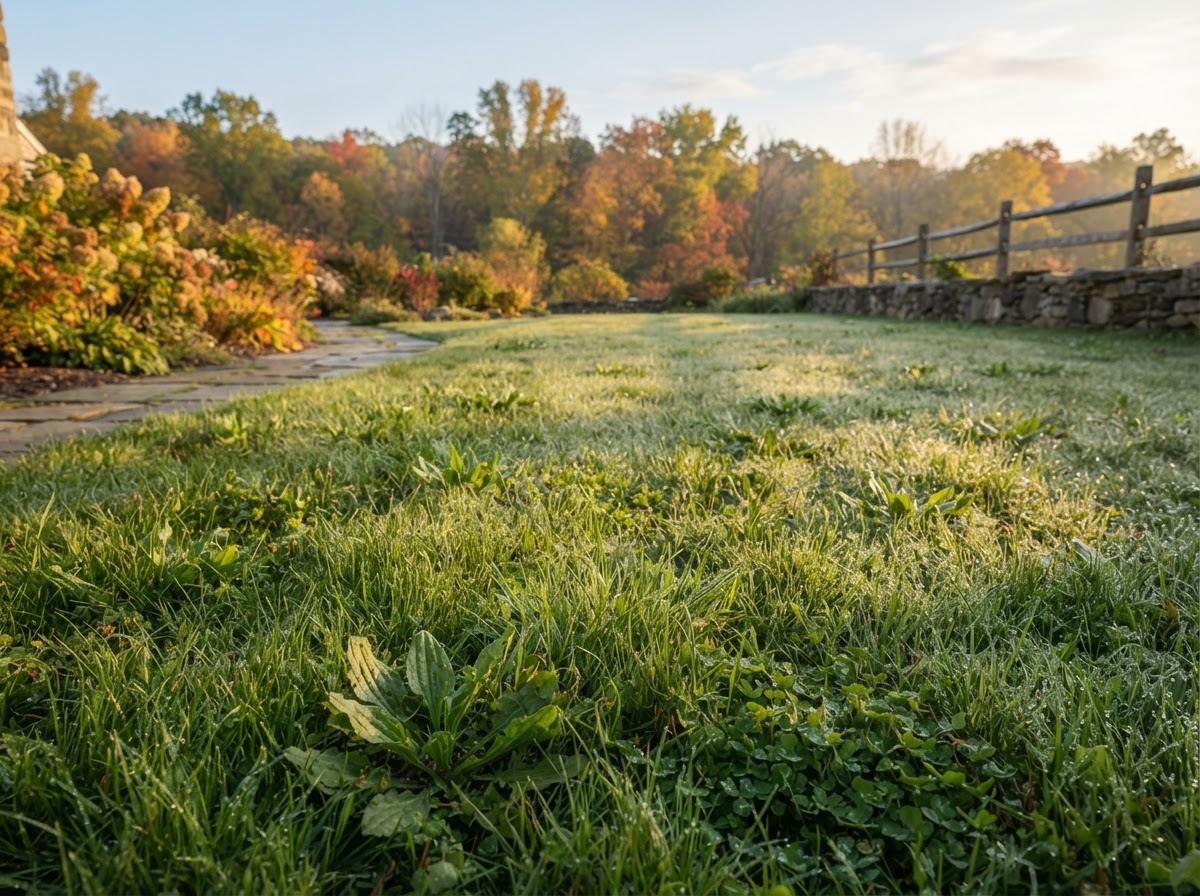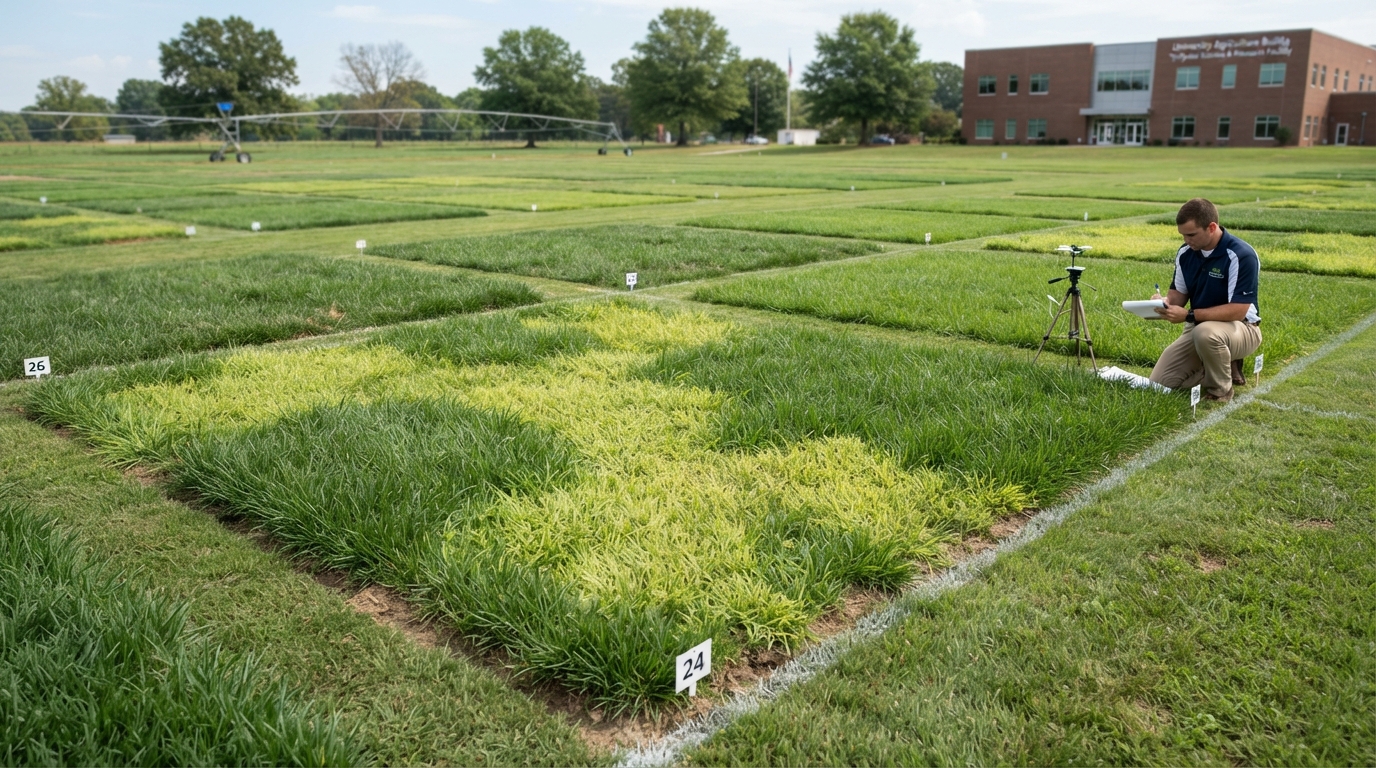
At Golden Green, this is one of the most common lawn questions we receive every summer and fall. Many homeowners think it's just another type of grass, but in a lawn made up of Turf-Type Tall Fescue and Kentucky Bluegrass, Creeping Bentgrass is actually considered an invasive grassy weed.
The good news? It can be controlled — but it takes patience, proper timing, and the right products.
What Is Creeping Bentgrass?
Creeping Bentgrass (Agrostis stolonifera) is a cool-season grass that was originally developed for golf course putting greens because it tolerates extremely short mowing. While it's excellent for golf courses, it usually doesn't belong in a home lawn.
Instead of growing in individual bunches like Tall Fescue, Creeping Bentgrass spreads aggressively by above-ground runners called stolons, creating thick, matted patches that slowly invade surrounding turf.
How to Identify Creeping Bentgrass
Many homeowners mistake it for regular grass because it's green. Here are several signs to look for:
Different Color
Usually a lighter, brighter green than the surrounding lawn. During summer stress, those patches often turn tan or brown before the rest of your lawn.
Soft and Puffy
Creates a dense, fluffy mat. Walking across it often feels softer or spongier than the surrounding turf.
Pulls Up Easily
Because it spreads by shallow, above-ground stolons, entire sections often lift up much more easily than the surrounding lawn.
Visible Stolons
If you pull up a patch, you'll often see thin runners connecting the plants together. Those runners (stolons) are a defining characteristic.
Why Is It So Hard to Get Rid Of?
Unlike many lawn weeds, Creeping Bentgrass is actually another turfgrass species. That means you can't simply spray a standard broadleaf weed killer on it. It also spreads aggressively through stolons, allowing it to continue expanding across the lawn if left untreated.
The Best Way to Control Creeping Bentgrass
At Golden Green, we've found the best long-term results come from weakening the Bentgrass first and then replacing it with desirable turf.
Spray with Tenacity®
Mesotrione (Tenacity®) is one of the few selective herbicides labeled to suppress or control Creeping Bentgrass in many cool-season lawns. Rather than expecting one application to eliminate the entire patch, multiple applications are usually necessary because Bentgrass is extremely persistent. University research and extension recommendations consistently note that sequential fall applications provide the best results. Adding a non-ionic surfactant (when allowed by the product label) improves coverage and helps the herbicide stick to the foliage.
Aerate the Lawn
Once the Bentgrass has been weakened, core aeration helps prepare the area for new seed. Aeration reduces soil compaction, improves oxygen movement, and creates excellent seed-to-soil contact.
Overseed
This is the step many homeowners skip. If you simply kill the Bentgrass and leave bare soil, another weed will likely move in. Instead, overseed with a premium blend of Turf-Type Tall Fescue and Kentucky Bluegrass. A thick lawn is your best long-term defense against future weed invasion.
Stay After It
Creeping Bentgrass isn't usually a one-and-done weed. Some patches require repeated treatments over multiple seasons. If new patches begin appearing, another Tenacity application during active growth — following the product label — can help keep it under control. Consistency is far more effective than trying to eliminate years of infestation in a single treatment.
Why Fall Is the Best Time
Late August through September is one of the best times to renovate lawns in Pennsylvania. After treating the Bentgrass:
Cool temperatures, warm soil, and reduced weed pressure give new grass the best chance to establish.
Don't Guess — Identify It First
Several grasses can resemble Creeping Bentgrass, including Rough Bluegrass (Poa trivialis) and Nimblewill. Since management strategies differ, proper identification is important before treating your lawn. If you're unsure, have the grass identified by a knowledgeable lawn care professional or your local extension service.
Let Golden Green Help
If strange patches are taking over your lawn, don't assume it's just "bad grass." It may be Creeping Bentgrass, and catching it early can make control much easier. At Golden Green, we provide free lawn evaluations and can identify problem grasses, recommend the proper treatment strategy, and help restore your lawn with professional weed control, aeration, and overseeding.
Golden Green — Your Lawn's Best Friend.