What Is Spotted Spurge, and How Do You Control It in Pennsylvania Lawns?
If you are seeing a low, flat weed spreading across thin or stressed areas of your lawn in summer, there is a good chance you are dealing with spotted spurge.
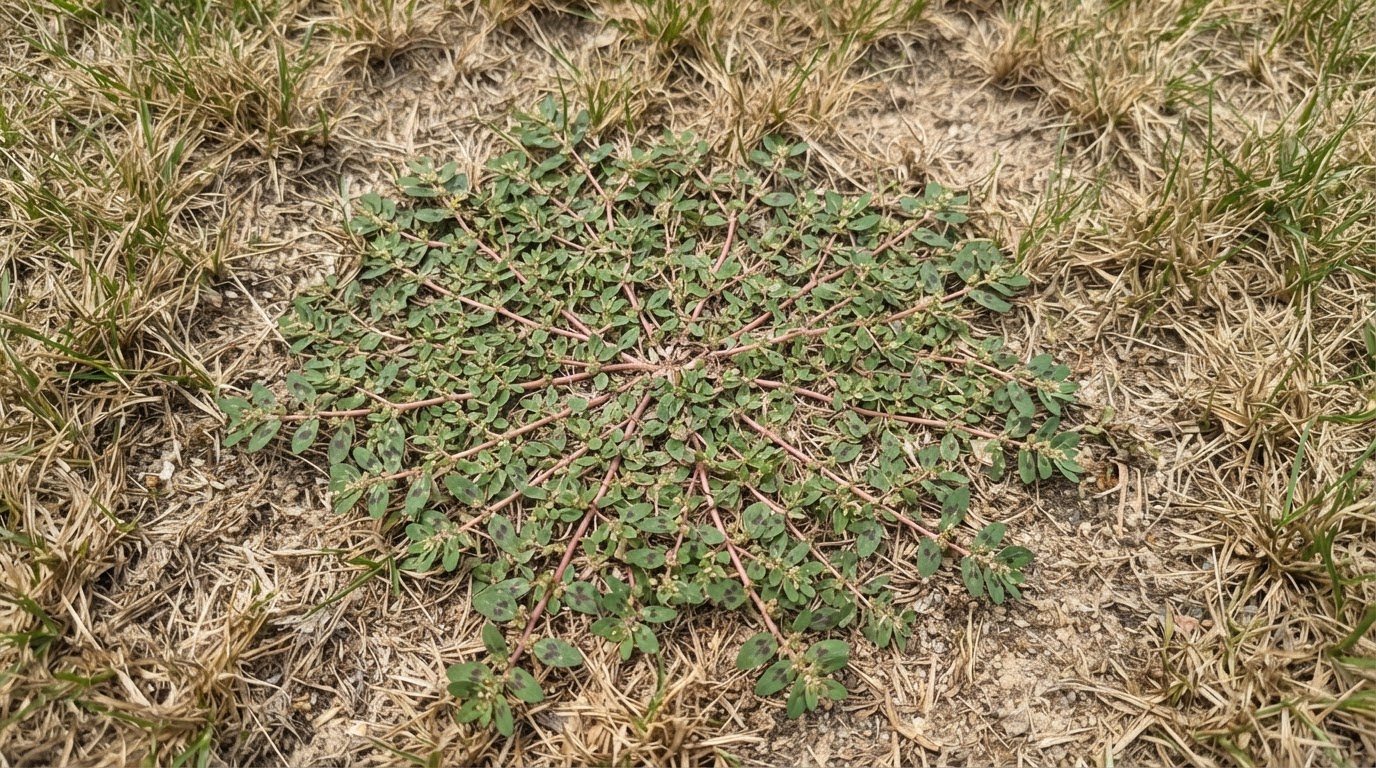
Spotted spurge is a summer annual weed that often shows up in thinning turf, drought-stressed lawns, and newly seeded lawns established in late spring or summer. It tends to grow close to the soil, spread outward like a mat, and become most noticeable during hot summer months.
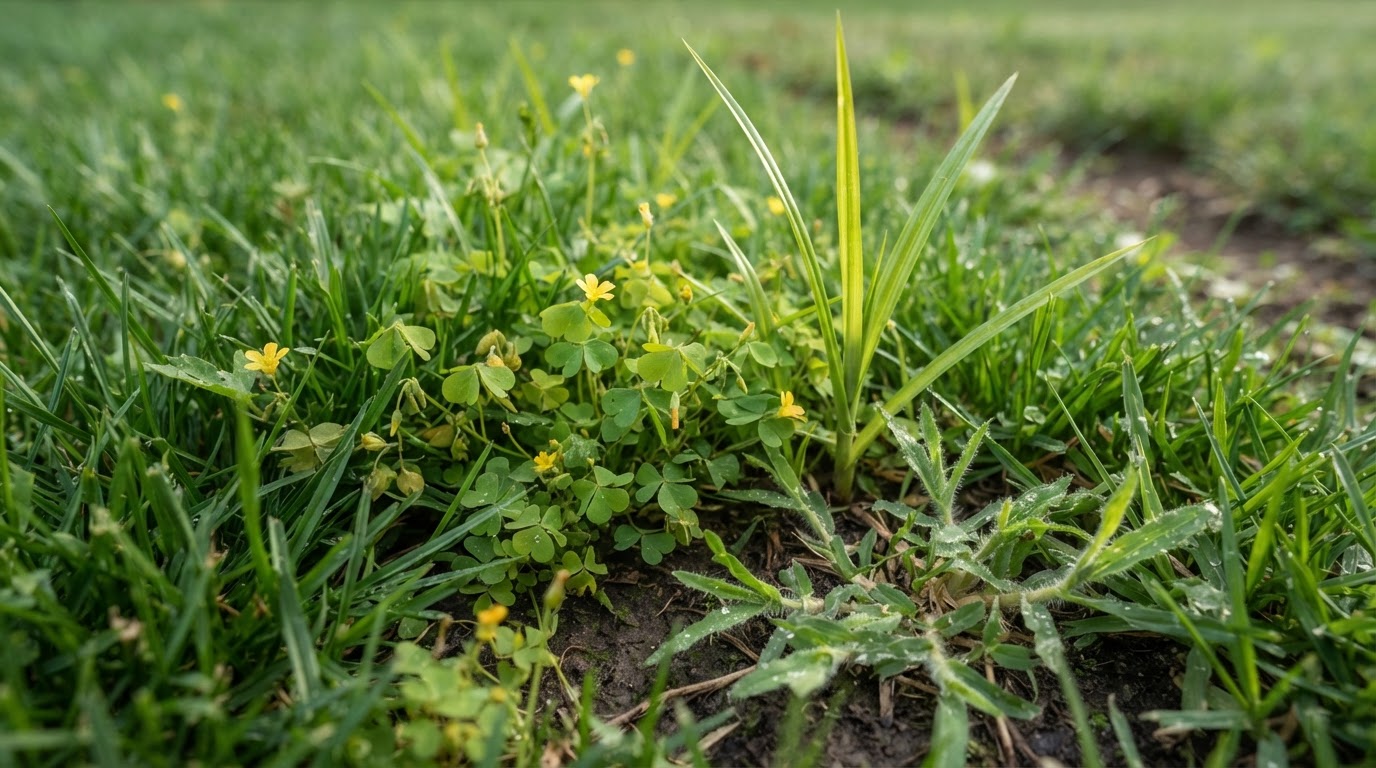
The good news is that spotted spurge can be controlled. But the deeper answer is this: spotted spurge often takes advantage of thin, compacted, hot, or disturbed areas, but its appearance does not necessarily mean the entire lawn is unhealthy. We have seen it appear along curbs, sidewalks, and other hot edges even in lawns that otherwise look excellent. That is why at Golden Green, we do not just think in terms of "What should we spray?" We think in terms of what the lawn is missing, and how we help it become thicker, healthier, and harder for weeds to invade.
Spotted spurge often takes advantage of thin, compacted, hot, or disturbed areas — but its appearance does not necessarily mean the entire lawn is unhealthy. We have seen it appear along curbs, sidewalks, and other hot edges even in lawns that otherwise look excellent.
What Is Spotted Spurge?
Spotted spurge is a broadleaf lawn weed that many homeowners notice in summer when the grass is thinning out or struggling under heat and stress. It is also sometimes called prostrate spurge or spotted sandmat.
It usually appears in places like:
- thin lawns
- drought-stressed turf
- bare areas
- newly seeded summer lawns
- along sidewalks
- near driveway edges
- close to ornamental beds
- hot, open parts of the yard
It is not a tall weed. It stays low, spreads outward from a central point, and often forms a flat patch that hugs the ground.
How to Identify Spotted Spurge
Spotted spurge has a few characteristics that make it easier to recognize once you know what to look for.
Common signs of spotted spurge:
- It grows flat to the ground
- It spreads outward in a radial, mat-like pattern
- Its stems are often pink or red
- The stems may have fine hairs
- The leaves are small and arranged opposite each other
- Older leaves often have a dark purple or reddish blotch in the center
- If the stem is broken, it releases a milky white sap
- It produces tiny white or pink flowers in summer
That milky sap is one of the easiest clues. If you break a stem and see a white sticky liquid, that is a strong sign you may be looking at spurge.
If you are not sure, this is exactly the kind of situation where Golden Green's Picture Your Weed, We'll Spray It for Free offer can help. Send us a photo, and we can help you figure out whether it is spotted spurge or something else.
Why Spotted Spurge Shows Up
Spotted spurge usually is not the first problem. It is often the result of another problem. This weed tends to move into lawns that are already vulnerable.
Common reasons spotted spurge shows up:
- the lawn is too thin
- the turf is drought-stressed
- the soil is compacted
- the lawn was seeded at the wrong time
- the grass is poorly adapted to the site
- mowing or watering habits are hurting turf density
- the lawn has bare spots or open soil
Spotted spurge is especially common in newly established turf seeded in late spring or summer, because that timing often leaves young grass trying to compete during heat and stress.
It also produces sticky seeds that can travel on shoes, mower tires, pet fur, and equipment. So once it gets around, it can spread easily.
What I’ve Seen With Spotted Spurge Over the Years
One thing I have learned from looking at lawns over the years is that spotted spurge can sometimes seem to show up out of nowhere.
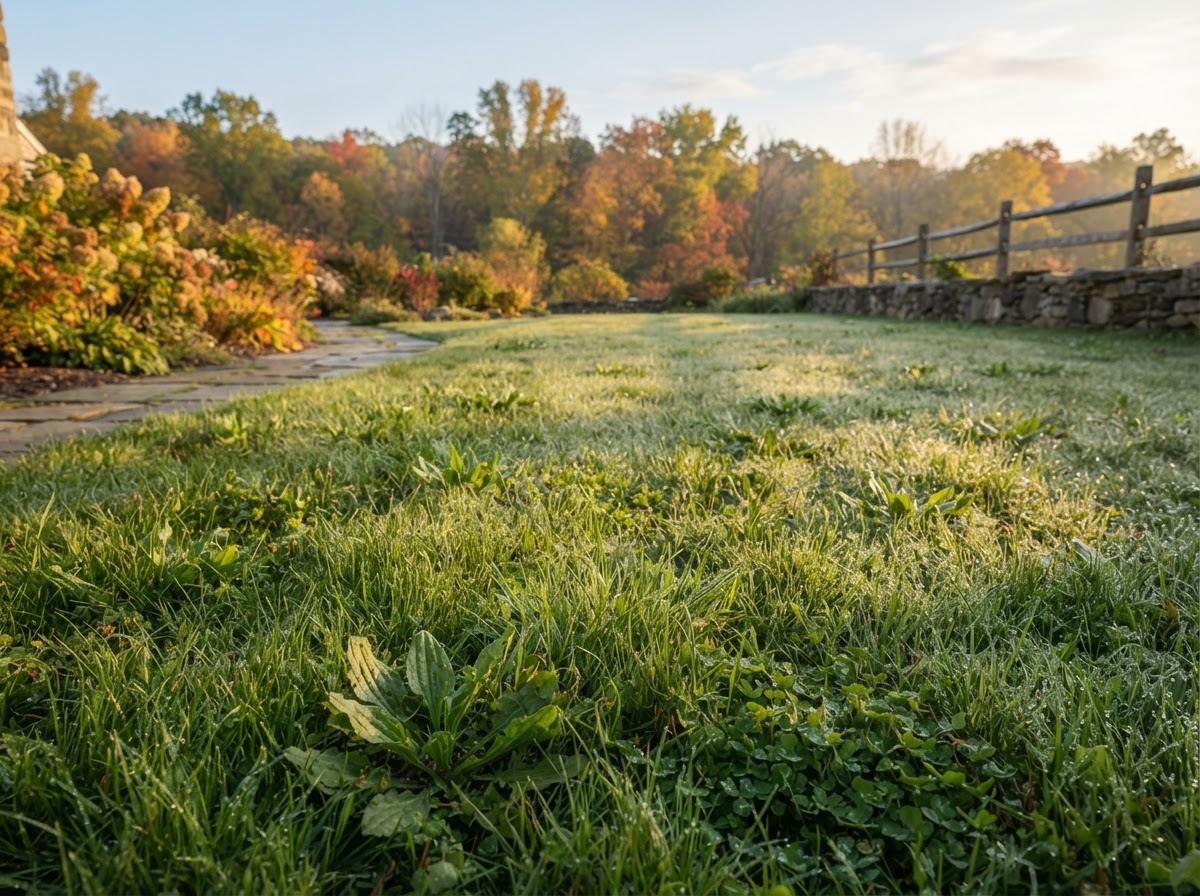
I have been on properties where the lawn looked thick, green, and healthy, and then during the heat of summer—especially around August—spotted spurge suddenly appeared along the edge of the lawn. You will commonly see it where the turf meets a sidewalk, driveway, curb, or roadway.
That is why I would not automatically look at spotted spurge and say, “This lawn is unhealthy.” Sometimes the lawn is actually in pretty good shape. Spotted spurge simply loves the conditions we often get along those edges. The soil can be hotter and drier, turf can become thinner, and there may be more compaction or exposed soil. In subdivisions, I have seen it growing right along the curb where the lawn meets the street, even though the rest of the property looks great.
You can also find it aggressively colonizing bare or compacted areas where grass is struggling to fill the space.
Another thing homeowners should understand is how quickly it can appear. You may not notice much spurge during the spring, and then summer heat arrives and suddenly there it is—flat against the ground and spreading rapidly.
Fortunately, spotted spurge is usually not something that causes me a lot of concern when I see it. In my experience, it responds well to an appropriate broadleaf weed-control application. A properly selected three-way broadleaf herbicide can be very effective on actively growing spurge when used according to the product label.
So when I see spotted spurge in an otherwise healthy lawn, I do not necessarily think the entire lawn program has failed. Sometimes it is simply a summer annual weed taking advantage of a small opportunity. Treat the weed, look at why it appeared in that particular spot, and move on with the overall lawn program. If you want a closer look at how we handle weeds like this, our weed control services walk through the approach.
What Most Homeowners Miss
Most homeowners see the weed and think, “I need something to kill this.” And yes, spotted spurge can be treated. But what many people miss is that spurge is opportunistic. It does not require a failing lawn—it just needs a small opening.
A beautiful lawn can still get weeds. The goal of a professional lawn program is not to somehow create a lawn in which another weed can never germinate. It is to recognize what appears, understand why it favors that location and season, control it appropriately, and continue improving the turf.
That said, spurge does tend to favor spots where the turf is giving ground, so it is still worth asking what that spot is missing:
- turf that is too thin to crowd out weeds
- a lawn under summer stress
- poor grass quality for that particular site
- shallow roots
- poor timing on seeding
- compaction, especially along edges
- weak mowing or watering practices
This is one of the biggest differences in how Golden Green thinks. We do not just look at the weed. We look at why the weed had room to move in—in that specific spot, not necessarily the whole lawn.
A healthy, thick lawn is one of the best defenses against spotted spurge. Fertilizer helps. Weed control helps. But fertilizer alone does not fix weak turf genetics, bad timing, or poor density. That is also why we talk so much about Sunny Seed Mix. A premium lawn is not just fed. It is built. Better grass varieties, overseeded at the right time through aeration and overseeding, can help create a thicker stand of turf that is much harder for summer weeds like spotted spurge to invade. You can read more about the seeding side of that work in our overseeding guide.
What Golden Green Recommends in Pennsylvania
For homeowners in Eastern Pennsylvania, the Lehigh Valley, and surrounding suburban markets, the best long-term strategy against spotted spurge is not random spraying. It is a plan. For cool-season Pennsylvania lawns, Golden Green recommends:
1. Build thicker turf. The best prevention is a lawn with good density. Thin turf gives spotted spurge space to germinate and spread.
2. Seed at the right time. For cool-season lawns in Pennsylvania, late summer and early fall are usually much smarter seeding windows than late spring or summer. That timing gives grass a better chance to establish before summer weed pressure.
3. Improve lawn health. Regular mowing, proper fertility, and turfgrass well-suited to the site all help reduce weed pressure over time.
4. Use pre-emergent weed control when appropriate. Some pre-emergent products can help prevent spotted spurge from germinating from seed.
5. Use post-emergent weed control when needed. Once spotted spurge is visible, post-emergent herbicides can be used to control emerged plants.
6. Stop treating symptoms only. A lawn needs a plan, not just a reaction. That is why Golden Green offers fertilization and weed control, lawn evaluations, aeration and overseeding, and simple weed identification support.
If you are not sure what is in your lawn, start with a photo. Picture Your Weed, We’ll Spray It for Free is a simple, low-pressure way to begin.
Why Sunny Seed Mix Matters
This is where Golden Green is different. Most companies will spray a lawn, fertilize it, and maybe throw down a generic seed blend in the fall. We take seed quality seriously because the type of grass in your lawn affects how it performs.
Sunny Seed Mix is Golden Green's proprietary premium seed blend selected to help lawns grow thicker, greener, stronger, and more resilient over time. That matters because if you aerate and overseed a lawn year after year with stronger grass varieties, the lawn can begin to outperform average turf. It can handle stress better. It can fill in better. And it can make it harder for weeds like spotted spurge to gain ground.
What to Expect Over Time
One treatment can help knock back visible spotted spurge. But that is not the same as fixing the lawn. Here is how the progress tends to unfold:
This season
- visible spurge can often be treated
- the lawn may look cleaner
- weed pressure may be reduced
Over the next season
- better fertility and mowing habits can help improve turf density
- proper timing for pre-emergent control can help reduce future spurge from seed
- fall aeration and overseeding can help strengthen the stand of turf
Over 1–3 seasons
- a thicker lawn can outcompete weeds better
- better grass genetics can improve turf quality
- repeated fall overseeding can help weak lawns become stronger, denser, and more resilient
That is one reason we stand behind our work with the Golden Guarantee and why we care so much about long-term lawn improvement. And when a customer invests in fall seeding, Sunny's Seed Promise reflects that we are not interested in just dropping seed and walking away. We want to help the lawn improve.
Frequently Asked Questions About Spotted Spurge
The Golden Green Perspective
At Golden Green, we believe homeowners deserve more than random applications and vague guesses. If spotted spurge is showing up in a lawn, we do not just ask what product to use. We ask why the lawn gave it room to grow.
That is the difference between treating lawns and managing them with a plan. For homeowners in Pennsylvania who already care about their lawn, clarity matters. Timing matters. Turf quality matters. Better grass matters. And a thicker, healthier lawn is almost always a better long-term answer than just another temporary green-up.
Helpful lawn care advice for Pennsylvania homeowners
If this guide helped you, add Golden Green as a Preferred Source on Google to see more of our lawn care guides in Google Search and AI experiences.
Let Golden Green Take a Look
If you think you may have spotted spurge in your lawn, start simple. Send us a photo through Picture Your Weed, We'll Spray It for Free, or ask us for a lawn evaluation. We will help you figure out what is going on and what the lawn actually needs.
Golden Green — Your Lawn's Best Friend.