Starter fertilizer is formulated for establishing new turf. The three numbers on a fertilizer bag describe its nitrogen, phosphate, and potash content. These supply nutrients that support plant growth. Many starter fertilizers contain more phosphorus than routine lawn-maintenance fertilizers. That does not mean the product with the highest middle number is automatically the best choice — the goal is to supply what the developing grass needs.
Seeding & Nutrition
Should I Use Starter Fertilizer When Seeding My Lawn?
Often, yes — starter fertilizer can help newly seeded grass establish, especially when repairing bare areas or rebuilding a thin lawn. But the right choice depends on your soil, the seeding project, and what fertilizer has already been applied.
Sep 22, 20269 min readBy Golden Green Lawn Care
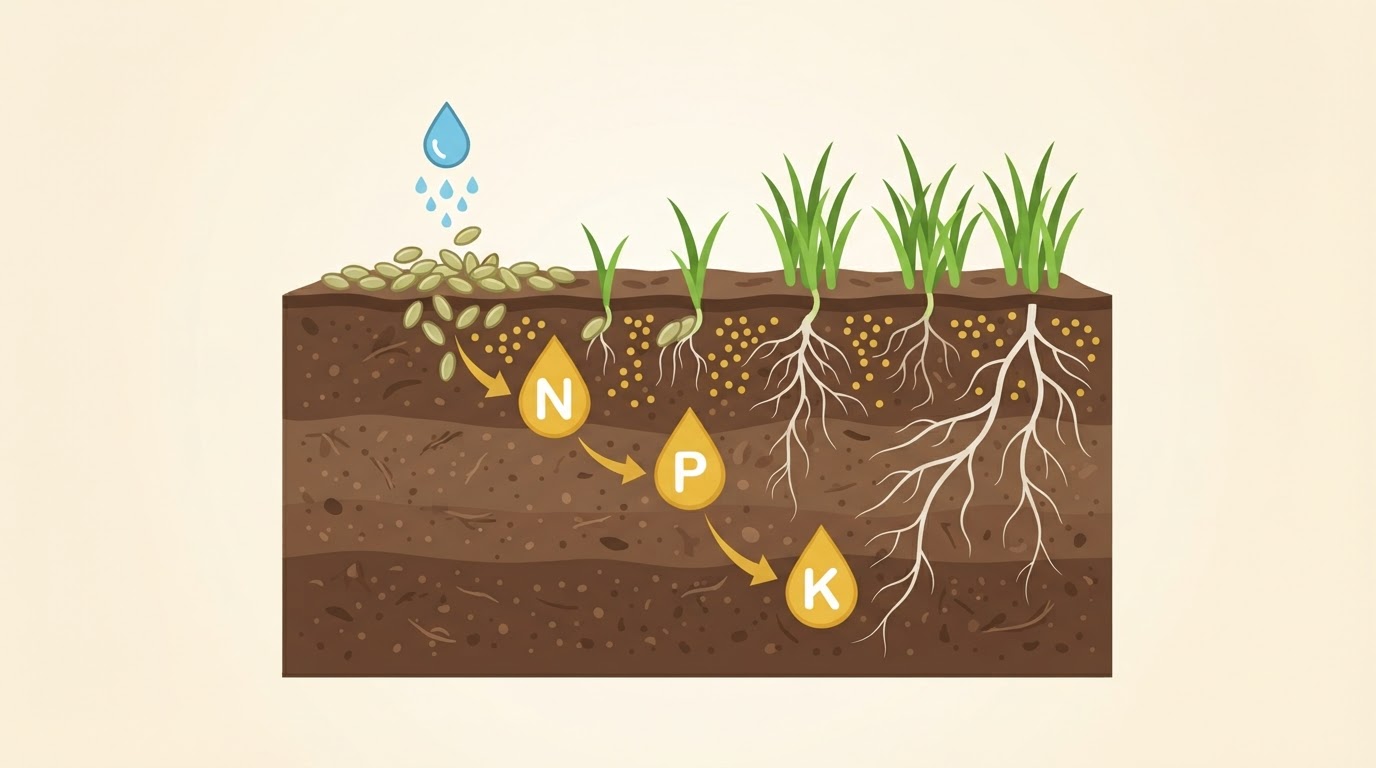
N
Shoots
P
Roots
K
Stress
The Quick Answer
Consider Starter Fertilizer When Establishing New Grass
Consider it when establishing a new lawn, repairing dead patches, or overseeding a thin lawn. Before applying it, work through this list.
- Check soil-test information when available.
- Account for recent and scheduled fertilizer applications.
- Choose a product suitable for newly seeded turf.
- Follow the application rate for the actual area being treated.
- Confirm that any included weed-control ingredient is compatible with your seed.
Starter fertilizer supports seedlings as they develop. Seed still needs suitable temperatures, moisture, oxygen, and soil contact to germinate and establish.
The Basics
What Is Starter Fertilizer?
N
Nitrogen
Supports leaf and shoot growth.
P
Phosphorus
Supports energy transfer and early plant development, including roots.
K
Potassium
Supports normal plant function and stress tolerance.
Penn State recommends using soil testing to determine phosphorus needs before establishing turf. Penn State Extension: Turfgrass Fertilization
Does Starter Fertilizer Make Grass Seed Germinate?
Grass seed has stored reserves that support its initial germination. Fertilizer does not switch that process on. The benefit of starter fertilizer is supplying nutrients as the seedling begins developing roots and leaves.
That distinction matters. If seed sits on dry thatch, receives inconsistent watering, or is planted under unsuitable conditions, adding more fertilizer will not solve the problem. A successful seeding project needs both a suitable seedbed and appropriate aftercare.
What Seed Actually Needs
- Suitable temperatures
- Consistent moisture
- Good soil contact
- Oxygen in the root zone
Fertilizer supports seedlings once they begin developing — it does not replace any of these.
Decision Guide
When Does Starter Fertilizer Make Sense?
At Golden Green, the recommendation starts with the lawn in front of us. A mostly bare renovation and a small overseeding touch-up do not necessarily need the same fertilizer plan.
| Your Project | What to Consider |
|---|---|
| Establishing a new lawn | Plan nutrients around soil-test results and establishment needs. |
| Heavy overseeding of thin turf | Starter fertilizer may help, but coordinate it with existing lawn treatments. |
| Repairing bare spots | Measure and treat the repair area accurately rather than fertilizing the entire yard unnecessarily. |
| Reseeding after grub damage | Address active damage and prepare the soil before expecting seed and fertilizer to work. |
| Light overseeding of a well-fed lawn | Check whether another application is needed. |
| Seeding where phosphorus is already high | Additional phosphorus may offer little benefit; choose nutrients based on the soil and project. |
Establishing a new lawn
Plan nutrients around soil-test results and establishment needs.
Heavy overseeding of thin turf
Starter fertilizer may help, but coordinate it with existing lawn treatments.
Repairing bare spots
Measure and treat the repair area accurately rather than fertilizing the entire yard unnecessarily.
Reseeding after grub damage
Address active damage and prepare the soil before expecting seed and fertilizer to work.
Light overseeding of a well-fed lawn
Check whether another application is needed.
Seeding where phosphorus is already high
Additional phosphorus may offer little benefit; choose nutrients based on the soil and project.
Why Starter Fertilizer Fits With Aeration and Overseeding
Aeration, seed, and fertilizer each have a different job. For a thin lawn, these services can work well together. However, bare or heavily damaged spots may need raking, surface loosening, or other preparation beyond aeration alone.
Core Aeration
Helps relieve compaction. Removes soil cores and creates openings that can improve conditions for rooting.
Overseeding
Adds new grass plants. Seed still needs to reach soil rather than remain suspended in old grass or thatch.
Fertilization
Supplies nutrients. Supports the plants developing in that prepared environment.
When Should You Apply Starter Fertilizer?
Starter fertilizer is commonly applied just before or just after seeding, as part of the establishment process. The exact method should follow the selected product's directions.
Penn State describes that timing in its lawn-establishment guidance. Penn State Extension: Lawn Establishment
The practical sequence for homeowners:
- 1Identify and correct the reason the area became thin or bare.
- 2Prepare the seedbed and address compaction where needed.
- 3Apply suitable seed and the planned fertilizer according to their directions.
- 4Begin the watering routine needed for establishment.
- 5Coordinate subsequent mowing, feeding, and weed control with the new grass.
If you already seeded and forgot starter fertilizer, do not assume the project has failed. Review what nutrients are available and whether an application is appropriate now.
Already on a Lawn Program? Check Before Adding More
A scheduled fall feeding and a separate starter application can overlap. Before buying another bag, tell your lawn care provider when you seeded, what product you plan to use, and whether anything has already been applied. More fertilizer is not automatically more helpful.
Golden Green coordinates seeding with the six-step fertilization and weed control program so the work supports one plan.
Starter fertilizer supports developing seedlings; it does not make seed germinate by itself.
Coordinate starter fertilizer with recent and scheduled fertilizer applications.
Check weed-control compatibility before seeding.
Fertilizer cannot compensate for poor soil contact, insufficient moisture, or unsuitable timing.
Can You Use Starter Fertilizer on Small Bare Spots?
Yes, when the area needs it — but small spots are easy to overapply. A bag may list coverage for thousands of square feet. A patch beside the driveway might cover only a small fraction of that. Measure the repair area and calculate the amount from the label. Avoid estimating by throwing a handful onto each spot. Uneven application can concentrate fertilizer around vulnerable seedlings.
Preparation still matters. Remove loose dead material, loosen the soil surface where necessary, and create good seed-to-soil contact. If the spot repeatedly fails, investigate the cause. Shade, traffic, compacted soil, drainage, or active pests may need attention before another round of seed.
Starter Fertilizer and Weed Control: Read the Whole Label
Not every fertilizer bag is suitable for seeding. Some products include herbicides. Many crabgrass preventers and other weed-control products can interfere with grass establishment or require a waiting period before reseeding. Certain products are specifically labeled for use with particular grass species at seeding. Do not assume all "weed and feed" or "starter plus weed control" products work the same way.
Check the grass species, seeding restrictions, and application directions — not just the word "fertilizer" on the bag. This is especially important during spring repairs, when weed-prevention schedules and seeding plans may conflict.
What Pennsylvania Homeowners Should Know About Phosphorus
Pennsylvania restricts phosphorus applications to lawns, with exceptions that include establishing, reestablishing, or repairing turf and certain soil-test-supported applications. That makes starter fertilizer relevant to legitimate seeding and repair work. It does not mean every lawn needs extra phosphorus whenever a little seed is added.
Match the product and application to the actual project, and follow current state requirements. Keep fertilizer on the lawn. Sweep stray granules off pavement and back onto the intended treatment area, and avoid application conditions that could wash nutrients away.
Is Fall Better Than Spring for Seeding?
For Pennsylvania cool-season lawns, late summer into early fall is generally the preferred establishment period. Spring seeding can work, particularly for repairs, but young grass has less time to mature before summer stress. Starter fertilizer may be useful in either season when the nutrient plan calls for it. It cannot make up for a shrinking growing window. By late September, location, seed species, soil temperature, and upcoming weather become particularly important. Slower-establishing grasses need more time.
Watering Determines Establishment
Once the seed is down, fertilizer cannot substitute for moisture. Keep the seedbed consistently moist during germination without flooding it. As seedlings establish, gradually shift toward deeper, less frequent watering. Do not judge the whole project by the first seedlings you see — different grasses emerge at different rates.
Mowing New Grass
Avoid heavy traffic on new grass. Begin mowing when seedlings reach an appropriate mowing height and are rooted firmly enough to tolerate it. Use gentle turns and avoid removing more than about one-third of the blade at once.
Coordinate Starter Fertilizer With the Lawn Program
A suitable starter fertilizer may be appropriate when repairing and seeding damaged areas. Choose it according to the lawn's needs, soil information, product directions, and applicable requirements. Do not automatically add starter fertilizer on top of a scheduled application — coordinate the two so the lawn receives an appropriate amount. Fertilizer supports growth; it cannot revive dead plants.
How Sunny's Seed Mix and Sunny Seed Promise Fit In
Seed selection helps determine what kind of lawn you are building. Soil preparation, nutrients, and aftercare help those plants establish. Golden Green uses Sunny's Seed Mix as part of its approach to improving turf density and long-term lawn performance. Appropriate starter fertilizer can support that establishment process.
Sunny Seed Promise
Unlimited Seeding Services as Needed During the Season
For homeowners enrolled in the six-step fertilization and weed control program plus aeration and seeding, Sunny Seed Promise provides unlimited seeding services as needed during the lawn care season. If areas need further attention, we assess them and coordinate follow-up with suitable growing conditions. That support matters because lawns do not all respond at the same speed.
Eligibility is precise: the six-step fertilization and weed control program plus aeration and seeding. Starter fertilizer alone does not qualify a customer for Sunny Seed Promise.
Sunny Seed Promise is the seeding benefit. The broader Golden Guarantee reflects our commitment to standing behind our service.
Frequently Asked Questions
Starter Fertilizer & Seeding Questions
Give Your New Grass a Coordinated Start
If you are investing in seeding, it is worth getting the details right. Golden Green looks at the condition of your lawn, the seedbed, fertilizer timing, watering, and follow-up needs together. We can help you decide whether starter fertilizer belongs in your project and how to coordinate it with the rest of your lawn care.
For homeowners across the Lehigh Valley and surrounding Eastern Pennsylvania communities, that means a clearer plan for building a thicker lawn.
Plan My Aeration and SeedingGolden Green Lawn Care — Your Lawn's Best Friend.
Related Articles
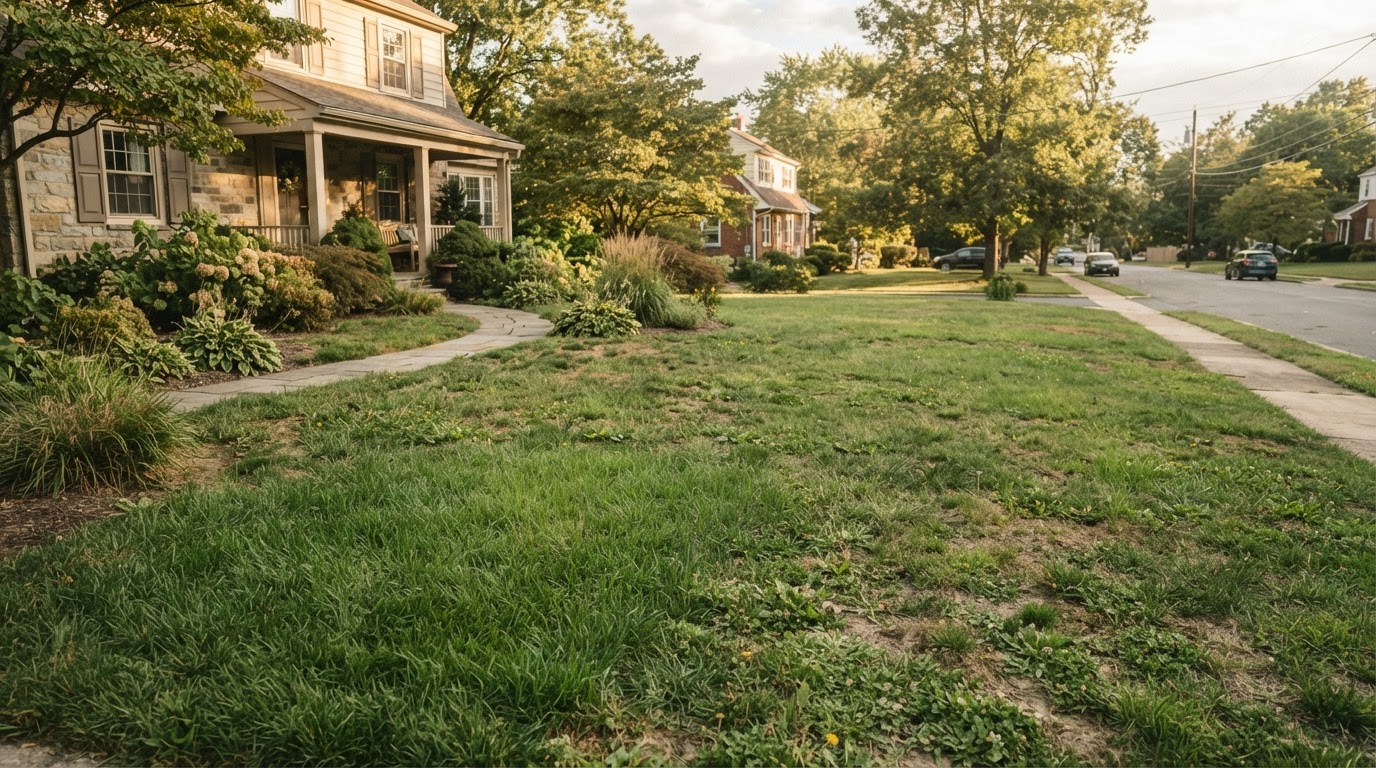
Lawn Care Strategy• 10 min read
How Long Does Lawn Care Take to Work in Pennsylvania?
Learn what affects lawn-care results in Pennsylvania, how treatment response differs from rebuilding thin turf, and when to ask for a reassessment.
Read Article
Behind the Scenes• 9 min read
What Does "Your Lawn’s Best Friend" Mean?
Discover what Golden Green’s "Your Lawn’s Best Friend" promise means: clear estimates, thoughtful lawn care, practical guidance, and accountable service.
Read Article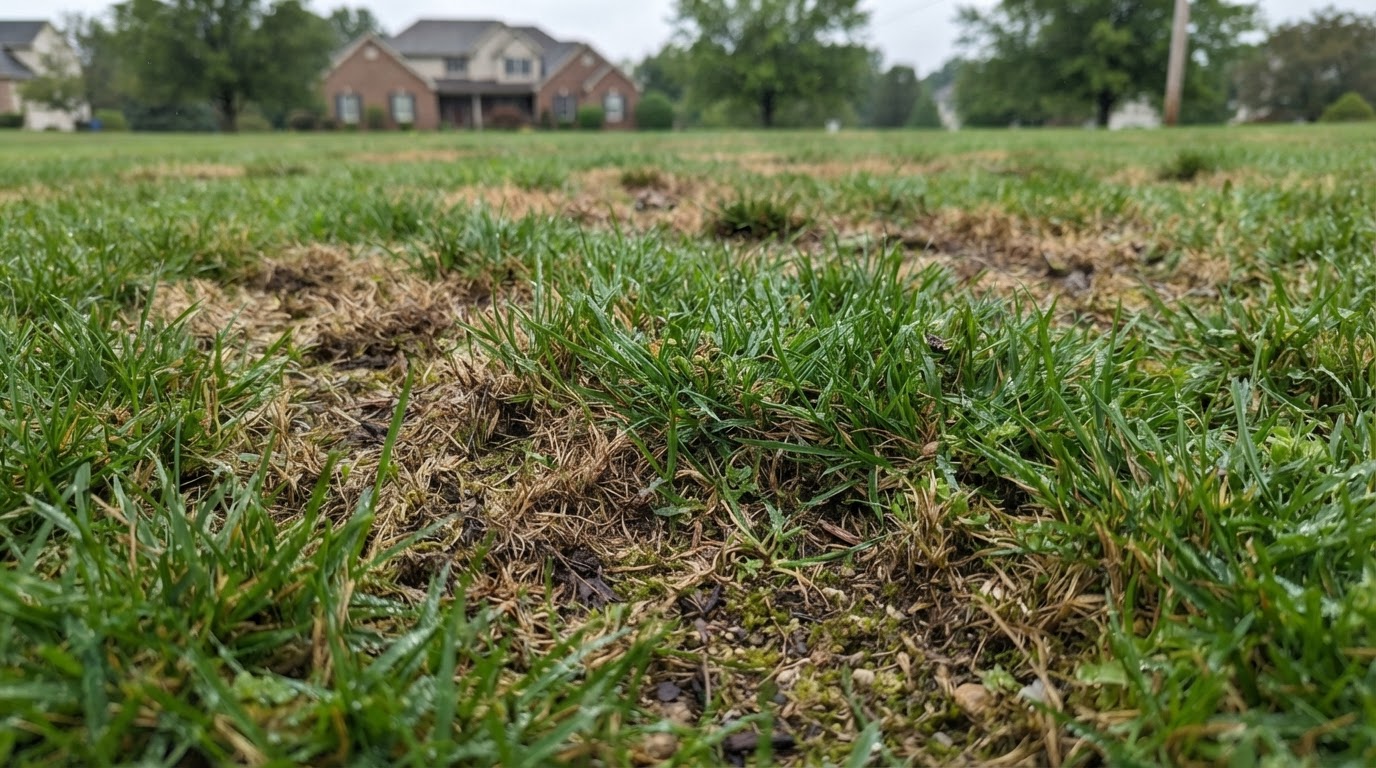
Lawn Disease & Turf Health• 10 min read
Fertilizer Burn or Lawn Disease? What Damaged Your PA Lawn?
Brown patches after lawn treatment? Learn what may suggest fertilizer injury or disease, what records matter, and how to investigate before treating again.
Read ArticleGolden Green Lawn Care Services