Do You Need to Water After Grub Treatment in Pennsylvania?
The homeowner approves the treatment. The technician measures out the product, treats the lawn, and leaves the service instructions. The job is finished. Or is it?
When we are treating an active white-grub problem, one of the most important parts of the job may still need to happen: watering the treatment into the appropriate part of the lawn. For the granular products discussed here, irrigation is part of the application — not an optional extra.
This is why, at Golden Green, I want more than a record showing that somebody spread a certain number of pounds. I want to know what we were treating, which product we selected, how much was applied, and how the required watering was handled.
A grub treatment is not finished simply because the spreader has left the lawn.
If the homeowner is responsible for irrigation, we need to explain that before the application — not after the lawn fails to respond.
The Quick Answer
A grub treatment is not finished simply because the spreader has left the lawn.
For the granular products discussed here, watering the treatment into the root zone is part of the application — not an optional extra. The right question is not, “Did the sprinkler run?” It is, “Did we follow the watering directions for this product and this target pest?”
The Complete Job in Three Stages
A grub treatment is more than running a spreader across the property. These three stages keep the whole job visible.
Water the Treatment
Move the product through the thatch and into the root zone where grubs feed — following this product's label, not a guess at minutes.
Confirm the Rate
The application rate depends on the target pest. White grubs, chinch bugs, and sod webworms are not the same problem.
Repair the Lawn
Killing grubs addresses the insect. Lawn repair addresses the turf the insect left behind. Those can be two different conversations.
Why Water Matters After Curative Grub Control
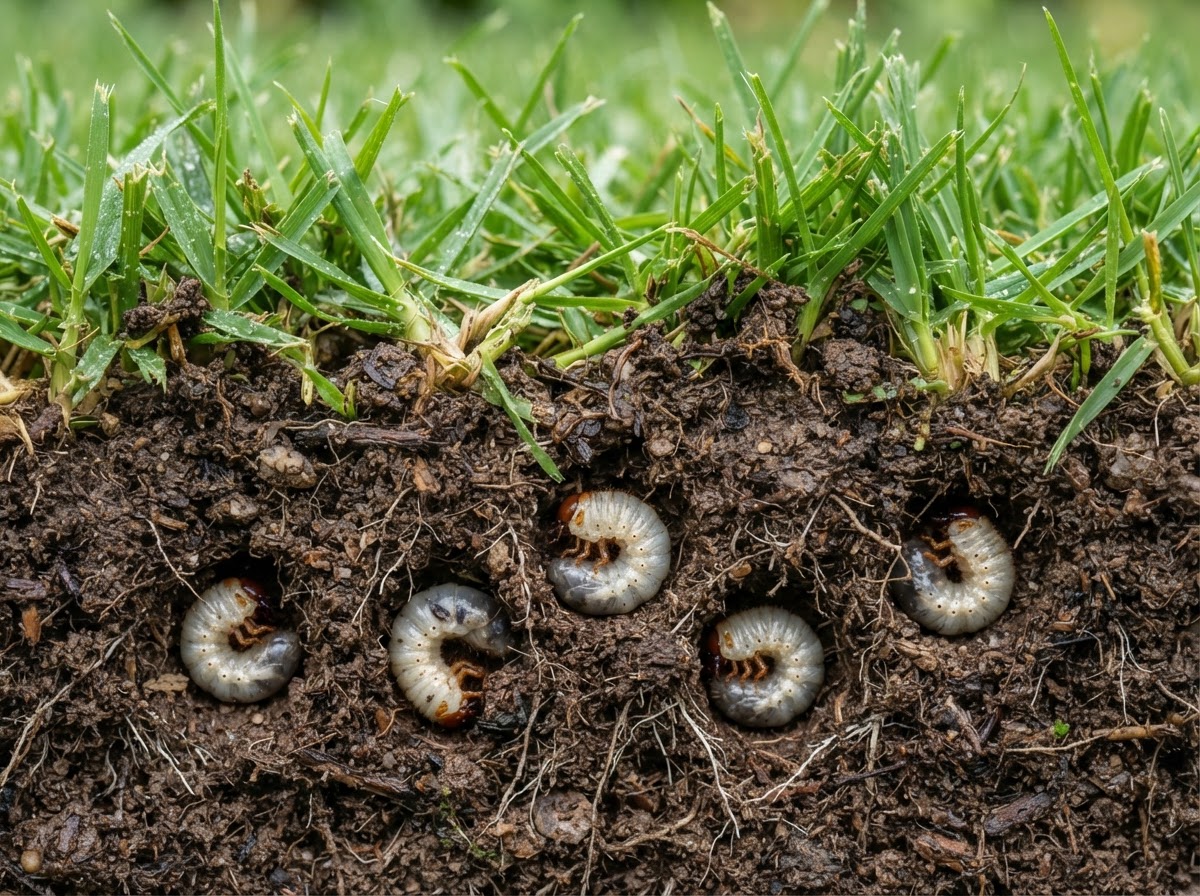
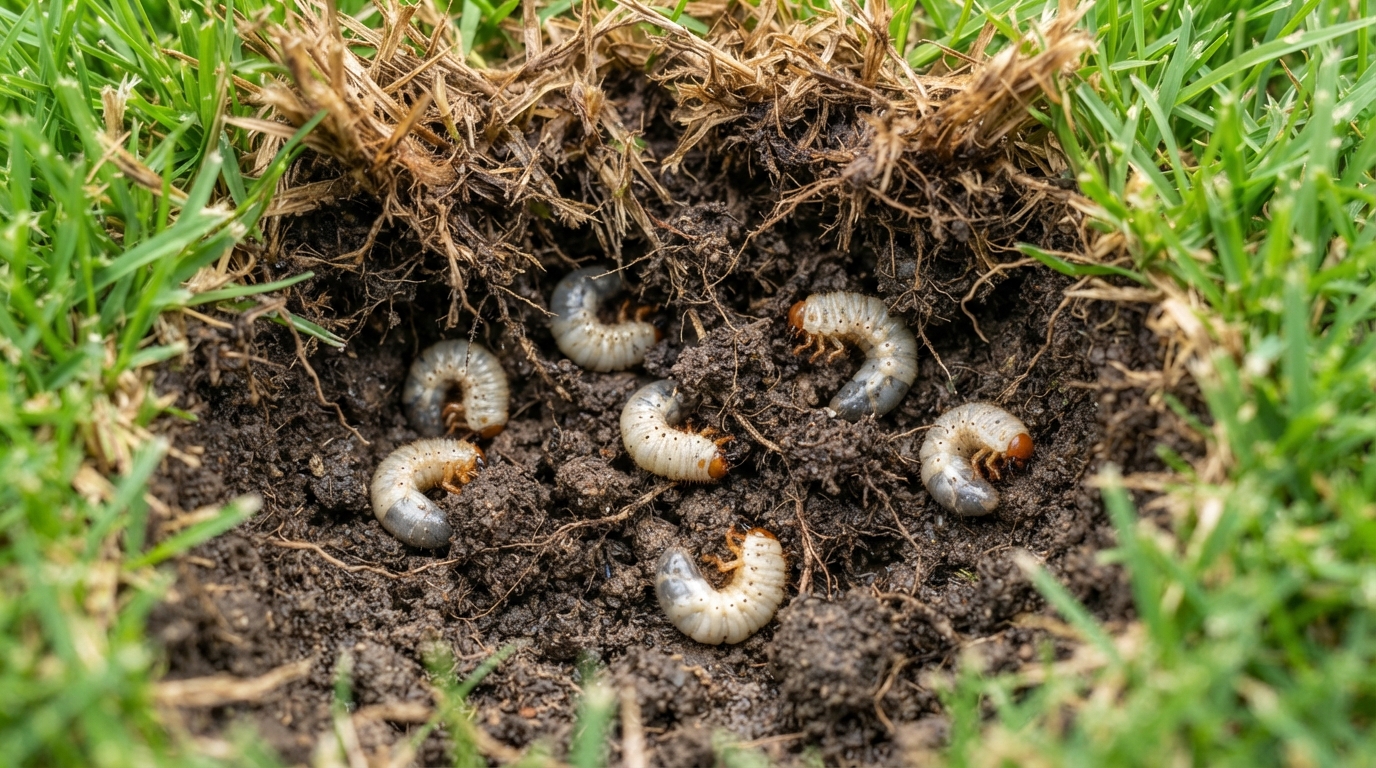
White grubs feed on grass roots. Getting an appropriate insecticide into the area where they are feeding is an important part of successful control. Michigan State University emphasizes watering grub-control products into the ground immediately after application and identifies irrigation as an important contributor to treatment performance.
That is different from merely making the grass blades look wet. A lawn can be covered in morning dew while the soil underneath remains comparatively dry. Wet foliage alone does not establish that a treatment has reached its intended location. That is the distinction I want homeowners to understand:
Breaking a granule apart is not the same as moving the treatment through the turf and into the root zone.
The first question should not be, “Did the sprinkler run?” It should be, “Did we follow the watering directions for this product and this target pest?”
DuoCide and Dylox: Which Products Are We Discussing?
Different formulations, not interchangeable bags of the same material. Match the formulation and registration number on the product being used.
The Andersons DuoCide Insect Control
“Product must be watered in immediately after application to lawns.”
The Andersons directs users to water DuoCide into lawns immediately. Subsurface-pest directions call for enough irrigation to wet the underlying soil.
The dispersing-granule technology is useful, but it does not remove the explicit lawn-watering requirement.
Dylox 6.2 Granular Insecticide
Requires watering promptly, on the application day, sufficiently to wet the remaining thatch and move the product to the root zone.
For white grubs under dry conditions, the label calls for prewatering. It specifies no more than ½ inch of thatch. Qualifying rainfall after treatment can satisfy the watering provision.
That is not permission to leave the product waiting for rain several days later.
Can Morning Dew Activate DuoCide?
DuoCide uses The Andersons’ dispersing-granule technology. Water helps the granules break into smaller particles and distribute the treatment. That technology is useful, but the manufacturer still directs immediate watering-in after lawn application. The label states: “Product must be watered in immediately after application to lawns.”
There is an important nuance: another paragraph discusses activation without immediate irrigation. However, that paragraph also explains that water must carry the material through the thatch. It does not remove the explicit lawn-watering requirement. Subsurface-pest directions call for enough irrigation to wet the underlying soil.
I would not substitute “there should be a heavy dew tomorrow” for that instruction.
For me, the practical lesson is straightforward: understand the granule technology, but do not confuse it with permission to skip the rest of the application. I want the watering plan established before the treatment goes down.
Dew Is Not a Substitute for Required Watering-In
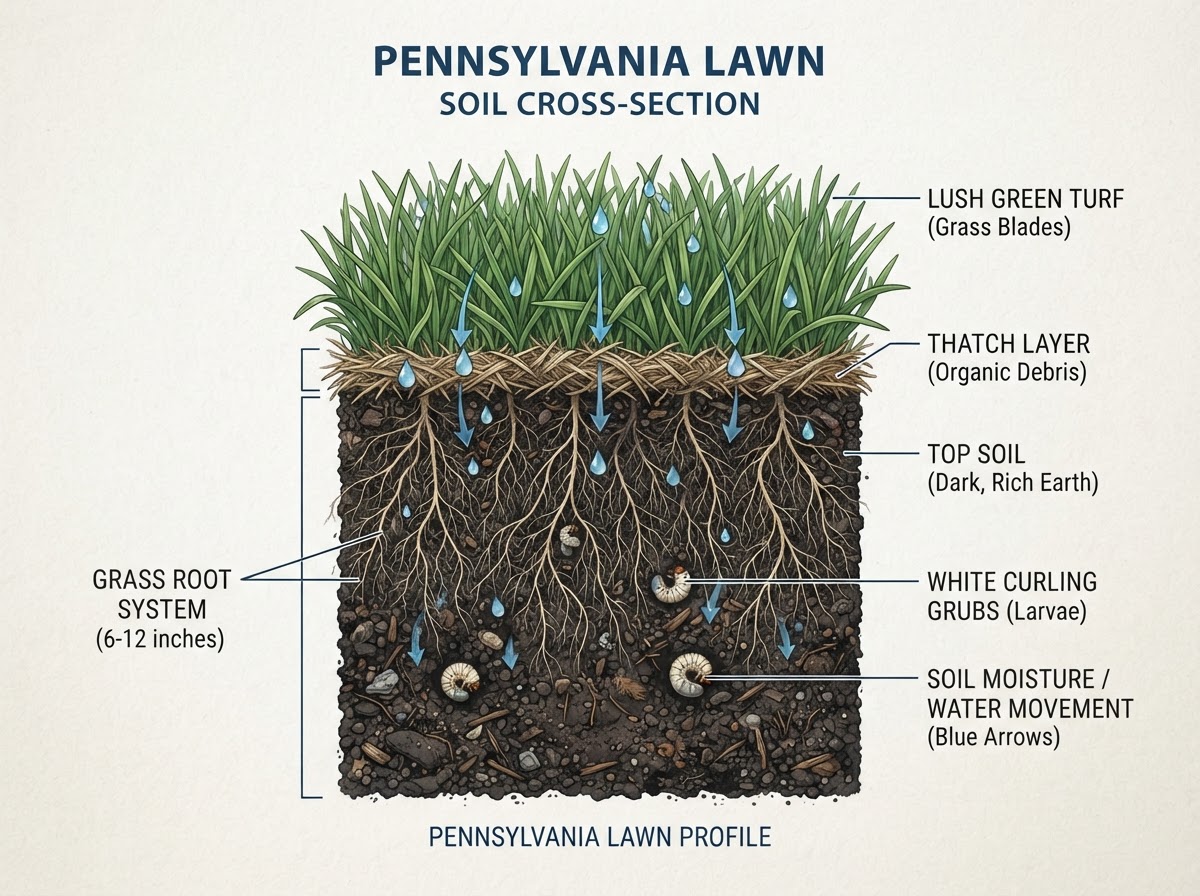
Breaking a granule apart is not the same as moving the treatment through the turf and into the root zone. Here is where the water needs to go:
Turf canopy
Wet foliage alone does not mean the treatment reached its target.
Thatch layer
Water must carry the material through the thatch — breaking a granule apart is not the same as moving it through.
Root zone
This is where white grubs feed — and where the treatment belongs.
University guidance: Michigan State University recommends at least ½ inch of irrigation immediately after chemical grub treatment. That is university guidance — not a numeric requirement printed on both of these labels. Use it alongside the actual product directions and a site assessment.
How Should Dylox 6.2 Be Watered In?
The reviewed Dylox label requires watering promptly, on the application day, sufficiently to wet the remaining thatch and move the product to the root zone. For white-grub treatment under dry conditions, it calls for prewatering. It also specifies no more than ½ inch of thatch. Qualifying rainfall after treatment can satisfy the watering provision; that is not permission to leave the product waiting for rain several days later.
That is why I do not want a homeowner hearing only, “We applied grub control.” They should understand whether the lawn needed preparation, when watering must happen, and who is responsible for doing it.
How Much Water Should You Apply?
The two labels reviewed describe watering by its purpose and required timing rather than assigning one fixed irrigation depth in inches. For an additional practical reference, Michigan State University recommends at least ½ inch of irrigation immediately after chemical grub treatment. That is university guidance — not a numeric requirement printed on both of these labels. It should be used alongside the actual product directions and an assessment of the site, not as an excuse to create runoff.
Measure Water — Don’t Guess at Minutes
- Use a rain gauge or straight-sided catch containers — not just sprinkler runtime.
- Twenty minutes from one sprinkler may deliver a different amount than twenty minutes from another.
- Plan the measurement and set up irrigation before treatment so you are not entering a treated area afterward.
- More water is not automatically better — both labels prohibit irrigation to runoff.
Both labels prohibit irrigation to runoff and restrict entry until the required watering is completed and the treated surface has dried. Do not describe either pesticide as automatically “pet safe.”
For Golden Green, this is a communication issue as much as an application issue. If somebody tells me, “I watered for a while,” I still do not know what the lawn received. I would rather help establish a usable plan beforehand.
More Water Is Not Automatically Better
The objective is to place the treatment appropriately — not wash it down the driveway. Both labels prohibit irrigation to runoff. They also restrict entry until the required watering is completed and the treated surface has dried, with exceptions for people performing the watering or incorporation work. Follow the full handling and protective-equipment requirements. That matters for children and pets, too. I would not describe either pesticide as automatically “pet safe,” and I would not replace its instructions with a generic waiting period.
The product-specific directions belong in the service communication.
If a property cannot be irrigated appropriately, that needs to be addressed before scheduling — not discovered after spreading the material.
The Correct Application Rate Depends on the Pest
This is another reason accurate identification matters. White grubs, chinch bugs, and sod webworms are not the same problem. Although these products have multiple labeled uses, the application rate is not necessarily identical for each insect.
The Correct Rate Depends on the Pest
White grubs, chinch bugs, and sod webworms are not the same problem. The labeled rate is not necessarily identical for each.
| Target pest | DuoCidelb / 1,000 sq. ft. | Dylox 6.2lb / 1,000 sq. ft. |
|---|---|---|
| White grubs (curative) | 4–8 lb | 3 lb |
| Chinch bugs | 2–4 lb | 3 lb |
| Sod webworms | 2 lb | 2–3 lb |
Selected label rates per 1,000 sq. ft. — not complete directions. Equipment calibration, permitted uses, application intervals, and annual limits still apply.
For a hypothetical 12,000-sq-ft treatment area, curative rates calculate to roughly 48–96 lb of DuoCide (depending on the labeled rate selected) or 36 lb of Dylox 6.2. These are alternative product calculations — not a recommendation to combine them. More pounds does not mean a product is “stronger.”
These are selected label rates, not complete directions. DuoCide also has a separate preventative rate; do not confuse it with the curative row. Equipment calibration, permitted uses, application intervals, and annual limits still apply. A rate range is not an invitation to choose the highest amount because the lawn looks bad. We need an appropriate treatment decision — not simply more product.
Why Golden Green works in units of 1,000 square feet
We measure the treatment area. We establish the appropriate rate. Then we calculate the material required. And the difference in pounds does not tell you which product is “stronger.” The ingredients, concentrations, and formulations differ.
The meaningful question is whether the chosen product was applied appropriately — not whether somebody emptied a larger bag.
Diagnose the Lawn Before Recommending a Rescue Treatment
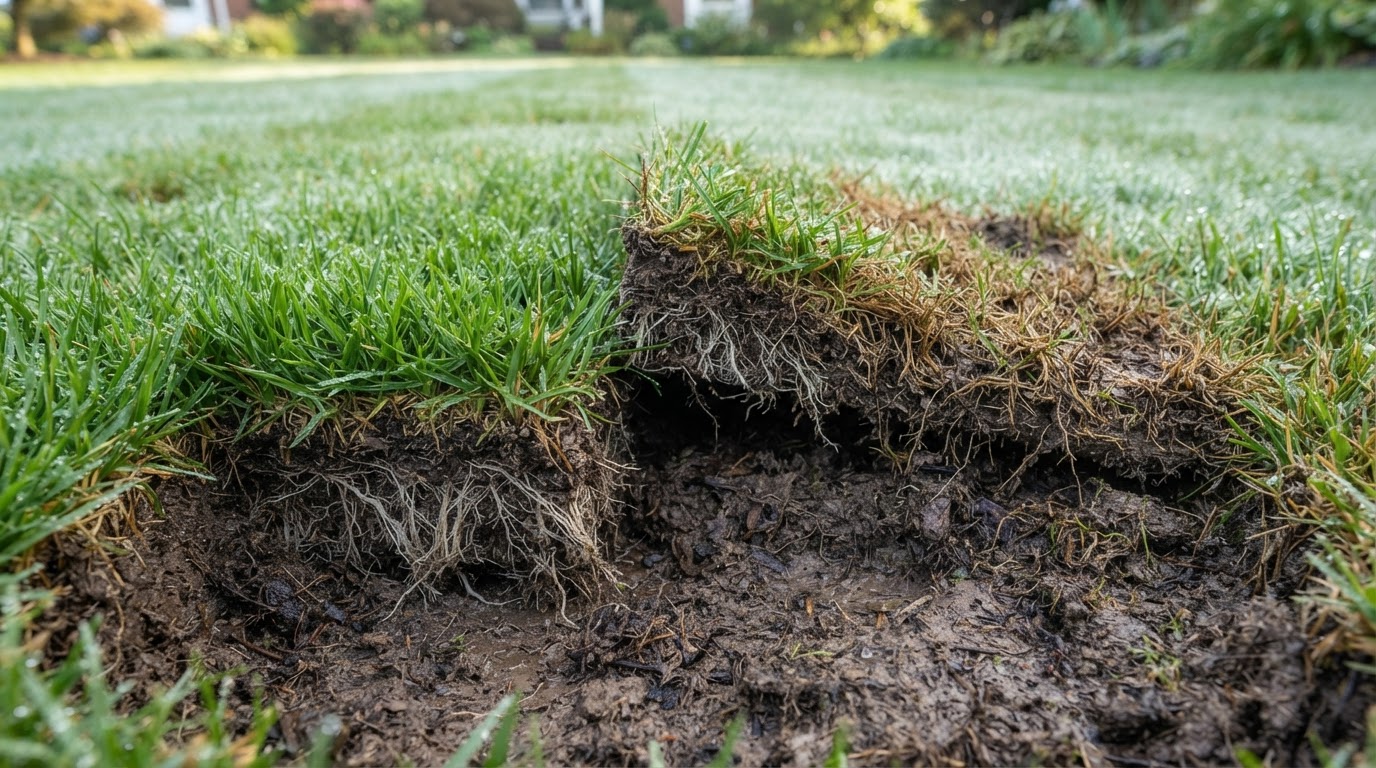
I want to be clear about what curative grub control means. We are responding to a confirmed problem — not applying a rescue treatment to every lawn that looks tired. Grub damage can resemble drought stress. More advanced root damage can leave turf that lifts unusually easily. However, healthy turf may tolerate some grub feeding, and treatment is not automatically necessary because a few grubs are present. Iowa State recommends evaluating the damage and recognizing that infestations can be localized.
Sometimes this investigation happens when we discover loose turf during aeration. That is the situation discussed in Grubs Found During Lawn Aeration.
Before I recommend a curative treatment, I want to know what we are treating — not just what color the grass has become.
Is Early Fall or Late Fall Better for Curative Treatment?
Not every part of fall offers the same opportunity. Waiting for frost is not the objective with an active grub problem.
Penn State identifies this as an important curative period while grubs are smaller and feeding near the surface.
As cold weather arrives, grubs move deeper into the soil; size, activity, and location affect treatment decisions.
A confirmed damaging problem deserves a documented prevention plan — chosen and timed for the selected product.
A September diagnosis should not automatically become an appointment postponed until November. Waiting for frost is not the objective with an active grub problem. We need to evaluate what the insects are doing now and whether the proposed treatment still fits.
What I Want the Customer to Know Before We Apply Anything
This is where I want Golden Green’s process to feel different from simply receiving another yard sign. That information should be clear enough that the customer is not calling later to ask, “Was I supposed to water that?”
What I Want the Customer to Know Before We Apply Anything
What we found
Explain the diagnosis and why treatment is being recommended.
What we are applying
Identify the product and document the treatment area and rate.
What happens next
Explain watering, access restrictions, and who will handle each responsibility.
What recovery may involve
Separate insect control from repairing grass that has already been damaged.
And if the lawn does not respond as expected, I do not want to jump straight to blaming the homeowner. We should review the diagnosis, timing, application, conditions, and establishment plan.
A follow-up question deserves an investigation, not a defensive answer.
Killing the Grubs Does Not Automatically Rebuild the Lawn
This is the second half of the problem. We may address the insects and still have damaged turf to repair. Dead or badly thinned areas may need reseeding or sod, while the preparation required depends on the remaining grass and underlying conditions. University of Maryland Extension emphasizes diagnosing and correcting those conditions before renovation.
Curative grub control addresses the insect. Lawn repair addresses what the insect left behind.
Repair Pathways for Damaged Turf
Curative grub control addresses the insect. Lawn repair addresses what the insect left behind. Click a situation to see the recovery conversation.
We evaluate whether improved maintenance, localized repair, or a broader aeration and overseeding plan is appropriate. I do not want to tear up healthy turf unnecessarily.
Where appropriate, Sunny Seed Mix is part of the plan for introducing desirable turf — not a substitute for fixing the conditions that caused the trouble.
Put Next Year’s Grub-Prevention Decision on the Calendar
If we have confirmed a damaging grub problem, I do not want us to forget it once the lawn looks better. We should document the history and discuss next year’s preventative approach. University of Minnesota Extension identifies a recent infestation history as one reason preventative treatment may be warranted. It does not recommend treating every lawn solely because grubs exist in the region.
Every lawn deserves a prevention plan. Not every lawn automatically needs the same preventive pesticide application.
Golden Green’s summer Step 3 visit is a practical time to discuss and coordinate appropriate grub protection. But the product — not the step number — determines its application window. The best message is not, “Everybody gets grub control in summer.” It is, “Let’s choose and time the appropriate protection for your lawn.” Once damage occurs, the potential cost also includes repair. Our grub-control cost guide explains why prevention, rescue treatment, and rebuilding turf are separate financial decisions.
What About Natural Grub Treatments?
Biological options exist, but they are not the same as DuoCide or Dylox. Milky spore targets Japanese beetle grubs rather than every white-grub species. Beneficial nematodes are living organisms whose performance depends on appropriate selection, handling, moisture, and application conditions. They are not interchangeable, guaranteed rescue treatments.
Golden Green does not offer natural grub treatments. I am comfortable explaining that distinction. A homeowner should know what kind of service they are purchasing rather than assume every grub product works the same way.
The Right Treatment Includes the Watering Plan
For me, this is about doing the complete job. Not just identifying an insect. Not just selecting a bag. Not just running a spreader across the property. I want a clear diagnosis, an appropriate product and rate, understandable watering instructions, and a realistic recovery plan. And I want the homeowner to know what they need to do before the technician leaves. That is how I would want my own lawn treated.
When you are comparing grub-control services, ask more than, “What does it cost?” Ask: what did you find, what are you applying, and how does it need to be watered in? Then ask what happens to the grass that has already been damaged. Because good lawn care does not stop at controlling the pest.
It follows through on the lawn.
Golden Green — Your Lawn’s Best Friend.
Concerned About Grub Damage or Lawn Recovery?
Start with a property-specific conversation before paying for a treatment that may not fit the problem. We diagnose what is actually happening beneath your turf — and explain the watering plan before the technician leaves.
Keep Reading About Grub Control & Lawn Recovery
These related pages go deeper on the services and reasoning behind grub treatment and repair:
Golden Green Grub Control
Our approach to preventative and curative grub control for Pennsylvania lawns.
Mechanical Core Aeration
Repair often begins with creating openings in the soil and giving new grass a place to establish.
Overseeding
Killing grubs doesn’t put grass back. Overseeding introduces desirable turf where grubs left damage behind.
Grub Control Cost in Pennsylvania
Why prevention, rescue treatment, and rebuilding turf are separate financial decisions.
Grubs Found During Lawn Aeration
Sometimes the investigation starts when we discover loose turf during aeration.
Sunny’s Seed Mix
Where appropriate, part of the repair plan for introducing desirable turf into a recovering lawn.
Citations Behind This Article
Michigan State University — grub control & irrigation
Emphasizes watering grub-control products into the ground immediately after application; recommends at least ½ inch of irrigation; describes measuring collected water rather than relying on runtime.
Penn State — white grub treatment timing
Identifies August through mid-September as an important curative period; notes grubs move deeper as cold weather arrives; emphasizes pest monitoring, weather, and soil conditions rather than a single date.
Iowa State — grub damage evaluation
Recommends evaluating the damage and recognizing that infestations can be localized; healthy turf may tolerate some feeding.
University of Maryland Extension — lawn renovation
Emphasizes diagnosing and correcting underlying conditions before renovation of damaged turf.
University of Minnesota Extension — preventative treatment
Identifies recent infestation history as one reason preventative treatment may be warranted; does not recommend treating every lawn solely because grubs exist in the region.
Product labels reviewed (educational summary)
The Andersons DuoCide Insect Control (EPA Reg. No. 9198-235) and Dylox 6.2 Granular Insecticide (EPA Reg. No. 5481-641-101563). This article is an educational summary, not a replacement for the complete product label.
Manufacturer-label directions are kept distinct from university guidance and Golden Green’s own field experience. Always read and follow the complete label accompanying the product.
Helpful lawn care advice for Pennsylvania homeowners
If this guide helped you, add Golden Green as a Preferred Source on Google to see more of our lawn care guides in Google Search and AI experiences.
Frequently Asked Questions About Watering After Grub Treatment
Is morning dew enough to water in a grub treatment?+
No. The Andersons directs users to water DuoCide into lawns immediately after application, and the reviewed Dylox 6.2 label requires prompt watering-in on the application day. A lawn can be covered in morning dew while the soil underneath remains comparatively dry — wet foliage alone does not establish that a treatment reached its intended location.
Does Dylox universally need more water than DuoCide?+
Neither reviewed label gives a fixed irrigation depth that supports saying Dylox universally needs “more water” than DuoCide. Both describe watering by its purpose and required timing. Michigan State's ½-inch guidance is university guidance, not a numeric requirement printed on both labels.
How much water should I apply after a grub treatment?+
Follow the specific product label. As an additional practical reference, Michigan State University recommends at least ½ inch of irrigation immediately after chemical grub treatment. Use a rain gauge or straight-sided catch containers to understand output, and plan the setup before treatment rather than guessing at sprinkler minutes.
Is the application rate the same for every insect?+
No. White grubs, chinch bugs, and sod webworms are not the same problem, and the labeled rate is not necessarily identical for each. A rate range is not an invitation to choose the highest amount because the lawn looks bad. The appropriate product and rate depend on accurate identification.
Does grub treatment also repair the dead grass?+
No. Curative grub control addresses the insect. Lawn repair addresses the turf the insect left behind. Damaged areas may need reseeding or sod, and the preparation depends on the remaining grass and underlying conditions.
Does every lawn need preventative grub control?+
Every lawn deserves a prevention plan, but not every lawn automatically needs the same preventive pesticide application. University of Minnesota Extension identifies recent infestation history as one reason prevention may be warranted. For a lawn that required rescue treatment, that prevention conversation should be a priority.
Does Golden Green offer natural grub treatments?+
No. Biological options like milky spore and beneficial nematodes exist, but they are not the same as the curative products discussed here and are not interchangeable, guaranteed rescue treatments. Golden Green does not offer natural grub treatments, and we explain that distinction honestly.