Pet-Safe Grub Treatment for Lawns: Why Golden Green Applies Preventative Grub Control Before Damage
If you're looking for a pet-safe grub treatment for lawns, one of the most important things to understand is that effective grub control isn't just about what is applied. It's also about when and how it is applied.
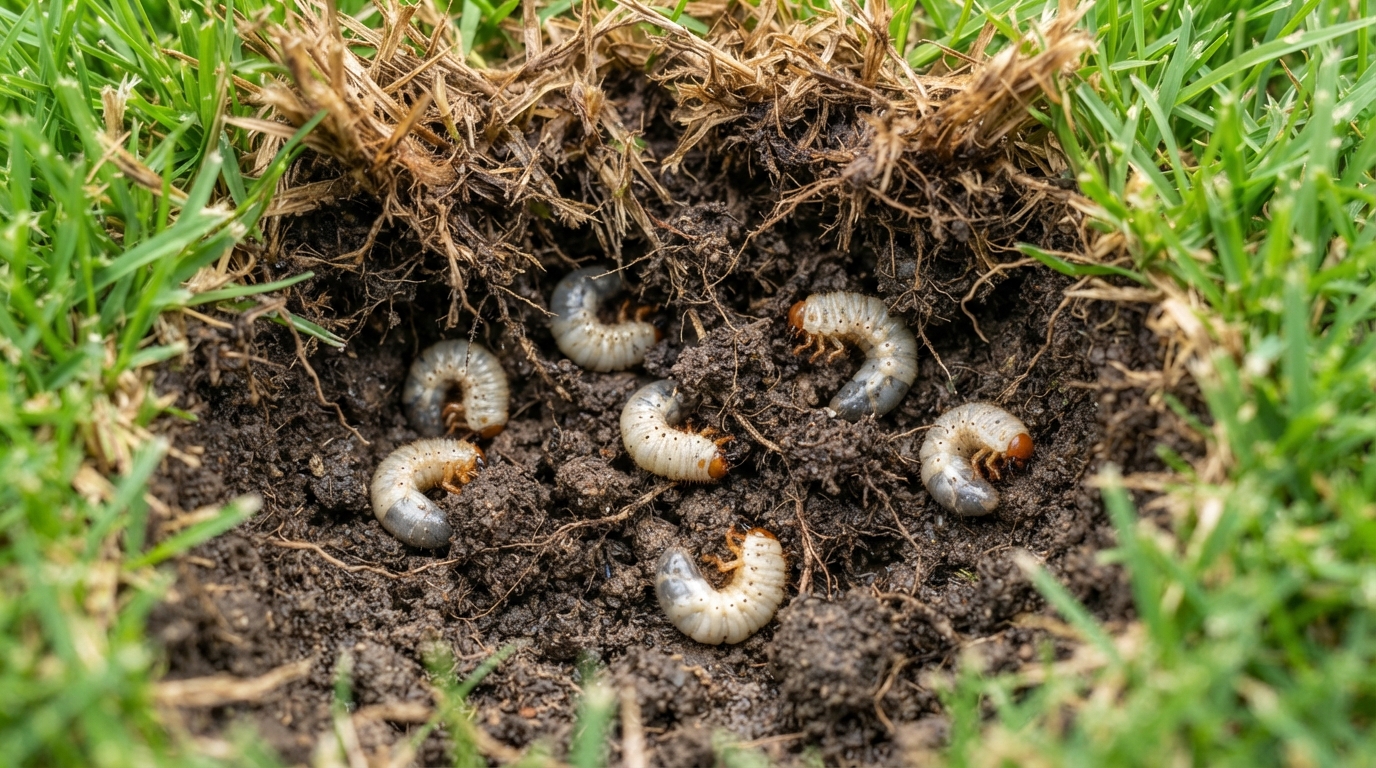
At Golden Green, preventative grub control is designed to protect your lawn before young white grubs begin seriously damaging the root system. For many of our Eastern Pennsylvania lawns, that protection is coordinated with our summer lawn-care schedule and the appropriate application window for the grub-control product being used.
And because families, children, dogs and other pets use the lawn too, we believe homeowners should understand what is being applied, why it's being applied and what instructions should be followed afterward.
The pesticide label—not a generic claim like “pet safe”—determines the required precautions and when people and pets may re-enter a treated lawn.
That's why Golden Green applies lawn-care products according to their labels and provides customers with clear service information following treatment.
What Are White Grubs?
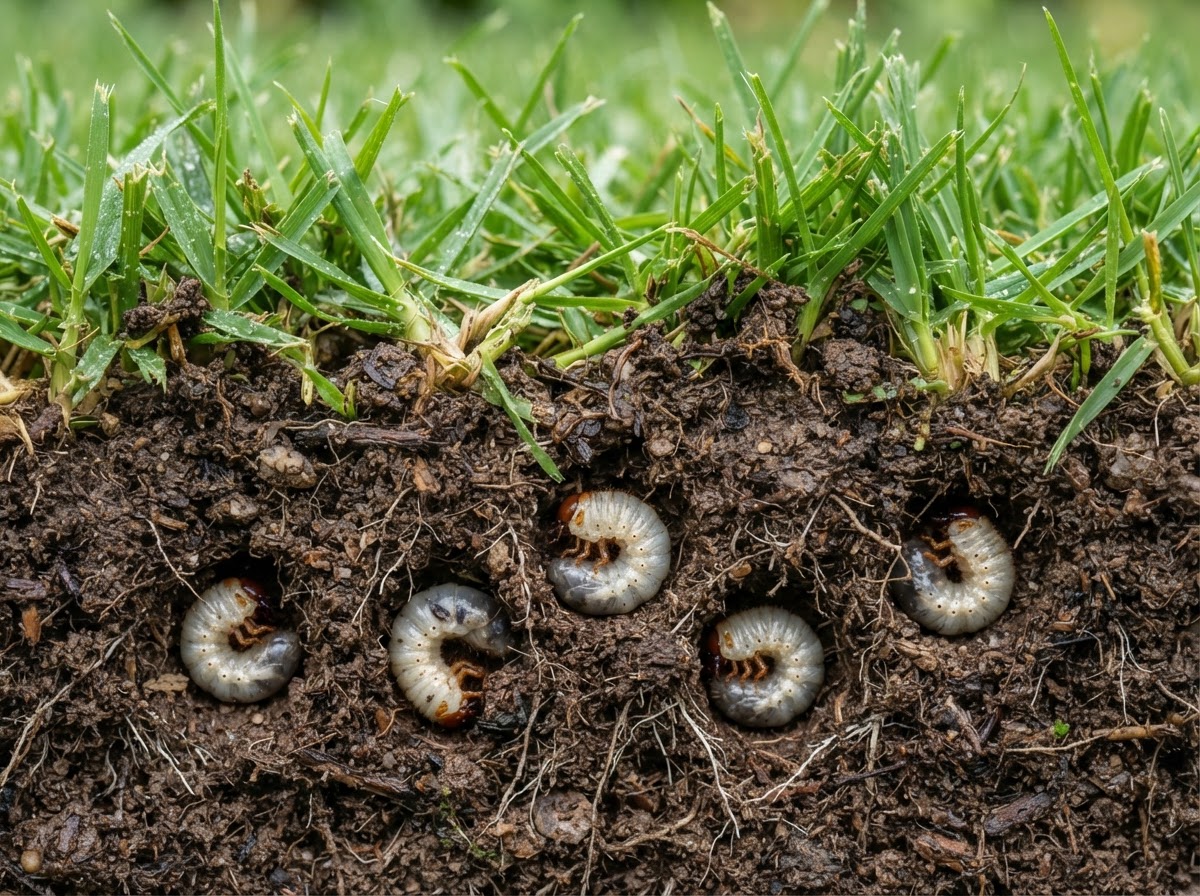
White grubs are the larval stage of several scarab beetles found in Pennsylvania lawns. Japanese beetles are one of the best-known examples.
The adult beetles are visible above ground during summer, but their larvae live below the lawn and feed on turfgrass roots. Penn State Extension reports that Pennsylvania lawns can suffer significant damage from several white-grub species, including Japanese beetle and northern masked chafer grubs.
That's what makes grub problems difficult for homeowners.
You often don't see the pest—you see what the pest did to the lawn.
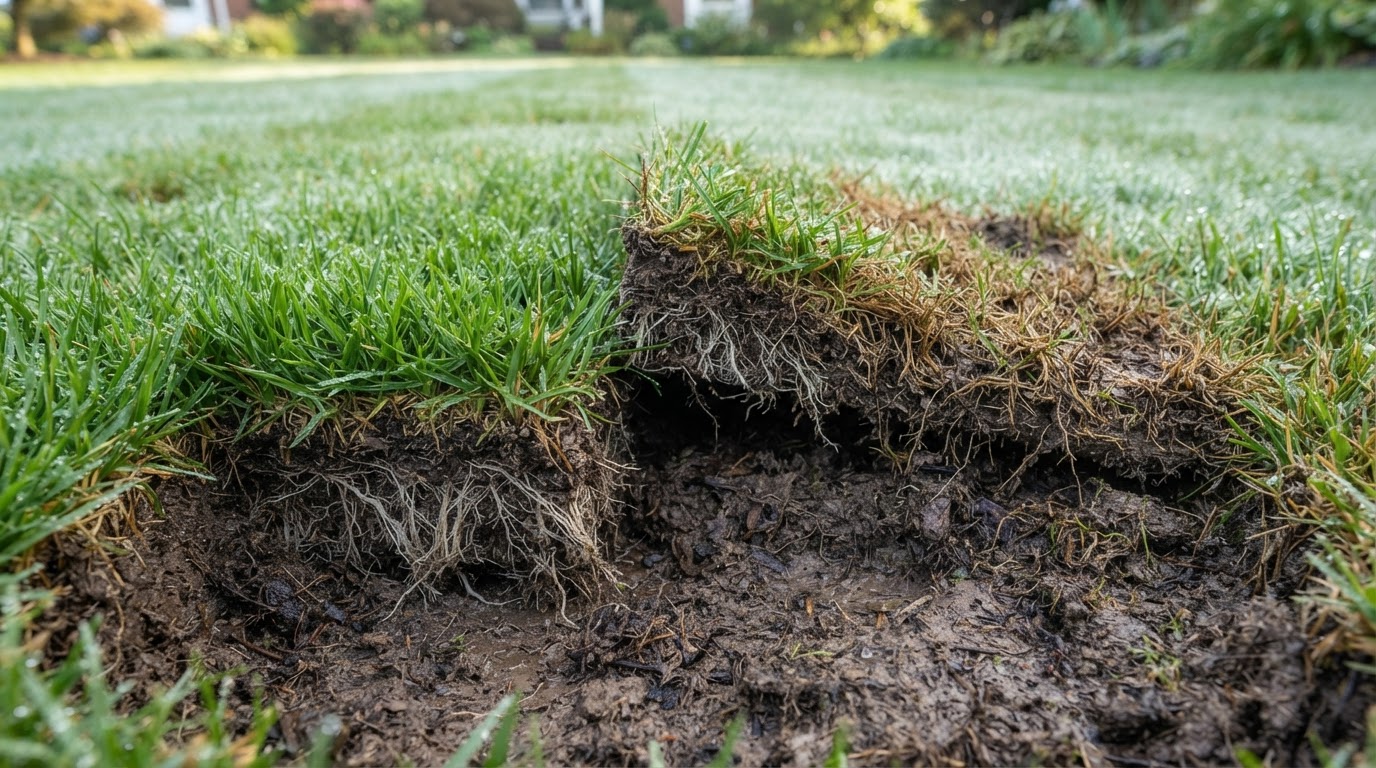
A lawn may begin wilting or developing brown patches. Severe root damage can eventually leave turf feeling loose or spongy enough that sections can be pulled or rolled back.
Is Grub Treatment Safe for Pets?
This is the question many homeowners really want answered. And it deserves a more responsible answer than simply saying:
“Yes, it's pet safe.”
Different grub-control products contain different active ingredients and have different label requirements. The pesticide label provides the directions for application, watering and any restrictions regarding people or pets entering the treated area.
Golden Green follows the product label and application requirements for the specific material being used. If an application requires people or pets to remain off the treated lawn until a particular condition is met, such as the application being watered in and the turf drying, customers should follow those instructions.
So when homeowners search for pet-safe grub treatment for lawns, our recommendation is simple:
Don't judge a lawn treatment by marketing language alone.
Ask:
- What product is being applied?
- What is the active ingredient?
- Why is it being used?
- Does it need to be watered in?
- When can children and pets return to the lawn?
- What does the actual product label require?
Those are much better questions.
Why Preventative Grub Control Is Applied Before Damage
Preventative grub control is designed to target the problem before significant turf damage occurs.
Many common white grubs follow a predictable seasonal life cycle. Adult beetles emerge during summer, mate and lay eggs in the soil. Those eggs hatch, and the young grubs begin feeding on turfgrass roots.
Penn State reports that Japanese beetle adults generally occur from late June through August, with eggs during July and August and larvae feeding during portions of late summer, fall and the following spring. Penn State also notes that much of the turf damage from Japanese beetle grubs occurs from late August into early October.
That creates an opportunity:
Protect the lawn before those young grubs become a serious problem.
The Japanese Beetle and White Grub Life Cycle
Here's the process in homeowner-friendly terms.
Adult beetles emerge
Japanese beetles commonly emerge in Pennsylvania during early summer.
Beetles mate and lay eggs
Female beetles lay their eggs in the soil.
Eggs hatch
Small white grubs emerge below the lawn.
Young grubs begin feeding
The grubs feed on turfgrass roots.
Lawn damage can appear
As root feeding becomes severe, lawns can wilt, thin and develop dead or dying areas.
The time to think about grub prevention is before your lawn looks like it has a grub problem.
Why Golden Green Uses Preventative Grub Control
Imagine waiting until you see smoke before deciding whether your house needs smoke detectors. Grub prevention follows a similar principle.
Once severe grub damage is visible, you're dealing with two problems:
1. The insects.
2. The lawn damage they already caused.
That can mean curative treatment followed by lawn recovery or repair. Preventative grub control attempts to interrupt that process earlier.
Penn State specifically describes preventative products as an important strategy for white-grub management and emphasizes that proper application timing is critical.
When Should Preventative Grub Control Be Applied in Pennsylvania?
This is where homeowners should be careful with blanket recommendations.
The correct timing depends on the active ingredient.
For example, Penn State identifies chlorantraniliprole and imidacloprid as preventative grub-control options, but their optimal application windows aren't identical. Penn State guidance places chlorantraniliprole earlier, while imidacloprid can be applied later in the summer prevention window.
That's why Golden Green doesn't believe good lawn care should simply mean:
“It's June. Put down grub control.”
We consider the product, label, pest life cycle, application timing and conditions.
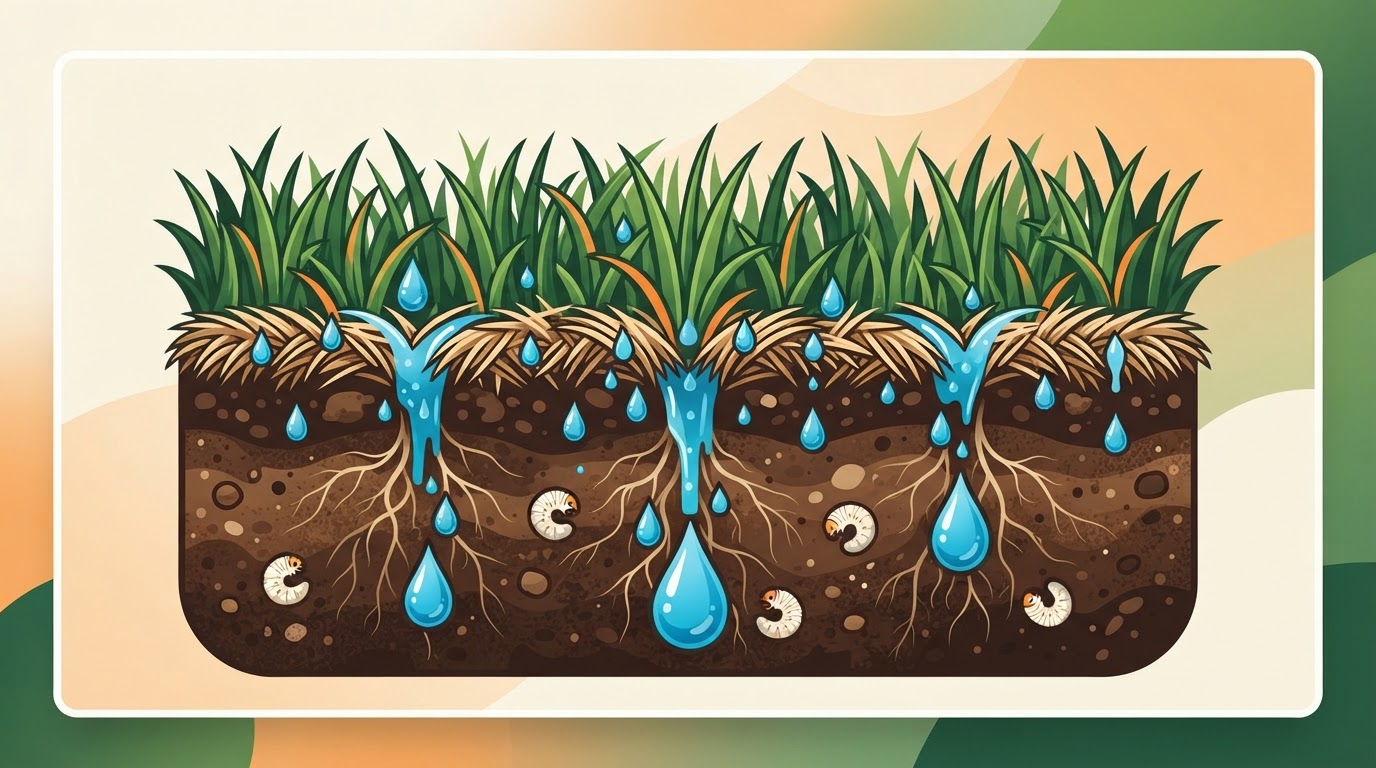
Why Watering Matters After Grub Control
White grubs aren't living on top of your grass blades. They're below them. Preventative materials therefore need to reach the appropriate area of the soil where they'll provide protection.
Penn State recommends that preventative grub-control products be irrigated according to their specific label directions.
That's another reason homeowners should pay attention to their post-service instructions.
Proper application is only part of the process. Proper aftercare matters too.
What Does Grub Damage Look Like?
Keep an eye out for:
- Irregular brown or dying areas
- Wilting despite adequate moisture
- Thinning turf
- Spongy or loose grass
- Sod that pulls back unusually easily
- Increased digging by skunks, birds or other animals
Penn State notes that severe infestations can destroy enough roots that affected sod can actually be rolled back. Animals feeding on the grubs can cause additional lawn damage.
But brown grass doesn't automatically mean grubs. Drought, disease, heat stress and other lawn problems can produce similar symptoms. That's why diagnosis matters.
Preventative vs. Curative Grub Treatment
There's an important difference.
Preventative
Applied before damaging grub populations develop.
Curative
Used when actively feeding grubs are already present and treatment is warranted.
They're not interchangeable. Penn State notes that preventative and curative products have different application windows, and spring curative applications can be less effective because overwintered grubs are larger and harder to control.
That's one reason Golden Green would rather help prevent serious root damage than arrive after sections of lawn are already dying.
Why Healthy Roots Matter
Your lawn's roots are its foundation. Roots absorb water and nutrients and help grass survive heat and drought stress. White grubs literally attack that foundation.
That's particularly important during an Eastern Pennsylvania summer because cool-season grasses may already be dealing with: heat, drought, humidity, disease pressure and mowing stress. Add significant root loss and the lawn has an even harder time handling those conditions.
A lawn can look healthy above ground while a problem is developing underneath it.
That's why preventative grub control isn't really about killing bugs. It's about protecting roots.
What Golden Green May Apply During Step 3
Golden Green's Step 3 is part of our summer lawn-care program. Depending on the lawn, program, weather, product timing and individual property, the visit may involve:
- Carefully timed fertilizer
- Iron to support color without excessive top growth
- Targeted weed control where appropriate
- Preventative grub protection when the product's application window calls for it
- Surface-insect treatment for qualifying programs
The goal isn't to force excessive growth during summer.
We're trying to help the lawn withstand summer while protecting it from problems that may show themselves later.
The Step 3 Bonus: Two Free Surface-Insect Applications
Golden Green customers who enroll in our six-step fertilization and weed-control program and add preventative grub control receive an additional benefit:
Two complimentary surface-insect applications.
They're applied during Steps 3 and 4 and are commonly referred to as flea-and-tick treatments. Depending on the product and target pest, surface-insect applications may also address lawn pests such as chinch bugs or sod webworms.
Penn State notes that chinch bugs and sod webworms can damage turf during the hot, dry summer months of June, July and August.
This creates a broader summer protection strategy: Six-step lawn care + preventative grub protection + two complimentary surface-insect applications.
What Most Homeowners Never See
This is one of the biggest differences between simply making grass green and actually managing a lawn. Homeowners naturally judge their lawn by what they can see.
Golden Green also pays attention to what's happening below the surface and what may happen next. The lawn can look beautiful today while beetles are beginning the life cycle that creates a grub problem weeks later.
Preventative lawn care requires thinking ahead. That's exactly what we're doing.
Keep Reading About Grub Control
This article focuses on pet safety and Pennsylvania timing. For the broader guide on preventative vs. curative products, see:
What Is the Best Grub Control for Lawns? Pennsylvania Grub Control GuideYou can also explore our main Grub Control service page or learn about Flea & Tick control.
Authoritative Reference
For more detailed, Pennsylvania-specific information on white grub identification and management, we recommend reading the Penn State Extension article:
White Grubs in Home Lawns — Penn State ExtensionFrequently Asked Questions About Pet-Safe Grub Treatment
Is grub treatment safe for dogs and other pets?
Safety instructions depend on the specific product being applied. Golden Green follows the pesticide label and provides customers with the applicable post-treatment instructions. Keep pets and people off treated areas whenever the label requires it.
What is a pet-safe grub treatment for lawns?
Rather than relying on a blanket “pet-safe” claim, homeowners should look at the actual grub-control product, its active ingredient and its EPA-approved label directions. Proper professional application and following re-entry and watering instructions are important.
When should preventative grub control be applied in Pennsylvania?
Timing depends on the active ingredient and local conditions. Penn State identifies different preventative windows for products such as chlorantraniliprole and imidacloprid, which is why the product label and pest life cycle should determine timing.
What are white grubs?
White grubs are the larvae of several beetles. They live below the soil surface, and several species can damage Pennsylvania lawns by feeding on turfgrass roots.
What does grub damage look like?
Grub injury can cause wilting, thinning, brown or dying turf and loose sod. Severe root damage can allow sections of turf to pull away from the soil easily.
Does preventative grub control need to be watered?
Many grub-control products require irrigation following application to move the material into the appropriate soil zone. Always follow the specific product label and Golden Green's post-service instructions.
Is preventative grub control included in Golden Green's six-step program?
Preventative grub control is an add-on to Golden Green's six-step fertilization and weed-control program.
What do I receive when I add preventative grub control?
Customers enrolled in the six-step program who add preventative grub control receive two complimentary surface-insect applications during Steps 3 and 4.
Helpful lawn care advice for Pennsylvania homeowners
If this guide helped you, add Golden Green as a Preferred Source on Google to see more of our lawn care guides in Google Search and AI experiences.
Looking for Pet-Safe Grub Treatment for Your Lawn?
If you're concerned about white grubs but also have children or pets using your lawn, ask questions. You should know what's being applied to your property and what instructions come with the treatment. Golden Green provides professional preventative grub control for homeowners throughout the Lehigh Valley and Eastern Pennsylvania as part of our comprehensive approach to lawn health.
Don't wait for the roots to disappear before thinking about grubs.
Golden Green — Your Lawn's Best Friend.