Why Do I Find Grubs When Aerating My Lawn in Pennsylvania?
Sometimes the most important thing we find while aerating a lawn isn’t the soil core coming out of the ground. It’s what we discover underneath the grass — and why loose turf can reveal grub damage during fall aeration in Eastern Pennsylvania.
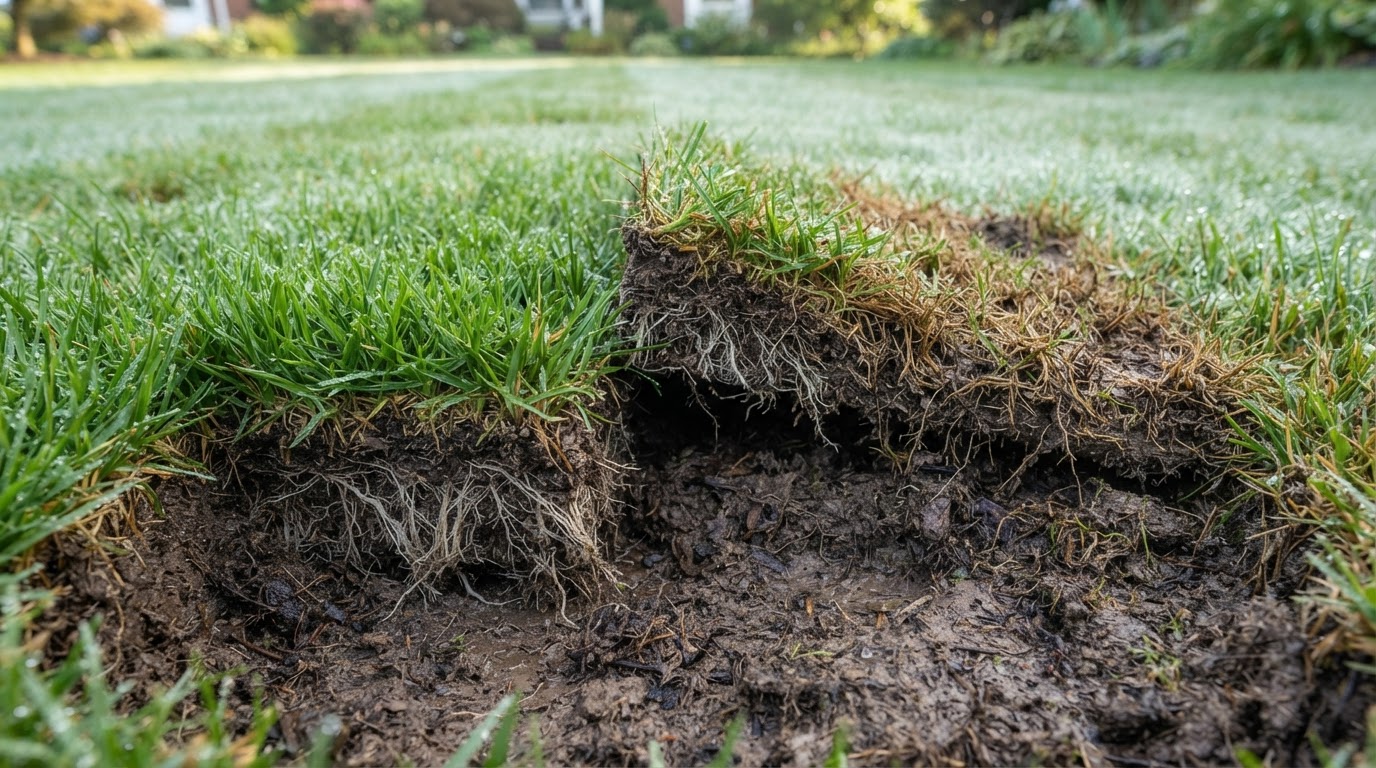
Sometimes the most important thing we find while aerating a lawn isn’t the soil core coming out of the ground. It’s what we discover underneath the grass.
September is one of my favorite times of the lawn-care season in Eastern Pennsylvania. The worst summer heat is beginning to break. Nights are getting cooler. We start seeing more morning dew. Cool-season grasses such as Kentucky bluegrass, turf-type tall fescue and perennial ryegrass begin moving into better growing conditions.
It’s also aeration and overseeding season.
And sometimes, while we’re aerating, we discover something the homeowner didn’t know was there: white grubs.
I’ve seen lawns where everything appears fairly normal from the surface. Then you begin aerating and notice that one section of turf doesn’t feel right. Maybe the grass looks thin. Maybe it’s still brown while the surrounding lawn is beginning to recover from summer. Maybe the root system seems weak.
In more heavily damaged areas, the turf may begin lifting or pulling away much more easily than healthy, well-rooted grass. That’s when it’s time to stop and look underneath.
White, C-shaped grubs feeding in the root zone. These can be some of the most important signs of grubs in a lawn — especially when the damage appears during late summer or early fall.
This is one reason I believe a good lawn-care technician needs to do more than simply drive across a property and complete the scheduled service. Sometimes the lawn tells you something while you’re working on it. You need to know what you’re looking at.
Quick Answer: Why Can Grub-Damaged Grass Pull Up So Easily?
White grubs are the immature stages of several scarab beetles. In Pennsylvania, species such as Japanese beetles and masked chafers can cause turf damage. The grubs live below the surface and feed on turfgrass roots.
When enough roots are damaged, the grass loses some of the system anchoring it to the soil. Severely damaged turf can become loose, spongy or unusually easy to pull back.
Aeration did not cause the grub damage. The grubs were already underneath the lawn. Working across the property during aeration can simply make an already weakened area more noticeable.
September Is When Two Important Lawn-Care Seasons Meet
September is an interesting month for lawn care in Pennsylvania because several things are happening at the same time. Our cool-season lawns are beginning to move out of summer stress. We’re entering an important fall growing period. We’re fertilizing. We’re aerating. We’re overseeding thin lawns. We’re dealing with late-summer weeds.
And we’re also entering a period when white grub damage can become much more noticeable. That creates an important overlap between two lawn-care problems: grub control and fall lawn recovery.
It’s aeration season. Let’s aerate. — We need to look at the lawn first.
What Can Grub Damage Look Like During Aeration?
Imagine we’re aerating a lawn in Emmaus, Macungie, Alburtis or elsewhere in the Lehigh Valley. Most of the property aerates normally. Then we reach one area and something changes.
Maybe the turf looks thin. Maybe it appears drought-stressed. Maybe there’s an irregular brown area. Maybe the surrounding lawn is beginning to recover as cooler weather arrives, but this particular area isn’t. Or perhaps the turf simply feels unusually loose.
Keep driving. We’ve got another lawn after this one. — No. Why is this happening?
That’s where actual lawn care begins. We can stop. Look at the grass. Check the roots. Pull back a suspicious section. Inspect the soil. And determine whether something is happening underneath the turf. Sometimes that investigation reveals white grubs.
Why Does My Grass Pull Up Easily?
This is one of the most useful questions a homeowner can ask. If you’re trying to figure out how to tell if your lawn has grubs, don’t rely on brown color alone. Check the roots and inspect underneath the turf.
Think about what normally holds a healthy lawn in place. Roots. You usually don’t think about them because you can’t see them. But those roots anchor the grass, absorb water and nutrients, and help the plant withstand environmental stress.
If a root-feeding insect damages enough of that system, the symptoms eventually become visible aboveground. So if you grab a section of declining turf and it comes away from the soil unusually easily, root damage is one possibility that deserves investigation. It does not automatically prove that you have grubs. But it’s a reason to look underneath.
Healthy Turf
Strong, deep root system
↓
Firmly anchored grass
↓
Resists pulling and traffic
Grub-Damaged Turf
Roots eaten and severed
↓
Loose, poorly anchored grass
↓
Lifts easily like loose carpet
How to Check Your Lawn for White Grubs
There is a simple field check homeowners can perform. Start at the transition area between damaged and healthier turf. That’s important. Don’t automatically go to the dead center of the worst brown patch. The transition area can give you a better opportunity to compare healthier rooted turf with the declining area.
Gently pull on the turf. Does it resist? Or does it lift unusually easily? If you’re suspicious, carefully cut and peel back a small section of turf and inspect the soil and root zone underneath. You’re looking for whitish or cream-colored larvae that commonly curl into a C-shape when exposed.
But don’t inspect only one tiny spot and make your entire diagnosis from that. Check several areas. You’re trying to answer a bigger question: Is there enough evidence here to explain the damage we’re seeing?
Signs of Grubs in a Lawn
Don’t Assume Every Brown Lawn Has Grubs
This is important. If you read this article and then walk outside and find a brown spot, don’t automatically buy an insecticide. Brown turf can have many causes:
Diagnose first. Treat second. Brown grass alone doesn’t prove you have grubs.
But brown or thinning turf combined with a weak root system, turf that pulls up unusually easily, and actual white grubs underneath gives us much stronger evidence.
Preventative vs. Curative Grub Control
There is a difference between preventing serious grub damage before it develops and discovering actively feeding grubs after damage has already begun. Golden Green offers preventative grub control earlier in the season as part of our lawn-care program because preventative products are designed around a different stage of the grub life cycle.
But suppose we’re aerating your lawn in September. The turf is loose. We inspect underneath it. We find actively feeding grubs. And there is already visible root damage. We can’t travel backward through the calendar and apply a preventative treatment. We’re dealing with a different situation.
Preventative
Before damaging grub activity develops. Timed earlier in the season.
Curative
Responding to an active grub problem when treatment is warranted.
The product, timing and grub stage matter. Treatment should always follow the label of the specific product being used.
Killing the Grubs Doesn’t Automatically Rebuild the Lawn
This may be the most important concept in this entire article. Let’s say we find damaging grubs. We confirm the problem. An appropriate curative treatment is warranted. We treat according to the product label. Problem solved? Only part of it.
Because there are actually two problems.
Problem #1
The Insect
Grubs are actively feeding on the root system. A curative treatment addresses this.
Problem #2
The Damaged Lawn
Grass has already lost roots. Some turf may be dead. The insecticide doesn't replant grass.
Killing the grubs doesn’t automatically rebuild the lawn. Curative grub control addresses the insect. Lawn repair after grub damage addresses what the insect left behind.
This Is Where Aeration and Overseeding Can Become Part of the Recovery
This is what makes discovering grubs during fall aeration particularly interesting. We’re already in one of the most valuable lawn-recovery periods of the year. If the underlying insect problem is appropriately addressed and the lawn has lost significant turf, we can evaluate what needs to happen next.
Some lightly damaged turf may recover. Other areas may need overseeding. More severely damaged lawns may require more extensive renovation. Lawn repair after grub damage may include aeration, overseeding or more extensive renovation depending on how much turf has been lost.
That’s where Golden Green’s fall aeration and overseeding program can become part of the recovery plan. And it’s also where Sunny Seed Mix comes into the picture. The objective isn’t merely to hide a brown spot. We want to begin rebuilding desirable turf density.
The Golden Green Diagnostic Process
Notice Suspicious Turf
Thin, brown, or loose areas that don't match the surrounding lawn.
Inspect Root Zone
Gently pull turf at the transition between healthy and damaged grass.
Confirm the Cause
Look for white, C-shaped grubs and assess root damage across several spots.
Treat Active Problem
If damaging grub activity is confirmed, apply curative control per label.
Repair Damaged Turf
Aerate and overseed lost areas with Sunny Seed Mix during the fall window.
Sometimes Aeration Becomes a Lawn Inspection
This is one of the reasons I care about the equipment we use and the technicians operating it. We could look at aeration like this: pull onto the property, unload the machine, pull plugs, load the machine, leave.
But that’s not how I want Golden Green thinking.
When you’re aerating, you’re moving across nearly the entire lawn. You’re seeing the turf up close. You’re seeing thin areas. You’re seeing weeds. You’re seeing soil conditions. You’re seeing how different areas respond to the aerator. And sometimes you’re seeing a problem that wasn’t obvious when you first pulled into the driveway.
Aeration becomes another opportunity to inspect the lawn. Sometimes what we discover changes what I would recommend next.
Why Healthy Roots Matter More Than Most Homeowners Realize
Most homeowners judge their lawn by what they can see. Is it green? Is it thick? Does it have weeds? Are there bare spots? But some of the most important parts of the lawn are invisible. They’re underground.
A beautiful lawn needs a functioning root system. Roots help anchor the turf. Roots help the plant access moisture. Roots help the plant obtain nutrients. Roots help turf withstand environmental stress.
That’s why soil conditions matter. That’s why watering practices matter. That’s why aeration can matter. And that’s why root-feeding insects matter. You can make the top of a lawn look green temporarily. But if something is destroying the foundation underneath, eventually you’re going to see the consequences aboveground.
What I Would Do If This Were My Lawn
If I were aerating my own lawn in Pennsylvania this September and found an area that was poorly rooted and lifting unusually easily, I wouldn’t simply keep driving and hope it looked better next spring.
I’d stop. I’d investigate. I’d pull the turf back. I’d inspect the root zone. I’d determine whether white grubs were actually present. I’d look at how much damage had occurred. I’d consider whether the level of active grub activity warranted treatment.
If treatment were needed, I’d use an appropriate curative product according to its label and the current situation. Then I’d evaluate the damage that was already done. If significant turf had been lost and conditions were appropriate for establishment, I’d start thinking about how to rebuild that area while we still had a valuable fall growing window.
Find the cause. Address the cause. Repair the damage. That’s a much better lawn-care strategy than guessing.
The Golden Green Perspective
Fall is one of my favorite times of the lawn-care season. The worst summer heat is beginning to break. The mornings start feeling different. There’s more dew on the grass. Cool-season turf begins responding. We’re feeding lawns. We’re aerating. We’re overseeding. We’re repairing what summer exposed.
But sometimes fall also reveals problems that were hiding underneath the surface. White grubs are a perfect example.
Sometimes the most important thing we find while aerating a lawn isn’t the soil core coming out of the ground. It’s what we discover underneath the grass.
If that happens, I don’t want our technicians simply completing the aeration and moving on. I want them to recognize the problem. I want the homeowner to understand what we found. And I want the next recommendation to make sense. Because great lawn care isn’t simply about applying products. It’s about paying attention to the lawn.
Golden Green — Your Lawn’s Best Friend.
Helpful lawn care advice for Pennsylvania homeowners
If this guide helped you, add Golden Green as a Preferred Source on Google to see more of our lawn care guides in Google Search and AI experiences.
Frequently Asked Questions
Share this article
Did Your Turf Pull Up During Aeration? Let’s Find Out Why.
If your lawn has loose turf, unexplained brown areas or signs of white grub damage, Golden Green can help determine what’s happening below the surface and recommend an appropriate next step. Whether the lawn needs curative grub control, aeration and overseeding, additional repair — or simply a closer inspection — the recommendation should start with understanding the problem.
Golden Green — Your Lawn’s Best Friend.
Related Articles
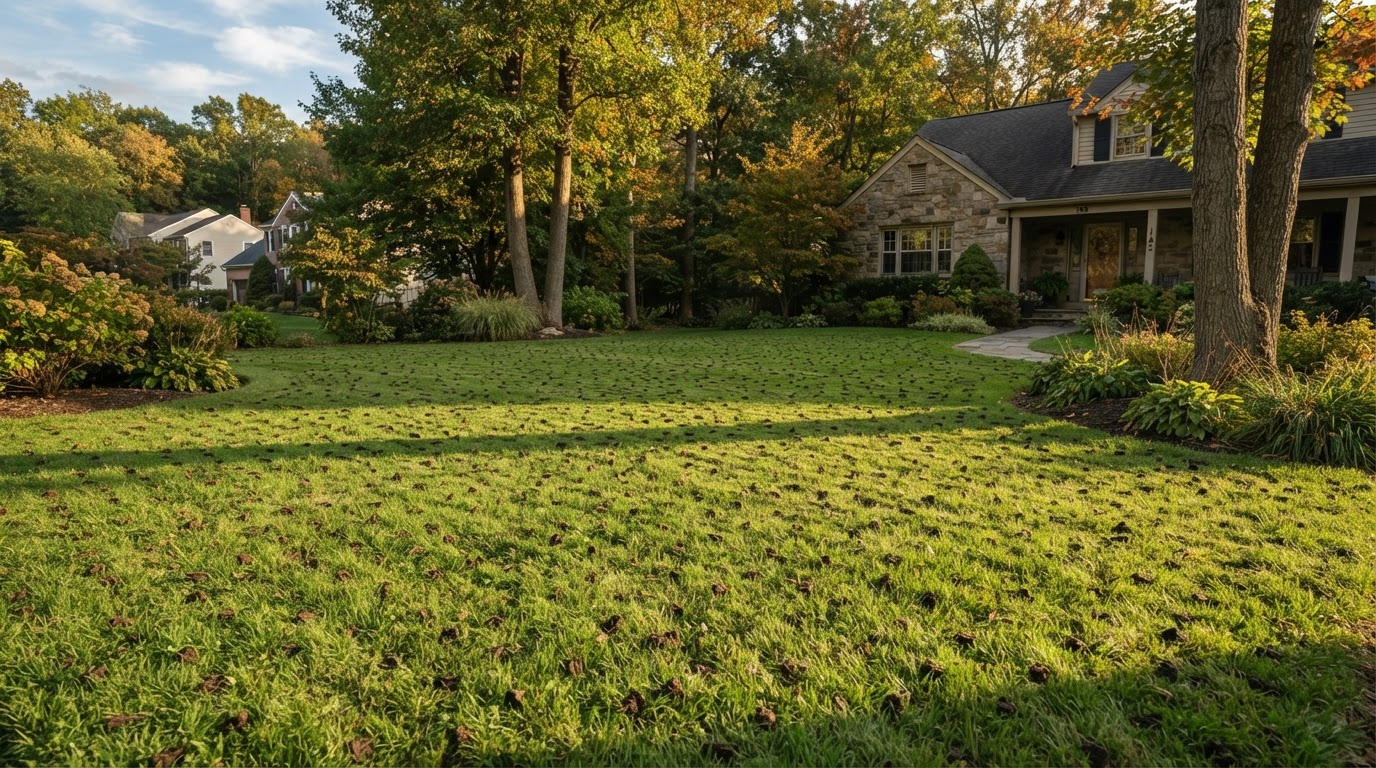
A Complete Guide to Overseeding Your Lawn in Eastern Pennsylvania
Learn when to overseed your Pennsylvania lawn, why fall timing matters, and how aeration and quality seed can help build thicker turf.
Read Article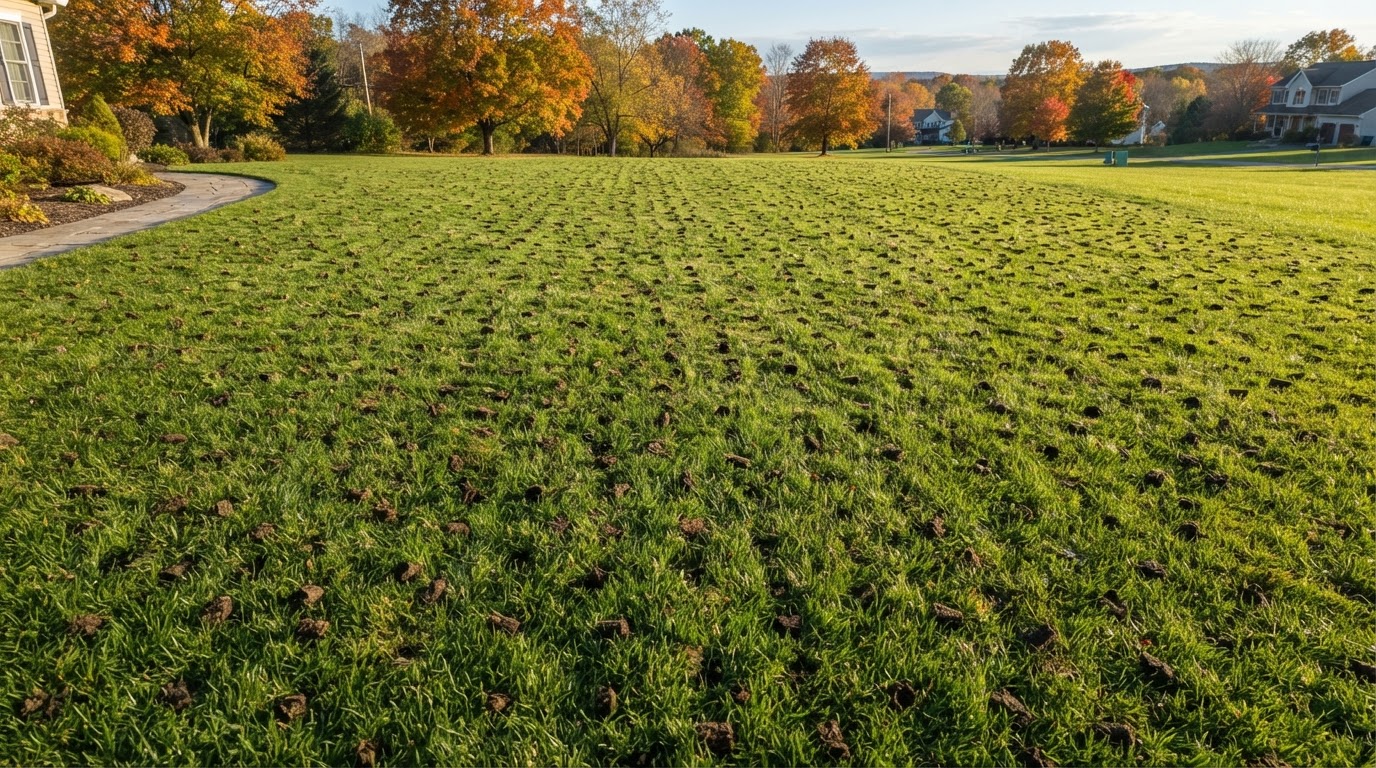
What is the Best Grub Control for Lawns?
Learn the difference between preventative and curative grub treatments, proper timing, and what works for Pennsylvania lawns.
Read ArticleHow Many Years of Aeration and Overseeding Does It Take to Transform a Lawn?
How often should you aerate and overseed? See why some Pennsylvania lawns improve dramatically after several fall seasons of aeration and seeding.
Read ArticleGolden Green Lawn Care Services