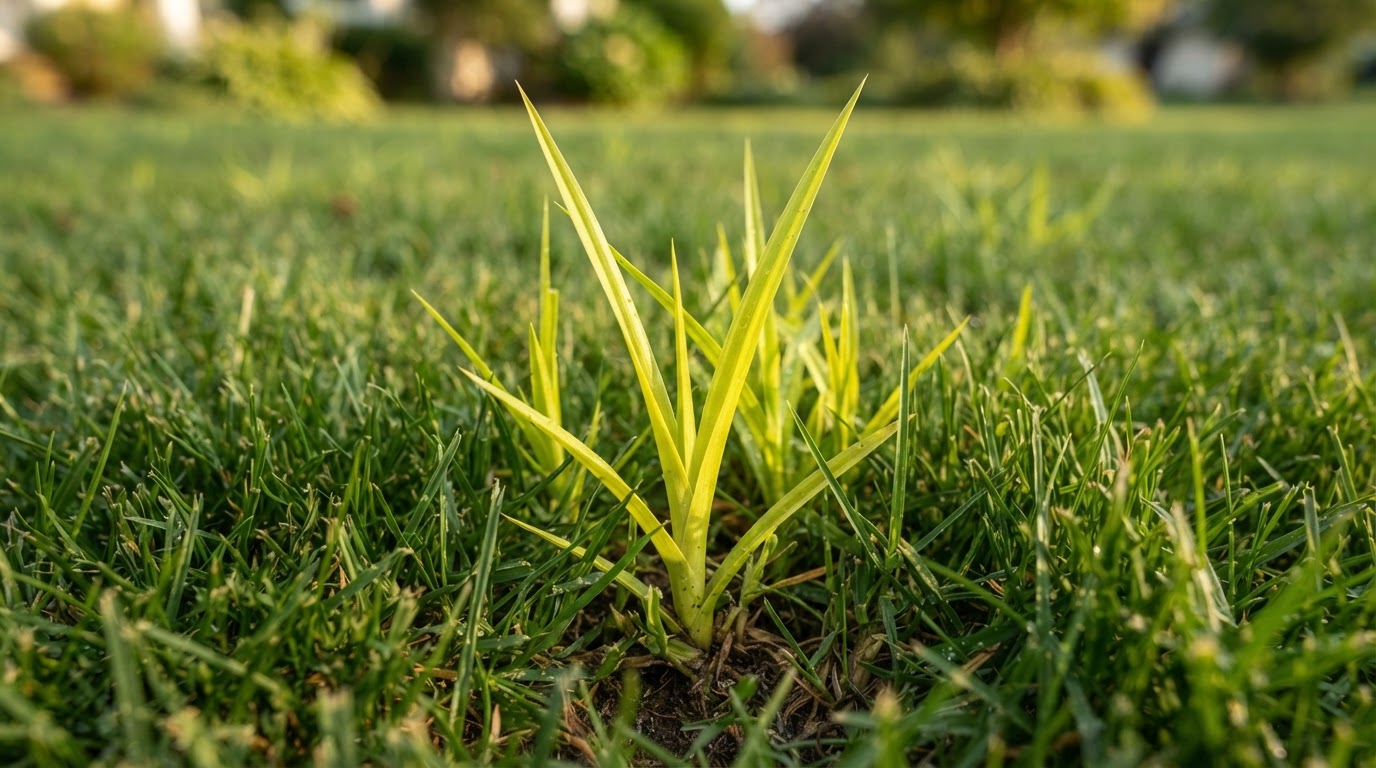
One of the biggest misunderstandings I see with crabgrass control is that homeowners sometimes think every crabgrass treatment does the same thing.
It doesn't.
There's a major difference between PRE-emergent crabgrass control and POST-emergent crabgrass control.
At Golden Green, those two strategies happen at very different times of the Pennsylvania lawn-care season and for very different reasons.
One is about preventing crabgrass before it becomes a summer problem. The other is about dealing with crabgrass that's already growing in the lawn. And if you're planning to aerate and overseed your lawn, understanding the difference becomes especially important.
PRE vs. POST Crabgrass Control
Probably the most important distinction in this entire article. Tap a panel to focus on one strategy.
They solve different problems at different stages of the season — spring prevention vs. late-summer control of plants you can already see.
Should You Apply Crabgrass Preventer in the Fall?
Usually, when homeowners ask me about crabgrass preventer in the fall, there's a story behind the question.
August arrived. Suddenly they could see crabgrass everywhere. Now they're thinking: "I don't want this again next year. Should I put down crabgrass preventer right now?"
That's understandable. But for many Pennsylvania lawns, fall is the time when I'm thinking about something different.
What allowed the crabgrass to become established in the first place? Was the lawn thin? Were there bare areas? Was the soil compacted? Did summer stress open the turf canopy?
Because killing crabgrass solves only part of the problem. If we leave the same thin opening behind, we've left an opportunity for another weed.
Don't just kill weeds. Replace their opportunity with better grass.
The Pennsylvania Crabgrass Calendar
Granular pre-emergent in Step 1 & Step 2. Block crabgrass before it germinates.
Why August Crabgrass Control and Fall Overseeding Can Work Together
Suppose I visit a lawn in August. The homeowner wants to aerate and overseed. But the lawn has substantial crabgrass.
I don't necessarily want to ignore the crabgrass and immediately throw seed into it. I may want to address that existing crabgrass first.
Depending on the exact herbicide label, turf species, application and lawn conditions, our program may allow us to treat the existing crabgrass and then transition into aeration and overseeding after the appropriate interval.
In some of our field situations, that transition may be around two weeks. But that's not a universal rule. The exact herbicide label controls.
Read the Label First. Seed Second.
The exact herbicide product label always determines the reseeding interval, compatible turf species, and application rate. Different formulations can have different restrictions. In our program, this may create roughly a two-week transition before aeration and overseeding when the specific product label and turf conditions allow — but never substitute our field experience for reading the label yourself.
Fertilizer Is Not the Same as a Weed Barrier
People sometimes hear us talking about avoiding certain applications around overseeding and conclude: "You can't fertilize new seed."
That's not necessarily true. Fertilizer and herbicide are not the same thing. A fertilizer that is appropriate for newly seeded turf can provide nutrients that support developing grass plants. The bigger concern is what weed-control products accompany that fertilizer.
We don't think about a fall lawn application as simply: fertilizer + weed killer + seed = throw everything down together. We coordinate the program.
Why Spring Pre-Emergent Is Different
Our Step 1 and Step 2 crabgrass strategy is preventive. We're not waiting until July to discover whether crabgrass appears everywhere. We're trying to manage the problem earlier.
But once that pre-emergent treatment is applied, homeowners should not assume that mechanical aeration automatically eliminates its effect or makes immediate overseeding appropriate.
Aeration creates holes in the soil. But I would not rely on aeration as a universal method for breaking a pre-emergent barrier so grass seed can safely be planted. Instead, look at the actual product. Check its reseeding restrictions. Then plan the seeding around the label.
Crabgrass Loves Opportunity
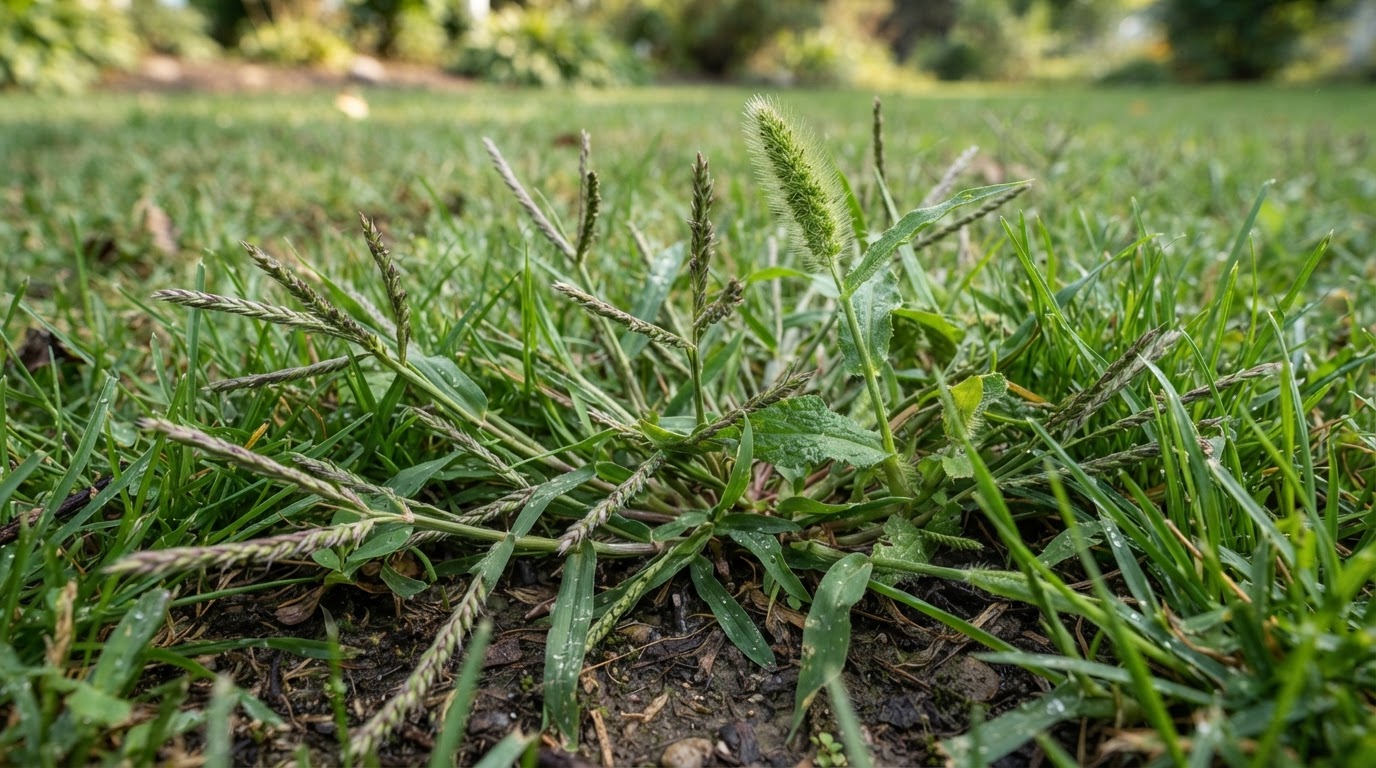
Look closely at where crabgrass often becomes obvious: driveway edges, sidewalk edges, thin areas, bare spots, stressed turf, disturbed soil.
We can spend our entire lawn-care strategy asking: How do we kill crabgrass? I think there's a second question that's just as important: Why was there enough room for crabgrass to establish here?
A thicker stand of desirable turf doesn't make a lawn weed-proof. But improving turf density can reduce some of the open opportunities weeds exploit. That's where aeration and overseeding enter the conversation.
A Crabgrass-Filled Lawn, Done Right
Don’t blindly throw down preventer. Build a sequence. Tap a step to expand.
Should I Apply Crabgrass Preventer Before Overseeding?
Be careful. If by "crabgrass preventer" you mean a traditional pre-emergent herbicide, it may interfere with establishing your desirable grass seed. Check the product label before seeding.
And don't assume aerating automatically solves the problem. If you're planning to overseed, coordinate the herbicide and seeding schedule before applying anything.
Can I Use Post-Emergent Crabgrass Control Before Overseeding?
Sometimes, yes. This is where post-emergent treatment can be valuable. We're treating an existing plant rather than creating the same type of preventive barrier used earlier in the season.
At Golden Green, we've used quinclorac-based strategies during the late-summer transition where appropriate, but the specific product label determines the required interval and compatible turf species.
Read the label first. Seed second.
Don't Just Kill Crabgrass. Build Better Turf.
I don't want Golden Green's lawn-care philosophy to become an endless cycle of: Find weed → spray weed → wait for next weed → spray again. I want to improve what's growing between those weeds.
That's why our broader program includes fertilization, intelligent weed control, mechanical core aeration, and overseeding with Sunny Seed Mix.
Don't just kill weeds. Replace their opportunity with better grass.
Golden Green — Your Lawn's Best Friend.