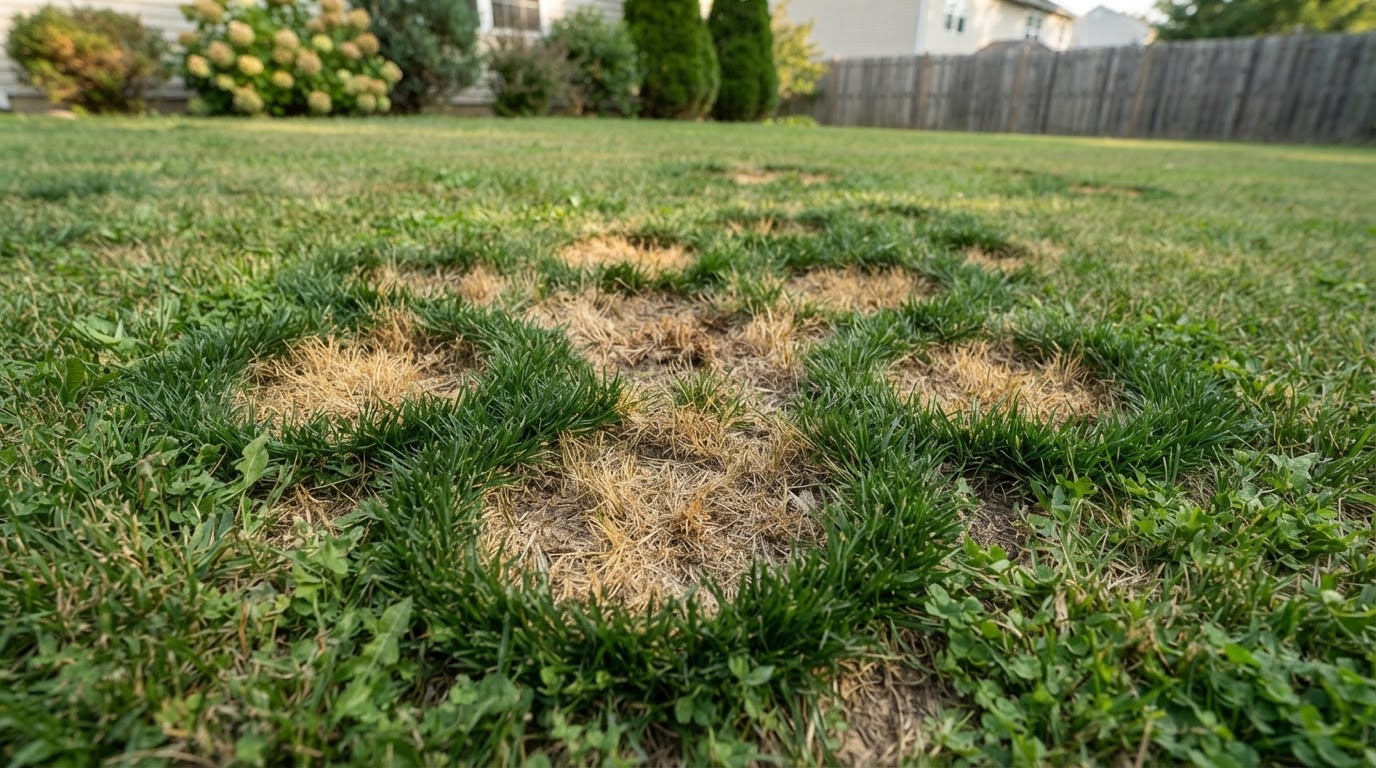
One of the more uncomfortable lawn problems I have seen over the years happens in otherwise beautiful neighborhoods.
A homeowner spends money fertilizing the lawn. They control weeds. They aerate. They seed. They mow carefully. The lawn looks great.
Then somebody walks a dog through the neighborhood, the dog stops at the edge of the property, and a few days later there is a brown spot.
I've even seen homeowners put signs near the sidewalk asking people not to let dogs use their lawn. I understand it. If you have spent years building a nice lawn, you don't want somebody else's dog damaging it.
Is there a grass that dog urine won't kill?
The honest answer: No turfgrass is completely dog-urine-proof.
But some grasses may tolerate these conditions better than others, and in Pennsylvania one of the grasses I like for a durable lawn is turf-type tall fescue.
Dog Urine Usually Isn't Burning Your Lawn Because It's "Acidic"
This is one of the biggest misconceptions surrounding dog urine and lawns. I am a lawn-care guy, not a veterinarian — if somebody believes their dog's health has changed, that is a conversation for a veterinarian. But from the lawn side, normal dog-urine injury is generally not an acidity problem.
Dog urine is burning your lawn because it's too acidic.
Penn State Extension explains that dog urine contains urea, which is rich in nitrogen. When a concentrated amount lands in one small area, that nitrogen can essentially act like an excessive fertilizer application and injure the turf. Colorado State also points to concentrated nitrogen-containing compounds and salts as contributors to the damage.
You should add lime to neutralize the 'acid' in dog urine.
Since the primary issue is concentrated nitrogen — not acidity — applying lime won't address the actual cause of the burn. The proven approach is dilution with water immediately after the dog urinates.
Special dog food supplements will stop lawn spots.
Penn State specifically recommends consulting a veterinarian before using products or dietary interventions intended to alter a dog's urine chemistry. Your dog's health matters more than your lawn — and we can always reseed grass.
Think about spilling a pile of fertilizer on one little spot. Fertilizer is good for grass at the right amount. Too much concentrated in one place can burn it. Dog urine can create a similar problem.
The Classic Dog Urine Burn Pattern
Dead
Center
Brown/dead center: Concentrated nitrogen essentially burned the turf — like an excessive fertilizer spill.
Dark green ring: The surrounding turf received extra nitrogen — but not enough to injure it. It actually greened up.
Outer edge: Diluted nitrogen acted as mild fertilizer, creating that telltale dark green halo.
What Grass Is Better for Homes With Dogs?
If somebody in Eastern Pennsylvania told me they have dogs that use the lawn constantly and they want a grass that's durable, turf-type tall fescue would be high on my list. That's not because tall fescue is immune to dog urine — it isn't. But it has several characteristics that make it useful for active residential lawns.
Turf-Type Tall Fescue
Top Pick for DogsColorado State specifically identifies tall fescue and perennial ryegrass as comparatively more tolerant of urine-associated salts. Tall fescue also brings good traffic and drought tolerance — exactly what an active family lawn needs.
- Relatively more urine-salt tolerant
- Excellent traffic tolerance for active dogs
- Good drought performance during Pennsylvania summers
- Creates very dense modern turf stands
Kentucky Bluegrass
Spreads & FillsKentucky bluegrass spreads through underground rhizomes, giving it some ability to fill small damaged areas over time when growing conditions are favorable. However, it is not specifically marketed as highly dog-urine tolerant.
- Rhizomatous spreading can help repair small spots
- Valuable component in a Pennsylvania lawn blend
- Excellent density and appearance when established
- Best used in combination, not as a standalone dog solution
The conversation isn't necessarily tall fescue OR Kentucky bluegrass. It's: what combination of cool-season grasses makes sense for this particular Pennsylvania property? That's part of the thinking behind Sunny Seed Mix.
The Front-Yard Dog-Walker vs. The Backyard Pet Owner
There are really two different homeowners reading this article. The first has somebody else's dog walking across the front lawn. The second has their own dog. These require different strategies.
The Neighborhood Dog Spot
A dog occasionally urinates along the edge of your front lawn — often near mailboxes, signposts, trees, curbs, and sidewalk edges. You have almost no control over it, and those areas receive repeated exposure.
Strategy
Don't panic. Establish dense, durable turf to give yourself a better starting point. A healthy lawn can often be repaired if injury occurs. There is no seed that makes the lawn immune — but a thick lawn handles it better.
The Backyard Pet Owner
Your own dog uses the same yard every day, going through the same door to the same section beside the patio. Pretty soon the lawn has little brown circles everywhere.
Strategy
Train the dog to use a designated elimination area (mulch or gravel). Give the dog its area and the lawn its area. That's far more predictable than constantly repairing ten little brown circles.
One of the Best Things You Can Do Immediately Costs Almost Nothing
If you see your dog urinate on the lawn and you have access to water, dilute the area promptly. Penn State notes that watering the spot immediately afterward is the proven way to dilute the concentration and reduce the potential injury.
Dilution.
More soil area. Lower concentration. Less potential fertilizer-like burn.
Why I Wouldn't Change My Dog's Diet to Save My Lawn
I would never recommend changing your dog's food or giving it a supplement simply because somebody says it will stop lawn spots. That's a veterinarian question. Penn State specifically recommends consulting a veterinarian before using products or dietary interventions intended to alter a dog's urine chemistry.
Your dog's health matters more than your lawn. We can reseed grass.
Why Aeration and Overseeding Matter for Dog Owners
If your lawn has dozens of thin spots from pets, traffic, summer stress and years of wear, I start thinking about the bigger picture. Why keep patching the same weak lawn? That may be a good opportunity for aeration and overseeding.
Fertilizer feeds the grass you already have. Seed gives you an opportunity to change the grass you have.
If I have an older lawn with weak turf and a dog running across it every day, I can continue fertilizing those plants. Or I can begin introducing newer desirable turf-type grasses into the stand. For some lawns, I've seen tremendous improvement through several fall seasons of aeration and overseeding.
Not because grass becomes indestructible. Because we're gradually building a better turf stand.
Traffic Damage and Urine Damage Are Two Different Problems
Urine Damage
Comes from concentrated urine deposited in an area. Creates the classic brown spot with a green ring.
Traffic Damage
Happens because the dog repeatedly runs, turns, digs or follows the same path. Wears down turf along fences, gates, and pathways.
A homeowner with a large active dog may have both happening simultaneously. Turf-type tall fescue becomes especially interesting here because it is commonly selected where traffic and drought tolerance are important. But traffic tolerant does not mean traffic proof.
The Realistic Dog-Lawn Strategy
Our goal should be resilience and recovery, not pretending damage can never happen. The best practical strategy is usually a combination of:
Durable Turf
Select turf-type tall fescue for salt and traffic tolerance.
Water the Lawn
Keep the lawn adequately watered to support recovery.
Dilute Fresh Spots
Flush urine spots with water immediately when practical.
Mow Higher
Maintain appropriate mowing height to reduce stress.
Repair Damage
Loosen soil and reseed dead areas promptly.
Aerate Compacted Soil
Core aeration relieves compaction from foot and paw traffic.
Overseed Thin Turf
Introduce better grass varieties each fall season.
Designated Pet Area
Create a mulch or gravel bathroom zone for your dog.
Sunny Seed Mix and the Golden Green Philosophy
Golden Green's philosophy with Sunny Seed Mix is not: "Here's magic seed that nothing can hurt." I don't believe in selling lawn care that way. Grass is alive. Dogs can damage it. Heat can damage it. Drought can damage it.
Our objective is to select quality cool-season turfgrass varieties appropriate for the lawn we're trying to build and then give those plants the best environment we reasonably can.
A premium lawn isn't simply fed. It is built.
The better somebody's lawn becomes, the more protective they often become of it. I understand why. You spend several years improving a lawn. You aerate. You seed. You fertilize. You water. It finally looks exactly how you wanted.
Then somebody walks their dog across it. Suddenly you're watching that dog thinking: "Please don't stop. Please don't stop…" And then it stops. I get it.
But instead of trying to create an indestructible lawn, I'd rather build a turf stand that is healthy enough to handle normal life and repair the damage when life happens.
A beautiful lawn should still be a usable lawn.
Golden Green — Your Lawn's Best Friend.
Does Your Lawn Need Seed, Aeration, or a Full Plan?
Whether you're dealing with dog spots, thin turf, or summer damage, let Golden Green take a look before you spend money guessing.