There are approximately four ways to deal with a lawn. Three of them can become surprisingly expensive, frustrating, or entertaining. The fourth is considerably less exciting. And that's probably a good thing.
If you're a homeowner in the Lehigh Valley or Eastern Pennsylvania, here's what you're getting yourself into.
Option #1: Hire Another Lawn Care Company
The Mystery Treatment Experience
Call for an estimate. Wait. Wait some more. Three weeks later, someone calls you back while you're eating dinner. Eventually, you receive an estimate:
Treatment for what? Nobody knows. Ask what they're putting down. "Fertilizer." What kind? "The good stuff." Excellent. Your lawn is apparently being treated by the same people who describe wine as "the red kind."
The Real Problem with Mystery Lawn Treatments
All joking aside, homeowners should know what is being done to their lawns and why. A professional lawn care program shouldn't simply consist of repeatedly putting products on the grass. Good lawn care starts with understanding the lawn.
That includes things like:
Treating symptoms isn't the same thing as improving a lawn.
Option #2: Do It Yourself
The Saturday Morning Chemistry Class
This sounds easy. And cheap. Until Saturday morning.
THE LAWN CARE AISLE WELCOMES YOU
Then you find a bag that says "STEP 1." You didn't realize your lawn had steps. So you buy whichever bag has the happiest-looking grass on the front. Drive home. Read the directions. Read them again. Google what the directions mean. Watch a 23-minute YouTube video explaining the directions. Discover you bought the wrong product. Drive back.
Now you need a spreader. And a sprayer. And weed killer. And grass seed. And gloves. And fertilizer. And pre-emergent. And apparently something called a surfactant.
Congratulations. At 9:00 AM you wanted greener grass. By noon you're taking an introductory course in agricultural chemistry. You apply everything. Wait. Nothing happens. So naturally... you apply more. Now something happens. Unfortunately, it's a 14-foot yellow stripe running diagonally across the front lawn.
Your wife asks: "Is the grass supposed to look like that?"
You confidently respond: "It'll grow out." She stops asking.
Can you fertilize and treat your own lawn?
Of course. Plenty of homeowners successfully maintain their own lawns. But there's an important distinction:
Buying lawn products is easy. Using the right product at the right rate and the right time is the difficult part.
- •Different weeds respond to different herbicides.
- •Different products have different application rates.
- •Pre-emergent products have timing requirements.
- •Some herbicides can interfere with seeding.
- •Fertilizer requirements change throughout the growing season.
- •Weather matters. Soil conditions matter. Turf species matter.
- •And sometimes the best treatment is not applying another product at all.
DIY lawn care can work extremely well for someone who enjoys learning the science. But if your idea of a relaxing Saturday doesn't involve calculating pounds of product per 1,000 square feet... there is another option.
Option #3: Do Absolutely Nothing
The Regional Weed Research Facility
Hard to beat that ROI. At least initially.
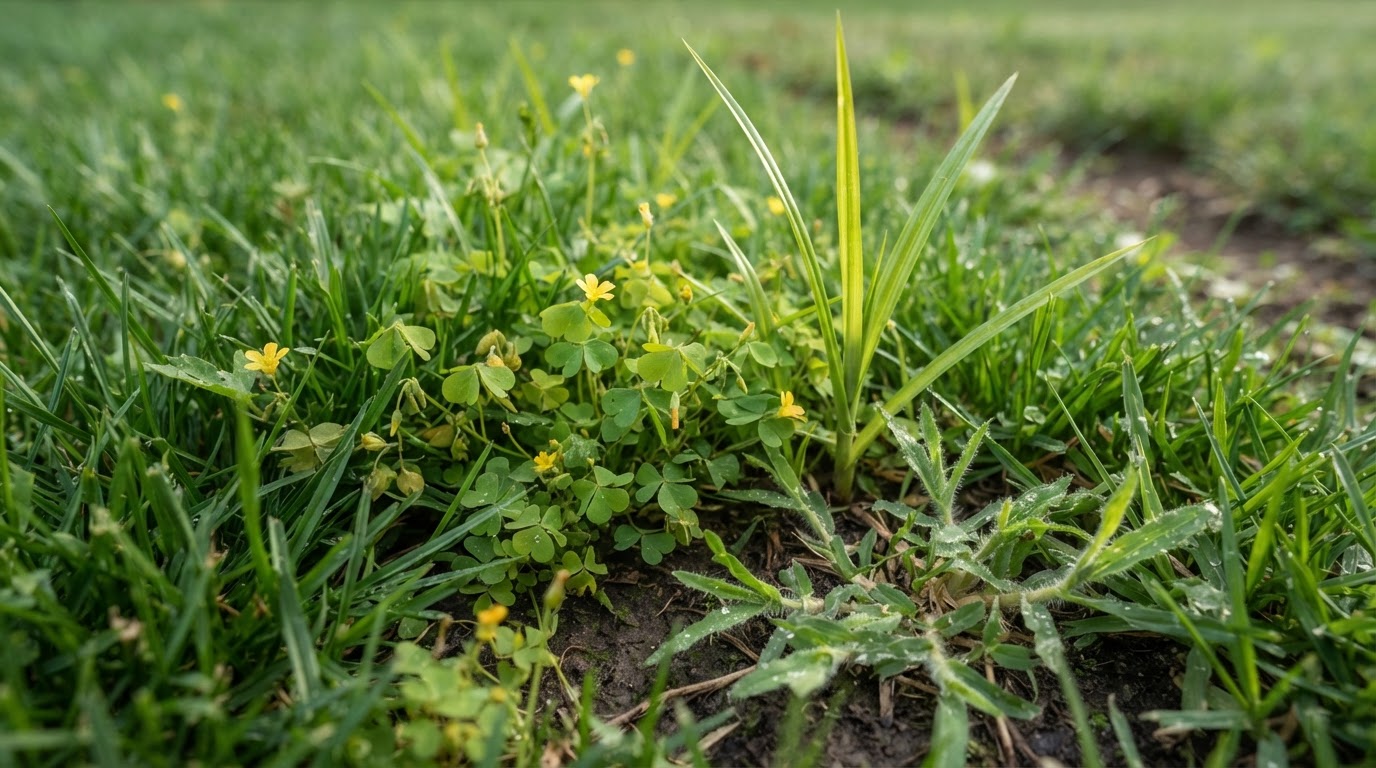
Then the dandelions arrive. Then clover. Then crabgrass. Then nutsedge. Then wild violet. Eventually, your property becomes less of a lawn and more of a:
Regional Weed Research Facility
Penn State may call asking whether they can conduct field trials. Your neighbor starts bringing his children over for educational tours.
"And over here, kids, we have mature crabgrass growing naturally in its native habitat."
By August, you're no longer mowing the grass. You're simply... reducing the biodiversity. But hey. You saved money on lawn care. Probably.
What actually happens when a lawn is neglected?
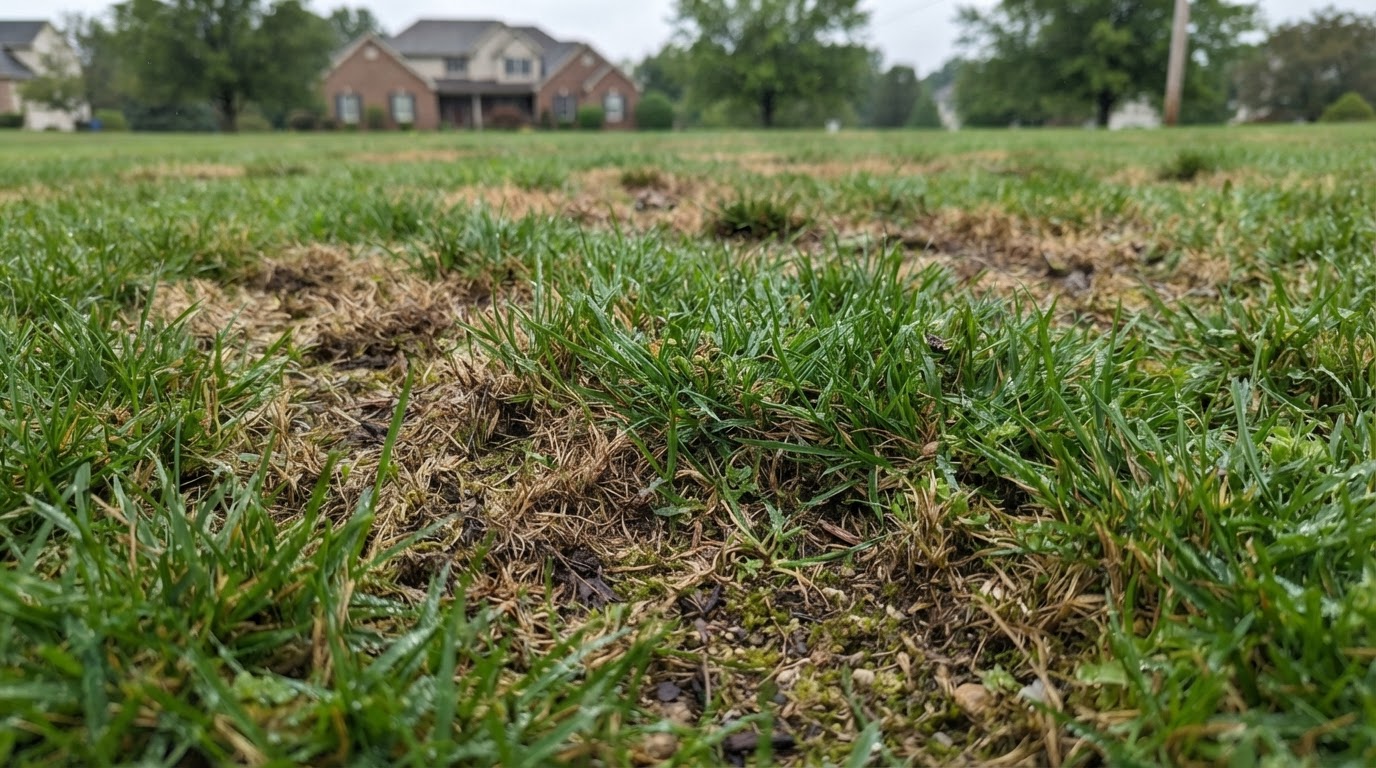
Here's where the joke becomes important. A thick, healthy lawn is one of your best defenses against weeds. When turf becomes thin, weak, compacted, stressed or damaged, weeds gain opportunities to establish.
That's why constantly asking "What can I spray on this weed?" isn't always the best question. A better question is:
"Why is this weed succeeding here in the first place?"
That question changes lawn care completely.
Option #4: Stop Guessing and Build a Healthier Lawn
The Golden Green Approach
This is the approach we believe in at Golden Green Lawn Care. Instead of chasing every weed that appears, think about lawn care as a system.
IDENTIFY the Problem
Crabgrass isn't nutsedge. Wild violet isn't clover. Broadleaf weeds aren't grassy weeds. And not every brown spot is caused by the same thing. Correct identification comes first.
UNDERSTAND Why It's Happening
Is the lawn thin? Is there excessive shade? Compaction? Improper mowing? Poor fertility? Insect damage? Environmental stress? Simply killing a weed doesn't necessarily fix the conditions that allowed it to establish.
APPLY the Right Treatment at the Right Time
Timing matters tremendously in professional lawn care. The correct product applied at the wrong time may produce disappointing results. The goal should be intentional treatments — not random applications because Saturday happens to be sunny.
STRENGTHEN the Turf
This is where fertilization, aeration, overseeding and other cultural practices can become important. A healthier, denser lawn leaves less room for unwanted plants to establish.
REDUCE Future Weed Pressure
The ultimate goal isn't to become extraordinarily talented at killing weeds. It's to create conditions where you have fewer weeds to kill. That's a much better long-term strategy.
What Does Professional Lawn Care Include?
Depending on the property and its needs, a professional lawn-health program may include:
Fertilization
Providing nutrients at appropriate times throughout the growing season.
Weed Control
Identifying and treating unwanted weeds with appropriate products and timing.
Pre-Emergent Applications
Helping prevent certain annual weeds before they establish.
Core Aeration
Relieving soil compaction and helping improve the growing environment.
Overseeding
Introducing quality grass seed to improve turf density.
Grub Prevention & Control
Protecting turf from potentially damaging white grubs.
Lime Applications
Used where appropriate to address soil pH conditions.
The important phrase is: "Where appropriate." A good lawn-care recommendation should be based on what the lawn needs — not simply what somebody can sell you.
The Golden Green Approach
At Golden Green Lawn Care, we're building our lawn programs around a straightforward philosophy:
We want to know what's happening in the lawn, understand why it's happening, apply appropriate treatments and improve the turf so homeowners can enjoy better long-term results.
Because you shouldn't need a chemistry degree to have a nice yard. And you definitely shouldn't have to wonder what "Lawn Treatment — $87" actually means.
Lawn Care in the Lehigh Valley & Eastern Pennsylvania
If you're dealing with weeds, thin turf or a lawn that simply isn't performing the way you'd like, Golden Green Lawn Care can help. We provide professional residential lawn-care services including:
Healthier lawns. Fewer weeds. Better results.
And preferably fewer Saturday afternoons standing in the garage Googling: "Did I accidentally kill my grass?"
Golden Green Lawn Care
Your Lawn's Best Friend.
Serving homeowners throughout the Lehigh Valley and Eastern Pennsylvania.
Request Your Golden Green Lawn Evaluation