A Complete Guide to Overseeding Your Lawn in Eastern Pennsylvania
Learn when to overseed your Pennsylvania lawn, why fall timing matters, and how aeration and quality seed can help build thicker turf — from the firsthand experience of a lawn-care professional who has watched Eastern PA lawns change over the years.
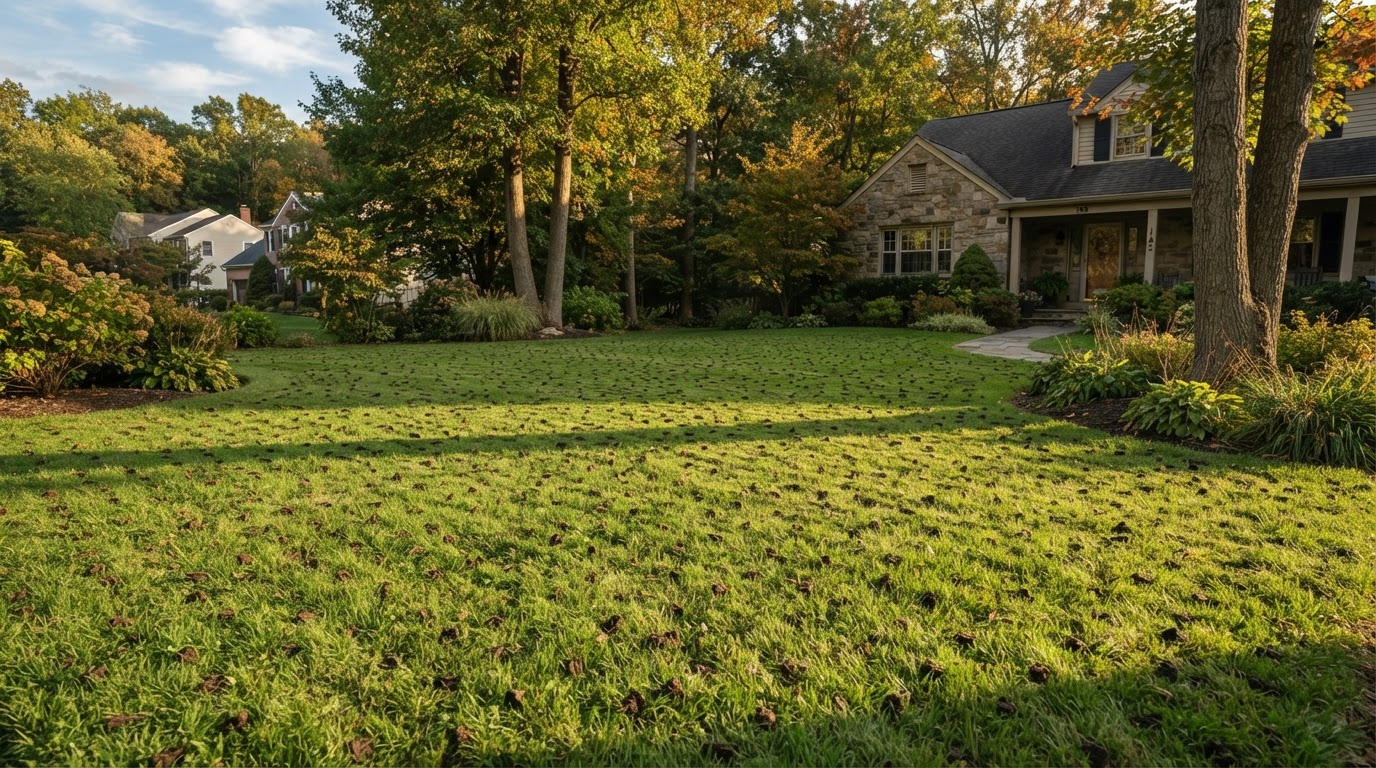
After years in lawn care, if you asked me what service can make one of the biggest long-term differences in a Pennsylvania lawn, aeration and overseeding would be near the top of my list.
Homeowners understandably spend a lot of time thinking about fertilizer and weed control. Those are important. We use them every day. But there is something fertilizer cannot do:
Fertilizer cannot put a new grass plant into an empty spot.
If you have a bare area, you can fertilize it all year. If there is no desirable grass plant growing there, there is nothing for that fertilizer to feed. And if an older lawn contains thin, weak, undesirable, or poorly adapted turf, fertilizer can improve the nutrition of the grass that's already there — but it doesn't magically replace those plants with different turfgrass varieties.
That's what makes overseeding so important. Overseeding gives us an opportunity to introduce new desirable turfgrass plants into an existing lawn and gradually improve what that lawn is made of.
You can fertilize an empty spot all year. It's still an empty spot until something grows there.
That simple idea has shaped the way I think about long-term lawn improvement.
Quick Answer: When Should You Overseed in Eastern Pennsylvania?
For most cool-season lawns in Eastern Pennsylvania, late summer into early fall is generally the preferred overseeding period. September is especially valuable for many lawns throughout the Lehigh Valley because soil remains warm while air temperatures begin moderating, giving successful seedlings an opportunity to establish before winter and continue developing the following spring.
The exact timing depends on the year, weather, turf species, lawn condition, weed pressure, previous herbicide applications, soil conditions, and watering ability. At Golden Green, we don't look at the calendar alone. We look at the lawn.
A Simple Eastern PA Fall Timeline
The goal isn't simply to get seed onto the property before winter. The goal is to give that seed a good opportunity to become established turf.
What Is Overseeding?
Overseeding means introducing new grass seed into an existing lawn without completely removing the lawn and starting over from bare soil. Homeowners may overseed to fill thin areas, repair appropriate bare areas, improve turf density, introduce desirable turfgrass varieties, improve the lawn's overall appearance, help rebuild areas damaged during summer, repair turf affected by insects or disease, and reduce open growing space where weeds can become established.
But I don't really think about overseeding as simply putting seed down. I think about it as:
Changing the population of grass plants in the lawn over time.
That's a much more useful way to understand what we're trying to accomplish.
Fertilizer Feeds the Lawn You Have. Seed Helps Build the Lawn You Want.
This may be the most important concept in this entire guide. Imagine I walk onto a 20-year-old lawn in Allentown. There is plenty of grass. Maybe there's Kentucky bluegrass. Maybe turf-type tall fescue. Maybe perennial ryegrass. Maybe there are older, coarser grasses. Maybe parts of the property have been repaired over the years using several different seed mixtures. There are thin spots. There are weeds. Maybe the lawn has been mowed too short for years.
If I apply fertilizer, I can help those existing grass plants grow. That's good. But I'm still feeding the plants that are already there. Overseeding gives us an opportunity to introduce additional desirable turfgrass into that existing stand. And if the lawn needs it, we can do it again another fall. Then perhaps again. Over time, successful establishment can gradually change the composition and density of the lawn.
A premium lawn isn't simply fed. It is built.
What I've Learned From Watching Lawns Change Over the Years
One misunderstanding I've encountered repeatedly is the expectation that overseeding is always a one-time repair. The thinking goes something like this: “My lawn is thin. Aerate and overseed it this September, and next year everything should be perfect.”
Sometimes one properly performed overseeding can produce a tremendous improvement. I've seen that. But an older established lawn that we're genuinely trying to transform can be different. In my field experience, I've seen two, three, four, or even five consecutive fall seasons of lawn improvement produce dramatic changes in some properties. That's an observation from my experience — not a rule that every lawn needs five years of overseeding. It doesn't.
A good lawn with minor thinning may respond beautifully after one season. Another may benefit from two. A severely deteriorated lawn may be better served by partial or complete renovation rather than repeatedly overseeding turf that isn't worth preserving. But when we're working with an established lawn that has desirable turf worth keeping, I've learned something:
Lawn improvement compounds.
The Multi-Season Transformation
Fall 1
Introduce desirable new turfgrass and begin filling weaknesses.
Fall 2
Create additional opportunities for establishment and improve more thin areas.
Fall 3
Continue improving turf density and introducing desirable plants where needed.
Fall 4
Build upon the previous seasons.
Fall 5
On some properties, you can eventually stand there and realize: this isn't the lawn we started with.
That's one reason I wrote a separate guide about how many years of aeration and overseeding it takes to transform a lawn.
Think About a 10×10-Foot Section of Your Lawn
Here's another way I explain repeated core aeration and overseeding. Imagine a 10-foot-by-10-foot section of lawn. Now run a core aerator across it. The machine removes plugs and creates openings throughout that area. But it obviously doesn't physically disturb every square inch of the 100 square feet. There is undisturbed turf and soil between the aeration holes. That's normal.
Now come back another fall and aerate again. You're creating another pattern of openings and another opportunity to improve conditions and achieve seed-to-soil contact throughout that turf. Then another season. And another when necessary. I'm not suggesting the machine somehow knows where last year's holes were. It doesn't. The point is that repeated aeration creates repeated opportunities throughout the lawn over time.
That helps explain why I've seen multi-year lawn-improvement programs accomplish things that one single aeration and overseeding couldn't accomplish by itself.
Why Aeration and Overseeding Work So Well Together
Core aeration removes small plugs of soil from the lawn. Depending on the condition of the property, that can help relieve soil compaction while creating additional openings within the turf canopy. For overseeding, those openings can be valuable because one of the things we're trying to improve is seed-to-soil contact.
Think about where you don't want expensive grass seed sitting: on top of thick debris, on leaves, on the sidewalk, on the driveway, inside a landscape bed, out in the street. Seed needs an opportunity to interact with soil, moisture, and the right growing environment.
Give that seed a reasonable opportunity to become a mature grass plant.
Why Golden Green Uses Professional Aeration Equipment
I've operated older walk-behind aerators. They work. But anyone who has spent an entire day operating one understands how physically demanding they can become. You're maneuvering a heavy machine around trees, landscape beds, slopes, driveways, houses, corners, gates, and irregular lawn areas. Do one property and it's manageable. Do property after property, hour after hour, and technician fatigue becomes real.
That's one reason Golden Green uses professional equipment such as the Stinger hydraulic aerator. But I don't want to make the equipment sound magical. It isn't. A machine doesn't make seed germinate. Soil moisture matters. Timing matters. Seed matters. The technician matters. Weather matters. Homeowner watering matters. Good equipment simply gives a trained technician a better platform for doing consistent work.
I want the technician thinking about my lawn — not spending all of his energy fighting the machine.
Good Grass Seed Is Too Expensive to Waste
This is one of those little things that bothers me after years in lawn care. Good grass seed sitting on a driveway. Or sidewalk. Or curb. Or landscape bed. Or street. That's not where I want it. When we're using quality seed, I want that seed getting the best reasonable opportunity to become a grass plant. Seed needs more than gravity. It needs:
When I see good grass seed sitting on a driveway, all I see is money and potential being wasted.
Why Seed Quality Matters
Not all grass seed is the same. Golden Green's seed program is called Sunny Seed Mix, and the philosophy behind it is simple:
A premium lawn isn't simply fed. It is built.
We take turfgrass selection seriously because the seed going into a lawn determines the plants we're attempting to establish. For Eastern Pennsylvania lawns, we're primarily working with cool-season turfgrass. Depending on the site, that means considering characteristics such as turf density, appearance, adaptation, sun and shade conditions, stress tolerance, turf quality, and the characteristics of different turfgrass species and varieties.
But even excellent seed has limitations. Great seed without adequate moisture can fail. Great seed in unsuitable deep shade can struggle. Great seed sitting on pavement accomplishes nothing. Great seed applied at the wrong time can disappoint. Great seed doesn't repair a severe drainage problem. Seed is incredibly important. But seed is part of a larger system.
Why Eastern Pennsylvania Lawns Often Need Overseeding
One reason overseeding is so relevant throughout the Lehigh Valley and Eastern Pennsylvania is what our cool-season lawns experience every year. A lawn can look beautiful in April. Beautiful in May. Then June arrives. Then July. Then August. Summer exposes weakness.
We may begin seeing:
By late summer, the lawn often shows us where its weaknesses are. That's one reason I like fall so much.
Summer tells us where the problems are. Fall gives us an opportunity to start rebuilding.
When Is the Best Time to Overseed in Eastern Pennsylvania?
For most major cool-season overseeding work, I generally prefer late summer into early fall. Pennsylvania weather doesn't follow an exact schedule every year, so I don't like pretending there is one magical date when every lawn should be seeded. But September is extremely important for many Eastern Pennsylvania lawns.
The soil can remain favorable for germination while moderating air temperatures reduce some of the stresses associated with midsummer. Successful seedlings then have an opportunity to establish before winter and resume development the following spring before facing their first full Pennsylvania summer. That's very different from waiting until the growing season is almost over and simply putting seed down because the calendar says it's still fall.
We don't just want germination. We want establishment.
Why Spring Overseeding Can Be Tricky
Spring overseeding isn't automatically wrong. There are situations where spring seeding makes sense. But spring can create competing priorities. One of the biggest questions becomes: do I prioritize establishing new turf, or do I prioritize crabgrass prevention?
Many traditional pre-emergent products used for crabgrass prevention can interfere with the establishment of desirable turfgrass seed. That means the spring lawn-care program has to be planned around the seeding decision. And even when spring seed germinates beautifully, those seedlings don't have very long before their first Pennsylvania summer. Heat. Humidity. Dry weather. Disease pressure. Water stress. That's a lot to ask of young turf.
That's why, when conditions allow, Golden Green generally prefers fall for major cool-season overseeding projects.
Sometimes I Don't Want to Seed Your Lawn Yet
This may sound strange coming from a company that offers overseeding. But sometimes my recommendation is: Not yet.
Imagine a lawn that's heavily occupied by crabgrass, foxtail, broadleaf weeds, and other undesirable vegetation. I don't necessarily want to spend a homeowner's money putting quality grass seed into a lawn that isn't ready to receive it. Sometimes we need to address significant weed competition first. Then aerate. Then seed.
But that creates another timing issue. Herbicides can have specific restrictions involving seeding intervals, turf species, rates, and application timing. The specific product label controls. So weed treatment and overseeding shouldn't be treated as two unrelated appointments. They need to be coordinated.
That's why I've written a separate guide: Should You Spray Crabgrass and Foxtail Before Aeration and Seeding?
I don't want to spend a customer's money putting premium seed into a lawn that isn't ready to receive it.
The New-Construction Lawn Problem
I've had versions of this conversation many times over the years. A family builds or purchases a beautiful new home. The landscaper establishes the lawn. Everything turns green. Everybody is excited. And emotionally, it feels like the lawn is finished.
Then winter comes. Spring arrives. The grass starts growing. Then Pennsylvania summer arrives. July. August. The turf begins showing weaknesses. Maybe areas thin. Maybe crabgrass appears. Maybe bare spots become more obvious. Suddenly the homeowner is looking at a lawn that doesn't feel very “new.”
And I completely understand the frustration. They've just built a house. They've dealt with contractors. Budgets. Change orders. Furniture. Moving. Landscaping. Every time they turn around, something else costs money. Then the lawn-care company arrives and says: “I think we should aerate and seed this fall.” Naturally, the homeowner thinks: I just paid for a new lawn!
I understand that reaction. But a newly established lawn is still a developing population of plants, often growing in soil that recently experienced significant construction activity.
New Construction Reality Check
A newly installed lawn can be new without being finished. If I installed new lawns for a living, there's one conversation I'd want to have with every homeowner: “Your lawn is installed, but don't necessarily think of it as finished. Let's evaluate it again next September.”
Construction Can Turn Part of an Old Lawn Into a “New Lawn”
You don't need a brand-new house to experience this. Maybe you've lived in the same home for 15 years. Then you install a swimming pool, a patio, new landscaping, a drainage system, utilities, an addition, or another construction project. Skid steers cross the lawn. Wheelbarrows travel over it. Soil gets disturbed. Turf gets damaged. Compaction occurs. Suddenly, one section of your established lawn behaves much more like a new-construction lawn.
In that situation, we're not simply asking: what fertilizer does this area need? We're asking: what turf needs to be rebuilt here?
Three Different Overseeding Customers
Not every lawn should receive the same recommendation.
The Good Lawn That Needs a Boost
The lawn is mostly healthy. It has desirable turf but some thinning. Maybe summer exposed a few weaknesses. This lawn may respond beautifully to one well-timed aeration and overseeding.
The Lawn We're Rebuilding
Older lawn. Thin turf. Weed pressure. Compaction. Mixed turf quality. This lawn may benefit from multiple seasons of coordinated weed control + fertilization + aeration + overseeding + good maintenance. The objective is progressive improvement.
The New or Construction-Damaged Lawn
New house. Pool installation. Patio project. Utility work. Skid-steer damage. Significant soil disturbance. This lawn may need continued establishment and repair rather than being treated as though the project ended the moment grass first appeared.
These are three different lawns. They shouldn't automatically receive three identical recommendations.
Watering: Where the Homeowner Becomes Part of the Job
Golden Green can prepare the lawn. We can aerate it. We can apply quality seed. We can help put that seed into a good position. Then our truck leaves. And now the homeowner becomes an important part of the process.
Newly seeded areas generally need consistent moisture during germination. That commonly means lighter, more frequent watering initially so the seedbed doesn't repeatedly dry out. As new turf develops, watering can gradually transition toward deeper, less frequent irrigation appropriate for established turf.
But I intentionally don't like giving every homeowner one generic instruction such as: “Water exactly 11 minutes three times a day.” That doesn't account for the property. One homeowner has irrigation. Another has hose sprinklers. One lawn is full sun. Another is shaded. One is flat. Another has a slope. One soil holds water. Another area dries faster. Then rainfall changes the entire equation.
We can put the seed in a good position to succeed. We cannot make September rain on command.
The homeowner doesn't need a meaningless universal number. They need to understand the objective: keep the seedbed appropriately moist during germination and adjust as the seedlings develop and conditions change.
Why Doesn't Every Seed Grow?
This is an important expectation. Applying thousands of grass seeds doesn't mean every individual seed eventually becomes a mature turfgrass plant. Some seed doesn't achieve adequate soil contact, dries out, receives too much water, washes away, gets eaten, encounters unfavorable environmental conditions, germinates and later dies, or competes unsuccessfully with existing vegetation.
That's not an excuse for poor workmanship. It's biology.
Our job is to stack as many factors as reasonably possible in favor of successful establishment. That's another reason repeated turf improvement can make sense on certain properties. The goal isn't perfection from every individual seed. The goal is to establish enough desirable plants, over enough time, to keep moving the lawn in the right direction.
When Should You Mow After Overseeding?
Mowing matters before and after overseeding. New seedlings need an opportunity to develop. When mowing resumes, use a sharp mower blade and avoid scalping or removing too much leaf tissue at once. For many of the cool-season lawns we work with in Eastern Pennsylvania, I generally prefer mowing around 3 to 3½ inches during much of the growing season, with adjustments when turf species and conditions warrant.
Repeatedly mowing excessively short can weaken turf and make maintaining density more difficult. Think about the contradiction: you spend good money building new turf in September. Then you spend the following summer repeatedly cutting it too short and stressing it. That works against what we're trying to accomplish. Lawn improvement is a system.
What Overseeding Can and Cannot Do
Overseeding CAN
- Introduce desirable turfgrass
- Help fill appropriate thin areas
- Improve turf density
- Help rebuild summer-damaged areas
- Gradually improve turf composition
- Increase turf competition for growing space
- Help improve an aging turf stand
Overseeding CANNOT
- Fix severe drainage problems
- Make deep shade sunny
- Repair a broken irrigation system
- Eliminate established weeds by itself
- Fix severe soil problems overnight
- Guarantee every seed will germinate
- Replace good mowing, watering and maintenance
This distinction matters. I don't want to oversell overseeding. But I also don't want homeowners to underestimate what repeated, well-planned turf improvement can accomplish.
Can Overseeding Help With Weeds?
Yes — but not because grass seed kills weeds. It doesn't. The benefit comes from competition for growing space and resources. Thin turf creates opportunities. Open areas receive sunlight. Weeds can establish. A denser stand of desirable turf occupies more of that growing space.
That's why I've come to think about turf density as an important component of long-term weed management. We still need weed control. We still use crabgrass-prevention strategies. We still treat broadleaf and grassy weeds when appropriate. But ultimately, I want desirable turf occupying as much of the lawn as the site will reasonably support.
Another spray isn't always the entire answer. Sometimes part of the answer is:
More grass.
What Results Should You Expect After Overseeding?
Overseeding isn't instant. Here's a more realistic way to think about it.
When Overseeding Is Not Enough
There are also lawns where I would not recommend spending years trying to seed our way out of the problem. Maybe most of the existing turf consists of undesirable perennial grasses. Maybe drainage is severe. Maybe dense shade makes the desired lawn unrealistic. Maybe the soil requires major correction. Maybe the existing lawn simply isn't worth preserving.
In those cases, partial or complete renovation may be the more honest recommendation. That's another principle I believe strongly:
Treat the lawn you actually have — not the service menu.
Five Things I Want Eastern Pennsylvania Homeowners to Remember
1. Seed is different from fertilizer.
Fertilizer feeds plants. Seed introduces plants.
2. Fall is generally our best major overseeding opportunity.
Especially for the cool-season turf common throughout Eastern Pennsylvania.
3. Seed-to-soil contact matters.
Throwing expensive seed everywhere isn't the objective.
4. Water matters tremendously.
A professionally performed overseeding still needs proper establishment care afterward.
5. Lawn improvement can take time.
Sometimes one fall creates a tremendous change. Sometimes multiple seasons create the transformation.
Why Overseeding Still Excites Me After Years in Lawn Care
I've watched lawns change dramatically through this process. Not overnight. Not because of one magic application. And not because we discovered some secret fertilizer. We kept improving the turf.
We controlled weeds. We aerated. We introduced better seed. We watered. We fertilized. Then we did it again when the lawn needed it.
Eventually, you can stand on a property and realize: this isn't the lawn we started with. That's what excites me about overseeding. We're not simply feeding what is already there.
We're helping build what comes next.
Golden Green — Your Lawn's Best Friend.
Helpful lawn care advice for Pennsylvania homeowners
If this guide helped you, add Golden Green as a Preferred Source on Google to see more of our lawn care guides in Google Search and AI experiences.
Frequently Asked Questions About Overseeding in Pennsylvania
Share this article
Is Your Lawn Thin? Let's Figure Out Why Before You Spend Money Guessing.
Bare areas? Thin turf? Summer damage? Crabgrass? Compaction? Your lawn may need aeration and overseeding — but it may also be telling us something else. Let Golden Green take a look at the lawn first and help determine the right next step.
Golden Green — Your Lawn's Best Friend.
Related Articles
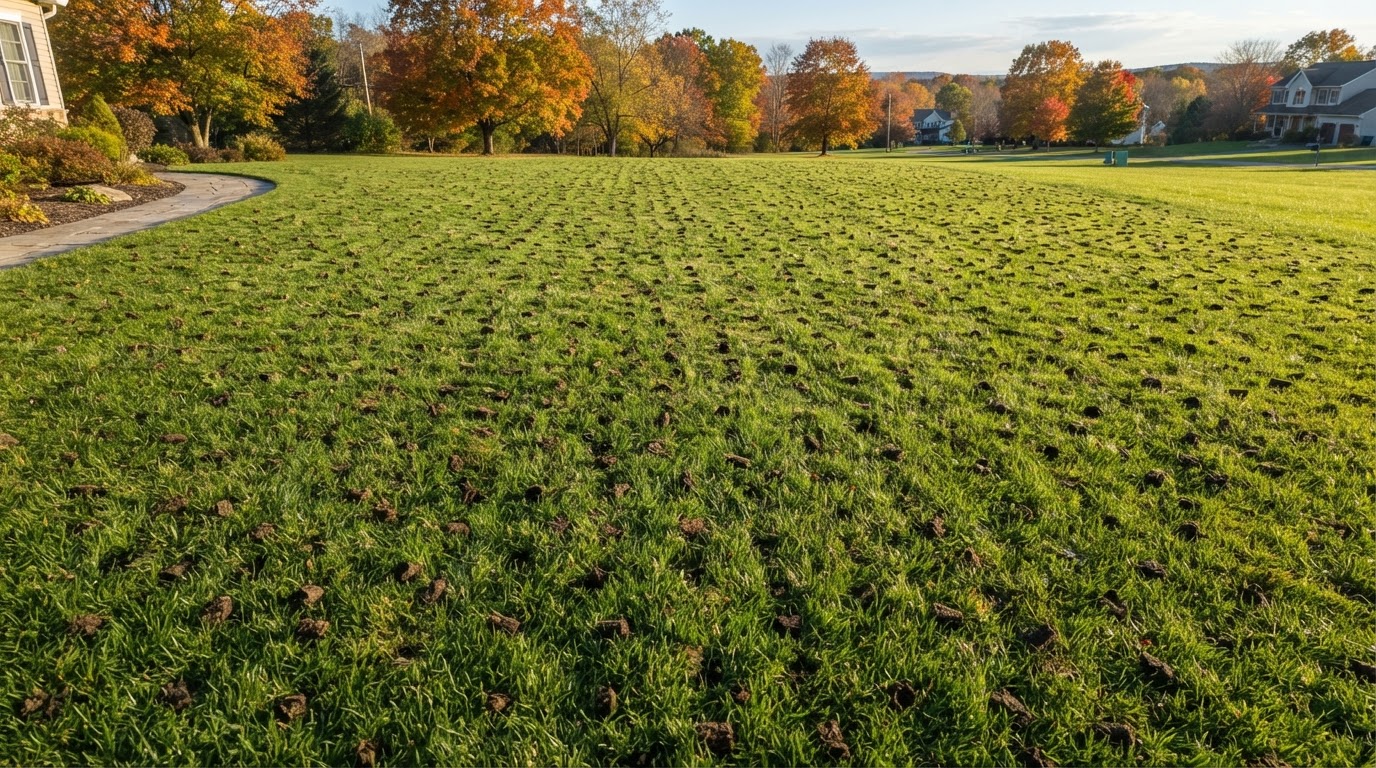
How Many Years of Aeration and Overseeding Does It Take to Transform a Lawn?
How often should you aerate and overseed? See why some Pennsylvania lawns improve dramatically after several fall seasons of aeration and seeding.
Read Article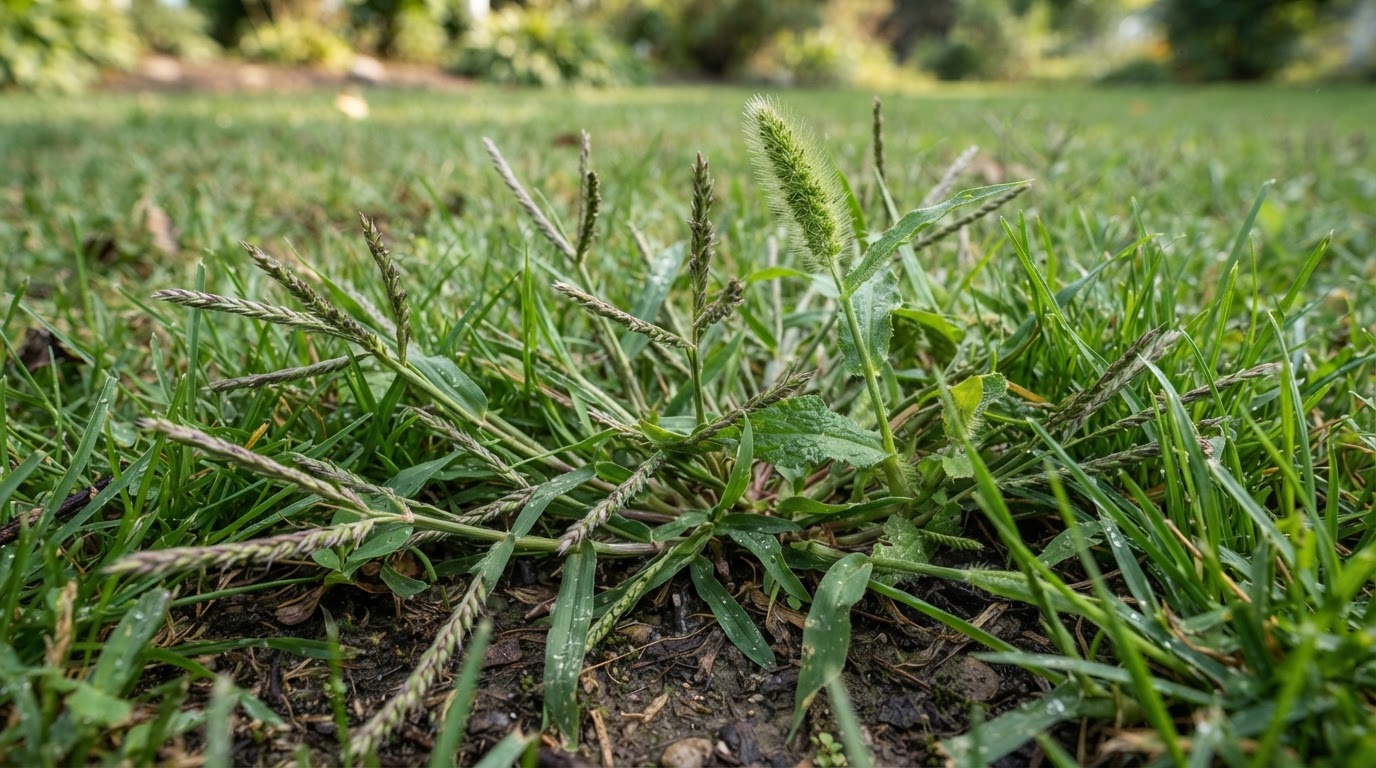
Should You Spray Crabgrass and Foxtail Before Aeration and Seeding?
Late-summer crabgrass and foxtail can leave bare spots. Learn why spraying before aeration and seeding may help Eastern PA lawns recover.
Read Article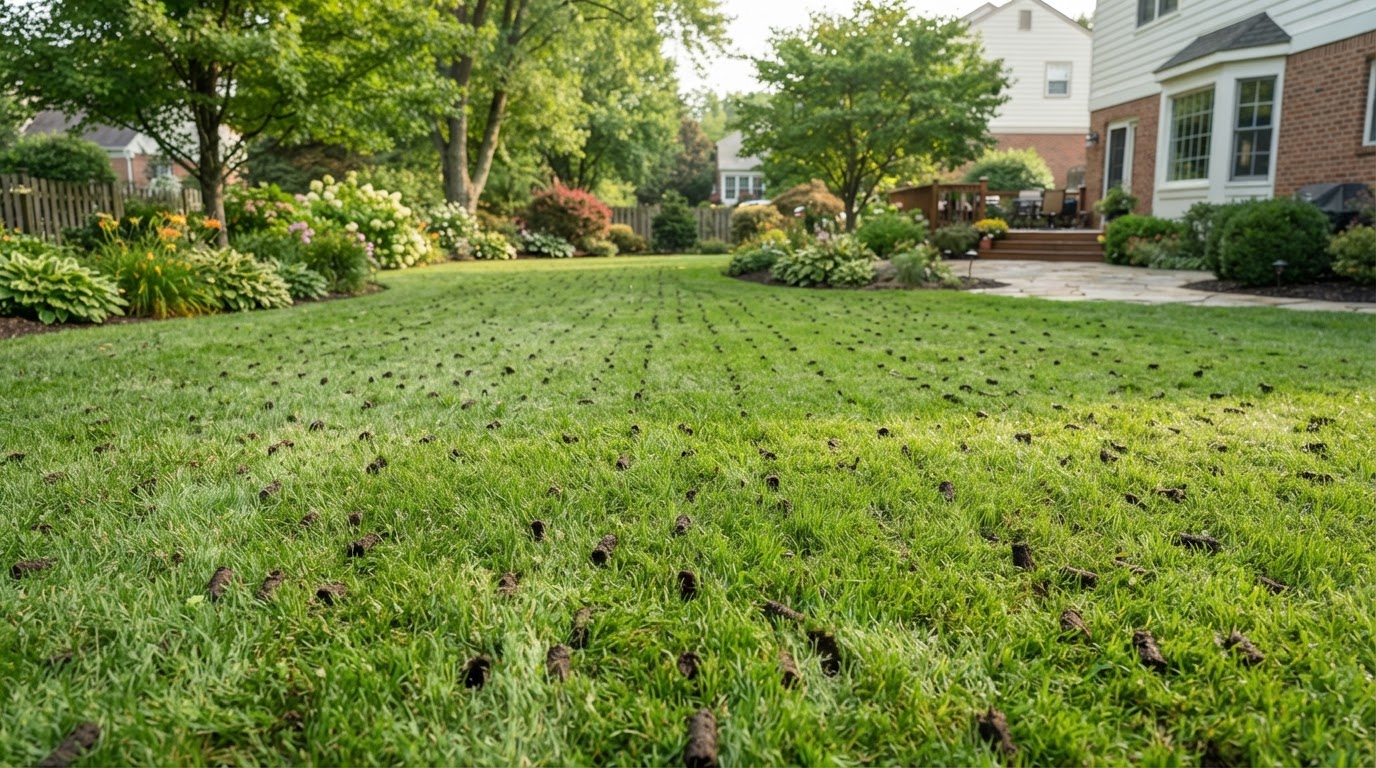
Why Golden Green Uses the Stinger GT30 for Aeration and Overseeding
After years of using different aerators, here's why Golden Green chose the Stinger GT30 — and why the operator matters even more than the machine.
Read ArticleGolden Green Lawn Care Services