How Often Should You Water Your Lawn in Pennsylvania? Why More Water Isn’t Always Better
Want to water your lawn less? Start by building a better lawn. Learn why deep watering, better turf and proper timing can mean less wasted water and a healthier Pennsylvania lawn — from the firsthand experience of a lawn-care professional who spent years building a lawn that needed less help from the sprinkler.
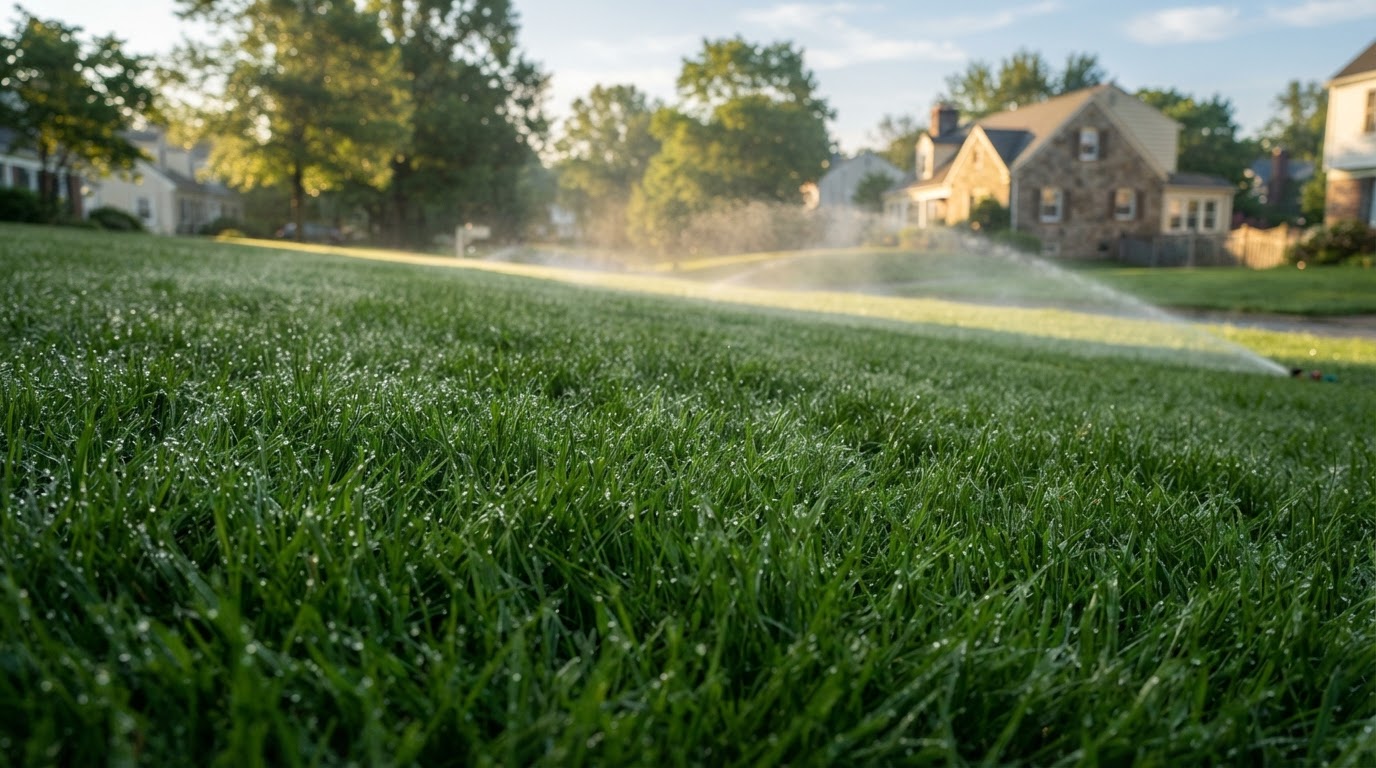
If you asked me what I have seen homeowners get wrong more than almost anything else over the years, it is this: they think a struggling lawn is a water problem.
Brown lawn? More water. Thin lawn? More water. Summer stress? More water. The sprinkler runs a little longer every morning, and the lawn still does not look the way they want.
After years of working on lawns across Eastern Pennsylvania, I have come to believe something different:
The best watering strategy I have ever used was not watering more. It was spending years building a lawn that needed less help from me when summer arrived.
That is a very different starting point than “how many minutes should I run my sprinkler?” And it is the reason I want to explain how I think about watering a Pennsylvania lawn — not just how often, but why.
The Quick Answer
How often should you water a Pennsylvania lawn?
For most established cool-season lawns, deep, infrequent watering when the lawn actually shows moisture stress is generally better than a short run every morning. There is no universal schedule — grass type, soil, rainfall, slope, sun and temperature all matter.
But the bigger idea is this:
The goal is not to water your lawn every day. The goal is to build a lawn that uses the water it receives well.
The Biggest Watering Mistake I Have Seen After Years in Lawn Care
I have watched this pattern repeat on property after property.
A homeowner sees the lawn looking rough in July. The instinct is understandable:
Brown lawn → more water.
So they set the irrigation system for a little bit every morning. Then the lawn is still struggling, so they add more water. The surface stays wet frequently, roots may remain relatively shallow, and prolonged leaf wetness can contribute to certain disease problems.
Penn State specifically warns that frequent, shallow irrigation can encourage shallow rooting and weaker turf, and identifies light, frequent irrigation as a factor in some turf diseases. It also recommends early-morning irrigation rather than nighttime watering where brown patch is a concern.
Your sprinkler system should be solving a moisture problem — not creating a dependency.
Common watering mistakes I see:
The Macungie Lawn That Changed How I Think About Water
I want to tell you about my own lawn, because it is the reason I think about watering the way I do.
I bought an established home in Macungie. There was grass. Fertilizer could make it greener. But it was not the stand of turf I wanted.
So I did not simply increase fertilizer or start running sprinklers every morning. For roughly four fall seasons I aerated and overseeded, progressively introducing the turf I wanted. Alongside that, I maintained the lawn with my fertilization and weed-control program, preventative grub management and lime where appropriate.
By the fifth year, I had a very different lawn.
And then came summer.
Instead of running irrigation every morning, my routine was roughly:
- Late June: one deep watering
- July: approximately once each week when needed
- Early August: continued as conditions required
I could get through the critical summer period with surprisingly few supplemental irrigation events because I had spent years improving the turf stand.
Do not judge your irrigation program by how often the sprinkler runs. Judge it by whether you are giving the turf what it needs without wasting water.
That is a much better way to think about it than telling everybody to water a fixed number of times. Your lawn is not my lawn. Your soil is not my soil. But the principle — build better turf so the lawn uses water well — holds.
Why Better Grass Can Mean Smarter Water Use
This connects directly to how I think about Sunny Seed Mix.
Penn State notes that turf-type tall fescue can reduce irrigation inputs and use applied water efficiently, and that drought-tolerant cultivar selection can reduce irrigation needs. That is not a promise that the right seed eliminates watering — it does not. But it means the grass you establish can influence how much help the lawn needs from irrigation.
If you want to read the full philosophy behind why I care so much about introducing better turfgrass over time, I wrote a separate cornerstone article:
The two ideas fit together: seed builds the turf; water helps establish and sustain it.
Deep and Infrequent vs. Little and Often
This is the core watering decision for an established lawn, and it is where most homeowners go wrong.
Deep & Infrequent
- Wets the root zone, not just the surface
- Encourages roots to grow deeper into the soil
- Lets the surface dry between waterings
- Generally better for established cool-season turf
Light & Frequent
- Keeps the surface constantly damp
- Can encourage shallow rooting
- Prolonged leaf wetness can favor disease
- Creates a lawn that depends on daily sprinkling
On my Macungie lawn, I often applied a little over an inch during a deep watering. That is what worked for that lawn and those conditions. Your lawn may be different. Penn State educational material gives a general deep-watering example of roughly 1 to 1½ inches per watering, while its more detailed guidance emphasizes wetting the root zone and adjusting for soil, drainage and conditions rather than blindly following a fixed number.
How to Know When Your Lawn Actually Needs Water
The lawn tells you when it is stressed. You just have to know what to look for.
Notice that none of those signs say “it is Tuesday.” The calendar is a rough guide. The lawn is the real signal.
Why “20 Minutes” Tells You Almost Nothing
This is one of my pet peeves, and it trips up a lot of homeowners.
Twenty minutes with one sprinkler could apply a completely different amount of water than twenty minutes with another. Pressure, nozzle type, coverage pattern, overlap — all of it changes what “20 minutes” actually delivers.
Time is not a measurement. Output is.
Penn State actually recommends measuring sprinkler distribution with equal-sized containers to understand application rate and uniformity. The old tuna-can trick is not glamorous, but it works: set a few straight-sided containers around the lawn, run the sprinkler, and measure how much water actually collected. That tells you what your sprinkler really does in twenty minutes.
When Should You Water?
Early morning is generally preferable. The turf gets the moisture it needs, and the leaf surface dries quickly as the day warms up, which can help reduce disease pressure.
Watering late at night keeps the grass wet for hours, and prolonged leaf wetness is something Penn State specifically flags as a factor in certain turf diseases. If brown patch is a concern, early-morning irrigation is the better choice over nighttime watering.
Can Too Much Water Hurt Your Lawn?
Yes. And I have seen it happen.
Frequent, shallow watering can encourage shallow rooting and weaker turf. Saturated soil can starve roots of oxygen. Prolonged leaf wetness can create an environment favorable to disease. And overwatering wastes water and can cause runoff.
More water is not automatically better. The right amount, applied the right way, at the right time — that is what helps.
An Eastern Pennsylvania Summer Watering Calendar
Here is roughly how I think about the summer window, with the obvious caveat that rainfall changes everything. This is a framework, not a prescription.
Late June
One deep watering if conditions call for it. The lawn is usually still carrying spring density.
July
Approximately once each week when needed. Watch the lawn, not the calendar.
Early August
Continue as conditions require. Adjust for rainfall, heat, and soil.
Later August
Begin shifting attention toward fall aeration and overseeding planning.
New Seed Is Different
Everything I just said about deep, infrequent watering applies to established turf. New grass seed is a completely different situation, and I do not want anyone to confuse the two.
Germinating seed needs frequent, light moisture. The seedbed should not repeatedly dry out during germination. That often means lighter, more frequent watering initially — sometimes multiple short cycles per day — until the seedlings establish. Then watering can gradually transition toward deeper, less frequent irrigation appropriate for established turf.
Do not water new seed like an established lawn. And do not water an established lawn like new seed.
Penn State explicitly makes this distinction. If you are overseeding this fall, the watering schedule during establishment is not the same as the schedule you will use next summer. That is why I talk to homeowners about aftercare before we leave the property.
Water, Sunny Seed Mix, and Aeration & Overseeding
These three things work as a system.
Aeration opens the soil and creates opportunities for seed-to-soil contact. Sunny Seed Mix introduces the turfgrass we want growing there. And water is what turns that seed into a living plant.
If you skip the watering piece, the best aeration and the best seed in the world can still fail. That is not an excuse — it is biology. Seed needs moisture to germinate, and seedlings need consistent moisture to survive their first weeks.
That is also why Sunny’s Seed Promise requires the customer to follow watering and aftercare instructions. We can put the seed in a great position to succeed. We cannot make it rain on command.
Why Water Matters After Lawn Treatments
One thing homeowners sometimes do not realize is how often moisture becomes part of the lawn-care program itself.
Depending on the specific product and label, irrigation or rainfall may be important after certain lawn applications. Water is also obviously critical during seed germination and establishment.
I do not separate “watering” from “lawn care.” They are connected.
Overseeding & New Seed
Germinating seed needs consistent light moisture. Letting the seedbed dry out can kill the crop before it starts.
Grub-Control Products
Many white-grub treatments are labeled to be watered in after application. Always follow the specific product label.
Granular Fertilizer
Moisture helps move nutrients into the soil. Watering (or rainfall) according to product directions matters.
Summer Root Health
Deep, infrequent watering supports a stronger root system that helps turf handle Pennsylvania heat.
A lawn-care company can do everything correctly when it visits your property, but Mother Nature — and what happens after our truck leaves — still matter.
My “12 Waterings” Benchmark — and Why It Is Not a Rule
I want to be careful here, because I do not want this to become a blanket recommendation.
On my Macungie lawn, after years of building the turf, I could often get through the critical summer stretch with roughly a dozen supplemental irrigation events. That is a personal benchmark from a specific lawn with specific soil, specific grass, and specific conditions.
“12 times” is not a rule. It is a result of building a lawn that needed less help.
Penn State explicitly says irrigation frequency depends on grass type, soil properties and climatic conditions. Rainfall, slope, rooting depth, sun exposure and temperature all change the equation. I am not telling you to water exactly twelve times. I am telling you that when you build better turf, the number often goes down on its own.
Five Counties, Different Lawns
Golden Green serves five counties across Eastern Pennsylvania, and the soil and conditions vary enormously from one to the next — sometimes from one street to the next.
Lehigh County
Clay-heavy valleys and rocky ridges hold water differently block by block.
Northampton County
Slopes near the river can dry fast; low spots can stay soggy.
Bucks County
Sandy pockets drain quickly and may need more attention in heat.
Montgomery County
Older suburban lawns often fight compaction that affects drainage.
Berks County
Farmbelt soils vary widely — one street can behave very differently from the next.
That is exactly why I do not hand every homeowner one universal watering number. The objective is the same everywhere — give the turf what it needs without wasting water — but the specifics depend on the lawn in front of you.
What I Want Homeowners to Remember
For years, I watched homeowners try to solve weak lawns with more water.
My experience taught me something different.
Sometimes the answer is not another hour with the sprinkler.
Build better turf. Build better roots. Water when the lawn needs it. Then let the grass do more of the work.
That is what happened at my own home in Macungie. It took years to build that lawn. But once we did, I did not have to spend the entire summer dragging hoses around trying to keep it alive.
A great lawn should not just look good when you are pouring water on it. It should be built to use the water it gets.
That is how I think about watering at Golden Green. And it is why a watering article belongs on a lawn-care site — because water is not separate from the program. It is part of it.
Golden Green — Your Lawn’s Best Friend.
Helpful lawn care advice for Pennsylvania homeowners
If this guide helped you, add Golden Green as a Preferred Source on Google to see more of our lawn care guides in Google Search and AI experiences.
Frequently Asked Questions About Watering Pennsylvania Lawns
Share this article
Want a Lawn That Uses Water Well? Start With the Turf.
Watering matters. But the lawn you are watering matters even more. Let Golden Green evaluate your turf, your soil, and your conditions — and help you build a lawn that does not need the sprinkler running every morning just to survive summer.
Golden Green — Your Lawn’s Best Friend.
Related Articles
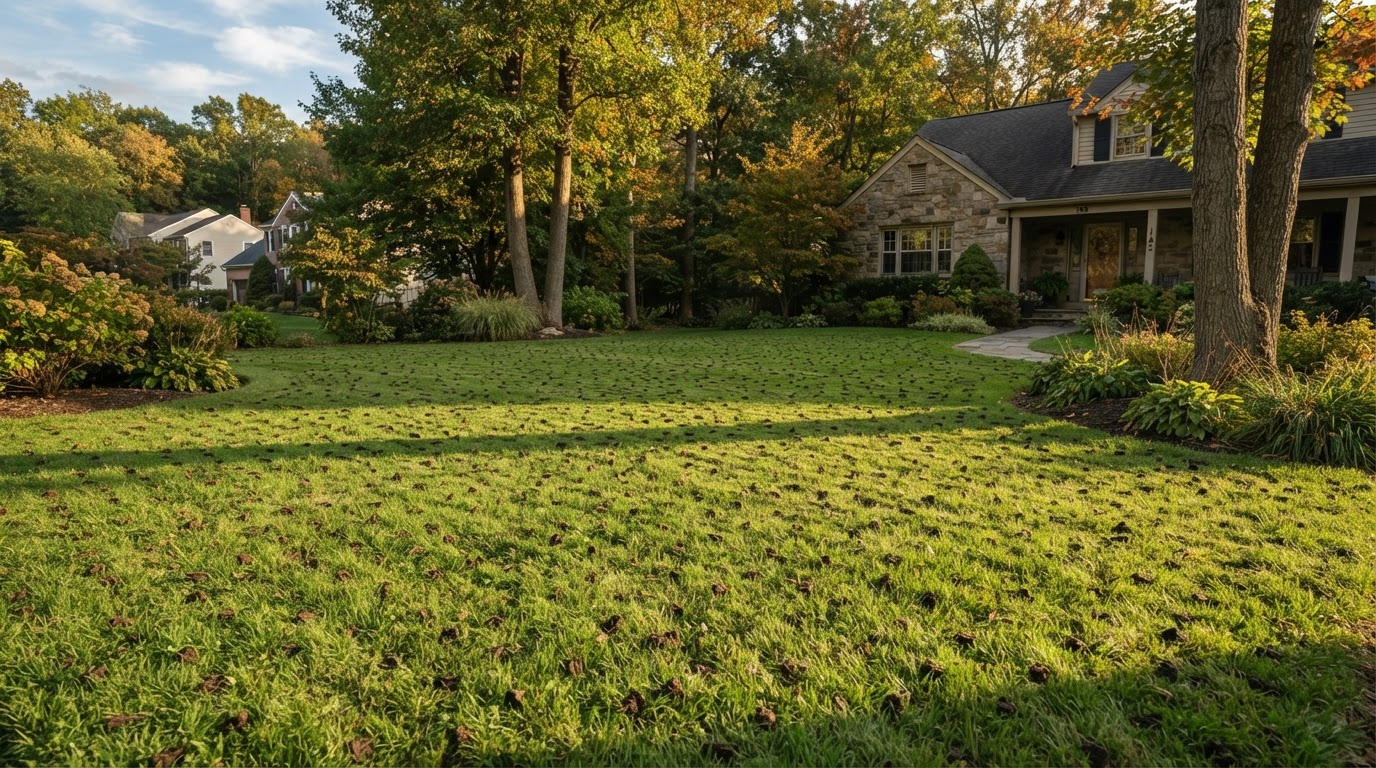
A Complete Guide to Overseeding Your Lawn in Eastern Pennsylvania
Learn when to overseed your Pennsylvania lawn, why fall timing matters, and how aeration and quality seed can help build thicker turf.
Read Article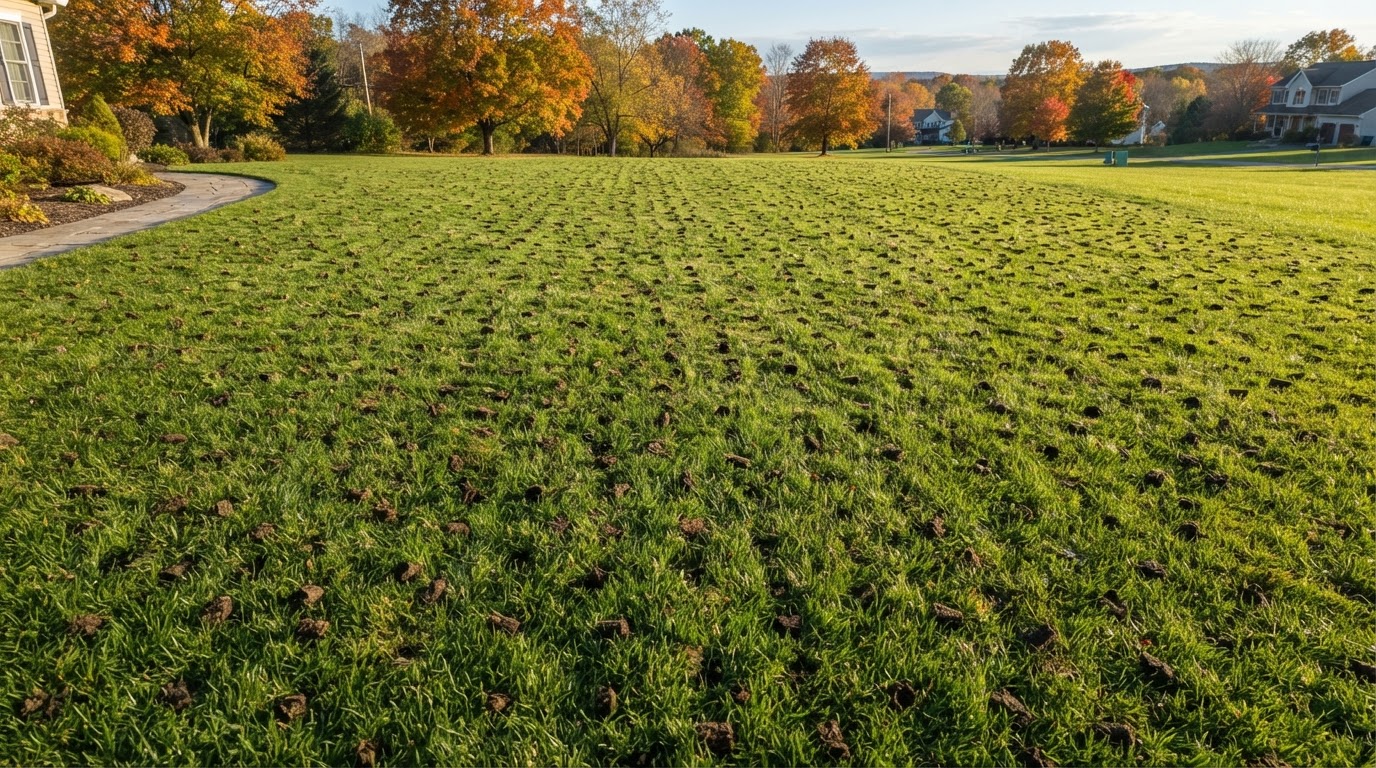
How Many Years of Aeration and Overseeding Does It Take to Transform a Lawn?
How often should you aerate and overseed? See why some Pennsylvania lawns improve dramatically after several fall seasons of aeration and seeding.
Read Article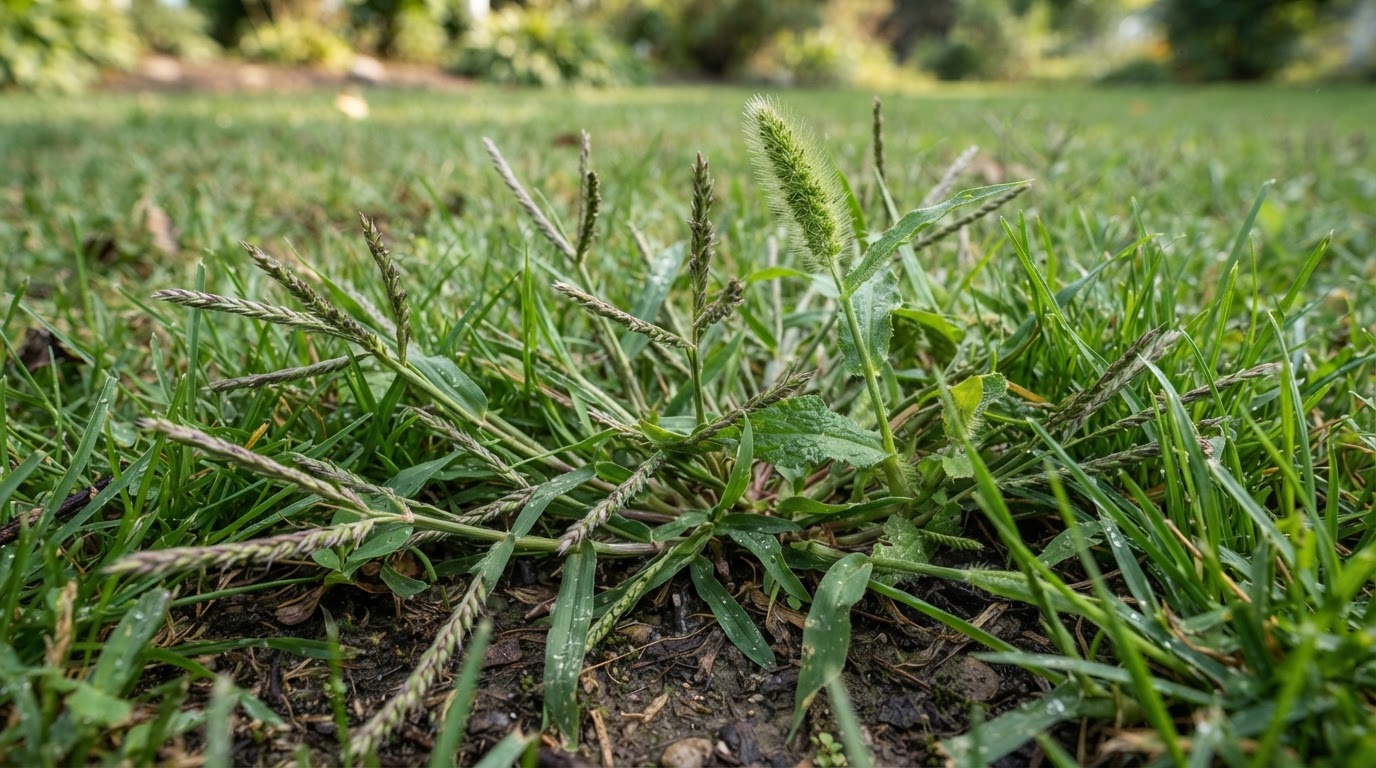
Should You Spray Crabgrass and Foxtail Before Aeration and Seeding?
Late-summer crabgrass and foxtail can leave bare spots. Learn why spraying before aeration and seeding may help Eastern PA lawns recover.
Read ArticleGolden Green Lawn Care Services