Organic-Based Lawn Fertilizer in Pennsylvania: Is It Better for Your Lawn?
Why Golden Green doesn’t pick a side in the organic vs. synthetic debate — and why treating your lawn as a complete system beats chasing a quick green-up every time.
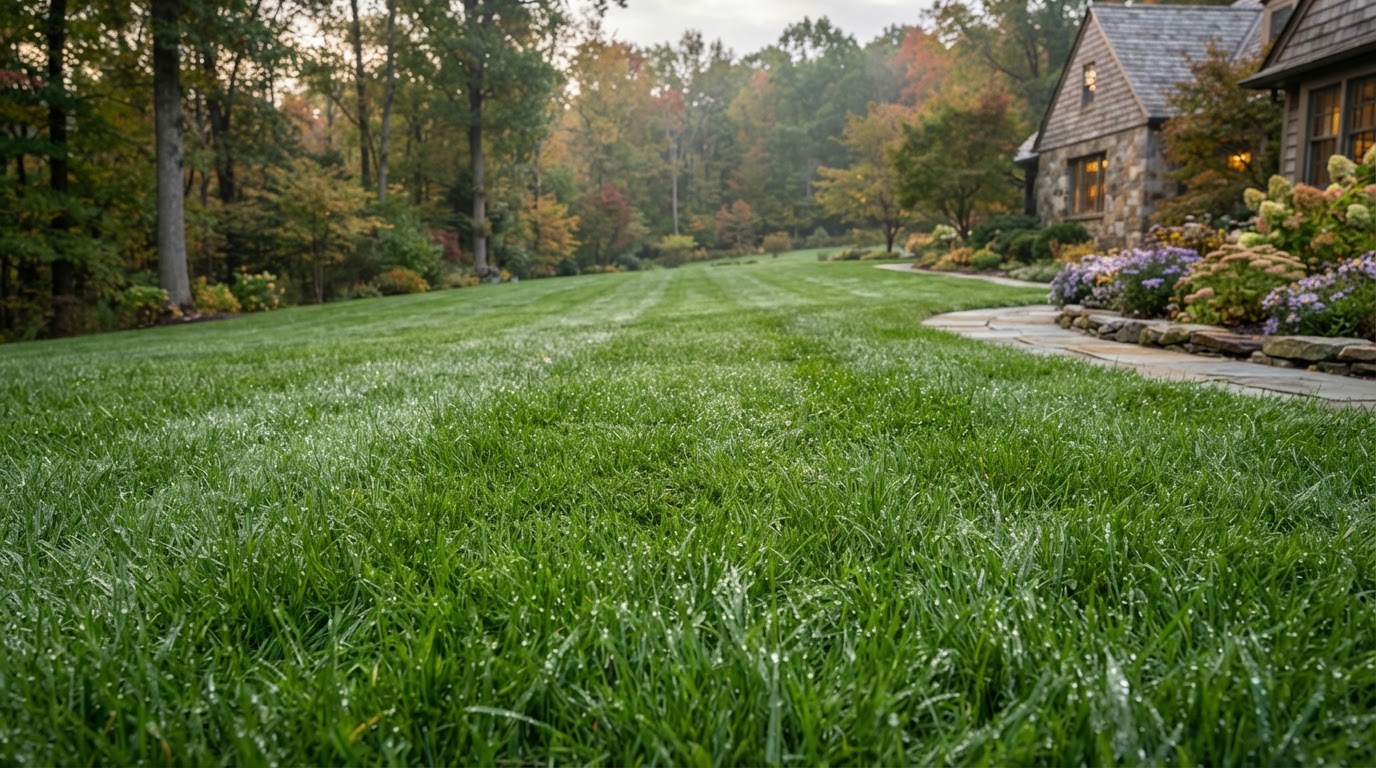
If you’ve ever stood in the fertilizer aisle at a garden center, you’ve probably seen some version of this debate: Organic or synthetic? Which one is better? Which one is safer? Which one grows better grass? Which one builds better soil?
After years in lawn care, I don’t think most Pennsylvania homeowners need another extreme answer.
The honest answer is that 100% organic lawn care is possible, and traditional fertilizer can also be very effective. But for many homeowners, I believe the most practical solution is somewhere between those extremes.
“A healthy lawn isn’t built by one bag of fertilizer. It is built through fertility + soil + roots + seed + water + mowing + aeration + time.”
— Golden Green Lawn Care
What Is Organic-Based Lawn Fertilizer?
Organic-based fertilizer generally combines organic or bio-based components with conventional plant nutrients. The idea is relatively straightforward: traditional fertilizer can provide nutrients the turf can readily use, while organic components contribute to a broader soil-focused fertility strategy.
So instead of asking organic or synthetic? I prefer asking: What combination gives this lawn the best practical long-term program?
Team Synthetic
- Effective turf nutrition
- Predictable, fast response
- Cost-efficient per application
- Reliable nutrient delivery
⚠ Can be overused to chase color while ignoring soil
Team 100% Organic
- Builds soil biology over time
- Environmentally gentle
- Supports microbial life
- Aligns with natural cycles
⚠ Slower, costlier, needs more homeowner involvement
The Golden Green Verdict
For most Eastern Pennsylvania homeowners, neither extreme is the most practical answer. An organic-based approach combines effective turf nutrition with soil-focused components — feeding the grass today while building the system underneath it.
Why Golden Green Doesn’t Pretend 100% Organic Is Easy
A true organic lawn-care program can work. But I don’t want to sell homeowners a romantic version of it. It often requires considerably more than simply changing fertilizer brands.
A serious organic strategy can involve:
There is nothing wrong with that approach. Some homeowners may love it. But many homeowners want a great lawn without turning lawn care into another full-time responsibility. They want something practical.
Synthetic Fertilizer Isn’t Automatically Bad
This deserves saying clearly. Synthetic fertilizer is not automatically harmful simply because it is synthetic. The nutrient is doing a job. Grass requires nutrition. Nitrogen matters. Potassium matters.
“Where I become concerned is when lawn care becomes entirely about producing a quick visual response while everything underneath the lawn is ignored.”
I have seen lawns turn green beautifully after fertilizer. Then summer arrives and they fall apart. Why? Because green color doesn’t necessarily tell you how deep the roots are, how compacted the soil is, what grass varieties are growing, or whether the turf is dense enough.
“You can have a green lawn that is still weak.”
The Energy Drink vs. Vegetables Example
This is one of the easiest ways I know to explain the philosophy. Imagine trying to live entirely on energy drinks. You’d certainly feel something — a quick response. But that doesn’t mean you’re properly nourished.
Energy Drink Fertilizer
- Quick response — you feel something
- But you're not properly nourished
- Ignores sleep, nutrition, exercise
- Crash follows the boost
Real Nutrition
- Steady, sustained energy
- Supports long-term health
- Builds a stronger foundation
- No crash — just consistent results
“A premium lawn isn’t simply pushed. It is built. The fertilizer matters. But the system matters more.”
— Golden Green Philosophy
What Most Homeowners See — and What I See
A homeowner walks outside and sees the surface. But after spending years looking at lawns, I’ve learned to ask another question: What is happening underneath?
What the Homeowner Sees
- →My lawn isn't dark enough
- →There are weeds everywhere
- →This area is thin
- →Why is there crabgrass?
- →Why did this section turn brown?
What the Professional Asks
- →Soil is compacted
- →Roots are shallow
- →Construction damaged the soil
- →pH needs attention
- →Turf variety isn't performing
- →Possible grub damage
- →Not enough desirable grass plants
That is why I don’t believe in blindly adding another fertilizer application every time the lawn doesn’t look right.
Fertilizer Feeds the Grass You Have
Suppose your established lawn contains older or poorly performing turf. We fertilize it. The plants respond. Great. But fertilizer hasn’t changed the plant — it has fed it.
Now consider overseeding. Overseeding allows us to introduce new desirable turfgrass plants into the existing lawn. That is fundamentally different.
“Fertilizer feeds the grass you already have. Overseeding gives you an opportunity to change the grass you have.”
— Golden Green
Why Sunny Seed Mix Fits This Philosophy
Golden Green’s overseeding program uses Sunny Seed Mix. The philosophy isn’t complicated: if we’re going to put grass seed into a homeowner’s lawn, I want that seed chosen intentionally.
Not all lawn sites are identical. Sun exposure, shade, soil, moisture, and the turfgrass varieties themselves all matter. But even excellent grass seed isn’t magic — it still needs soil contact, water, reasonable temperatures, proper timing, and acceptable growing conditions.
“Good seed in bad conditions is still bad lawn management.”
Why Mechanical Aeration Matters
Many Eastern Pennsylvania lawns deal with compaction. Construction activity can be particularly hard on soil — heavy equipment moves across the property, topsoil gets disturbed, the house is built, landscaping is completed, grass gets installed.
The homeowner sees green and thinks: Finished. But the soil underneath may still have problems. Mechanical core aeration physically removes soil cores and creates openings in the turf. That can help manage compaction while also providing opportunities for seed-to-soil contact during overseeding.
Golden Green also uses liquid soil-conditioning approaches as part of our broader soil-management strategy. I don’t consider liquid aeration and mechanical core aeration identical services — they aren’t. Our philosophy is to use tools for what they actually do rather than pretend every product solves everything.
Soil Testing Before Guessing
If a lawn repeatedly struggles despite receiving fertilizer, eventually I want more information. A soil test can help us understand factors such as soil pH and nutrient conditions.
“Lime should solve a known soil-pH problem — not become something automatically spread because it sounds good.”
Why Organic-Based Lawn Care Is Really a Systems Approach
When people hear “organic-based fertilizer,” they may picture a particular bag. I think that’s too narrow. For Golden Green, the larger concept is: treat the lawn as a complete system.
Fertility is one spoke. Soil, roots, seed, water, mowing, aeration, weeds, insects, and seasonality are the rest.
Sometimes fertilizer is the answer. Sometimes aeration is. Sometimes seed. Sometimes the best thing we can do is identify something that doesn’t need to be treated at all.
My Experience With My Own Macungie Lawn
I saw this personally with a lawn I owned in Macungie. It was an established lawn. It wasn’t terrible. But it wasn’t made up of the type of turf I ultimately wanted.
Starting Point
An established lawn in Macungie. Not terrible — but not the turf I wanted. I could fertilize and water it, and it would green up. But it wasn't becoming the lawn I wanted just by feeding the same existing grass.
Fall After Fall
So fall after fall, I aerated and overseeded. I continued the fertilization and weed-control program. I managed grubs. I applied lime when appropriate. I kept improving the turf deliberately.
The Turning Point
Over several seasons, the lawn changed dramatically. By the later years, it was a completely different stand of turf from where it began.
The Surprise
A stronger, denser lawn with desirable turf handled dry periods far better. I wasn't constantly dragging hoses around trying to rescue thin grass. Better turf meant smarter water use — not more water.
“Sometimes the way to use water more effectively isn’t simply changing the sprinkler timer. It’s building better turf.”
A Thick Lawn Is Part of Weed Management
Herbicide is useful. Golden Green uses weed-control products where needed. But I don’t want herbicide to be our entire weed-management strategy.
Weeds take advantage of openings — bare soil, thin turf, damaged areas, edges, summer decline. A dense stand of desirable grass occupies more of that growing space. That doesn’t mean thick grass magically eliminates every weed. But turf competition matters.
“Our long-term objective isn’t simply “kill more weeds.” It’s “build more desirable grass.””
— Golden Green
What Results Should You Expect?
I don’t want to sell organic-based lawn care as magic. A poor lawn doesn’t become spectacular because we used an organic component in the fertilizer.
First Season
Improved fertility and appearance. The lawn looks better, but it's still the same grass population underneath.
Next Fall
Overseeding begins improving turf density. New desirable grass starts establishing alongside existing turf.
Multiple Years
A well-managed lawn becomes dramatically different. Better density, better roots, better drought tolerance.
“Not just “did it get greener after Tuesday’s application?” But “is this a better lawn than it was two years ago?””
Is Organic-Based Fertilizer Better for Your Pennsylvania Lawn?
For many homeowners, I think an organic-based strategy is an excellent middle ground. It acknowledges the value of effective turf nutrition while also recognizing that the grass depends on the environment beneath it.
It avoids pretending that traditional fertilizer is automatically bad. And it avoids pretending that 100% organic lawn care is effortless. Instead, it asks a much better question: How do we build the healthiest practical lawn for this property?
“A premium lawn isn’t just fertilized. It is developed. Season after season. Plant after plant. Root after root. Until someday you stand on the lawn and realize: this isn’t the lawn we started with.”
— Golden Green — Your Lawn's Best Friend
Does Your Lawn Need Fertilizer, Aeration, Seed — or Something Else?
Let Golden Green take a look and help you build the right plan. Not sure whether your lawn needs fertilizer, aeration, seed, soil improvement — or something completely different? We’ll figure it out together.
Request a Lawn EvaluationFrequently Asked Questions
Share this article
Related Articles
How Often Should You Fertilize Your Lawn in Pennsylvania?
How often should you fertilize a Pennsylvania lawn? Learn why Golden Green uses a seasonal six-step approach instead of treating every application the same.
Read Article
Fertilizer Burn or Lawn Disease? What Damaged Your PA Lawn?
Brown patches after lawn treatment? Learn what may suggest fertilizer injury or disease, what records matter, and how to investigate before treating again.
Read Article
Is Professional Lawn Care Worth the Cost in Pennsylvania?
Is professional lawn care worth the cost in Pennsylvania? Compare DIY expenses, treatment pricing, service expectations, and what your quote should include.
Read ArticleGolden Green Lawn Care Services