Sometimes the problem isn't your fertilizer. It isn't your weed control. And it isn't that your lawn needs more water.
Sometimes it's your mower blade.
I've seen homeowners spend a tremendous amount of time and money trying to improve their lawn while overlooking something that touches virtually every grass plant on the property every single week: the mower.
What You Can Do Right
- Follow a 6-step balanced fertility program
- Keep pre-emergent barriers active against crabgrass
- Aerate and overseed with premium seed in fall
- Water deeply and infrequently when needed
The Overlooked Variable
Repeatedly running a dull blade or scalping the turf weekly wipes out those gains.
“Every time you mow, you're doing something to the grass plant. The question is whether you're helping it or unnecessarily stressing it.”
Why Does My Grass Look Brown After Mowing?
If your lawn looks greener before mowing and develops a brown, tan, or whitish cast afterward, get down on your hands and knees and look closely at the individual grass blades. Don't look at the entire lawn from twenty feet away. Look at one single blade of grass.
A properly sharpened mower blade should produce a relatively clean cut across the leaf. A dull mower blade can tear, shred, or fray the grass leaf instead.
The Math of Frayed Leaf Tips:
Those damaged, ragged tips dry out in the Pennsylvania sun and turn tan, straw-colored, or white. Multiply that by millions of individual grass leaves across your yard, and suddenly the entire lawn takes on a bleached, stressed appearance. The lawn may not need another fertilizer application—it may simply need the mower blade sharpened.
Sharp Mower Blade vs. Dull Mower Blade
This is one of the easiest lawn problems homeowners can learn to diagnose themselves. Here is how the two cut qualities compare:
Sharp Mower Blade
Clean CutSlices grass cleanly across the leaf blade like a razor.
- Smooth, clean horizontal cut with minimal wounded tissue
- Rapid natural wound seal within 24 to 48 hours
- Maintains vibrant deep-green canopy color across the lawn
- Reduced water loss through open torn leaf ends
- Significantly lower risk of opportunistic fungal entry
Dull Mower Blade
Torn & ShreddedBatters and rips grass tissue, leaving frayed, ragged leaf ends.
- Frayed, shredded tips that turn straw-colored, tan, or white
- Widespread tan cast across the lawn 24–48 hours after mowing
- Higher moisture evaporation and summer drought vulnerability
- Increased susceptibility to dollar spot, brown patch & leaf diseases
- Homeowners often mistake shredded tips for nitrogen deficiency
“Before spending money trying to fix a mysterious brown lawn, look at the grass blade itself. Sometimes the grass is telling you exactly what happened.”
This Photo Is a Great Example
I came across a real-world side-by-side comparison that illustrates this principle extremely well. Look at these two neighboring sections of cool-season lawn:
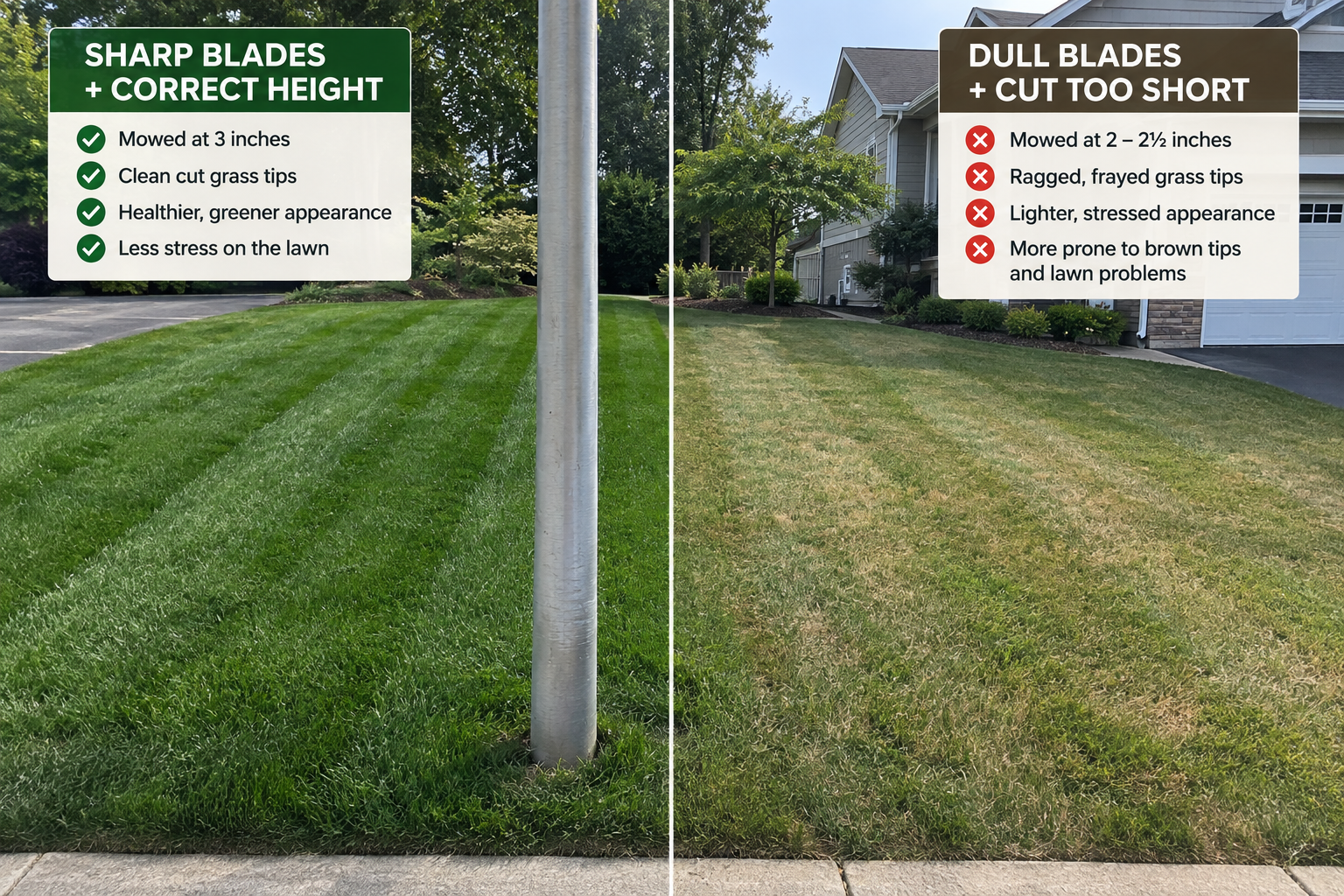
Both lawns in this neighborhood were receiving regular service from the same professional lawn care provider. Yet visually, they looked completely different:
Left Section: Sharp + 3 Inches
The taller, cleanly cut turf looked noticeably darker, fuller, and healthier. The roots stayed protected under cooler soil temperatures.
Right Section: Dull + 2 to 2½ Inches
The shorter lawn with frayed cut ends took on a tan, bleached hue. Soil heat cooked the crowns and moisture evaporated at twice the speed.
There were other factors between properties—such as irrigation—so a single photograph isn't a laboratory trial. But it perfectly illustrates what I've seen over years on Pennsylvania lawns: how you mow substantially affects how your lawn looks and performs.
Don't Blame the Fertilizer Until You Look at the Mower
Imagine paying for a professional lawn fertilization program. The technician applies the balanced seasonal nutrients correctly. The turf responds.
Then someone runs an aggressive mower with dull blades across it every week, scalping it down to 2 inches. The homeowner looks out the window on Wednesday and thinks:
“My fertilization program isn't working! The grass looks yellow.”
The fertility was not the problem. The grass leaf was physically mutilated and cut too short. The lawn doesn't know who applies the fertilizer, who mows the lawn, who runs the sprinkler, or who sharpened the blade. The grass experiences all of it as one continuous environment.
Can Mowing Your Lawn Too Short Damage It?
One of the most common mistakes during stressful summer weather is mowing cool-season turf too short. Homeowners sometimes think: “If I cut it shorter, I won't have to mow again as soon.”
Grass isn't carpet. You are cutting a living organism. When you cut too short, you remove photosynthetic leaf tissue right when the plant is desperately trying to produce carbohydrates to survive July and August heat.
Golden Green Preferred Summer Height
Shades the soil surface, preserves deeper roots, and reduces moisture evaporation during hot July & August days.
Common Homeowner Scalping Height
Exposes soil to sun, stresses cool-season crowns, burns through moisture rapidly, and invites crabgrass & spurge.
Severe Scalping
Severely strips photosynthetic leaf area and depletes root reserves in cool-season Kentucky bluegrass & tall fescue.
The Golden Rule: The One-Third Rule
Never remove more than one-third of the total leaf blade height in a single mowing session. If rain or a vacation causes your lawn to grow tall, do not scalp it back to 3 inches all at once. Raise your deck, take off the top third, wait two or three days, and bring it down to your preferred height on the second cut.
How Often Should You Sharpen Your Mower Blades?
There is no universal calendar schedule for every homeowner. A mower cutting a small half-acre residential lot has a very different workload from a commercial crew running six hours a day. Blade wear depends on what the mower encounters:
Instead of relying blindly on dates, look at cut quality. Check your grass tips periodically. If they look shredded instead of cleanly sliced, sharpen the blade. For most homeowners, sharpening twice a season (once in early spring and again in mid-summer) keeps the cutting edge keen and healthy.
5-Step Field Check: Is Your Lawn Suffering from Mowing Stress?
Follow this practical field checklist before spending money on emergency fertilizer or insecticides:
Kneel Down and Inspect Single Leaves
Don't judge the lawn from the deck or car. Look at one blade of grass up close. Is the tip cleanly sliced or frayed and shredded?
Check Timing: Did the Tan Color Appear 1–2 Days Post-Mow?
If the lawn looked dark green right before mowing but developed a bleached tan hue 24 to 48 hours later, suspect the mower blade.
Verify Mower Deck Height
Measure the height on a hard level driveway from ground to blade edge. Are you cutting below 3 inches during summer heat?
Inspect Mower Blade Edge
With the spark plug disconnected, feel the blade edge. Is it nicked by stones, rounded off, or dull like a butter knife?
Rule Out Grubs & Drought
Pull gently on the turf. If it holds firm, roots are intact (not grubs). Check soil moisture before dumping excess fertilizer.
What If I Sharpen the Blade and the Lawn Is Still Brown?
Then keep diagnosing! A dull mower blade is one possible cause of a brown-looking lawn. It isn't the only one. Brown or declining turf can also result from:
Diagnose first. Treat second. Always confirm the exact problem before dumping products on the lawn.
More Water Doesn't Fix a Dull Blade
When a lawn looks light or tan after mowing, homeowners often run the sprinkler excessively. But if the leaf tips are physically shredded, running water will not sharpen the blade. Excessive water on torn foliage actually increases fungal disease vulnerability.
Fertilizer Can't Correct Poor Mowing
Good lawn care isn't just what you put on the lawn. It's how you care for the grass that's already there. Golden Green delivers balanced nutrients, pre-emergents, and weed treatments—but mowing happens weekly between our visits.
Better Mowing Makes Better Seed More Valuable
Think about what happens after you invest in improving your lawn. You've aerated with commercial core aeration. You've overseeded with Sunny's Seed Mix. You've spent weeks nursing new seedlings into deep-rooted, drought-tolerant turf.
Now you have superior turf genetics. We want to protect that investment with:
How Mowing Connects to Your Complete Lawn Plan
Mowing is part of a complete ecosystem. Explore our in-depth guides to see how mowing interacts with the rest of your Pennsylvania lawn care:
Frequently Asked Questions About Mowing & Brown Turf
Is Your Lawn Turning Brown or Struggling After Mowing?
Let Golden Green take a look. We will inspect your turf leaves, evaluate your soil conditions, test for root depth and grubs, and help build a plan that works.