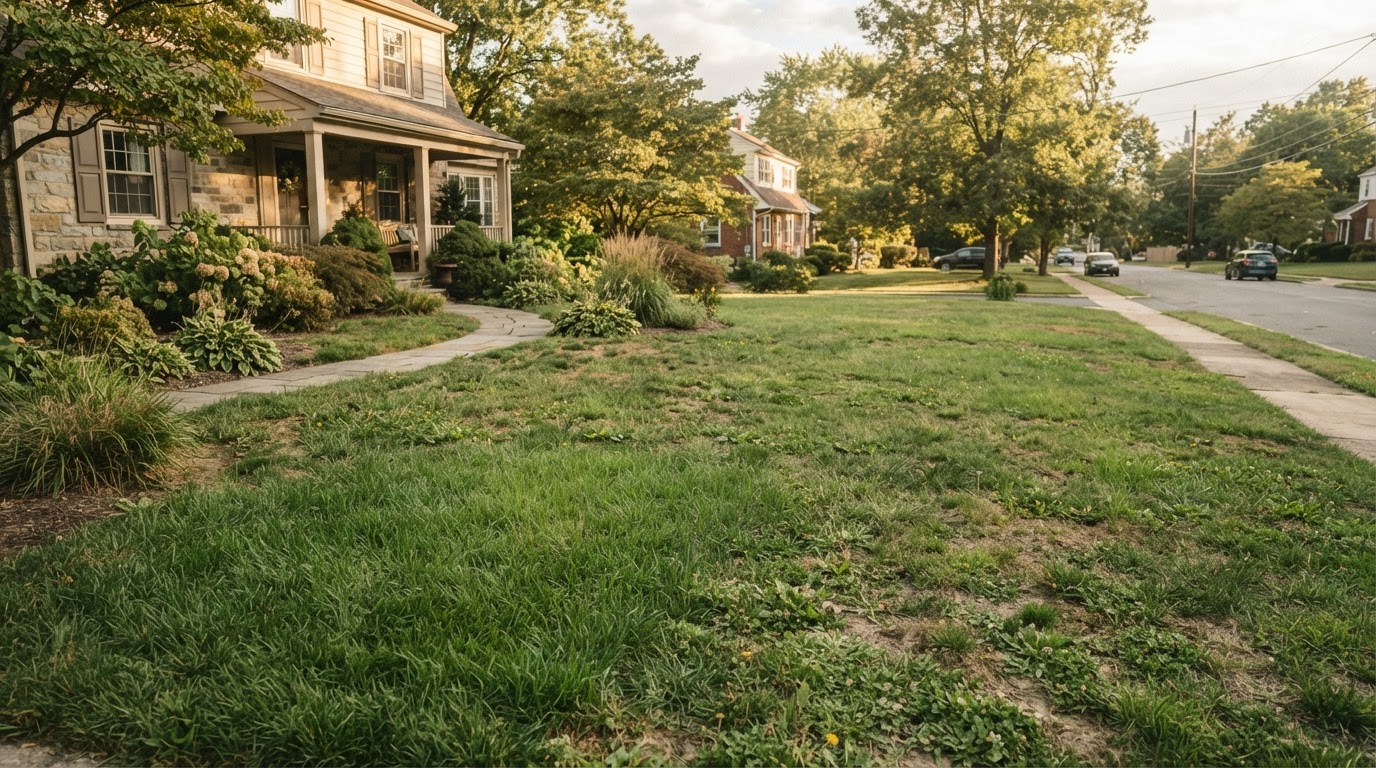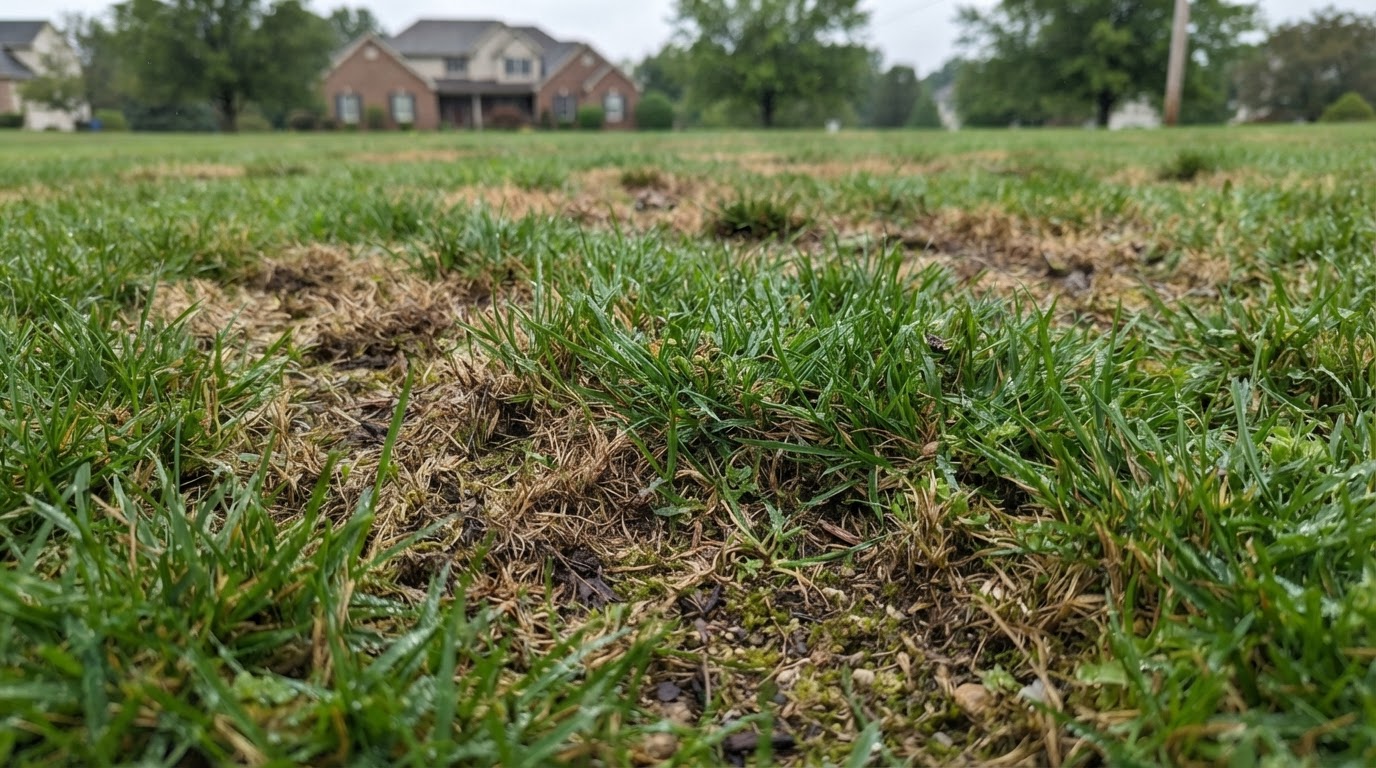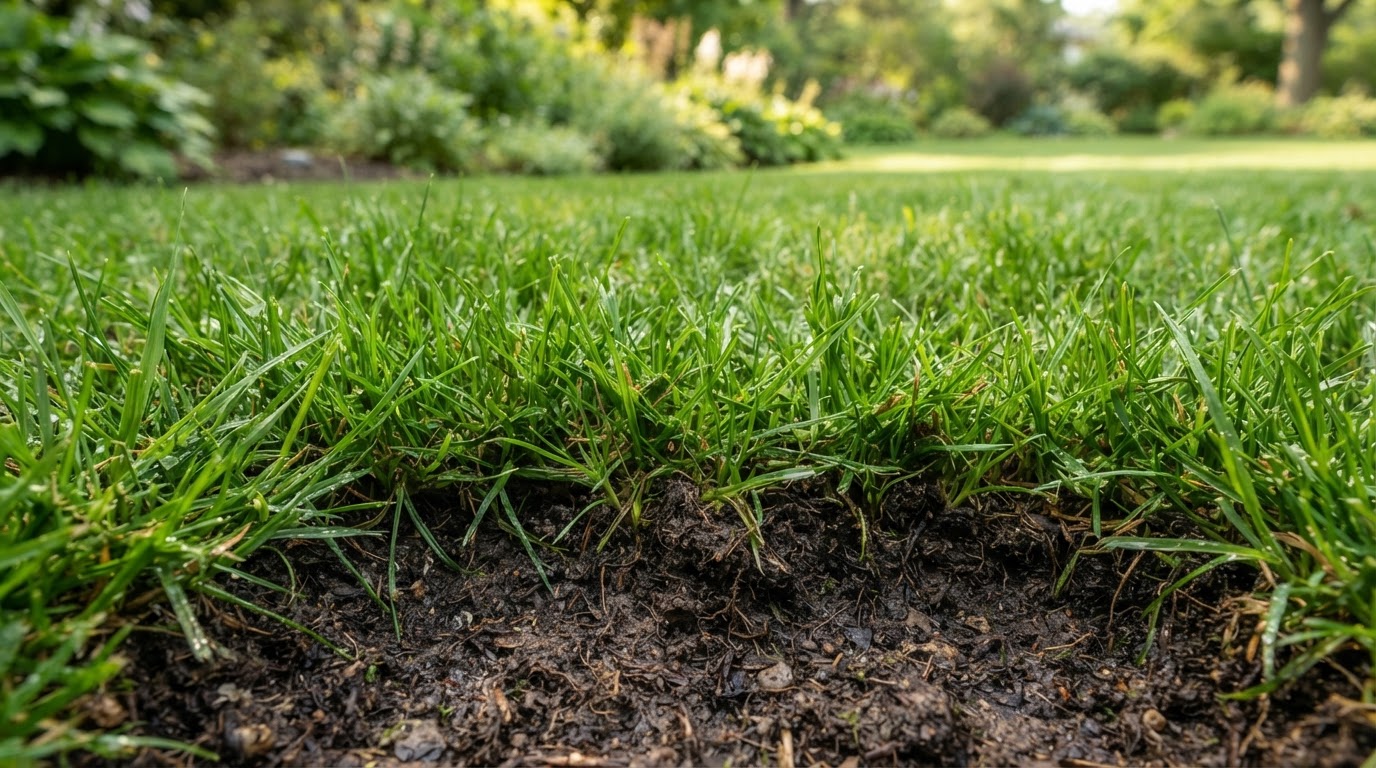
Send a properly collected sample to a reputable agricultural soil laboratory that provides recommendations for lawns. Golden Green works through SiteOne Landscape Supply for soil testing. Homeowners who prefer to arrange testing independently can also consider Penn State's Agricultural Analytical Services Laboratory, which offers soil-fertility testing and recommendations for the intended crop or planting.
But choosing where to send the soil is only the beginning.
The sample has to represent the right area. The laboratory needs to know what you are growing. And someone needs to connect the report with what is actually happening on the property.
That is the part I want homeowners to understand.
Imagine looking at a lawn that has disappointed you for another season. You have watered it. You have purchased fertilizer. Perhaps someone has suggested lime.
Now you are considering another product.
Before making that purchase, I would ask:
What are we trying to correct—and how do we know it needs correcting?
Sometimes the next useful step is not another bag.
It is better information.
That is the thinking behind Golden Green's lawn soil-testing service.
Why I Would Rather Start With a Question Than a Product
When a lawn looks pale, thin, or uneven, the temptation is to do something immediately.
Add fertilizer. Apply lime. Buy a soil amendment.
I understand that impulse. Nobody enjoys spending money on a property and watching the lawn struggle.
But I do not want Golden Green recommending a product merely because a homeowner is understandably frustrated.
I want to know what problem we are trying to solve.
Soil testing can identify nutrient deficiencies, excessive levels, and pH conditions that help guide the choice of fertilizer or amendments. It can also reveal that a particular nutrient does not need to be added.
That last possibility matters.
A useful recommendation can be, "You do not need to buy that."
For me, that is not a missed sale. It is part of providing a service worth trusting.
Where Can You Get a Lawn Soil Test in Pennsylvania?
Through Golden Green's soil-testing process
Golden Green uses SiteOne Landscape Supply as a resource for soil testing and brings the findings into the broader lawn-care conversation.
SiteOne offers laboratory-based testing options with their own collection, submission, and reporting instructions. The specific package determines what is analyzed and how the sample should be handled.
Our role is not simply to hand the homeowner a report.
We want to connect the results with the lawn's condition, the work already performed, and the improvements being considered.
You can start that conversation through our Soil Testing page.
Through a laboratory you arrange independently
Penn State's Agricultural Analytical Services Laboratory is one publicly available option for Pennsylvania homeowners. Its soil-fertility program provides analytical results with lime and fertilizer recommendations for the specified use. A purchased kit is not the only submission route; the laboratory also publishes instructions and forms.
This is a separate option—not a statement that Penn State analyzes Golden Green's samples.
Whichever route you choose, read the laboratory's current instructions before collecting soil.
A reputable lab and a well-collected sample belong together.
What Should You Look for in a Soil Lab?
I would not choose a testing service simply because the package has the longest list of impressive-sounding measurements.
I would ask practical questions:
Does it explain how to sample an established lawn? What does the selected package measure? Will the report provide recommendations for turfgrass? Is there a clear way to submit the sample and identify its location?
Penn State, for example, distinguishes recommendations for maintaining an existing home lawn from recommendations for establishing one. That illustrates why the intended use belongs on the submission form.
A report intended for a vegetable garden is not automatically the right instruction sheet for your front lawn.
Tell the lab what you are growing and what you are trying to accomplish.
What Can a Lawn Soil Test Tell You?
The exact information depends on the laboratory and package. For a routine fertility test, these are the main questions I want answered.
Is soil pH appropriate for the turf?
Soil pH describes acidity or alkalinity. It influences nutrient availability and the growing conditions the grass experiences.
That does not mean a lawn outside a preferred range is incapable of absorbing any fertilizer. It means the pH may be limiting performance and deserves proper interpretation.
I do not want to keep adjusting the feeding program without understanding whether soil acidity needs attention.
Are the measured nutrients low, adequate, or excessive?
A soil report can help distinguish an actual need from an assumption.
For example, Penn State's standard fertility analysis includes phosphorus, potassium, magnesium, and calcium, along with pH and a lime-requirement test. Other analyses, including organic matter and certain nitrogen tests, are listed separately. Do not assume every package measures everything.
Is lime needed—and how much?
This is one of the most useful lawn decisions a test can inform.
A pH reading and a lime recommendation are related, but they are not interchangeable. Penn State explains that lime requirements depend on soil acidity and the liming material involved, and recommends using an appropriate laboratory recommendation rather than guessing.
That is why I want lime applications connected to an actual need.
The lawn's location, the season, or the presence of mature trees is not a substitute for that information.
Does a Soil Test Tell You Exactly How Much Fertilizer to Apply?
It can guide important fertilizer decisions, but the report still needs interpretation.
One useful distinction concerns nitrogen. Penn State explains that a routine soil test helps establish phosphate and potash requirements, while a lawn's nitrogen requirement is not determined in the same way by a standard soil test. The nitrogen program also needs to reflect the turf and its management.
That is why I do not want a soil report treated as a stand-alone shopping list.
We still need to consider the lawn, season, previous applications, and the recommendations being made.
For Golden Green, fertilization should be a planned response—not simply an attempt to make every number on a report larger.
The goal is not the highest nutrient reading. The goal is an appropriate recommendation for the lawn.
Share this article
The Most Important Part May Happen Before the Sample Reaches the Lab
This is where an otherwise good testing process can go wrong.
The laboratory analyzes the material it receives. It cannot look back at your property and discover that the sample came from a fertilizer spill or that two very different lawn areas were mixed together.
Both Penn State and SiteOne emphasize representative sampling and avoiding contamination.
For me, collecting the sample is not a minor chore before the "real science."
It is part of getting a useful answer.
Separate areas that are meaningfully different
A front lawn and backyard do not automatically require separate tests just because they are on opposite sides of the house.
But different soil, treatment histories, or growing conditions may justify separate samples.
Consider these examples:
| Situation | Sampling approach to discuss |
|---|---|
| Similar lawn conditions and treatment history | A representative combined sample may be appropriate. |
| A healthy general lawn and a persistently weak section | Keep the problem area identifiable rather than automatically blend it into the general sample. |
| Different soil or previous lime and fertilizer treatments | Separate samples may provide more useful information. |
Penn State specifically calls for separate sampling where turf areas differ in soil or previous fertilizer and lime treatments.
Avoid contaminating the general sample
Do not use a fertilizer spill, compost pile, pet-urine hotspot, or other unusual area to represent the whole lawn.
If that unusual location is the problem you need investigated, discuss it separately rather than mixing it into an ordinary fertility sample.
Use clean equipment and follow the lab's instructions about removing grass, thatch, and other material.
Collect multiple cores and follow the correct depth
One random scoop is not a reliable representation of a larger treatment area.
Collect small samples across the area and combine them as the selected laboratory directs. Follow that lab's specified depth and sample quantity rather than borrowing instructions from an unrelated kit.
Label and submit carefully
Use recognizable names such as Front Lawn, Back Lawn, or Problem Area.
Follow the instructions for drying, packaging, registration, and submission. Do not assume that instructions from a previous test apply to a different service.
Good labels preserve the connection between the report and the ground it represents.
When Is Soil Testing Especially Useful?
I would give testing serious consideration when the lawn keeps underperforming and we do not have a clear explanation.
Perhaps it remains thin despite treatment. Perhaps the color is disappointing. Perhaps you are planning a substantial improvement and want more information before investing in seed and other work.
Uncertainty about lime is another good reason to test. Penn State recommends applying limestone only when soil-test results establish a need.
But I do not believe every lawn complaint needs to begin with a laboratory.
Here is the distinction I would use:
| Situation | My starting approach |
|---|---|
| Repeated poor response with no clear explanation | Consider soil testing alongside a lawn evaluation. |
| Uncertainty about lime or nutrient needs | Obtain suitable testing before guessing. |
| Planning overseeding or renovation | Consider what soil information would help guide the project. |
| Clearly excessive mowing, traffic, or irrigation damage | Address the visible issue while deciding whether testing would add useful information. |
| A recent, relevant soil report is already available | Review it before automatically ordering another test. |
Testing should answer a question. It should not be sold merely because it is available.
What a Routine Soil Test Cannot Tell You
This is just as important as the benefits.
A routine fertility report does not directly tell us whether the mower is cutting too low, whether a particular grass is suited to the shade, whether traffic is wearing out a passage, or whether the soil is physically compacted.
Those are among the limitations identified in Golden Green's testing approach: the report needs to be combined with turf observations, site conditions, seasonality, and field judgment.
It also matters which laboratory analyses were actually ordered.
For example, measuring soil texture—the proportions of sand, silt, and clay—is a separate service in Penn State's laboratory program. An organic-matter result does not automatically provide that measurement.
Likewise, a standard fertility test should not be represented as a screen for every pollutant or pesticide residue. Penn State distinguishes its fertility testing from those purposes.
For Golden Green, the lesson is straightforward:
A lab report is one piece of the diagnosis—not permission to stop looking at the lawn.
Why Moss, Thin Grass, and Pale Color Need Context
A homeowner sees something wrong and wants a clear answer.
That is reasonable.
But I do not want to point at moss or thin grass and immediately announce, "You need lime."
Instead, I want to understand the setting. What does the report show? How much sunlight reaches the area? What happens after rain? How is the grass being cut and watered?
Your lawn may have more than one issue.
If the test identifies a nutritional concern, we should address it. If the numbers do not explain the problem, we should keep investigating rather than force the lawn into a fertilizer explanation.
Sometimes the value of testing is helping us avoid the wrong conclusion.
What Happens After the Results Come Back?
Receiving the report is not the finish line.
I want the homeowner to understand what it changes.
First, connect the report to the correct lawn area
Confirm which sample produced which result and whether the recommendations are for maintaining existing turf or establishing new grass. Penn State's reporting guidance emphasizes checking the identifying information and understanding the recommendations in context.
Next, separate necessary action from unnecessary additions
Does the report support lime? Does it indicate a nutrient need? Are some measured nutrients already adequate? I want those questions answered before products are added to the estimate.
Then connect the findings with the rest of the property
Perhaps the next step involves the fertility program. Perhaps mechanical aeration or overseeding needs to be considered alongside separate observations about compaction and turf density. The important part is explaining which recommendation comes from the laboratory and which comes from examining the lawn. Those should not be blurred together.
Finally, keep a record and review the response
Save the report, sample-area names, and resulting recommendations. Future testing is more useful when we know what was previously measured and what changed afterward. The retesting plan should reflect the lawn, corrective work, and laboratory guidance—not an arbitrary promise that every property needs the same schedule.
How Soil Testing Connects With Sunny Seed Mix
A soil report and a seed decision answer different questions.
Testing helps us understand selected properties of the soil. Seed selection concerns the grass we are trying to establish.
Correcting a soil issue does not turn one grass variety into another.
That is why Sunny Seed Mix belongs in the wider lawn-improvement conversation—but not as an automatic purchase attached to every test.
A property with healthy, suitable turf may need no additional seed. Another lawn may need both soil-related corrections and improvement of the turf stand.
SiteOne's own soil-testing guidance treats testing, seed selection, fertility, and maintenance as connected parts of establishing and managing turf.
For qualifying seeding customers, Sunny's Seed Promise should be understood through its actual terms. It is not a promise that seed can overcome every site limitation.
A premium lawn is not built by testing alone, fertilizing alone, or seeding alone. The recommendations need to work together.
The Same Principle Applies Across Eastern Pennsylvania
Whether I am discussing a lawn in Emmaus, Macungie, Allentown, or Sellersville, I do not want to assign its soil needs based only on the town name.
The useful information comes from the property and a sample that represents it.
That is the perspective I want Golden Green to bring to homeowners throughout Lehigh, Northampton, Berks, Bucks, and Montgomery counties.
We should be able to explain why we recommended a test, what it showed, and how it influenced the plan.
Better local service should mean a more specific recommendation—not the same assumption repeated across five counties.
What Results Should You Expect?
The first result should be clarity.
A soil test does not change the lawn merely because the report arrives.
It gives us information that can improve the next decision.
During the current season, that may mean understanding whether an amendment is justified or deciding not to purchase something unnecessary.
In the next season, we can assess the lawn's response to the work actually performed.
Over multiple seasons, testing can contribute to a more informed program—but there is no universal promise of a transformed lawn within one, two, or three years.
The result depends on the problem, the recommendation, the conditions, and the follow-through.
The Golden Guarantee should be read according to its published terms, separately from the question of what a laboratory test can establish.
Stop Guessing—Without Expecting the Test to Do Everything
I do not see soil testing as a replacement for lawn-care experience.
I see it as a way to give that experience better information.
If a homeowner asks why we recommended lime, I want an answer.
If they ask why we changed part of the fertility plan, I want an answer.
And if the report does not explain why the lawn is struggling, I want us to acknowledge that and investigate further.
That is the kind of lawn care I respect.
Clear. Practical. Specific to the property.
Not another product added because the lawn looks disappointing.
Not a lab report filled with numbers nobody explains.
A useful test, properly collected, followed by a recommendation the homeowner can understand.
Golden Green — Your Lawn's Best Friend.
Find Out Whether Soil Testing Makes Sense for Your Lawn
If you are unsure about lime, disappointed with the lawn's response, or planning a larger improvement, start with the questions you need answered. Learn about Golden Green's Soil Testing service, and let's discuss the appropriate next step.
Frequently Asked Questions
Related Articles

The Eastern PA Soil Map: Understanding Your Lawn's Foundation
The soil composition across Lehigh, Berks, Bucks, and Northampton counties varies significantly. See the comparison and what it means for your lawn.
Read Article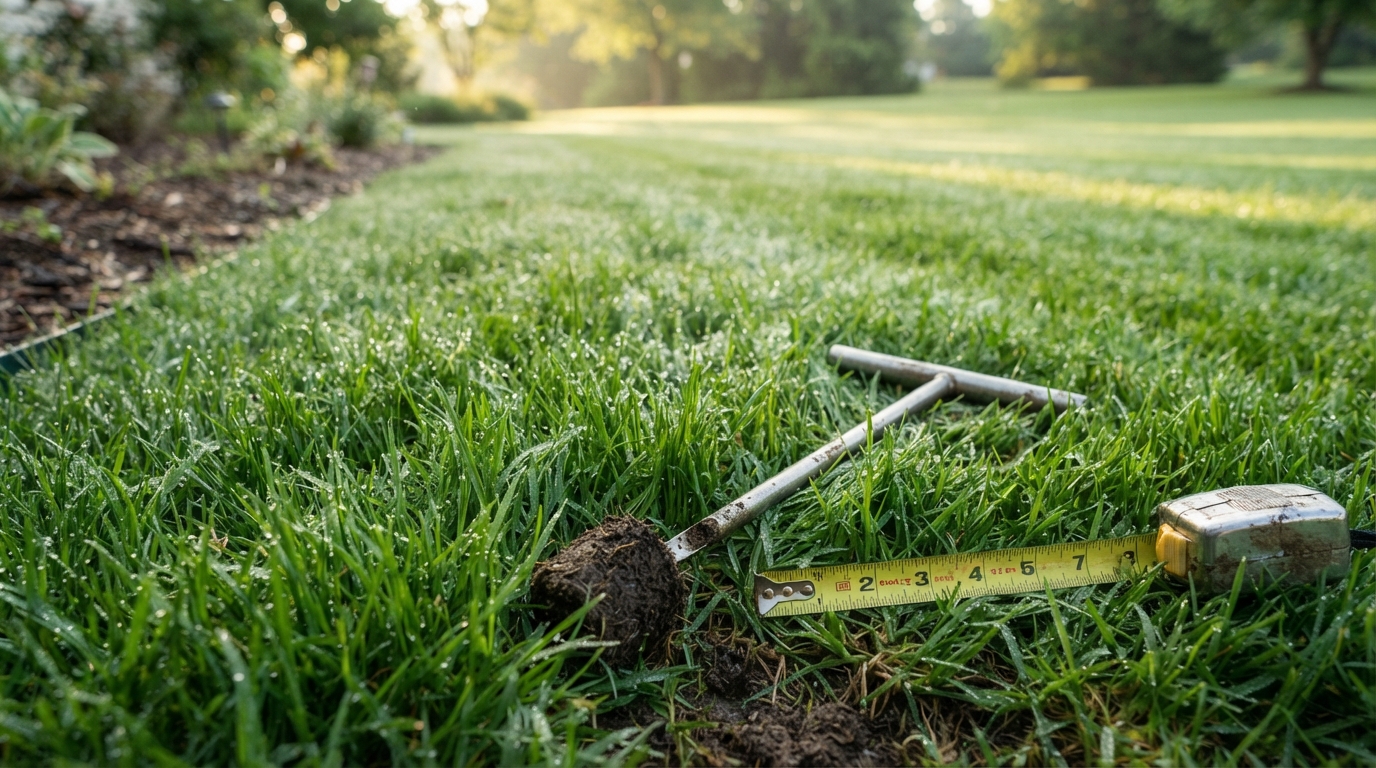
How Much Fertilizer Does Your Pennsylvania Lawn Need?
Learn how lawn fertilization rates are calculated, what fertilizer numbers mean, and how much fertilizer Pennsylvania lawns actually need.
Read Article
A Complete Guide to Overseeding Your Lawn in Eastern Pennsylvania
Learn when to overseed your Pennsylvania lawn, why fall timing matters, and how aeration and quality seed can help build thicker turf.
Read ArticleHelpful lawn care advice for Pennsylvania homeowners
If this guide helped you, add Golden Green as a Preferred Source on Google to see more of our lawn care guides in Google Search and AI experiences.