Accurate square footage starts with mapping the property using a satellite-based tool like Golden Green's online lawn measurement calculator, which calculates lawn or lot size directly from Google maps imagery. Homeowners enter their address, trace the lawn area, and receive a precise figure — critical for matching fertilizer and seed bag coverage rates to avoid costly over- or under-application.
What Do You Need Before Measuring Your Lawn?
Accurate measurement starts with three things: a clear property boundary, a reliable tool, and a reason for measuring in the first place. Skipping this step leads to guesswork, and guesswork on a lawn wastes product, money, and time. Homeowners across Eastern Pennsylvania who want dependable results need to know their exact square footage before applying a single treatment.
Preparation follows a simple order:
Walk the property line
Note exactly where lawn ends and landscaping, driveways, or mulch beds begin. The boundary you draw here drives every number after it.
Identify irregular sections separately
Most yards aren't perfect rectangles. Treat curved beds, side strips, and odd angles as their own shapes instead of averaging them into one guess.
Choose a measuring method
Hand tools work for small or simple yards. Satellite-based tools handle larger or oddly shaped properties faster and with less room for counting errors.
Record the total in square feet
Write the final figure down before shopping for seed, fertilizer, or weed control. Every product label is built around square footage, not bag count.
What Tools Work Best for Measuring a Lawn?
Lawn measuring tools range from a basic tape measure and measuring wheel to digital options. A lawn area calculator that uses satellite maps from Google lets homeowners calculate square footage without walking every corner of the yard, which speeds up planning for larger properties.
Why Does Exact Square Footage Matter So Much?
Knowing precise measurements is essential for proper care and maintenance decisions, not just a nice-to-have detail. Every bag of fertilizer, bottle of weed control, and box of grass seed is labeled by coverage area. Under-measuring means under-treating; over-measuring wastes money on product the lawn doesn't need.
This groundwork matters just as much for professional care. Golden Green builds custom lawn health plans — fertilization, weed control, grub and pest control, aeration, and overseeding — for homeowners throughout Lehigh, Berks, Bucks, and Northampton counties, and every one of those plans depends on accurate square footage from the start. Get a quote built around your property's actual size.
Quick takeaway: If you remember nothing else, remember this — measure first, buy second. The square footage number drives every product decision that follows.
How Do You Manually Measure Your Lawn's Square Footage?
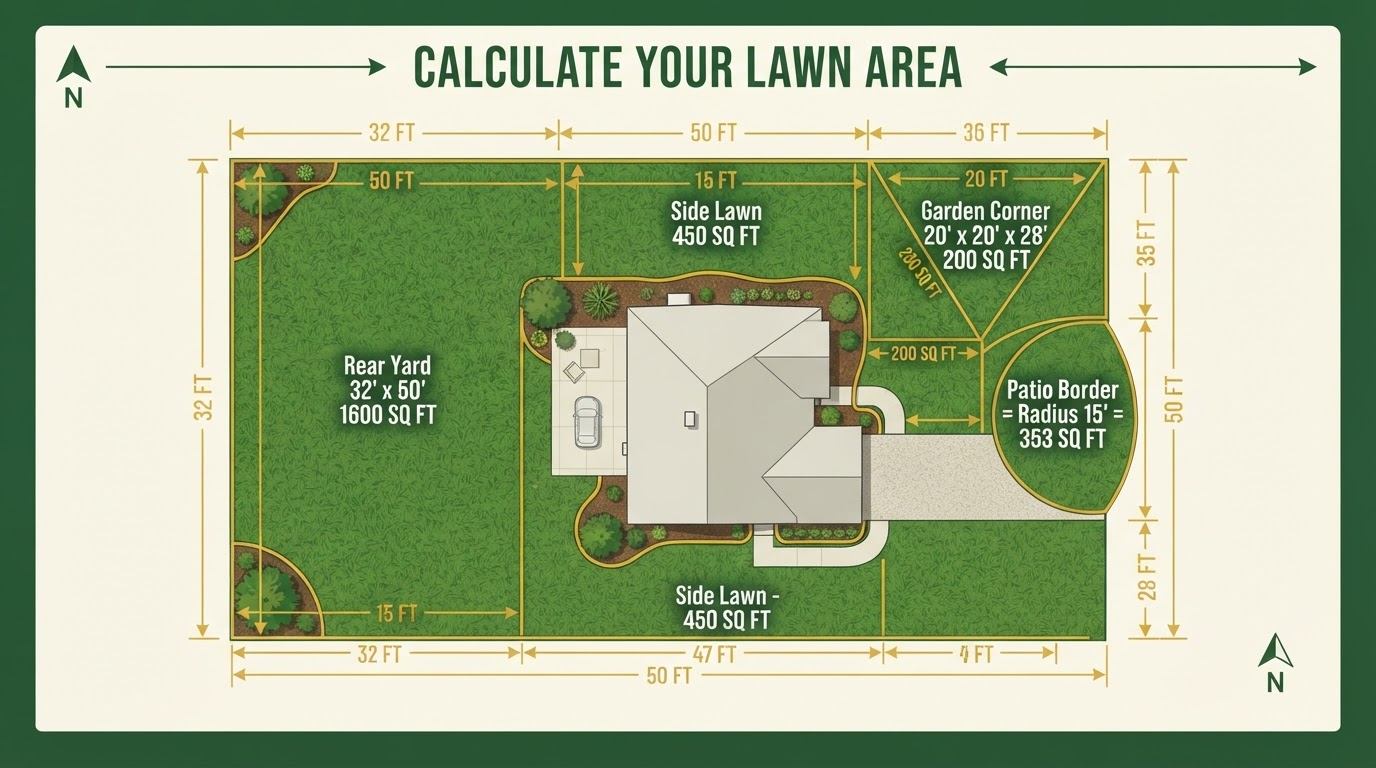
A homeowner measures lawn square footage by breaking the property into simple shapes, measuring each one with a tape or measuring wheel, and adding the totals together. Skipping this step leads to guesswork on fertilizer and seed bags, which wastes money and often damages grass. Golden Green starts every service with the property itself, along with the homeowner's concerns and goals, rather than assigning a package before anyone has looked at the lawn. That same property-first mindset applies to how to measure lawn square footage at home.
Follow these steps in order:
Divide the property into sections
Break the yard into front yard, back yard, side strips, and any beds or obstacles that should stay excluded from the treated area.
Measure rectangles (length × width)
Multiply length by width in feet. A 40 ft × 30 ft rectangle equals 1,200 sq ft.
Measure triangles (base × height ÷ 2)
Multiply base by height, then divide by two. A triangular corner with a 20 ft base and 15 ft height equals 150 sq ft.
Measure circles (π × radius²)
Measure the radius, multiply by 3.14, then multiply by the radius again. A 10 ft radius circle equals about 314 sq ft.
Add every section together
Sum all shapes for the total lawn square footage. Subtract driveways, patios, and beds if you measured the full lot first.
The Three Shapes That Cover Almost Every Lawn
Break your yard into these building blocks, calculate each one, then add them together for the total square footage.
Rectangle
Triangle
Circle
What Tools Work Best for Measuring a Lawn by Hand?
A 100-foot tape measure, marking flags, and a notepad handle most residential lots without trouble. A measuring wheel speeds up long, irregular stretches and reduces counting errors. These basic lawn measuring tools cost little and pair well with a simple sketch of the yard.
Why Does Section-by-Section Measuring Matter?
Breaking a lawn into sections mirrors the approach Golden Green uses on every property it services. Before recommending a treatment, the focus stays on understanding what the lawn actually needs, section by section, rather than treating the whole yard as one uniform space. A front yard with heavy shade and a sunny backyard often need different attention. Accurate measurements reveal those differences before a single product goes down.
This is the same care Golden Green brings to properties like those in Bally. Aeration and weed control get planned around the property, not around a generic formula.
How Can a Lawn Area Calculator Simplify Measuring?
A lawn area calculator replaces guesswork with satellite-based precision. These digital tools pull imagery straight from Google maps, letting homeowners trace property boundaries onscreen instead of pacing off distances with a tape measure. Learning how to measure lawn square footage this way takes minutes, not an afternoon of trial and error.
Before using one of these tools, homeowners need three things ready: the property address, a rough sense of which areas count as lawn versus garden beds or hardscape, and a clear goal — seeding, fertilizing, or budgeting for professional service.
Satellite Measurement Workflow
Enter the property address
Type the address into the calculator's search field to pull up the correct Google satellite image.
Confirm the correct property
Verify the satellite image shows your lot and not a neighbor's before tracing anything.
Trace the lawn outline
Click around the lawn perimeter, excluding driveways, patios, and flower beds so only treatable turf is counted.
Record the total square footage
Save the figure the tool generates. This is the number you'll use for seed coverage and fertilizer rates.
Match it to product labels
Use that figure to calculate grass seed coverage or a fertilizer application rate per 1,000 sq ft.
Are Online Measuring Tools Accurate Enough for DIY Treatments?
Satellite-based lawn measuring tools give most residential properties a solid starting estimate. Irregular lot shapes, dense tree cover, or oddly angled beds shave off accuracy. Owners of complex yards should treat the number as a close approximation rather than an exact figure. These calculators also help with home landscaping projects like laying new sod, not just treatment planning.
Beyond seeding, a square-footage figure supports broader Eastern PA lawn care decisions. A homeowner who already knows lawn size walks into a conversation about how much weed control do I need with real numbers instead of guesses. Golden Green Lawn Care operates on a pay-as-you-go basis, with no long-term contracts. Homeowners can compare a self-measured estimate against a professional quote before committing to any treatment. Proof that Golden Green stays Your Lawn's Best Friend at every step, not just after the contract is signed.
Want a professional measurement? Request a free quote and Golden Green will map your property and build a plan around the real numbers.
How Do You Convert Square Footage Into Fertilizer Rates?
Converting square footage into a usable fertilizer amount starts with one number: total lawn area in square feet, divided by 1,000. Product labels list the fertilizer application rate per 1000 sq ft. That division is the bridge between a measurement and an actual bag purchase. Skipping this step leads to two common outcomes — under-application that leaves patches thin, or over-application that burns grass and wastes money.
Follow these steps once the lawn has been measured:
Confirm the total square footage
Use a lawn area calculator or manual measurement to establish the exact number before opening any bag.
Divide by 1,000
A 5,500 sq ft lawn equals 5.5 coverage units. This figure drives every calculation that follows.
Read the product label rate
Every fertilizer, weed control product, and grub treatment lists its rate per 1,000 sq ft separately.
Multiply units by the labeled rate
The result is the total product amount needed for the full property — not a guess.
Recalculate for irregular zones
Flower beds, driveways, and patios don't need treatment. Subtract those areas from the gross lot size first.
From Square Feet to Bag Purchase
The bridge between a measurement and an actual product amount is one division by 1,000.
Worked Example
A 5,500 sq ft lawn divided by 1,000 gives 5.5 coverage units. If the fertilizer label calls for 4 lbs per 1,000 sq ft, multiply 5.5 × 4 = 22 lbs total. That is the exact amount to buy — no guesswork, no waste, no burned patches.
How much weed control do I need for my lawn?
Weed control volume depends entirely on treated square footage, not the size of the weed problem itself. A property with scattered dandelions and one with dense crabgrass coverage still use the same rate calculation. The difference is treatment frequency, not concentration. Skipping the square footage step here risks both wasted product and inconsistent coverage across the yard.
Why does timing affect these calculations?
Fall changes the math for seed, though not for fertilizer rate itself. Cool air paired with warm soil creates ideal germination conditions for new seed and lets roots establish before winter. Accurate square footage determines exactly how much seed to buy for that window. Core aeration and overseeding each fall repair summer damage, and getting the coverage number right avoids costly reseeding later.
Golden Green Lawn Care builds custom lawn health plans around this same math. Fertilization, weed control, and grub and pest control are each calibrated to the measured square footage of the property, not a rough estimate. Clients receive a clear account of what was scheduled, completed, and billed against that measured area, which is part of what makes Golden Green Your Lawn's Best Friend for homeowners who want accuracy over guesswork.
What Common Measuring Mistakes Should You Avoid?
Guessing at square footage instead of walking the property line by line causes most fertilizer application rate per 1000 sq ft miscalculations. Skipping a proper lawn area calculator check before ordering seed or weed control wastes product and money on a lawn that never gets what it actually needs.
Subtract driveways, beds, and structures. Rough estimates lead to under- or over-application.
Treat irregular shapes as separate rectangles or triangles and add them up.
Recheck measurements each season. New beds, patios, or sod shift the usable lawn area.
Match the confirmed square footage to product labels before buying. Bag coverage rarely lines up with a rounded-sm guess.
Coverage depends on accurate square footage, not the size of the bag on the shelf. Buying by guesswork often means treating the same spots twice while missing others — a mistake diagnosis-first service avoids by identifying problem areas before recommending product.
Does timing affect measurement accuracy?
Fall matters most for lawn recovery, since cool air and warm soil favor new seed. Measuring before this window keeps a lawn on schedule for overseeding rather than scrambling once the calendar has already worked against it. Honest, no-hidden-fee guidance makes it easier for homeowners across Eastern PA lawn care territory to compare DIY costs against a professional quote with confidence.
Conclusion
In closing, accurately measuring your lawn square footage transforms fertilizer and seed application from guesswork into a precise science. When you know your property's dimensions, you apply the right amount of product — avoiding waste while maximizing results. Whether you tackle this measurement yourself or partner with a lawn care professional who handles the details, the foundation for a thicker, greener lawn starts with this single, essential step. Take the time to measure now, and you'll set your lawn up for the healthy growth it deserves.
Stop Guessing — Get Your Lawn Measured the Right Way
Accurate square footage is the foundation of every fertilizer, seed, and weed control decision. Golden Green maps your property and builds a custom plan around the real numbers — no contracts, no guesswork.
Frequently Asked Questions
Related Articles
Lawn Fertilization: How Much Fertilizer Does Your Pennsylvania Lawn Need?
Learn how lawn fertilization rates are calculated, what fertilizer numbers mean, and how much fertilizer Pennsylvania lawns actually need.
Read Article
A Complete Guide to Overseeding Your Lawn in Eastern Pennsylvania
Learn when to overseed your Pennsylvania lawn, why fall timing matters, and how aeration and quality seed can help build thicker turf.
Read Article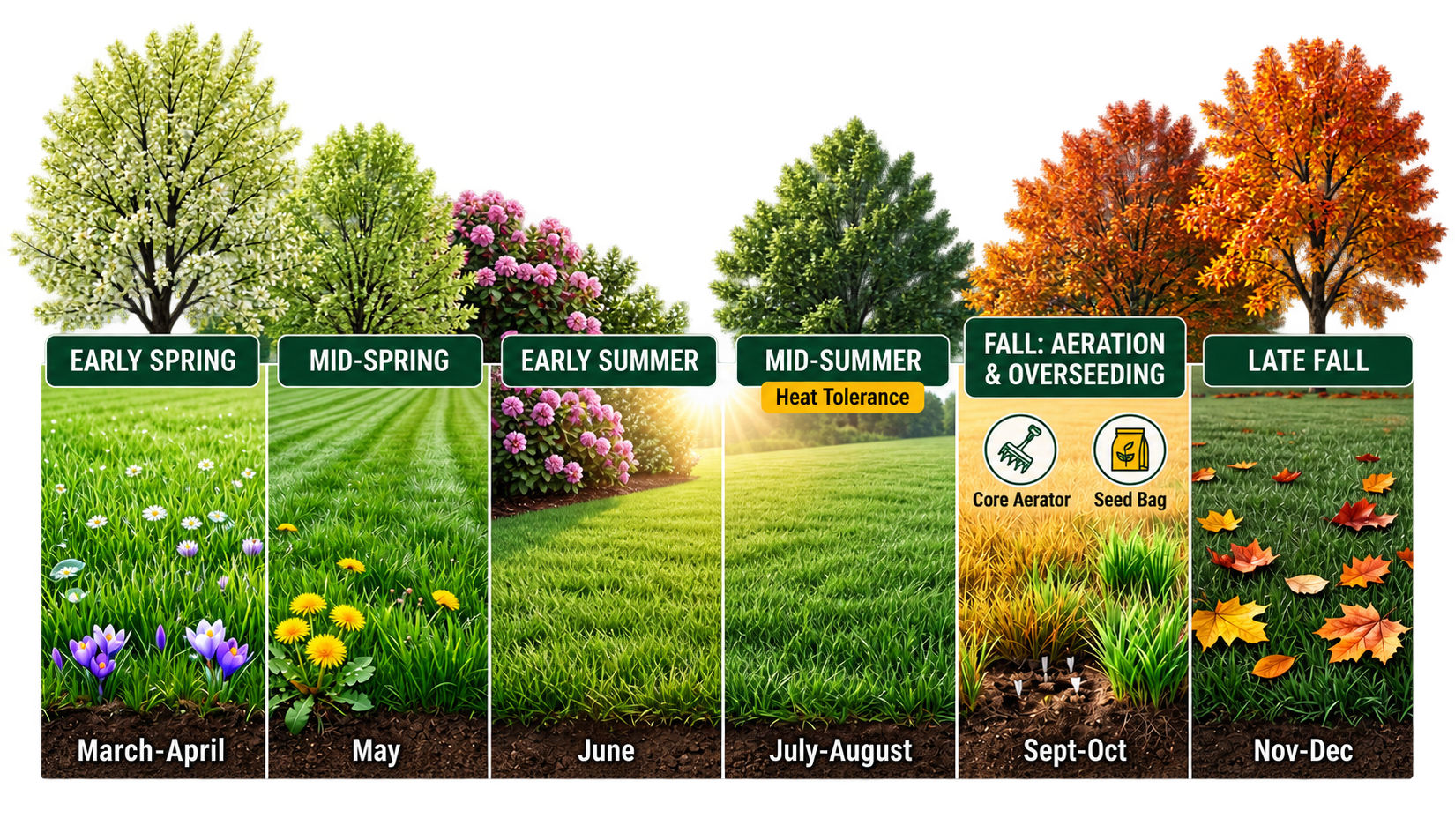
What Is the Best Lawn Fertilization Schedule in Pennsylvania?
Learn how Golden Green coordinates six lawn treatments with fall aeration and overseeding across Eastern Pennsylvania.
Read ArticleHelpful lawn care advice for Pennsylvania homeowners
If this guide helped you, add Golden Green as a Preferred Source on Google to see more of our lawn care guides in Google Search and AI experiences.