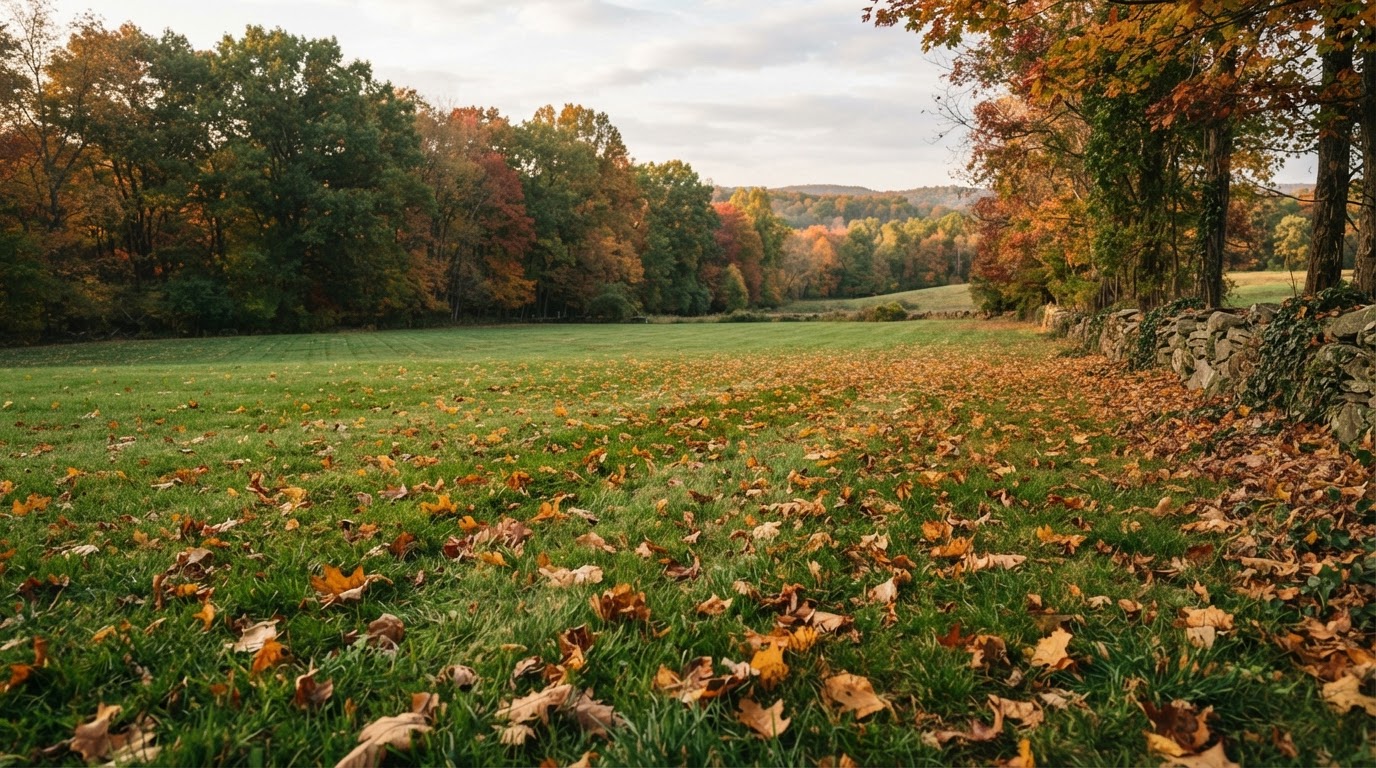
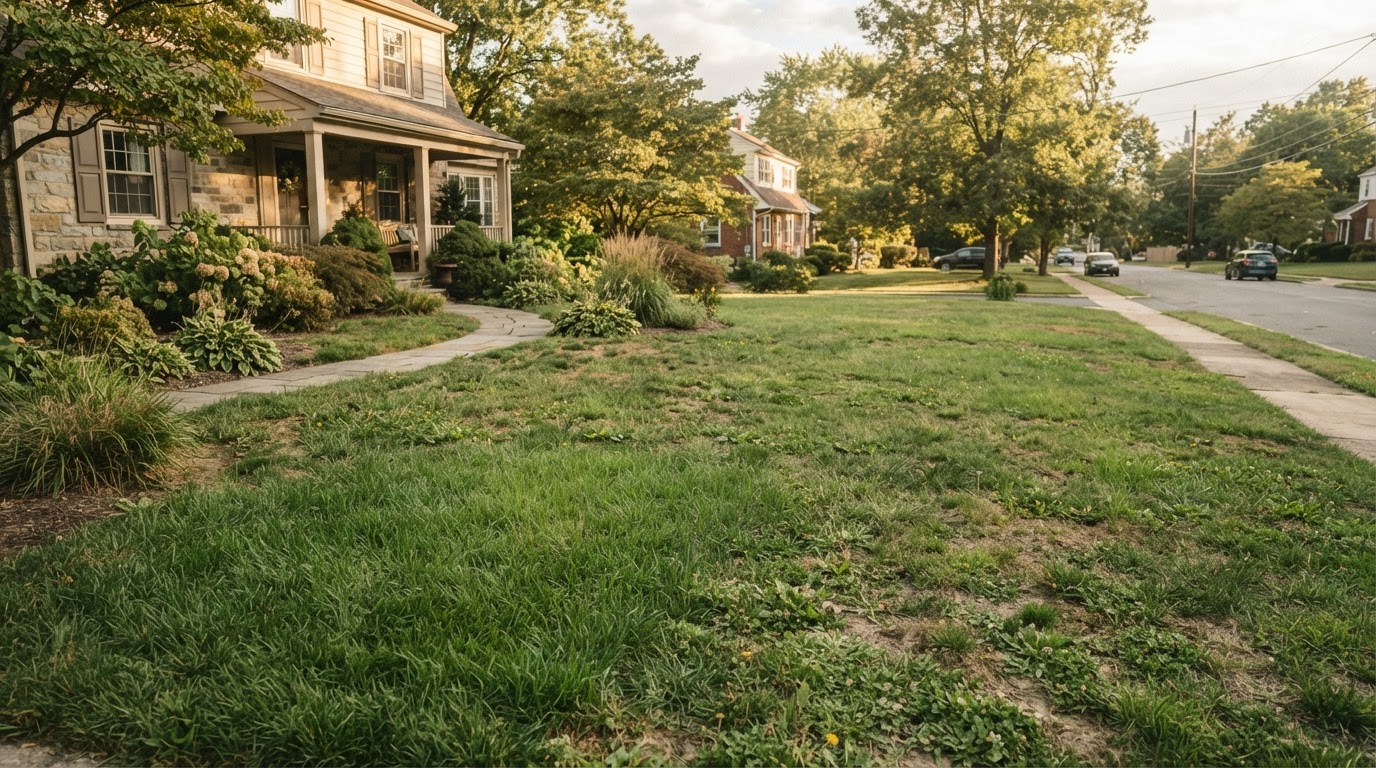
When Is the Best Time to Aerate and Overseed a Lawn in Pennsylvania?
Imagine this. It’s an early September morning in Pennsylvania. You wake up, pour yourself a cup of coffee, throw on your bathrobe and bedroom slippers, and walk out the front door.
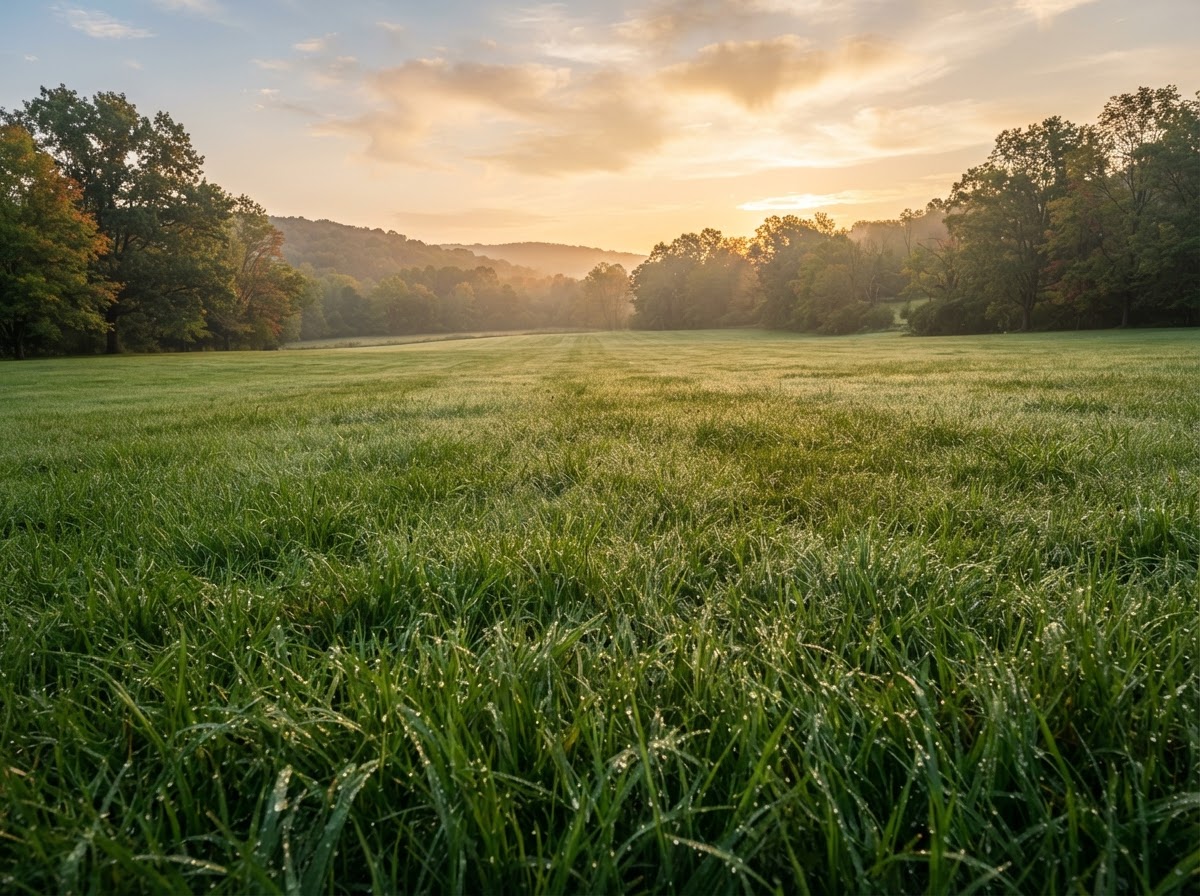
The mail carrier tossed a piece of mail near the end of your driveway, so instead of walking down the sidewalk, you cut straight across the lawn. Halfway across, you notice something.
Your slippers are getting wet. Not soaked. Just damp. You look down and see moisture collecting on the grass blades. The nights have become cooler. Morning dew is hanging around. The brutal heat of summer is beginning to loosen its grip.
And your lawn? It’s starting to wake up again. For me, that little September morning tells an entire story.
Fall has arrived for your cool-season lawn. And with it comes one of the most important lawn-improvement windows we get all year in Eastern Pennsylvania: aeration and overseeding season.
You don’t get this opportunity whenever you want it. You can’t decide in December that you wish you had September back. Once this window closes, you’re largely looking toward the next appropriate seeding opportunity. That’s why, at Golden Green, I view fall mechanical core aeration and overseeding as much more than another service on the lawn-care calendar.
It’s an opportunity with a deadline.
The Quick Answer
Late August into September — a window with a deadline, not a date on a calendar.
For many established cool-season lawns in Eastern Pennsylvania, late summer into early fall is the prime period for mechanical core aeration and overseeding, with September especially valuable. Exact timing depends on weather, turf condition, grass species and recent herbicide applications.
When Is the Best Time to Aerate and Overseed a Lawn in Pennsylvania?
For many established cool-season lawns in Eastern Pennsylvania, late summer into early fall — particularly around late August and September — is a prime period for mechanical core aeration and overseeding. Exact timing varies with weather, turf condition, location, grass species and what has recently been applied to the lawn.
But September is exciting. Pennsylvania’s cool-season grasses are moving away from the stresses of summer and into conditions more favorable for growth. The days are getting shorter. Nights are getting cooler. Soil is still relatively warm. And those damp September mornings remind you that summer isn’t in charge anymore.
The Fall Establishment Window
Heat, drought, traffic and pests expose the lawn's weaknesses.
Nights cool, dew returns, soil still warm — favorable for seed.
Cool-season grasses recover and establish. Golden Green's focus.
Still possible, but establishment time shrinks before cold.
Conditions no longer favor reliable establishment. Wait.
Illustrative seasonal pattern for Eastern PA cool-season lawns. Actual conditions vary by year, location and weather.
Why Is Fall the Best Time to Aerate a Lawn in Pennsylvania?
Think about what your lawn has just experienced. June. July. August. Heat. Dry periods. Foot traffic. Mowing. Insects. Weeds. Crabgrass. Potential disease pressure. Maybe insufficient irrigation. Maybe too much irrigation. By August, a Pennsylvania lawn can tell you quite a bit about its weaknesses.
Summer shows the weaknesses
- Thin areas become obvious
- Bare spots become obvious
- Compacted areas show themselves
- Crabgrass takes advantage of openings
Fall gives us the opportunity
- Relieve compaction with core aeration
- Introduce desirable grass via overseeding
- Improve seed-to-soil contact
- Build a thicker stand over seasons
Summer shows us the weaknesses. Fall gives us an opportunity to work on them.
What Does Mechanical Core Aeration Actually Do?
At Golden Green, when we’re talking about our fall aeration program, we’re talking about mechanical core aeration. A core aerator travels across the lawn and removes plugs of soil and turf. Those cores are brought to the surface and left on the lawn to break down naturally. Core aeration can help relieve soil compaction and improve movement of air and water into the soil.
But there’s another reason I love pairing aeration with overseeding. We’re not only working on the soil.
We’re putting new grass into the lawn.
Fertilizer Feeds the Grass You Have. Seed Helps Change the Lawn You Have.
This is one of the most important distinctions I want Golden Green customers to understand. You can have a very good lawn fertilization program. You can feed the lawn, control weeds, manage insects and improve the color. But fertilizer cannot put a new grass plant into an empty spot.
Fertilizer
Feeds what's thereA good fertilization program feeds the lawn, controls weeds, manages insects and improves color. But fertilizer cannot put a new grass plant into an empty spot.
Seed
Changes what's thereOverseeding introduces desirable grass into thin areas and gradually improves the turf stand. It's the difference between maintaining a lawn and deliberately improving one.
You can fertilize an empty spot all year. It’s still an empty spot until something grows there.
That’s why overseeding is so important. Over time, overseeding gives us an opportunity to introduce desirable grass into thin areas and gradually improve the turf stand. For me, that’s one of the biggest differences between simply maintaining a lawn and deliberately trying to improve a lawn.
When Should You Overseed a Lawn in Pennsylvania?
For many Eastern Pennsylvania cool-season lawns, late summer and early fall provide an excellent overseeding window. I particularly like getting this work accomplished during September when conditions cooperate. Could we seed later? Sometimes. Could we seed earlier? Sometimes. The problem with treating a calendar date as an absolute rule is that we’re working with a living plant and real weather.
The later we wait, the less establishment time remains before colder conditions arrive. Seed needs time. Germination isn’t the finish line.
If You Miss Fall Aeration and Overseeding, You Can’t Just Move September
This is why aeration season feels different to me from almost anything else we do. Suppose we’re running a little behind on a fertilizer application. We can often adjust. Maybe a service that normally happens six weeks after the previous visit occurs at seven weeks. Then we tighten the next interval when appropriate. There’s flexibility.
Fertilizer timing
FlexibleIf a visit normally happens six weeks after the previous one and occurs at seven, we can tighten the next interval. There's room to adjust.
The program keeps moving.
September seeding
Not flexibleYou can't call in December and ask for September back. Once the fall establishment window closes, that opportunity is gone until the next appropriate season.
The calendar moved. The conditions moved with it.
That’s why Golden Green puts so much emphasis on aeration and overseeding season.
Aeration Season at Golden Green Is Like Christmas at UPS
Here’s how I think about it operationally. Imagine UPS during Christmas. UPS delivers packages all year. But then Christmas approaches. Suddenly there is a deadline. People want those boxes under the Christmas tree. UPS can’t say, “we’re running a little behind, we’ll deliver your Christmas presents January 14.” Technically, they delivered the packages. But they missed the opportunity.
So during the Christmas rush, it’s all hands on deck. That’s how I think about fall aeration and overseeding at Golden Green. We’re still running a lawn-care company. We’re still managing our regular fertilization and weed-control program. But for several weeks, there is something happening that has a biological deadline.
We need to get those lawns aerated and seeded while the fall establishment window is still working in our favor.
Why Step 4 and Step 5 May Have a Slightly Different Gap
Golden Green’s six-step lawn-care program generally moves through the season at approximately five- to six-week intervals, although actual timing depends on weather, turf conditions and the treatment being performed. Then we reach late summer and early fall. Step 4 has helped carry the lawn out of summer and into the beginning of fall. And now we have the aeration and overseeding window sitting between Step 4 and Step 5.
This is where I am perfectly comfortable allowing some operational flexibility. Why? Because Step 5 can wait a little when appropriate. September can’t. If our technicians are busy aerating and overseeding lawns and the next fertilizer visit moves slightly, that doesn’t mean we’ve forgotten about the lawn. It’s strategic.
Should You Fertilize Before or After Aeration and Overseeding?
This is where lawn-care programs need coordination. Fertilizer and grass seed are not automatically enemies. An appropriately selected fertilizer can support turf growth and establishment. The bigger concern around seeding is often what herbicides have been applied and what their labels say about reseeding intervals.
The product label controls the timing. That’s why we don’t simply treat an overseeding lawn exactly like every other lawn on the route.
What About Crabgrass Before Aeration and Seeding?
This is another situation we encounter. August arrives and the lawn has crabgrass. The homeowner wants to seed. What should happen first? Depending on the lawn, product and timing, we may need to address existing crabgrass before overseeding. That’s different from applying a spring pre-emergent crabgrass barrier.
A post-emergent treatment targets crabgrass that is already growing. A pre-emergent is intended to interfere with germination and establishment of targeted weeds before they emerge, and some pre-emergent programs can also interfere with desirable grass-seed establishment. That’s why spring crabgrass prevention and fall overseeding need to be understood as parts of a complete annual program — something I cover in more detail in our crabgrass prevention guide.
Don’t just kill weeds. Replace their opportunity with better grass.
Should You Aerate Before Overseeding?
For many established lawns, I strongly like the combination of mechanical core aeration and overseeding. Why? Because simply throwing grass seed over a lawn isn’t the same thing as creating favorable opportunities for establishment. Core aeration creates openings across the property and exposes soil in many locations. Then we apply seed across the lawn.
Does every seed germinate? Of course not. We’re dealing with nature. Existing grass competes. Weather matters. Moisture matters. Seed-to-soil contact matters. Grass species matter. Homeowner care matters. But aeration and overseeding together give us an opportunity to improve the lawn that fertilization alone cannot provide.
How Aeration + Overseeding Builds a Better Lawn
One Year of Overseeding May Not Transform Your Lawn
This is another place where I want to set realistic expectations. I love aeration and overseeding. But I’m not going to tell you “do this once and your lawn will be perfect forever.” That’s not how I’ve seen lawns work. A lawn that has been thin for years may need repeated improvement. A newly constructed home may have challenging soil conditions and a basic initial turf stand. An older lawn may contain grass varieties that have been there for decades.
Some properties may benefit from several consecutive fall seasons of aeration and overseeding. At Golden Green, that may include our Sunny Seed Mix where appropriate. That’s how I like to think about lawn improvement:
It compounds. Year after year. Seed after seed. Season after season.
Why Your September Morning Dew Matters
Now go back to that cup of coffee. You’re standing at the edge of your driveway. Your bedroom slippers are damp. There’s dew on the grass. It’s quiet. The sun hasn’t fully warmed the lawn. And you’re looking across a yard that might have looked exhausted six weeks earlier. Now it’s beginning to change.
That is what I love about September in Pennsylvania. The lawn feels alive again.
And for a lawn-care professional, that’s exciting because we’re no longer simply helping turf survive summer. We’re entering one of our best opportunities to improve what comes next.
Fall Aeration and Overseeding Across Eastern Pennsylvania
The exact conditions can vary across our service territory, but the basic cool-season lawn principles follow us throughout Eastern Pennsylvania. Whether we’re aerating a lawn in Emmaus in Lehigh County, working around Telford or Sellersville, servicing a property near Skippack, or farther west toward Fleetwood and Wyomissing, we’re working against the same basic reality.
Fall gives us a valuable but limited establishment window.
Fall Aeration Across Eastern Pennsylvania
The location changes. The lawn changes. The weather changes. But the importance of timing doesn't.
What About Lawn Aeration in Emmaus?
Homeowners searching for lawn aeration in Emmaus are dealing primarily with cool-season turfgrass. The important question isn’t simply “when can somebody run an aerator over my lawn?” The better question is: when can aeration be coordinated with everything else we’re trying to accomplish?
If we’re also overseeding, timing becomes more important. If weed control was recently applied, we need to consider the product label. If the lawn is severely dry, conditions matter. If heavy rain changes our schedule, conditions matter.
Good lawn care isn’t about forcing the lawn into our calendar. The lawn and the weather help determine the calendar.
The Same Principle Applies in Telford, Bally, Skippack and Wyomissing
We’ve begun seeing homeowners search for services such as lawn aeration in Telford, Bally, Skippack, and Wyomissing, and lawn seeding in communities such as Sellersville and Fleetwood. That’s why Golden Green’s approach isn’t built around one town. We’re building a lawn-care system for cool-season turf across Eastern Pennsylvania. And September is one of the most important parts of that system.
How Should You Prepare for Aeration and Overseeding?
The best preparation depends on your property, but several things deserve attention.
How to Prepare
- Tell us about obstacles that may be hard to see
- Mark irrigation components or objects that could be damaged
- Address significant weed problems at the appropriate time
- Understand the watering requirements for new seed
- Plan ahead — don't wait until the window is almost gone
New Grass Needs Different Watering Than an Established Lawn
This distinction is important. I frequently tell homeowners not to assume that watering an established lawn every morning is the best approach. But new grass seed is different. During germination and early establishment, the seeded area requires appropriate moisture.
New grass needs different watering than an established lawn
During germination and early establishment, the seeded area needs appropriate moisture — favorable for germination without runoff or erosion. As the grass establishes, watering practices change. We can aerate and put seed in a good position to succeed, but we cannot make September rain on command.
What Is the Best Time to Aerate and Overseed a Lawn in Pennsylvania?
If you want the short answer:
Late summer into early fall is generally the prime window, with September being especially valuable for many Eastern Pennsylvania cool-season lawns.
But the better answer is: don’t choose the date in isolation.
Don't choose the date in isolation. Consider:
September Isn’t Just Another Month on the Lawn Calendar
For me, September is one of the most exciting times of the year in lawn care. The summer stress is fading. The nights are cooler. The dew is back. The grass is responding. And suddenly we’re not merely maintaining the lawn we have.
We’re building what comes next.
Fertilization matters. Weed control matters. Grub control matters. Mowing matters. Watering matters. But if I have a thin lawn with poor grass and bare areas, there’s something none of those services can do by themselves.
They can’t put a new grass plant where one doesn’t exist. Seed can.
So tomorrow morning, grab your coffee. Put on your slippers. Walk across the lawn. And if your feet come back a little wet, take a look around. September is telling you something.
Your lawn’s fall opportunity has arrived.
Golden Green — Your Lawn’s Best Friend.
Don't Miss This Fall's Aeration & Overseeding Window
September has a deadline. Plan ahead, get on the schedule, and let Golden Green put your lawn in a position to improve — not just survive.
Keep Reading About Aeration & Overseeding
These related guides go deeper on the services behind fall lawn improvement:
Golden Green Mechanical Core Aeration
How core aeration relieves compaction and improves the movement of air and water into your soil.
Golden Green Overseeding
Why introducing desirable grass into thin areas is how you improve a lawn, not just maintain one.
Sunny Seed Mix
Golden Green's seed blend, used where appropriate for rebuilding damaged or thin turf.
Crabgrass Prevention & Fall Overseeding
Why spring pre-emergent and fall overseeding must be coordinated as one annual plan.
Helpful lawn care advice for Pennsylvania homeowners
If this guide helped you, add Golden Green as a Preferred Source on Google to see more of our lawn care guides in Google Search and AI experiences.
Frequently Asked Questions About Aeration & Overseeding Timing
When should I aerate and overseed my lawn in Pennsylvania?+
Late summer into early fall is generally a strong period for aerating and overseeding established cool-season lawns in Pennsylvania. September is particularly valuable in many Eastern Pennsylvania locations, although weather, turf condition, grass species and previous treatments should be considered.
Is September a good time to aerate a lawn in Pennsylvania?+
Yes. September is commonly an excellent period for mechanical core aeration of cool-season Pennsylvania lawns, especially when aeration is being paired with overseeding.
When should I overseed my lawn in Pennsylvania?+
Late summer through early fall is generally preferred for cool-season turf. Starting early enough gives seedlings more establishment time before colder late-fall conditions arrive.
Should I aerate before overseeding?+
Mechanical core aeration can be particularly useful before or in conjunction with overseeding because it relieves compaction and creates openings that can improve opportunities for seed-to-soil contact.
Can I fertilize when I overseed?+
Certain fertilizers can be compatible with seeding and may support establishment. The larger concern is often herbicides. Always check the labels of products being applied before seeding because some herbicides have required reseeding intervals.
Can I apply crabgrass preventer and overseed at the same time?+
Many conventional pre-emergent herbicides can interfere with desirable grass establishment, so the exact product label and timing matter. Spring crabgrass prevention and fall overseeding should be coordinated as part of an annual lawn-care plan.
Is October too late to overseed in Pennsylvania?+
Not automatically, but the later seeding occurs, the less favorable establishment time may remain before colder weather. Location, weather and grass species matter. Golden Green prefers not to unnecessarily give away valuable early-fall establishment time.
How often should a lawn be aerated and overseeded?+
It depends on compaction, turf density, soil conditions, grass varieties and the homeowner's goals. Some struggling lawns may benefit from repeated fall aeration and overseeding over several seasons rather than expecting a complete transformation after one treatment.
Does aeration alone make a lawn thicker?+
Aeration can improve soil conditions, but it doesn't introduce new grass plants. If increasing turf density is the objective, pairing aeration with appropriately selected grass seed can be particularly valuable.